Source: Wikimedia Commons
Micans flower beetle
IntermediateDicronorhina micans
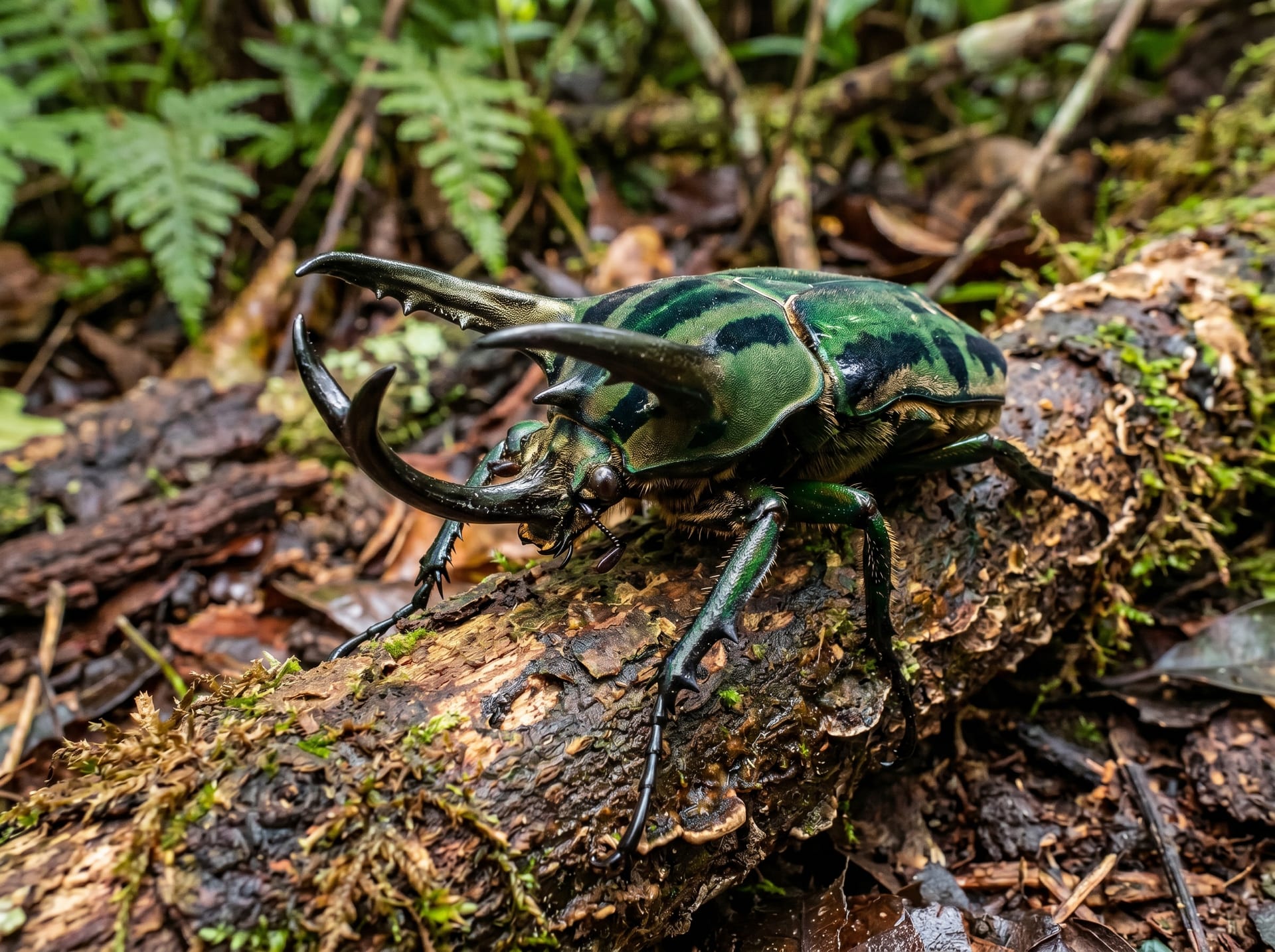
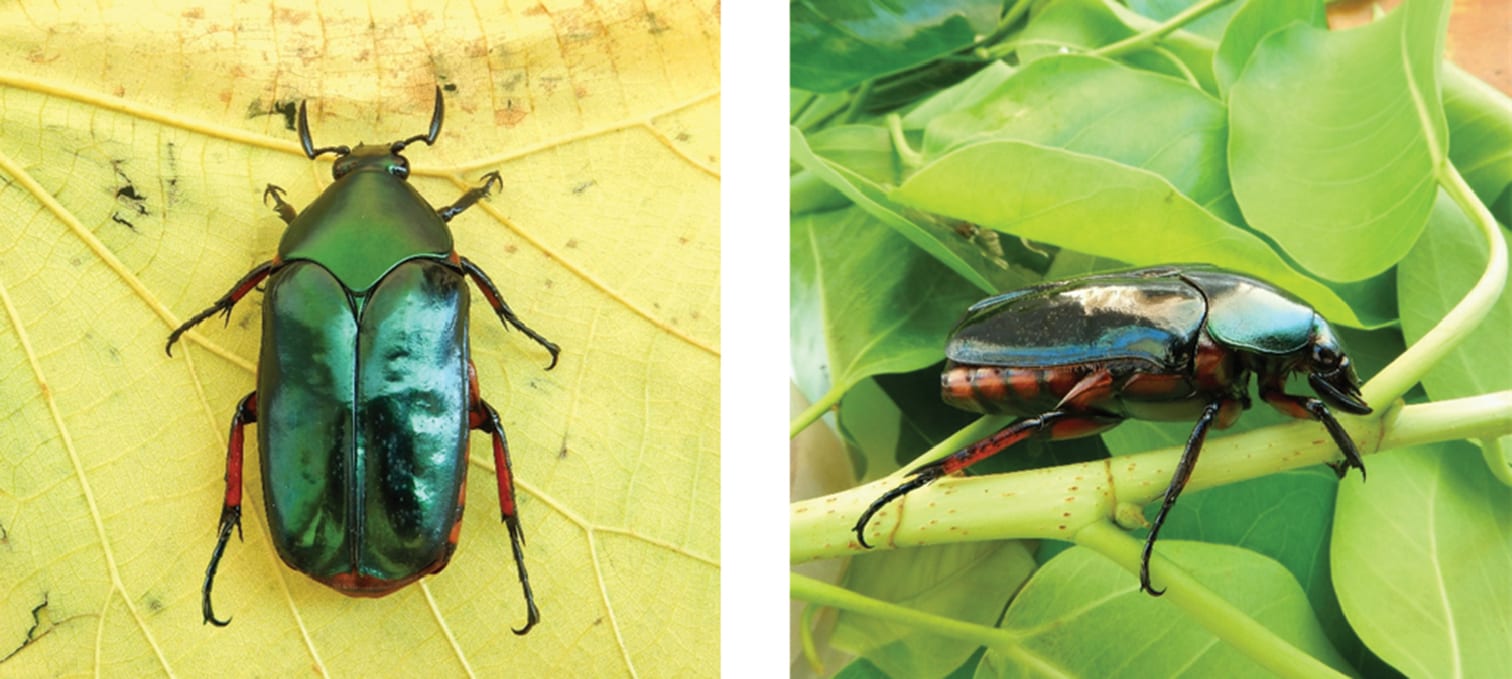
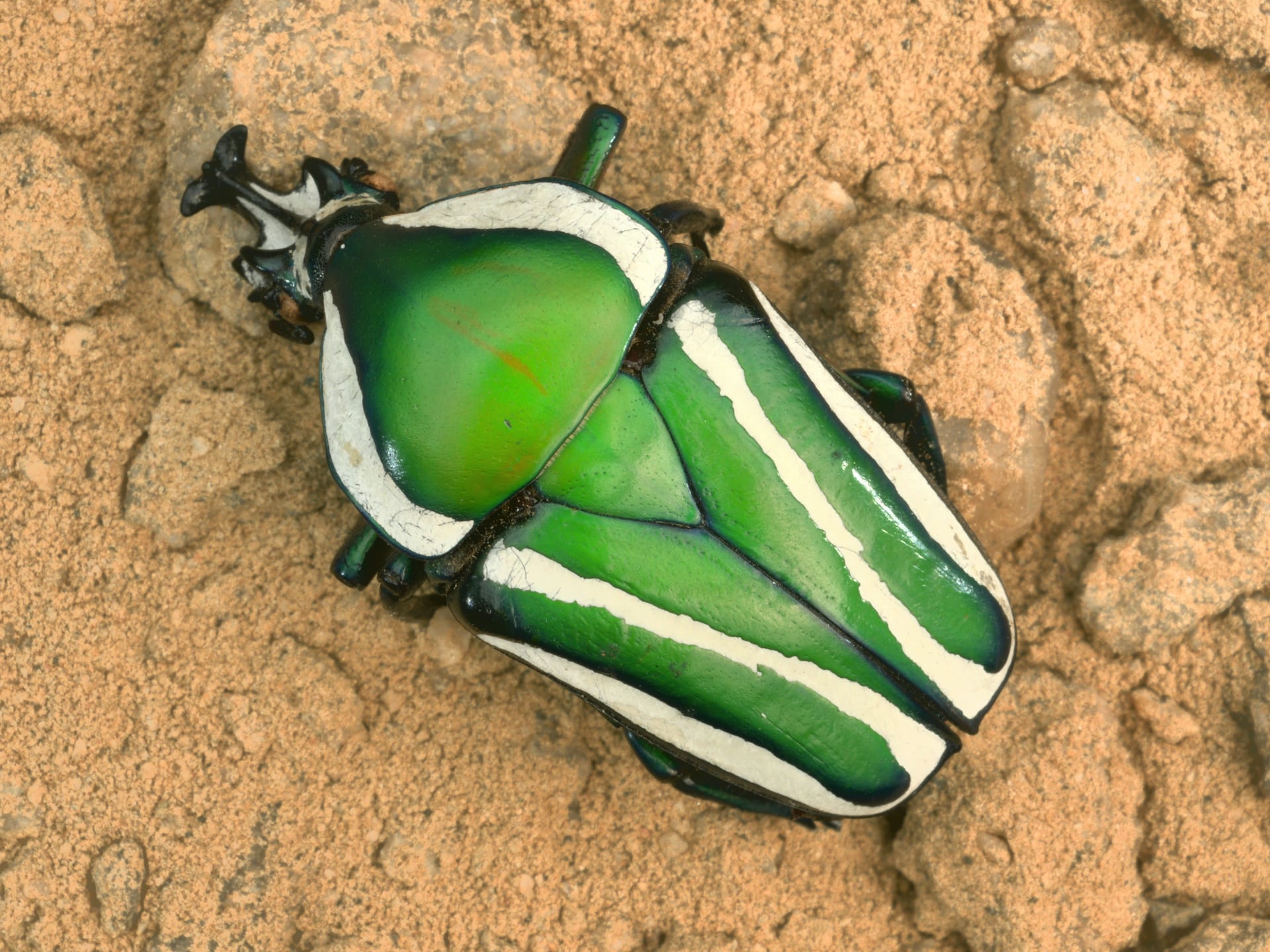
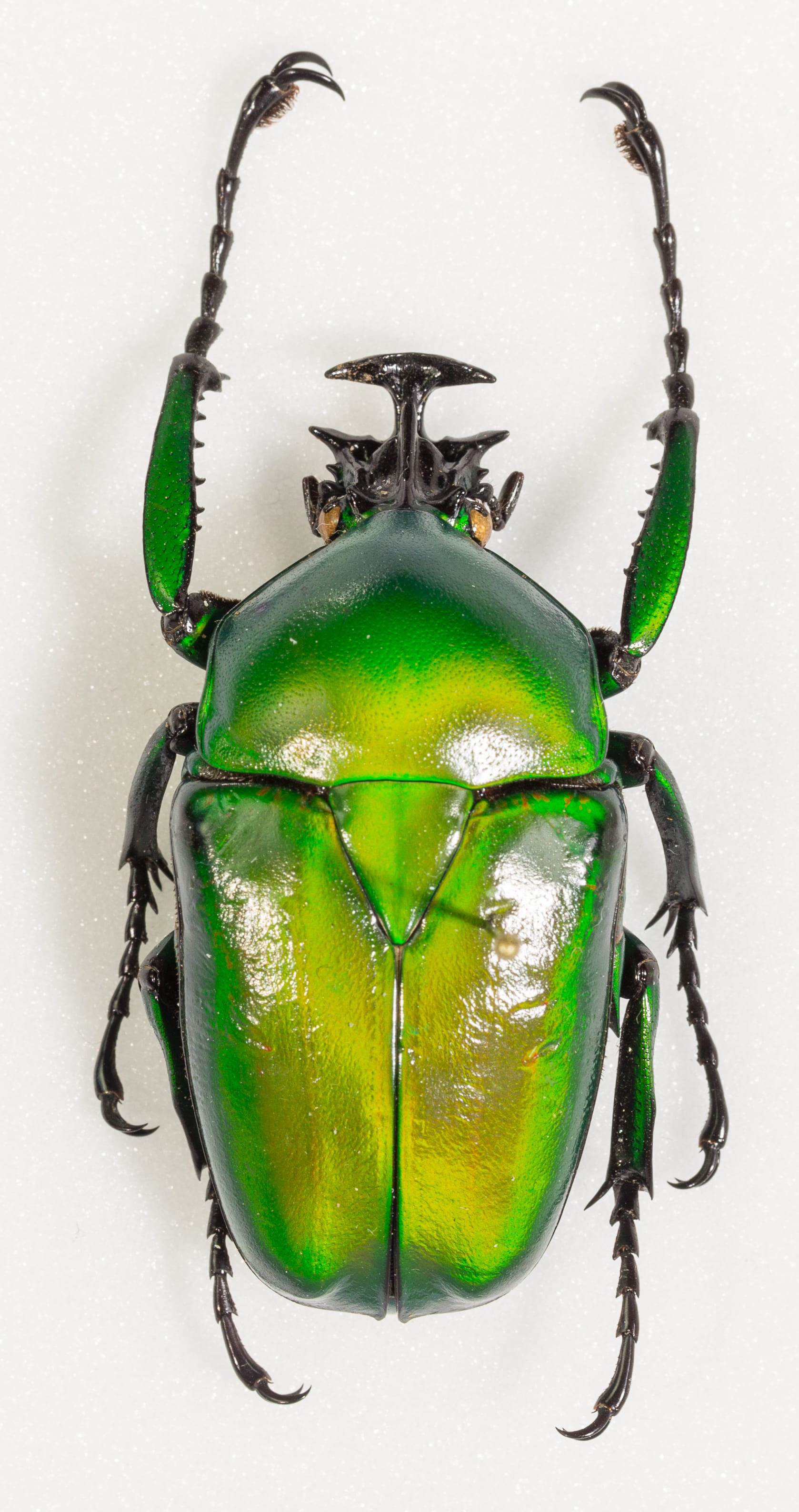
A large flower chafer in metallic green with a golden or bluish sheen; males carry a flat T-shaped horn on the forehead. It is the largest of the four Dicronorhina species and lives in tropical Africa.
Difficulty
Intermediate
Temperature
20〜28℃
Lifespan
Adults about 3 months (about 10 months per generation)
Size
Males 40-60mm, females 40-50mm
Humidity
60〜80%
Diet
Adults take nectar and ripe fruit; larvae eat humus-rich substrate
About
Dicronorhina micans (Drury, 1773) is a flower chafer (Scarabaeidae: Cetoniinae) of tropical Africa. The genus holds four sub-Saharan species (cavifrons, derbyana, kouensis and micans), and this is the largest: males reach 40-60mm and females a little less at 40-50mm. The ground colour is metallic green with a golden or bluish sheen, and males bear a flat T-shaped horn on the forehead. GBIF records are concentrated in the Democratic Republic of the Congo, with others from the Republic of the Congo, Togo, Uganda and Cameroon. Adults are active by day and feed on nectar and overripe fruit. Females lay in the substrate, larvae appear after about two weeks, the larval stage takes about five months and the pupal stage about two, and adults live about three months, so a generation takes roughly ten months. Like its relative D. derbyana it is bred in Japan, and domestically bred stock appears at specialist shops.
Source: Wikipedia (CC BY-SA 4.0)
Lifespan of the Micans flower beetle
The Micans flower beetle lives Adults about 3 months (about 10 months per generation).
Size of the Micans flower beetle
The Micans flower beetle grows to Males 40-60mm, females 40-50mm.
Basic Info
Origin
Tropical Africa (DR Congo, Cameroon, Uganda and others)
Lifespan
Adults about 3 months (about 10 months per generation)
Size
Males 40-60mm, females 40-50mm
References & Sources
Edited & verified by: BreederDirect editorial team
The taxonomic, regulatory, and husbandry data on this page are compiled and verified against the authoritative primary sources below.
Primary sources
Taxonomy & Authority
Regulations & Conservation Status
Not CITES-listed
Many live foreign Scarabaeoidea (stag beetles, rhinoceros beetles, flower chafers and relatives) are quarantine pests whose import is banned under Japan's Plant Protection Act, and even importable species require a species-name certificate from a foreign government body under the Invasive Alien Species Act (entry only via designated airports, never by international post). Whether a species may enter must be checked with the Plant Protection Station in advance, so choose domestically bred stock and never release captive beetles.
Sources: Plant Protection Station: Importing Scarabaeoidea (JA) / Plant Protection Station: Importing live insects (JA) / Ministry of the Environment: List of invasive alien species (JA) / Species+ CITES query (no listing)
Regulations may change. Always verify the latest information with the relevant authorities.
Micans flower beetle Listings
Loading latest listingsFind listings for this species