Source: Wikimedia Commons
Metallic Mantis
AdvancedMetallyticus splendidus
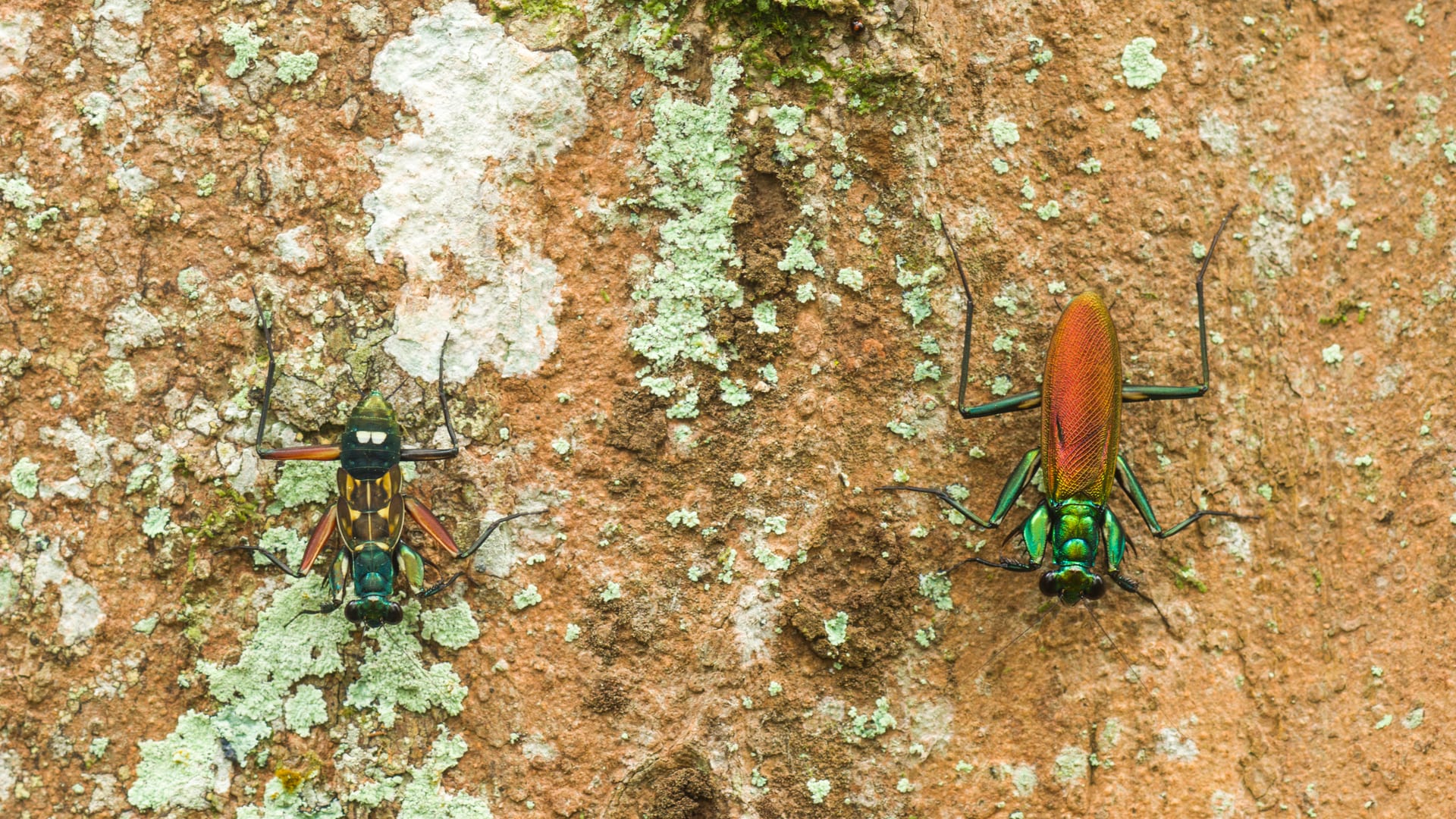
A primitive Southeast Asian mantis with metallic iridescence. Females are golden green and males blue-violet; it runs under bark like a cockroach to hunt. Rarely cannibalistic, but specific food and habitat needs make it hard to keep.
Difficulty
Advanced
Lifespan
Adults 6 months to 1 year
Size
Females about 3-4cm, males about 2-3.5cm
Diet
Cockroaches, firebrats and flies (young firebrats and small fruit flies for nymphs)
About
The metallic mantis (Metallyticus splendidus) is a member of the family Metallyticidae found in tropical forests of Southeast Asia such as Malaysia and Indonesia. With a short prothorax, flattened body and metallic sheen it belongs to a primitive lineage sometimes called a living fossil. The sexes differ in colour: females are golden green tinged with red, males a glossy blue-violet. It hides under the bark of dead trees and, instead of ambushing, darts after prey, mainly cockroaches, termites and flies, running on all six legs like a cockroach. Mating is unusual, the male joining abdomen tips without mounting the female, and oothecae are laid in bark crevices and hatch in 80-90 days at room temperature. Aggression between individuals is very low so groups can be kept, but its specific food and habitat needs make it a difficult species.
Source: Wikipedia (CC BY-SA 4.0)
Lifespan of the Metallic Mantis
The Metallic Mantis lives Adults 6 months to 1 year.
Size of the Metallic Mantis
The Metallic Mantis grows to Females about 3-4cm, males about 2-3.5cm.
Body length is about 3-4cm, males being smaller.
Temperature & humidity for the Metallic Mantis
Keep at 25-30C by day with humidity of 60-70% by day and 70-90% at night, and offer running prey such as firebrats and roaches.
Basic Info
Origin
Southeast Asia (Malay Peninsula, Borneo, Sumatra and nearby islands)
Care Specifications
PeacefulGroupBreeding: Hard
Sources: USMANTIS - Metallyticus splendidus, Iridescent bark mantis / Metallyticus splendidus - Wikipedia (EN)
References & Sources
Edited & verified by: BreederDirect editorial team
The taxonomic, regulatory, and husbandry data on this page are compiled and verified against the authoritative primary sources below.
Taxonomy & Authority
Accepted name: Metallyticus splendidus Westwood, 1835
Authority databases: GBIF
Nomenclature follows global taxonomic authority databases.
Regulations & Conservation Status
Not CITES-listed
Sources: CITES Appendix (checklist.cites.org)
Regulations may change. Always verify the latest information with the relevant authorities.
Metallic Mantis Listings
Loading latest listingsFind listings for this species