Source: Wikimedia Commons
Giant water bug
AdvancedLethocerus indicus
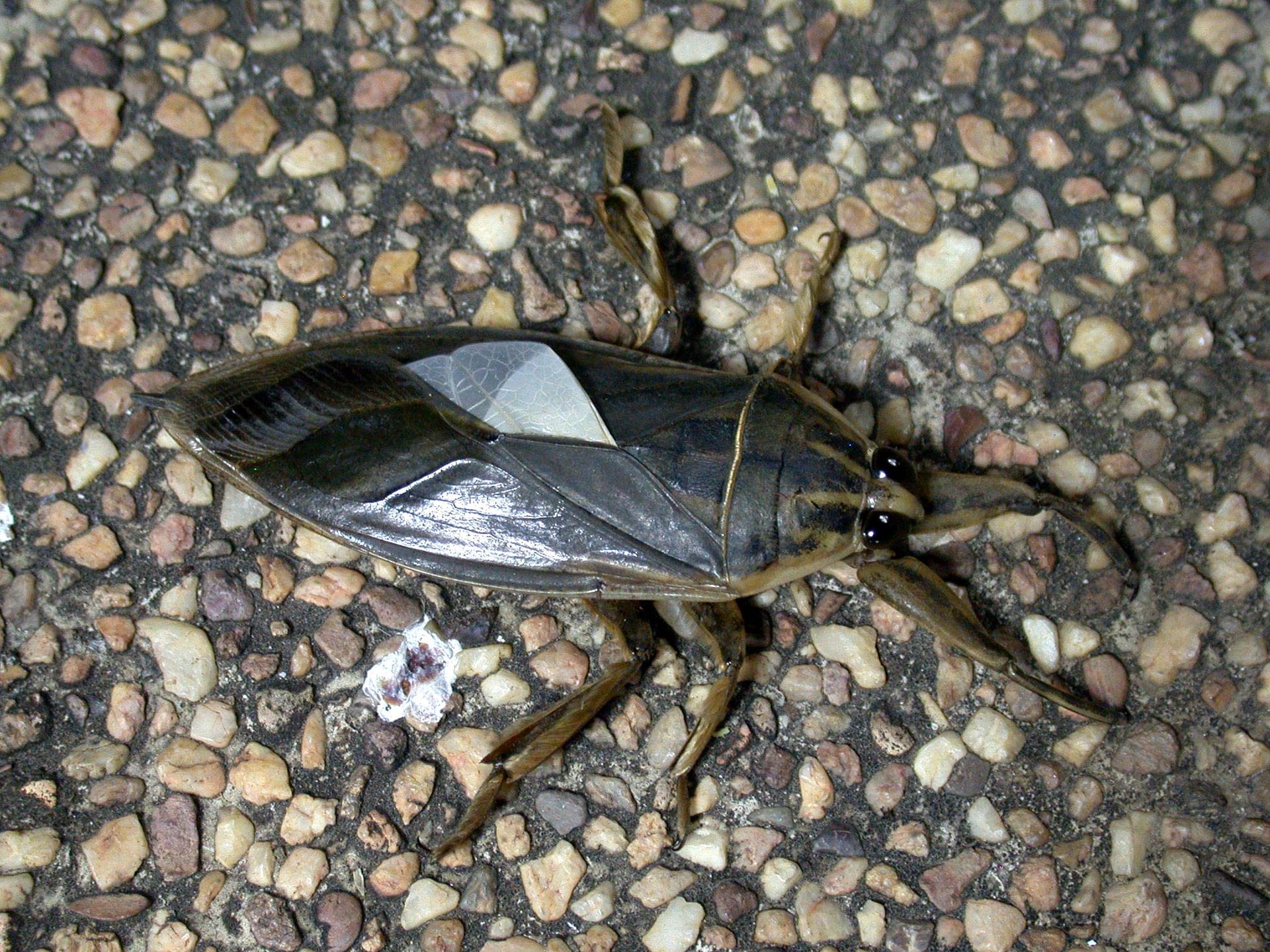
A large giant water bug found from South to Southeast Asia, also sold in Japan as the Java water bug. It resembles the Japanese Kirkaldyia deyrolli but has smaller forelegs, rounder eyes and an inverted-V mark on the thorax. It is eaten in Southeast Asia.
Difficulty
Advanced
Temperature
20〜28℃
Lifespan
Little data
Size
Females 74.0-80.0mm, males 64.0-77.6mm
Humidity
60〜80%
Diet
Carnivorous (catches small fish and other small animals)
About
Lethocerus indicus (Le Peletier & Serville, 1825) is a large aquatic true bug (Belostomatidae) ranging from peninsular India, Sri Lanka and Bangladesh through Southeast Asia to southeast China, Taiwan, Sumatra, Java, the Philippines and western New Guinea. Females measure 74.0-80.0mm and males 64.0-77.6mm. It closely resembles the Japanese giant water bug Kirkaldyia deyrolli but differs in its smaller forelegs, rounder and more closely set eyes, even broader and flatter hind legs, dark streaks on the scutellum and forewings, and an inverted-V mark on the thorax. It lives in clean, still water with a steady level and plenty of aquatic plants. In Japan it was recorded only on Yonaguni, has not been seen since the late 1970s and is listed as Critically Endangered on the national Red List. Both sexes give off a distinctive scent, and in Thailand, Vietnam and elsewhere it is widely used as food and flavouring. Japanese pet shops occasionally sell it under locality names such as Burmese or Javan giant water bug. It is harder to keep than the Japanese species, but with good care long-term keeping and breeding are possible.
Source: Wikipedia (CC BY-SA 4.0)
Size of the Giant water bug
The Giant water bug grows to Females 74.0-80.0mm, males 64.0-77.6mm.
Basic Info
Origin
South and Southeast Asia, southeast China, Taiwan and western New Guinea (recorded in Japan only on Yonaguni)
Lifespan
Little data
Size
Females 74.0-80.0mm, males 64.0-77.6mm
Temperature
References & Sources
Edited & verified by: BreederDirect editorial team
The taxonomic, regulatory, and husbandry data on this page are compiled and verified against the authoritative primary sources below.
Primary sources
- Wikipedia
- Ministry of the Environment: Nationally rare species list (JA)
- Ministry of the Environment: List of invasive alien species (JA)
- Plant Protection Station: Importing live insects (JA)
- Species+ CITES query (no listing)
- Lethocerus indicus - Wikipedia (EN)
- GBIF: Lethocerus indicus (Le Peletier & Serville, 1825)
Taxonomy & Authority
Regulations & Conservation Status
Not CITES-listed
This species is not designated under the Invasive Alien Species Act (Ministry of the Environment list, September 2026). The similar Japanese giant water bug (Kirkaldyia deyrolli) is a nationally rare species (Class 2 specified) that may not be captured or transferred for sale, so take care not to confuse them. Bringing live insects from abroad requires prior checking with the Plant Protection Station. Choose domestically bred stock and never release captives.
Sources: Ministry of the Environment: Nationally rare species list (JA) / Ministry of the Environment: List of invasive alien species (JA) / Plant Protection Station: Importing live insects (JA) / Species+ CITES query (no listing)
Regulations may change. Always verify the latest information with the relevant authorities.
Giant water bug Listings
Loading latest listingsFind listings for this species