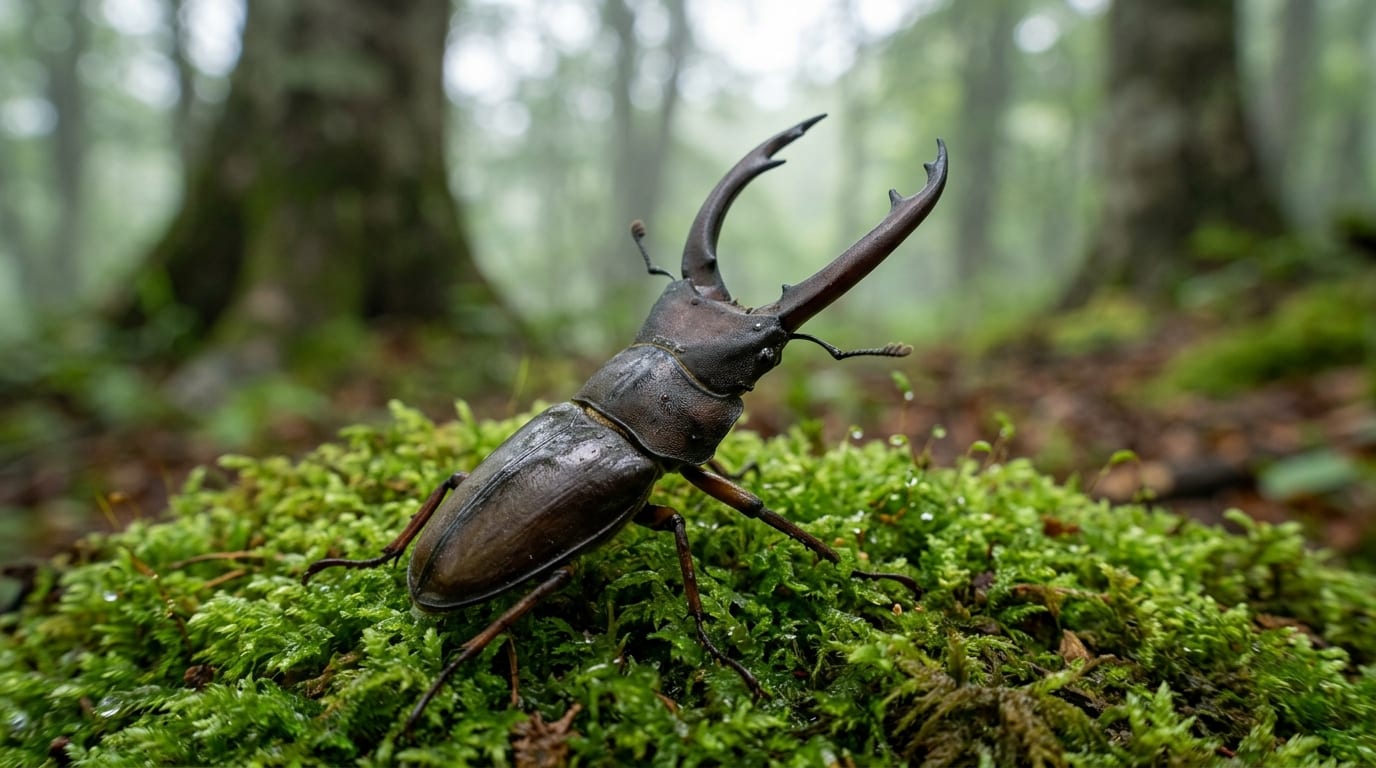
Oni Stag Beetle
The Oni Stag Beetle is a compact species, with even large males reaching only around 25mm — modest by stag beetle standards. What it lacks in size, it makes up for in presence: its mandibles curve upward in a bold, straight sweep that gives it a striking, almost fierce look up close. In the wild, it lives mainly in beech forests at higher elevations, though in Hokkaido it can be found even at lower altitudes. One unusual trait is that adults eat very little once they mature, which naturally shortens how long they remain active. It's a beetle suited to keepers drawn to subtlety and character rather than flashy size.
View Oni Stag Beetle encyclopedia →0% commission on your first sales!Register by September 30, 2026 and your first 2 sales are commission-free!
Breeder Wanted!
List on BreederDirect and sell directly to customers nationwide!
6 Transparency Standards You Can Trust
When listing Insects, Breeders disclose the following. We guarantee transparency on growth stage and breeding unit.
- Life Stage Clarity
- Generation Info
- Real Photos
- Breeding Unit
- Country of Origin
- Body Length (mm)
Browse all 296 breeds
Verified breeders wanted for Insects
Breeders are signing up now ahead of launch. Subscribe to be notified when new listings go live.
Getting alerts is free with a member account. When new listings match your saved search, we'll notify you by email and in-app.
Browse other categories
Verified breeders (preview)
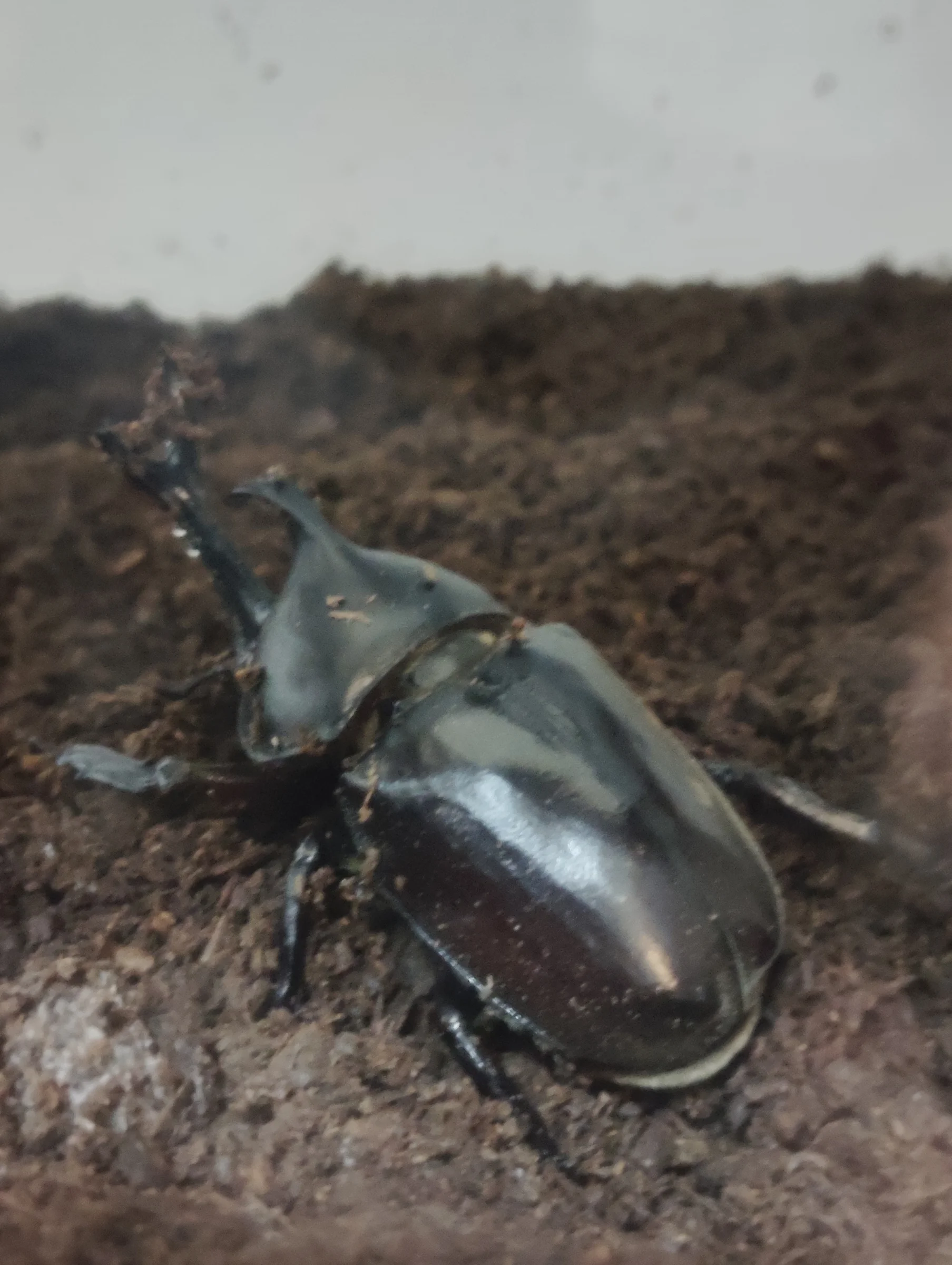
Oni Stag Beetle key facts
- Care level
- Advanced
- Lifespan
- One to several weeks once active
- Size
- About 25mm in large males (captive record 27.0mm, wild record 27.2mm)
- Diet
- Larvae eat soft rotten wood of broadleaf trees; adults barely feed
- Temperature & Humidity
- It lives mainly in beech forest at around 800 to 2,000 m, and in Hokkaido also in the lowlands. The larvae grow inside damp, soft fallen wood, so that wood must be kept moist.
- Breeding & Egg-laying
- The female lays into the same fallen logs that feed the larvae. The larvae eat damp, soft wood of beech, Japanese oak and horse chestnut, grow over about a year, pupate in late July and emerge in August and September. The captive record for the species is 27.0 mm and the wild record 27.2 mm.
- Cohabitation
- The sexes differ little and the mandibles are not enlarged, so violent fighting is not conspicuous, but as the adults mate while walking over logs a breeding set is best run with a single pair. Do not mix beetles from different localities.
- Lifespan & Rearing Period
- Adults die within a week to a few weeks of becoming active. The larval period is about a year, and since every beetle leaves the wood in the season it ecloses, no adults overwinter inside rotten wood. Breeding plans have to be built around that short adult life.
- Health & Notes
- Adults barely feed, so food cannot be expected to extend their lives. The related morimotoi and P. tokui are separated by locality, so beetles without locality data should not be mixed in. The congener P. dauricus, found in Japan only on Tsushima, is listed as near threatened.
About Oni Stag Beetle
A small stag beetle whose large males reach only about 25mm, known for its straight, upward-curving mandibles. Found mainly in beech forests, it's an advanced-level species that eats little as an adult and has a short adult lifespan.
7 things to know before welcoming a Oni Stag Beetle
1An advanced-level species
The Oni Stag Beetle is considered an advanced-level species because adults eat very little, which requires specific know-how to manage well. It's best approached after gaining experience with easier stag beetle species first.
2A short adult lifespan
Once active, adults typically live for only about one to a few weeks. Compared to many other stag beetles, the time you'll spend with an adult is relatively short, so it helps to know this going in.
3Distinctive mandible shape
The male's mandibles curve upward in a distinctively straight sweep, giving it a look unlike most other stag beetles. The exact curve varies a bit from individual to individual, which adds to the appeal.
4A small-bodied species
Even large males only reach around 25mm, making this a relatively small species among stag beetles. It's less about sheer size and more about appreciating its subtle, sculptural form.
5Prefers cooler, higher elevations
In the wild, it mainly lives in beech forests at elevations of roughly 800 to 2000 meters, suggesting a preference for cooler conditions. When keeping one, it helps to avoid letting the environment get too warm.
6Feeding needs are minimal
Since adults barely feed once mature, there's no need to offer food frequently. A small amount of jelly is enough — just keep an eye on how much, if any, gets eaten.
7Prepare the setup in advance
Since the adult stage is short, it's worth setting up the enclosure — case, climbing branches, and so on — before the beetle arrives. A calm, ready environment helps reduce stress from the start.
Frequently asked questions about Oni Stag Beetle
- Q.Why does the Oni Stag Beetle have such a short adult lifespan?
- A.Since adults eat very little once mature, they can't sustain themselves for long. As a guide, they typically live for about one to a few weeks after becoming active.
- Q.Is this species suitable for beginners?
- A.Because it barely feeds as an adult, it's generally considered more challenging than typical stag beetles. Gaining experience with an easier species first is a good idea before taking one on。
- Q.How big does the Oni Stag Beetle get?
- A.Even large males reach only about 25mm, making it a relatively small stag beetle. For reference, recorded maximums are 27.0mm in captivity and 27.2mm in the wild.
- Q.What's distinctive about its mandibles?
- A.The male's mandibles curve upward in a straight sweep, unlike the more strongly curved shapes seen in many other species. Comparing how this curve varies between individuals is part of the enjoyment for keepers.
- Q.Is the Oni Stag Beetle subject to CITES?
- A.No, it is not subject to CITES.
Useful tools for Oni Stag Beetle care
Learn more about Oni Stag Beetle in the encyclopedia
View Oni Stag Beetle encyclopedia entry →
Care difficulty, lifespan, size and diet — all basics covered.
More in this category
Can't find the one you're looking for?
Post your wishes for free and breeders with matching animals will contact you with introductions.