Regius Giant Shining Stag Beetle
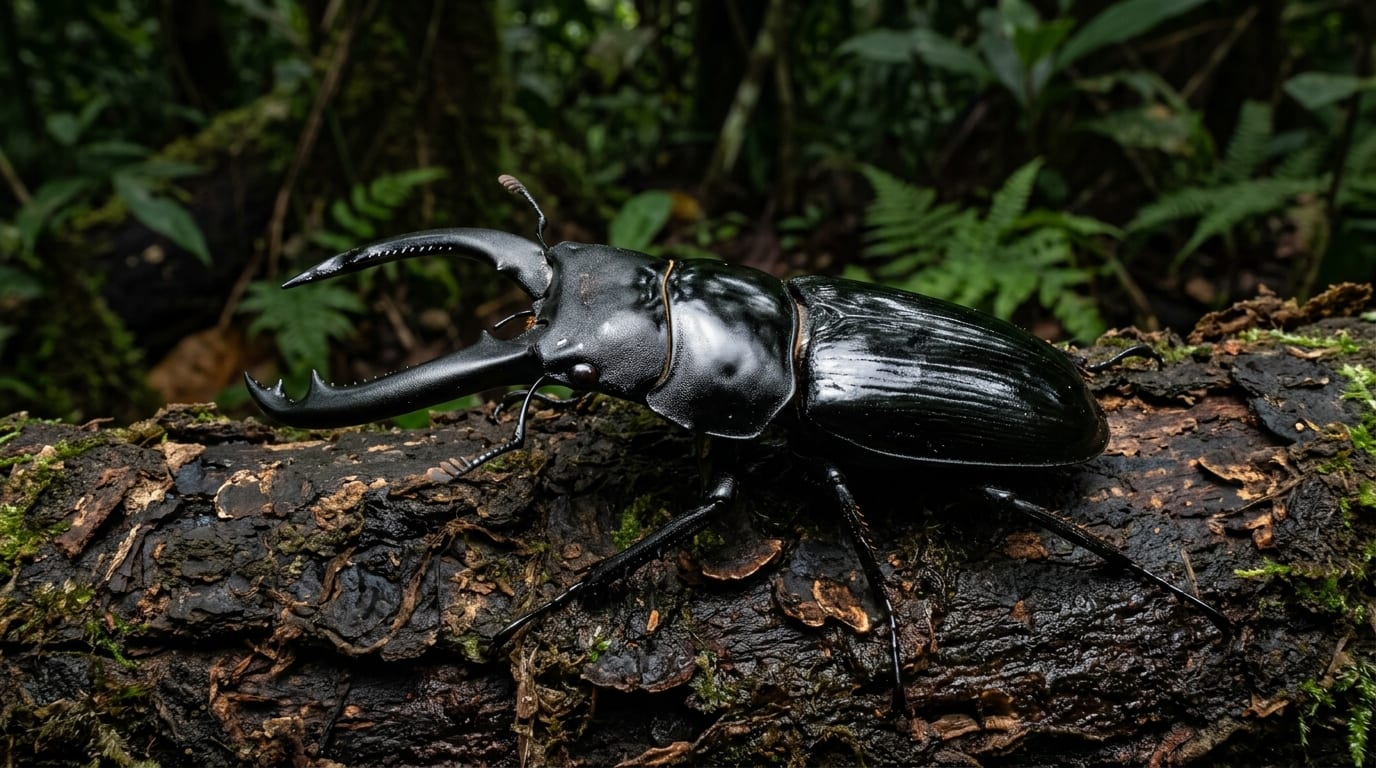
The Regius Giant Shining Stag Beetle is one of the signature species in the genus Mesotopus, slightly smaller and slimmer than its close relative, the Tarandus Giant Shining Stag Beetle. Its mandibles curve more gently and extend forward in a long, streamlined shape that gives the beetle a sleek, elegant look. With its glossy black body and generally calm temperament, it's a rewarding species to observe up close. Adults are active for only a few months, so attentive day-to-day care matters once you bring one home. Because keeping this species well means staying on top of temperature and humidity, it's generally considered a beetle for keepers with some prior experience.
View Regius Giant Shining Stag Beetle encyclopedia →0% commission on your first sales!Register by September 30, 2026 and your first 2 sales are commission-free!
Breeder Wanted!
List on BreederDirect and sell directly to customers nationwide!
6 Transparency Standards You Can Trust
When listing Insects, Breeders disclose the following. We guarantee transparency on growth stage and breeding unit.
- Life Stage Clarity
- Generation Info
- Real Photos
- Breeding Unit
- Country of Origin
- Body Length (mm)
Browse all 296 breeds
Verified breeders wanted for Insects
Breeders are signing up now ahead of launch. Subscribe to be notified when new listings go live.
Getting alerts is free with a member account. When new listings match your saved search, we'll notify you by email and in-app.
Browse other categories
Verified breeders (preview)
Regius Giant Shining Stag Beetle key facts
- Care level
- Intermediate
- Lifespan
- A few months as an adult
- Size
- Captive record 96.4mm, wild record 93.0mm
- Diet
- Adults take tree sap and beetle jelly; larvae are reared in Coriolus mycelium bottles
- Temperature & Humidity
- Mesotopus lives in the central African rainforest, and for the genus the substrate is kept on the dry side, with a temperature in the twenties considered right. The Coriolus medium also degrades quickly.
- Breeding & Egg-laying
- As with Allotopus, the beetle lays into Coriolus or Ganoderma logs and into Coriolus medium, and the larvae develop in Coriolus mycelium bottles. Since that was worked out the species has been fairly easy to keep given the right materials. The captive record stands at 96.4 mm.
- Cohabitation
- Members of the genus will fight their own kind and other stag beetles alike, and both sexes grip very hard, so the beetles are never housed together and handling calls for care. Because its rank relative to M. tarandus is disputed, the two should not be crossed or housed together.
- Lifespan & Rearing Period
- The larvae grow in Coriolus mycelium bottles, but the medium degrades quickly so the replacement interval matters. Once past the early stages the larvae are hardy. The adults live a few months.
- Health & Notes
- Its rank is treated differently by different sources: GBIF keeps it as a full species while others usually fold it into M. tarandus. Keep locality data and breeding lines strictly separate. Importing live Scarabaeoidea requires the species identification certificate.
About Regius Giant Shining Stag Beetle
The Regius Giant Shining Stag Beetle is slightly smaller and slimmer than its relative Mesotopus tarandus, with gently curved mandibles. It suits intermediate keepers, with adults active for only a few months.
7 things to know before welcoming a Regius Giant Shining Stag Beetle
1Suited to Intermediate Keepers
The Regius Giant Shining Stag Beetle is considered an intermediate-level species, since keeping it healthy calls for attention to temperature and humidity swings. Keepers with some prior stag beetle experience should find it manageable.
2Slender Body, Elongated Jaws
Compared with its close relative, the Tarandus Giant Shining Stag Beetle, this species is slightly smaller and slimmer. Its mandibles curve gently and extend forward in a long, streamlined shape.
3Adults Are Active for Months
Adults remain active for only a few months. Plan on checking temperature, humidity, and general condition regularly once you bring one home, since that active period is relatively short.
4Temperature and Humidity Matter
Sudden temperature swings and dryness can easily affect this beetle's condition, so keep the enclosure out of direct sunlight and away from air-conditioning drafts. Check the substrate regularly and keep it appropriately moist.
5A Generally Calm Temperament
Beetles in this genus tend to have a fairly calm temperament, though their mandibles are still powerful, so take care not to get pinched when handling one. It's best to let the beetle set the pace rather than forcing interaction.
6Size Varies by Individual
Body size varies from individual to individual — the known records are 96.4 mm for captive-bred specimens and 93.0 mm in the wild. Beetles you actually bring home may well be smaller, so treat these records as a rough reference rather than a guarantee.
7Prepare the Enclosure First
Before bringing one home, prepare an enclosure with insect substrate, some footholds so the beetle can right itself if it tips over, and a food dish. Setting up the space and care routine in advance makes the transition smoother.
Frequently asked questions about Regius Giant Shining Stag Beetle
- Q.Can a beginner keep a Regius Giant Shining Stag Beetle?
- A.This species is considered intermediate-level, requiring some attention to temperature and humidity management. Keepers with prior stag beetle experience should find it approachable.
- Q.How does it differ from the Tarandus Giant Shining Stag Beetle?
- A.The Regius is slightly smaller and slimmer than the Tarandus, with more gently curved mandibles. Its long, forward-extending, streamlined jaw shape is a key way to tell the two apart.
- Q.How long do adults stay active?
- A.Adults are typically active for only a few months. Keep up with day-to-day care once you bring one home, since that window of activity is relatively short.
- Q.How large can it grow?
- A.Records show sizes of 96.4 mm for captive-bred and 93.0 mm for wild specimens. Individual variation is significant, though, and smaller individuals are common.
- Q.Is it subject to CITES?
- A.The Regius Giant Shining Stag Beetle is not subject to CITES.
Useful tools for Regius Giant Shining Stag Beetle care
Learn more about Regius Giant Shining Stag Beetle in the encyclopedia
View Regius Giant Shining Stag Beetle encyclopedia entry →
Care difficulty, lifespan, size and diet — all basics covered.
More in this category
Can't find the one you're looking for?
Post your wishes for free and breeders with matching animals will contact you with introductions.