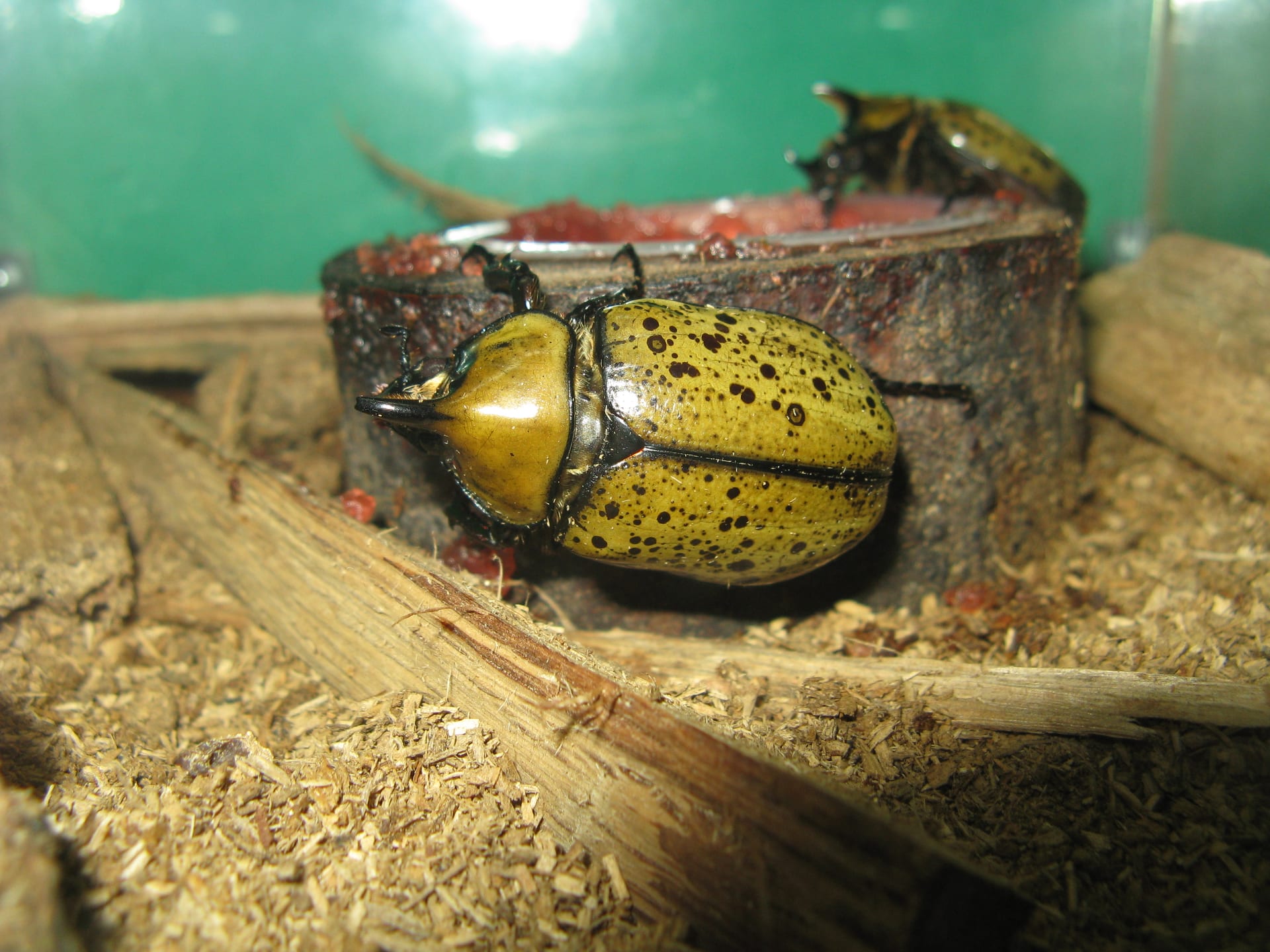
 © KENPEI / CC BY-SA 3.0
Hyllus Rhinoceros Beetle
The Hyllus rhinoceros beetle is a striking Mexican species known for its pale creamy-yellow elytra scattered with black speckles. Among the Dynastes group native to North America, it ranks as one of the largest, with males typically reaching 42 to 90mm and exceptional captive-bred specimens recorded in the upper 90s, including one report in the 98mm class. Its temperament is generally calm, and its hardiness makes it forgiving for keepers who are new to beetle care as long as the basics of husbandry are followed. Because its life cycle, including the larval stage, spans a long single generation, keepers can enjoy watching it grow and develop over an extended period.
View Hyllus Rhinoceros Beetle encyclopedia →0% commission on your first sales!Register by September 30, 2026 and your first 2 sales are commission-free!
Breeder Wanted!
List on BreederDirect and sell directly to customers nationwide!
6 Transparency Standards You Can Trust
When listing Insects, Breeders disclose the following. We guarantee transparency on growth stage and breeding unit.
- Life Stage Clarity
- Generation Info
- Real Photos
- Breeding Unit
- Country of Origin
- Body Length (mm)
Browse all 296 breeds
Verified breeders wanted for Insects
Breeders are signing up now ahead of launch. Subscribe to be notified when new listings go live.
Getting alerts is free with a member account. When new listings match your saved search, we'll notify you by email and in-app.
Browse other categories
Verified breeders (preview)
Hyllus Rhinoceros Beetle key facts
- Care level
- Intermediate
- Lifespan
- Adults 4-8 months
- Size
- Males 42-90mm (recorded above 97mm), females 52-61mm
- Temperature
- 18℃
- Diet
- Adults take beetle jelly; larvae eat fermented substrate
- Temperature & Humidity
- In the wild it occurs mainly between 1,000 and 1,600 metres, and for the congeneric D. grantii it is reported that the beetle cannot survive above 30C. Keep the substrate at a moisture that forms a ball when squeezed.
- Breeding & Egg-laying
- The female builds an egg chamber in firmly packed substrate at the base of the container. The larvae run about twenty percent larger than those of D. grantii. The BE-KUWA 2025 edition lists a captive record of 98.2mm for the nominate subspecies (Shinichi Sugimoto, registered 2012, expected maximum 105mm).
- Cohabitation
- Adults are kept singly and put together only for pairing. Males fight with their horns and must always be separated. Do not mix beetles of different localities or subspecies.
- Lifespan & Rearing Period
- In the wild adults appear from May to November and are active chiefly from July to October.
- Health & Notes
- In 2001 it was reckoned second only to the congeneric D. satanas in rarity in Japan, but captive-bred beetles now circulate. Wild beetles are usually 55-60mm, so do not expect the size of large captive stock. Importing foreign rhinoceros beetles falls under the Plant Protection Act, and whether a given species may enter depends on the country it comes from, so domestically bred stock is the safe choice.
About Hyllus Rhinoceros Beetle
A large Mexican rhinoceros beetle with pale creamy-yellow elytra marked by black spots. One of the largest North American Dynastes species, males reach 42-90mm, and its hardiness makes it easy for beginners to keep.
7 things to know before welcoming a Hyllus Rhinoceros Beetle
1Pale Coloring, Large Build
The elytra are pale creamy-yellow with scattered black spots, giving this species a distinctive look among white rhinoceros beetles. Males typically grow to 42-90mm, and captive-bred giants have been recorded exceeding 97mm, with one report reaching the 98mm class.
2Generally Calm Temperament
Hyllus rhinoceros beetles tend to have a relatively calm temperament, making them easier to handle than some other beetle species. That said, individual personalities vary, so it's best to get to know each beetle gradually.
3Hardy and Beginner-Friendly
This species is considered beginner-friendly, and with consistent basic care it tends to thrive without major issues. It's often recommended as a good starter species for those new to keeping beetles.
4A Long Single Generation
A full generation from egg to death has been recorded at roughly 675 days in some cases and around 1109 days in others under captive conditions, meaning this species can take a long time to complete its life cycle. Data specifically on adult-only lifespan, however, has not been established.
5Setting Up the Enclosure
Because this is a large beetle, it helps to prepare an enclosure with reasonable width and depth. Keep the substrate moderately moist and place the case somewhere temperatures won't swing to extremes.
6Insect Jelly Is the Staple Food
The adult beetle's main food is commercial insect jelly, which should be replaced regularly so it never runs out. During the larval stage, a well-balanced fermented substrate is commonly used for feeding.
7What to Prepare Beforehand
Before bringing one home, it helps to have the basics ready in advance — an enclosure, insect substrate, a climbing branch, and insect jelly. Since this is a large species, it's a good idea to choose a case with some extra room to accommodate its adult size.
Frequently asked questions about Hyllus Rhinoceros Beetle
- Q.Can beginners keep a Hyllus rhinoceros beetle?
- A.Yes, this species is considered beginner-friendly and tends to thrive with basic, consistent care. It's often recommended as a good starter species for first-time beetle keepers.
- Q.How large does a Hyllus rhinoceros beetle grow?
- A.Males typically grow to around 42-90mm, and captive-bred individuals have been recorded exceeding 97mm, with one report reaching the 98mm class. Growth varies between individuals, so these figures should be taken as general guidance.
- Q.How long does a Hyllus rhinoceros beetle live?
- A.A full generation from egg to death has been recorded at roughly 675 days in some cases and around 1109 days in others under captive conditions. Data specifically on adult-only lifespan has not been established.
- Q.Is its temperament aggressive?
- A.It's generally considered to have a calm temperament and is said to be easier to handle than some other beetle species. That said, individual personalities vary, so it's best to interact with each beetle gradually.
- Q.Is the Hyllus rhinoceros beetle covered by CITES?
- A.No, the Hyllus rhinoceros beetle is not covered by CITES. This is worth keeping in mind if you're considering keeping one.
Useful tools for Hyllus Rhinoceros Beetle care
Learn more about Hyllus Rhinoceros Beetle in the encyclopedia
View Hyllus Rhinoceros Beetle encyclopedia entry →
Care difficulty, lifespan, size and diet — all basics covered.
More in this category
Can't find the one you're looking for?
Post your wishes for free and breeders with matching animals will contact you with introductions.