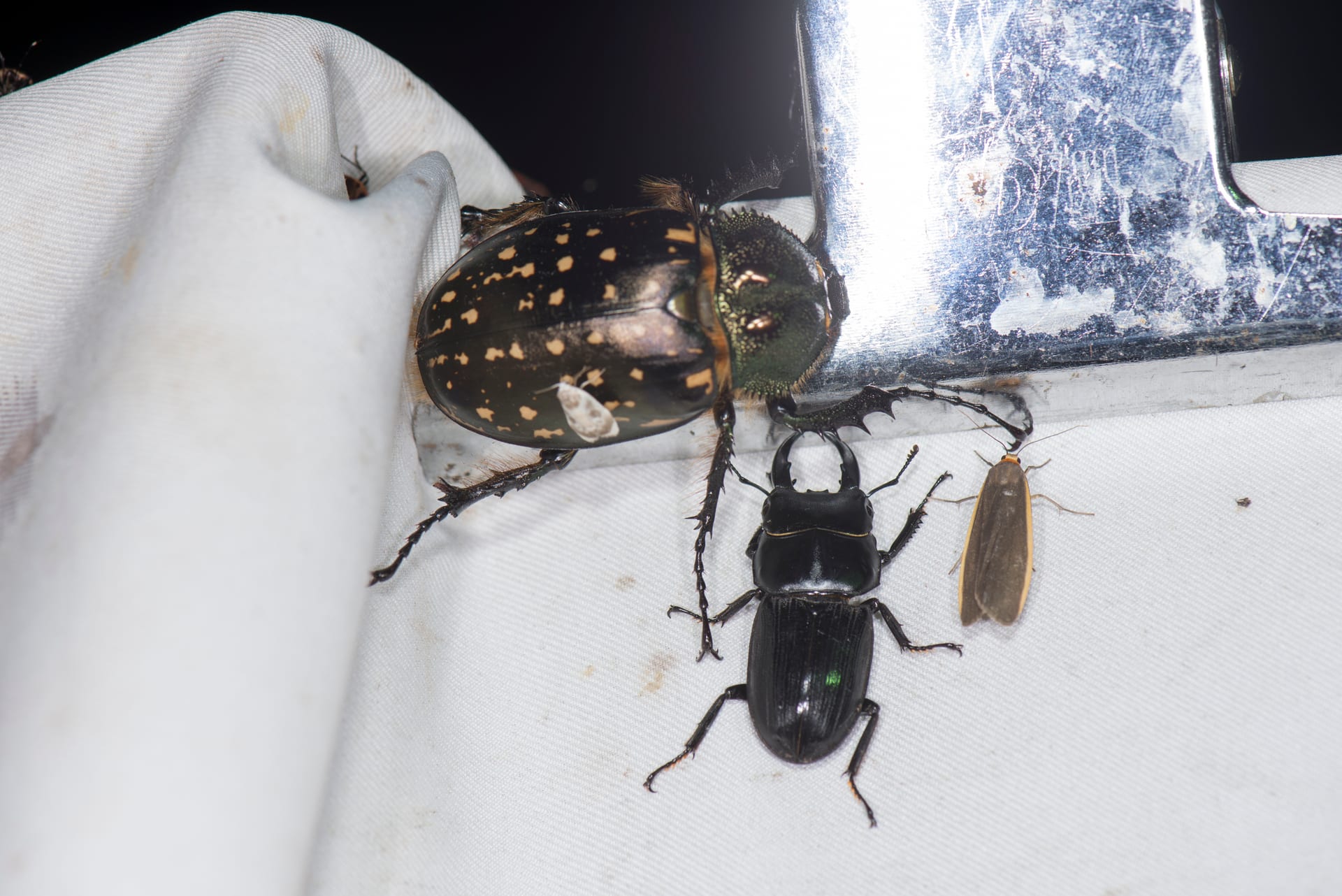
 © LiCheng Shih / CC BY 2.0
Schenkling's Giant Stag Beetle
Schenkling's Giant Stag Beetle is a large stag beetle species endemic to Taiwan. With a sturdy build reminiscent of a scaled-up Dorcus rectus (kokuwagata), males can reach up to 92 mm, making it one of the largest stag beetles found in Taiwan. Its temperament tends to be somewhat aggressive, so keeping individuals singly is standard practice. Because the species is protected in its native Taiwan, the beetles available in Japan are captive-bred descendants raised through generations. Considered suitable for intermediate-level keepers, its imposing size and powerful mandibles make it a rewarding species for hobbyists with some prior stag beetle experience.
View Schenkling's Giant Stag Beetle encyclopedia →0% commission on your first sales!Register by September 30, 2026 and your first 2 sales are commission-free!
Breeder Wanted!
List on BreederDirect and sell directly to customers nationwide!
6 Transparency Standards You Can Trust
When listing Insects, Breeders disclose the following. We guarantee transparency on growth stage and breeding unit.
- Life Stage Clarity
- Generation Info
- Real Photos
- Breeding Unit
- Country of Origin
- Body Length (mm)
Browse all 296 breeds
Verified breeders wanted for Insects
Breeders are signing up now ahead of launch. Subscribe to be notified when new listings go live.
Getting alerts is free with a member account. When new listings match your saved search, we'll notify you by email and in-app.
Browse other categories
Verified breeders (preview)
Schenkling's Giant Stag Beetle key facts
- Care level
- Intermediate
- Lifespan
- Adults 1-3 years
- Size
- Males 35-92mm, females 40-50mm
- Temperature
- 18℃
- Diet
- Beetle jelly; larvae on fungus bottles or fermented substrate
- Temperature & Humidity
- Room temperature works. Keep summers below 30C; activity slows under 18C. A highland species, so beware of heat.
- Breeding & Egg-laying
- Eggs are laid in decaying logs or fermented substrate; rear larvae on fungus bottles. Males may attack females even after mating, so pair briefly under supervision.
- Cohabitation
- Fierce-tempered; house both sexes singly and never with other species.
- Lifespan & Rearing Period
- No species-specific source for lifespan or larval period. As is usual in Dorcus, adults live several years.
- Health & Notes
- Category II protected in Taiwan; collection and sale are banned. Japanese stock is captive-bred only, so verify the line's origin.
About Schenkling's Giant Stag Beetle
Discover the traits, temperament, and care basics of Schenkling's Giant Stag Beetle, a large species endemic to Taiwan. Males reach up to 92 mm, it's not subject to CITES, and it suits intermediate-level keepers.
7 things to know before welcoming a Schenkling's Giant Stag Beetle
1Keep Them Solo
Schenkling's Giant Stag Beetles have an aggressive temperament, and housing multiple individuals in the same case can lead to serious fighting. This applies not only between males but also between males and females. As a rule, house each beetle in its own separate container.
2Mimic Its Native Climate
Native to Taiwan, this species tends to prefer warmer conditions than Japan's average climate. Take particular care in winter to prevent the enclosure from getting too cold, and avoid sudden temperature swings.
3Powerful Size and Jaws
Males can reach up to 92 mm, making this Taiwan's largest stag beetle species, and its powerful mandibles are a major highlight. Handle it carefully during maintenance, as a bite from those jaws can deliver a strong pinch.
4Captive-Bred Lineage
Because this species is protected in its native Taiwan, the individuals available in Japan are captive-bred descendants raised through generations. Knowing this background can deepen your appreciation as you care for one.
5Best for Experienced Keepers
This species is generally considered suitable for intermediate-level keepers. Because managing temperature, humidity, and the particular needs of a large-bodied species takes some know-how, it's best to have some basic stag beetle keeping experience first.
6Size Difference Between Sexes
Males range from 35 to 92 mm while females range from 40 to 50 mm, showing much greater size variation among males. Keep in mind that individuals of the same species can differ quite a bit in size.
7Prepare a Suitable Enclosure
Since this is a large-bodied species, it's reassuring to prepare a reasonably spacious case and appropriate insect substrate in advance. Set up your enclosure and environment before bringing one home.
Frequently asked questions about Schenkling's Giant Stag Beetle
- Q.Can beginners keep this species?
- A.This species is generally rated as suitable for intermediate-level keepers rather than complete beginners. It's best to gain some basic stag beetle keeping experience first, since managing temperature, humidity, and its aggressive temperament requires a bit of know-how.
- Q.How much do males and females differ in size?
- A.Males range from 35 to 92 mm, while females range from 40 to 50 mm. Males show especially wide variation in size, and the largest individuals rank among Taiwan's biggest stag beetles.
- Q.Is it aggressive, and can multiple beetles be kept together?
- A.Yes, this species has a somewhat aggressive temperament, and housing multiple individuals together in one case can lead to fighting. Both males and females are best kept one per enclosure.
- Q.How long does it live?
- A.Like other stag beetles, this species spends time as a larva before emerging as an adult, which then remains active for a period of time. The exact duration varies by individual and rearing conditions, so it's best to keep an eye on how each beetle is doing.
- Q.Are there any legal restrictions on this species?
- A.Schenkling's Giant Stag Beetle is not subject to CITES. The individuals available in Japan are captive-bred descendants raised through generations.
Useful tools for Schenkling's Giant Stag Beetle care
Learn more about Schenkling's Giant Stag Beetle in the encyclopedia
View Schenkling's Giant Stag Beetle encyclopedia entry →
Care difficulty, lifespan, size and diet — all basics covered.
More in this category
Can't find the one you're looking for?
Post your wishes for free and breeders with matching animals will contact you with introductions.