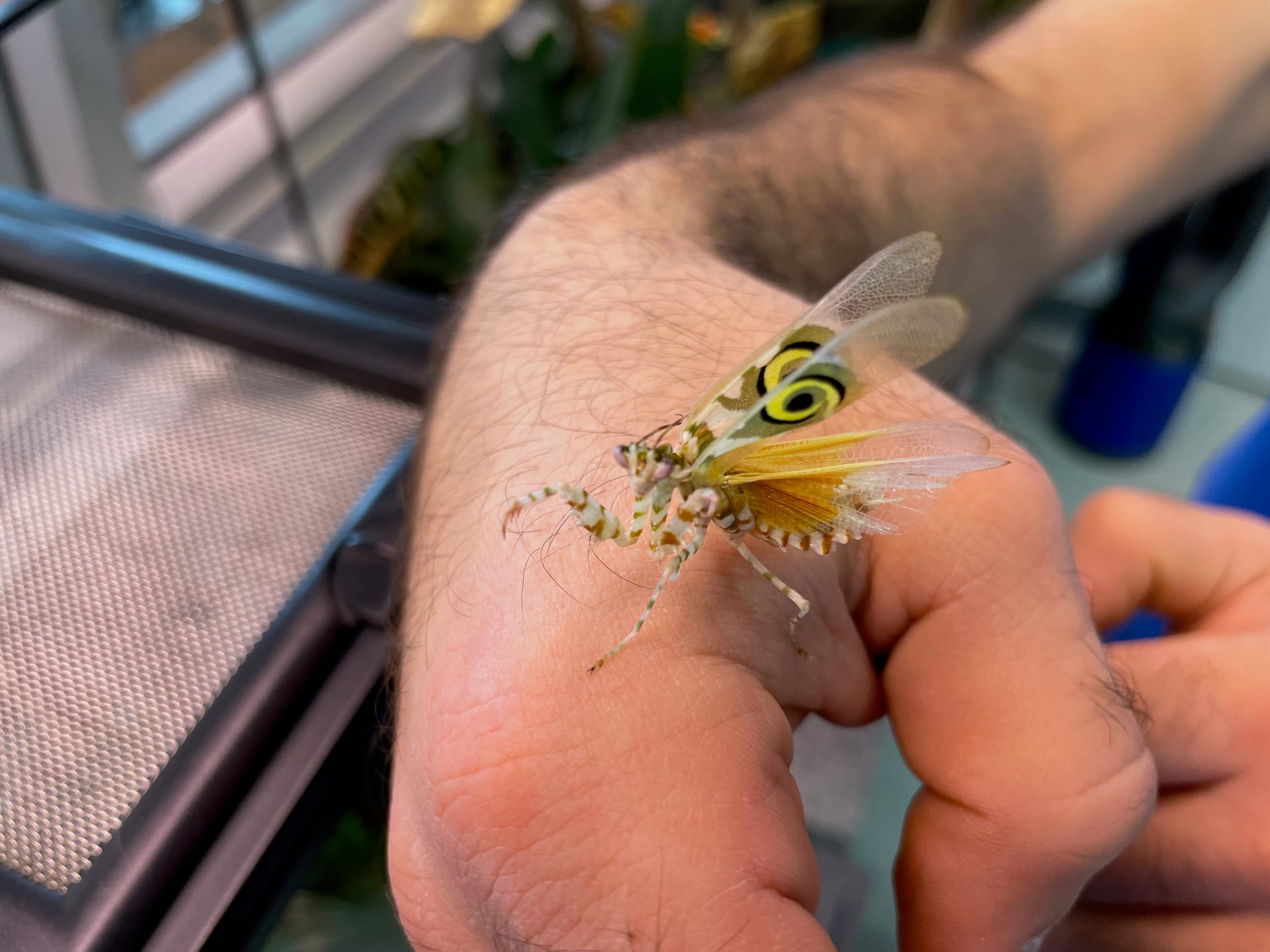
 © Fungus Guy / CC BY-SA 4.0
Banded Flower Mantis
The Banded Flower Mantis is a striking flower mantis native to Southeast Asia. Its name comes from the wide white band running across its forewings, paired with green-and-white mottled patterning and vivid orange hindwings. Newly hatched first-instar nymphs are colored red and black, mimicking ants for protection as they grow. Males and females differ noticeably in size, with females reaching up to about 5cm. Watching one lie in wait among flowers for its prey has a quiet intensity that suits keepers who already have some mantis-keeping experience.
View Banded Flower Mantis encyclopedia →0% commission on your first sales!Register by September 30, 2026 and your first 2 sales are commission-free!
Breeder Wanted!
List on BreederDirect and sell directly to customers nationwide!
6 Transparency Standards You Can Trust
When listing Insects, Breeders disclose the following. We guarantee transparency on growth stage and breeding unit.
- Life Stage Clarity
- Generation Info
- Real Photos
- Breeding Unit
- Country of Origin
- Body Length (mm)
Browse all 296 breeds
Verified breeders wanted for Insects
Breeders are signing up now ahead of launch. Subscribe to be notified when new listings go live.
Getting alerts is free with a member account. When new listings match your saved search, we'll notify you by email and in-app.
Browse other categories
Verified breeders (preview)
About Banded Flower Mantis
A Southeast Asian flower mantis known for the white band across its forewings and vivid orange hindwings. Nymphs mimic ants, and males and females differ notably in size — a species suited to intermediate keepers.
7 things to know before welcoming a Banded Flower Mantis
1Nymphs Mimic Ants
Newly hatched first-instar nymphs are colored red and black, mimicking ants to avoid predators. They look very different from the adults and are small enough to slip through case gaps or ventilation mesh, so check enclosures carefully.
2The Band That Gives It Its Name
The wide white band crossing the forewings gives this mantis its "banded" name. It combines green-and-white mottling with vivid orange hindwings, and the pattern becomes clearer as it matures.
3Males and Females Differ in Size
Females grow larger than males, reaching up to about 5cm. This size difference comes with different growth rates and lifespans — males live up to about 6 months, females up to about a year.
4Best Kept Individually
Mantises are aggressive and prone to cannibalism, so it's best to house each individual in its own separate enclosure. Housing them together also risks the female preying on the male.
5Watch for Molting Trouble
They grow by molting repeatedly through each life stage. Molting leaves them vulnerable, so keep the enclosure calm and provide sturdy perches or mesh they can grip securely.
6Needs Live Insect Prey
As a predator that feeds on live insects like crickets, you'll need a steady supply of live feeder insects on hand. Adjust prey size to match the mantis's growth stage.
7Suited to Intermediate Keepers
The Banded Flower Mantis is considered suited to intermediate keepers. Having some basic insect-keeping experience — enclosure setup, perches, humidity management — will help things go smoothly.
Frequently asked questions about Banded Flower Mantis
- Q.Can beginners keep this species?
- A.The Banded Flower Mantis is considered suited to intermediate keepers. Some prior insect-keeping experience will make it easier to care for.
- Q.How long does it live?
- A.Males live up to about 6 months, while females live up to about a year, so the two sexes differ noticeably in how long you'll keep them.
- Q.Is it true that males and females differ in size?
- A.Yes. Females grow larger than males, reaching up to about 5cm, and this also affects their growth rate and lifespan.
- Q.What should I feed it?
- A.Feed it live insects such as crickets. As a carnivore it needs live prey, sized to match its current growth stage.
- Q.Are there any legal restrictions on buying or keeping it?
- A.The Banded Flower Mantis is not subject to CITES.
Useful tools for Banded Flower Mantis care
Learn more about Banded Flower Mantis in the encyclopedia
View Banded Flower Mantis encyclopedia entry →
Care difficulty, lifespan, size and diet — all basics covered.
More in this category
Can't find the one you're looking for?
Post your wishes for free and breeders with matching animals will contact you with introductions.