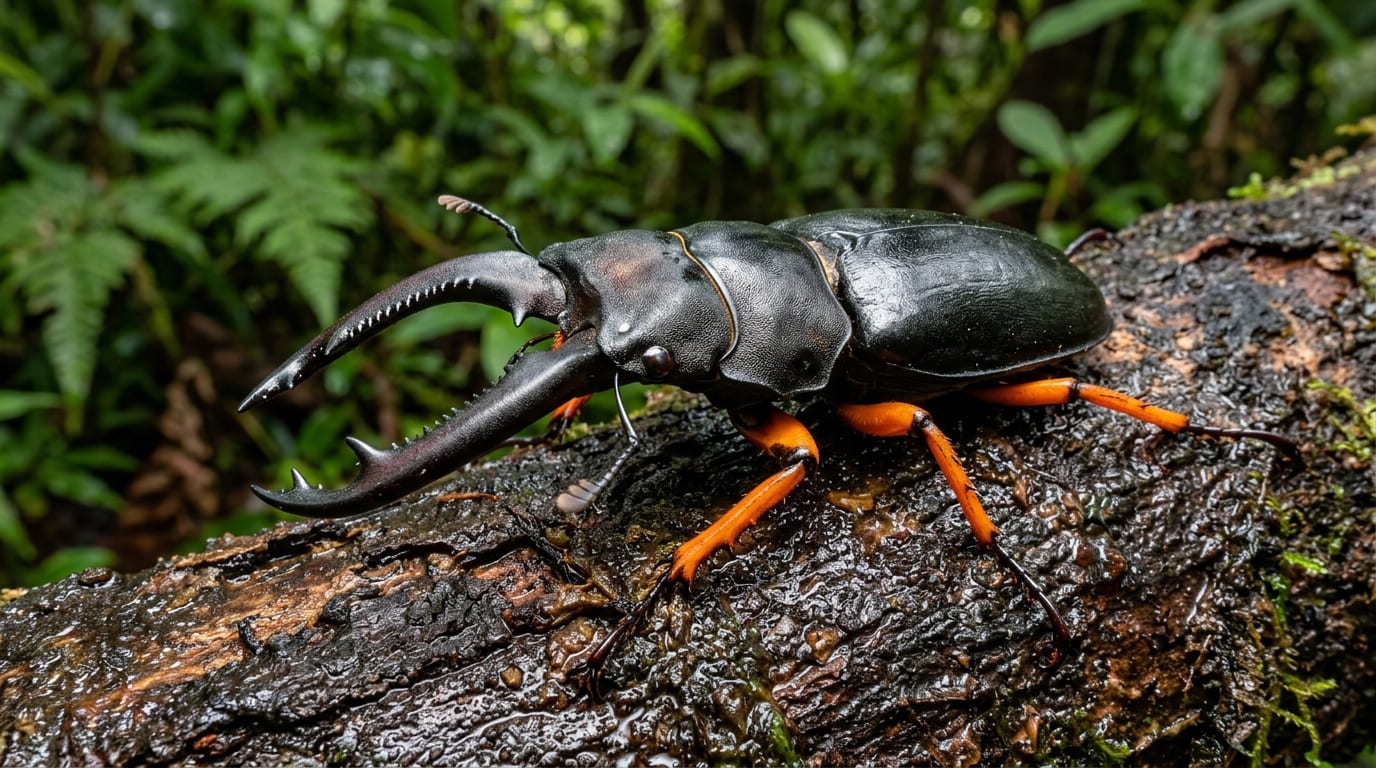
Imperial Shining Stag Beetle
The Imperial Shining Stag Beetle is best known for its bright orange legs contrasted against jet-black, metallic-sheened elytra. Its mandibles carry a row of fine, saw-like inner teeth, with a larger forked tooth set near the tip — a distinctive feature that sets it apart from other shining stag beetles. Native to the forests of northern Borneo and the Philippines, the species includes some notably large individuals in the wild. Beetles of this kind tend to be feisty and require confident handling, making this a species best suited to experienced keepers. Adults are active for only a few months, so keepers who take one on should be ready to enjoy that short window closely.
View Imperial Shining Stag Beetle encyclopedia →Breeder Wanted!
List on BreederDirect and sell directly to customers nationwide!
BreederDirect's 6 Transparency Commitments
When listing Insects, Breeders disclose the following. We guarantee transparency on growth stage and breeding unit.
- Life Stage Clarity
- Generation Info
- Real Photos
- Breeding Unit
- Country of Origin
- Body Length (mm)
Browse all 336 breeds
Verified breeders wanted for Insects
Breeders are signing up now ahead of launch. Subscribe to be notified when new listings go live.
Getting alerts is free with a member account. When new listings match your saved search, we'll notify you by email and in-app.
Browse other categories
Verified breeders (preview)
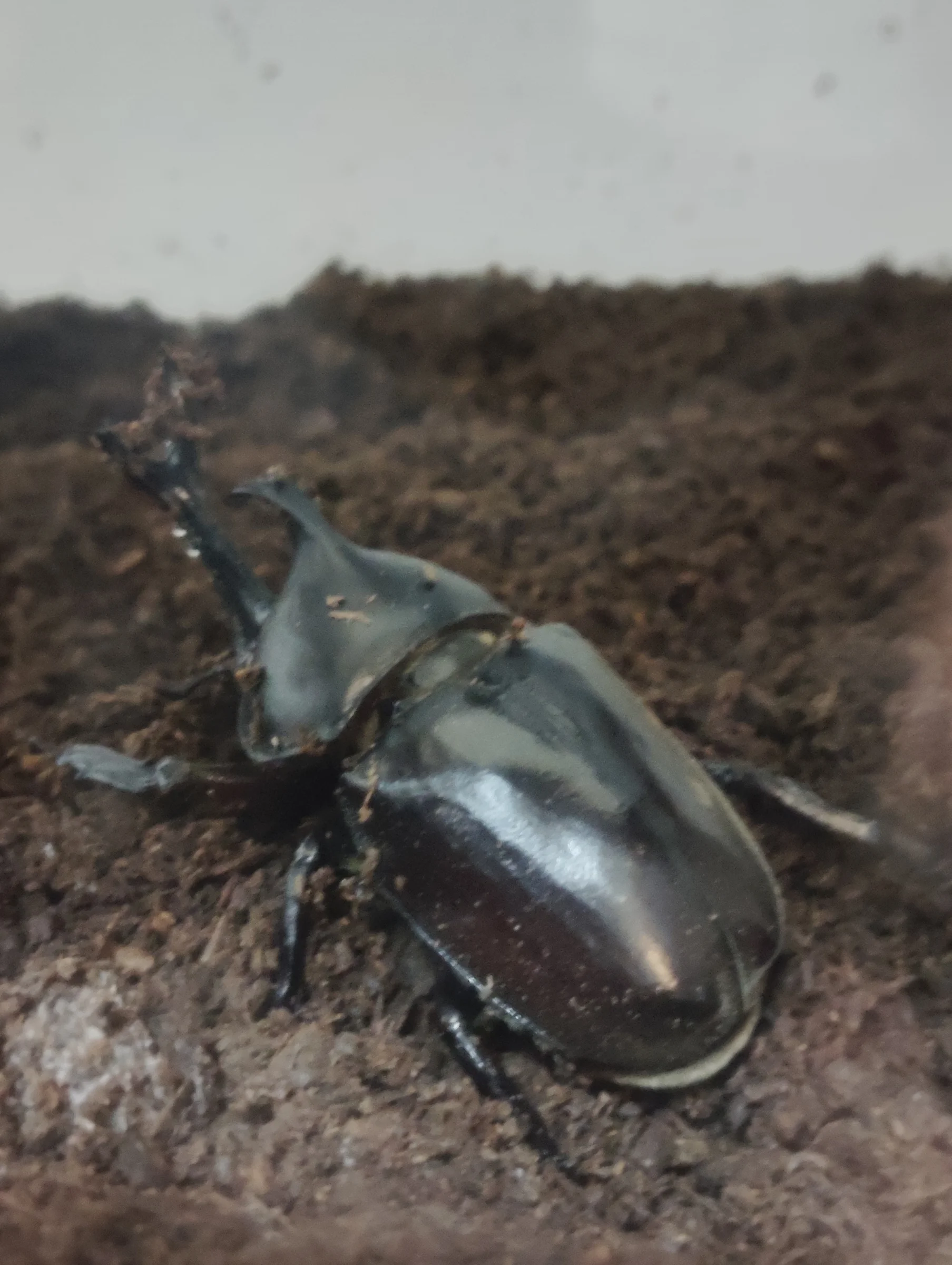
Imperial Shining Stag Beetle key facts
- Care level
- Advanced
- Lifespan
- A few months as an adult
- Size
- Captive record 50.0mm for the nominate form; wild record 72.3mm
- Diet
- Adults take fermented sap of broadleaf trees and beetle jelly; larvae eat humus close to soil
- Temperature & Humidity
- Odontolabis adults and larvae alike tolerate cold poorly and are said to be unable to survive a winter on mainland Japan or further north. Do not let the substrate dry out.
- Breeding & Egg-laying
- With a captive record of 50.0 mm against a wild record of 72.3 mm, the way to finish large individuals has not been worked out. The larvae eat humus close to soil, so the usual substrates for the genus apply, spent substrate mixed with the remains of mycelium or nitrogen-rich rhinoceros-beetle substrate, with red-rotted flake worth trying if no eggs are obtained.
- Cohabitation
- Male Odontolabis are for the most part short-tempered and combative, and a male will sometimes kill a female he does not take to. Several are never kept together and each beetle is housed alone. The larvae too hold their chamber in the humus as territory, attacking and sometimes eating intruders, so they are reared separately.
- Lifespan & Rearing Period
- For the genus, one to two years pass between hatching and pupation and the adults live a few months. Beetles that have been active for about a month and a half are said to start losing tarsi and antennal segments to necrosis at an increasing rate.
- Health & Notes
- Supply is limited and husbandry information scarce, so treat it as a species for advanced keepers. Importing live Scarabaeoidea requires the species identification certificate. Odontolabis larvae compete strongly with other species, so the beetles must never be released or abandoned outdoors.
About Imperial Shining Stag Beetle
Imperial Shining Stag Beetle: orange legs, glossy black elytra, and a forked inner tooth on its mandibles. Native to northern Borneo and the Philippines, it's an advanced-keeper species.
7 things to know before welcoming a Imperial Shining Stag Beetle
1An Advanced-Keeper Species
The Imperial Shining Stag Beetle is considered suitable for experienced keepers only. Its temperature and humidity needs, along with handling its powerful mandibles, call for more careful attention than many other stag beetles. It's best to build up some keeping experience before bringing one home.
2Adults Live Just Months
Adult beetles are active for only a few months. Plan your enclosure setup and feeding schedule in advance so you can make the most of that short window once you bring one home.
3Look for the Forked Tooth
The mandibles carry a row of fine, saw-like inner teeth, with a larger tooth split into two prongs near the tip. This forked tooth is a key feature for telling it apart from related species.
4Size Varies by Individual
Captive-bred records for the nominate subspecies run around 50.0 mm, while wild-caught records reach as large as 72.3 mm. Size varies with rearing conditions and genetics, so it's worth focusing on an individual's overall health rather than length alone.
5Keep Males Separated
As with stag beetles generally, two males housed together may fight using their mandibles. The Imperial Shining Stag Beetle is no exception, so housing them individually is the safer default.
6Recreate Its Habitat
Native to the forests of northern Borneo and the Philippines, this species favors warm, humid conditions. Avoid letting the substrate dry out or exposing it to sudden temperature swings, and try to keep conditions close to its natural range.
7Gear Up Before Arrival
Before bringing one home, prepare an appropriately sized enclosure, insect mat, and equipment for temperature control. Since this species has notably large mandibles, it also helps to get comfortable handling it safely.
Frequently asked questions about Imperial Shining Stag Beetle
- Q.Is this beetle suitable for first-time keepers?
- A.This species is generally considered suitable for experienced keepers rather than beginners. Managing temperature and humidity, along with handling its large mandibles safely, calls for some prior insect-keeping experience.
- Q.How long do adults live?
- A.Adults are typically active for only a few months. Because that window is short, it helps to have the enclosure and care routine ready before you bring one home.
- Q.How large does it get?
- A.Captive-bred records for the nominate subspecies are around 50.0 mm, while wild-caught records reach up to 72.3 mm. Size varies by individual and rearing conditions, so treat these figures as a general guide rather than a guarantee.
- Q.Where is this species from?
- A.It's native to northern Borneo and the Philippines. Since its natural range is tropical, it's a good idea to keep husbandry conditions warm and humid.
- Q.Can I keep more than one together?
- A.Males may fight with their mandibles if housed together, so it's best to keep each beetle in its own enclosure. Separate housing also reduces the risk of injury.
Useful tools for Imperial Shining Stag Beetle care
Learn more about Imperial Shining Stag Beetle in the encyclopedia
View Imperial Shining Stag Beetle encyclopedia entry →
Care difficulty, lifespan, size and diet — all basics covered.
More in this category
Can't find the one you're looking for?
Post your wishes for free and breeders with matching animals will contact you with introductions.