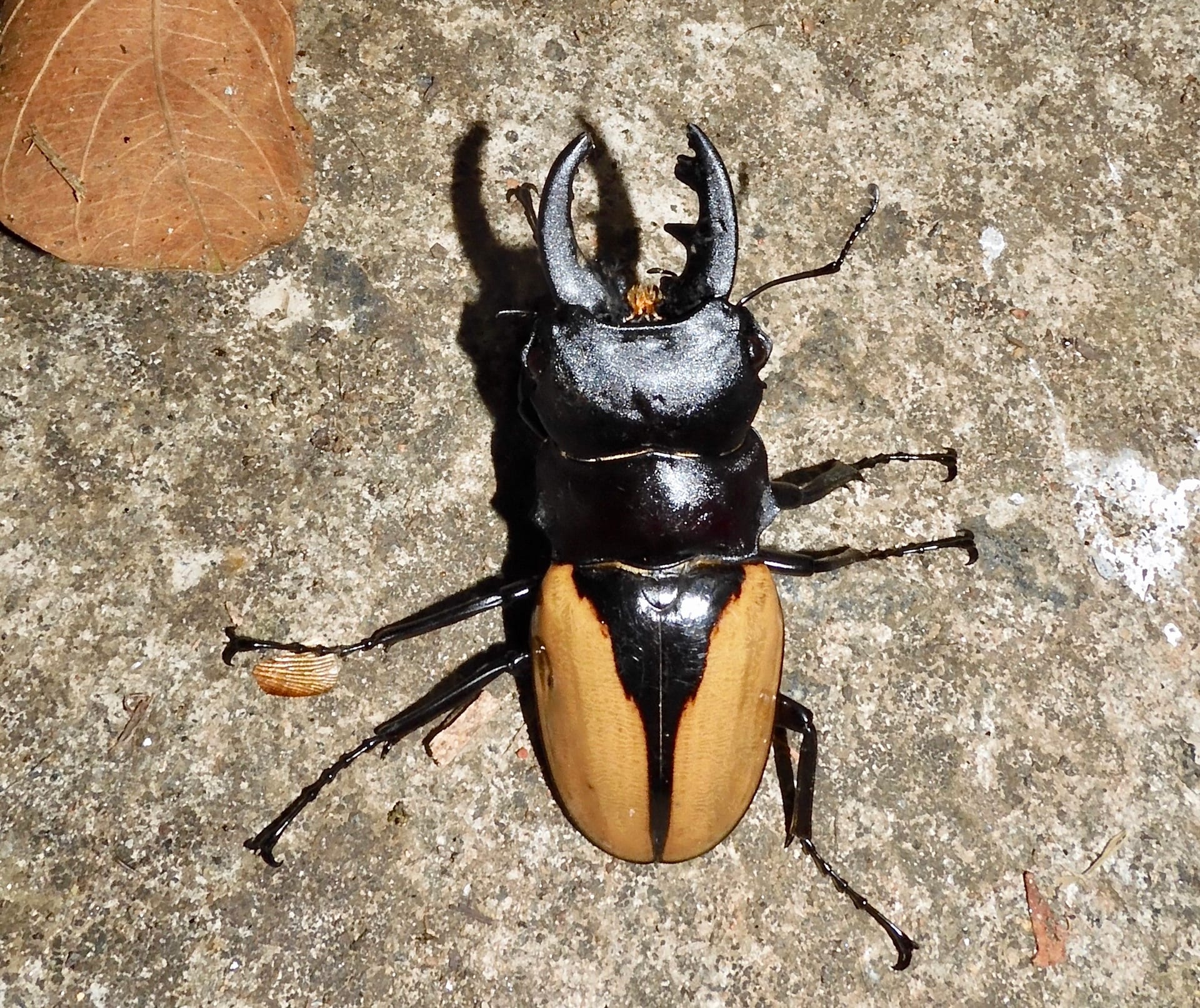
 © Seema Merchant / CC BY 4.0
Burmeister's shining stag beetle
Burmeister's shining stag beetle is a large stag beetle native to southern India, and in captivity it's considered the biggest species in its genus, with a recorded maximum of 109.9mm for males and 64.7mm for females. It breeds relatively easily on standard beetle-larvae substrate, making it one of the more approachable species in its genus to raise from egg to adult. Its glossy body and bold mandibles give it real presence, while the one-to-two-year larval stage lets keepers watch its growth unfold slowly before the adult's few-month lifespan. Considered an intermediate-level species, it rewards keepers who already have some stag beetle experience.
View Burmeister's shining stag beetle encyclopedia →0% commission on your first sales!Register by September 30, 2026 and your first 2 sales are commission-free!
Breeder Wanted!
List on BreederDirect and sell directly to customers nationwide!
6 Transparency Standards You Can Trust
When listing Insects, Breeders disclose the following. We guarantee transparency on growth stage and breeding unit.
- Life Stage Clarity
- Generation Info
- Real Photos
- Breeding Unit
- Country of Origin
- Body Length (mm)
Browse all 336 breeds
Verified breeders wanted for Insects
Breeders are signing up now ahead of launch. Subscribe to be notified when new listings go live.
Getting alerts is free with a member account. When new listings match your saved search, we'll notify you by email and in-app.
Browse other categories
Verified breeders (preview)
Burmeister's shining stag beetle key facts
- Care level
- Intermediate
- Lifespan
- Adults a few months (genus accounts); 1-2 years from hatching to pupation
- Size
- Captive records 109.9mm (male) and 64.7mm (female); wild record 105.0mm (male)
- Diet
- Adults take sap or beetle jelly; larvae eat nitrogen-rich substrate such as rhinoceros-beetle mat
- Temperature & Humidity
- Odontolabis adults and larvae are cold-sensitive and cannot survive winter temperatures in mainland Japan, so always heat them in winter.
- Breeding & Egg-laying
- It is one of the easier Odontolabis to breed, laying in commercial rhinoceros-beetle substrate. Rear larvae on used substrate mixed with spent fungus-bottle contents or on nitrogen-rich mat, and keep them separate because they defend their tunnels and may attack one another.
- Cohabitation
- Odontolabis are aggressive and males may kill an incompatible female. Never keep several together; house singly and supervise pairings.
- Lifespan & Rearing Period
- Odontolabis adults live a few months, and about six weeks after becoming active their tarsi and antennae start to die back rapidly. Development from hatching to pupation takes one to two years, so pair adults soon after they become active.
- Health & Notes
- Odontolabis are singled out as beetles that must never be allowed to establish outside their native range. Importing foreign stag and rhinoceros beetles is regulated by the Plant Protection Act and the Invasive Alien Species Act (species-name certificate), with each species needing clearance from the Plant Protection Station, so domestically bred stock is the safe choice. Never release captive beetles.
About Burmeister's shining stag beetle
Burmeister's shining stag beetle, native to southern India, grows to the largest size in its genus in captivity — males up to 109.9mm, females up to 64.7mm. It breeds easily and suits intermediate-level keepers.
7 things to know before welcoming a Burmeister's shining stag beetle
1Larvae take 1-2 years
It takes around one to two years from hatching to pupation, so keepers watch this species grow slowly over time. Since the adult stage lasts only a few months, the larval period is a big part of the enjoyment of keeping this beetle.
2Breeds relatively easily
It's known to lay eggs relatively easily on standard commercial beetle-larvae substrate, making it one of the easier species to breed within its genus. That makes it a reasonable choice for keepers who want to try breeding.
3Impressively large records
In captivity this species grows to the largest size in its genus, with a recorded maximum of 109.9mm for males and 64.7mm for females. Captive-bred males can even surpass the wild record of 105.0mm, giving keepers a chance to enjoy truly impressive mandibles.
4Suited to intermediate keepers
This species is considered suitable for intermediate-level keepers rather than complete beginners. Having some prior stag beetle keeping experience will help you raise it with more confidence.
5Native to southern India
This large stag beetle is native to southern India, so care that mimics a stable, warm climate suits it well. Avoid sudden temperature swings and aim to keep conditions consistent.
6Adults live a few months
Once it reaches adulthood, this beetle typically lives for only a few months, much shorter than its long larval stage. That limited adult window makes day-to-day observation especially rewarding.
7Prepare supplies in advance
Before bringing one home, it's a good idea to prepare basic supplies such as a rearing case, insect substrate, and insect jelly. If you plan to raise it from a larva, set aside separate substrate for egg-laying and larval rearing as well.
Frequently asked questions about Burmeister's shining stag beetle
- Q.Can beginners keep this species?
- A.While the basic care isn't overly complicated, this species is generally considered suited to intermediate keepers rather than complete beginners. It helps to have some prior stag beetle keeping experience before bringing one home.
- Q.How large does this species grow?
- A.Captive-bred records reach 109.9mm for males and 64.7mm for females, making it one of the larger species in its genus. The wild record for males stands at 105.0mm.
- Q.How long do adults live?
- A.Adults typically live for a few months. The larval stage, by contrast, lasts one to two years from hatching to pupation, so raising this beetle to adulthood takes patience.
- Q.Is breeding this species difficult?
- A.It's known to lay eggs relatively easily on standard beetle-larvae substrate, making it one of the easier species to breed within its genus. That said, larvae take one to two years to pupate, so breeding requires patience.
- Q.Are there any legal restrictions on this species?
- A.This species is not subject to CITES. Many live foreign Scarabaeoidea (stag beetles, rhinoceros beetles, flower chafers and relatives) are quarantine pests whose import is banned under Japan's Plant Protection Act, and even importable species require a species-name certificate from a foreign government body under the Invasive Alien Species Act (entry only via designated airports, never by international post). Whether a species may enter must be checked with the Plant Protection Station in advance, so choose domestically bred stock and never release captive beetles.
Useful tools for Burmeister's shining stag beetle care
Learn more about Burmeister's shining stag beetle in the encyclopedia
View Burmeister's shining stag beetle encyclopedia entry →
Care difficulty, lifespan, size and diet — all basics covered.
More in this category
Can't find the one you're looking for?
Post your wishes for free and breeders with matching animals will contact you with introductions.