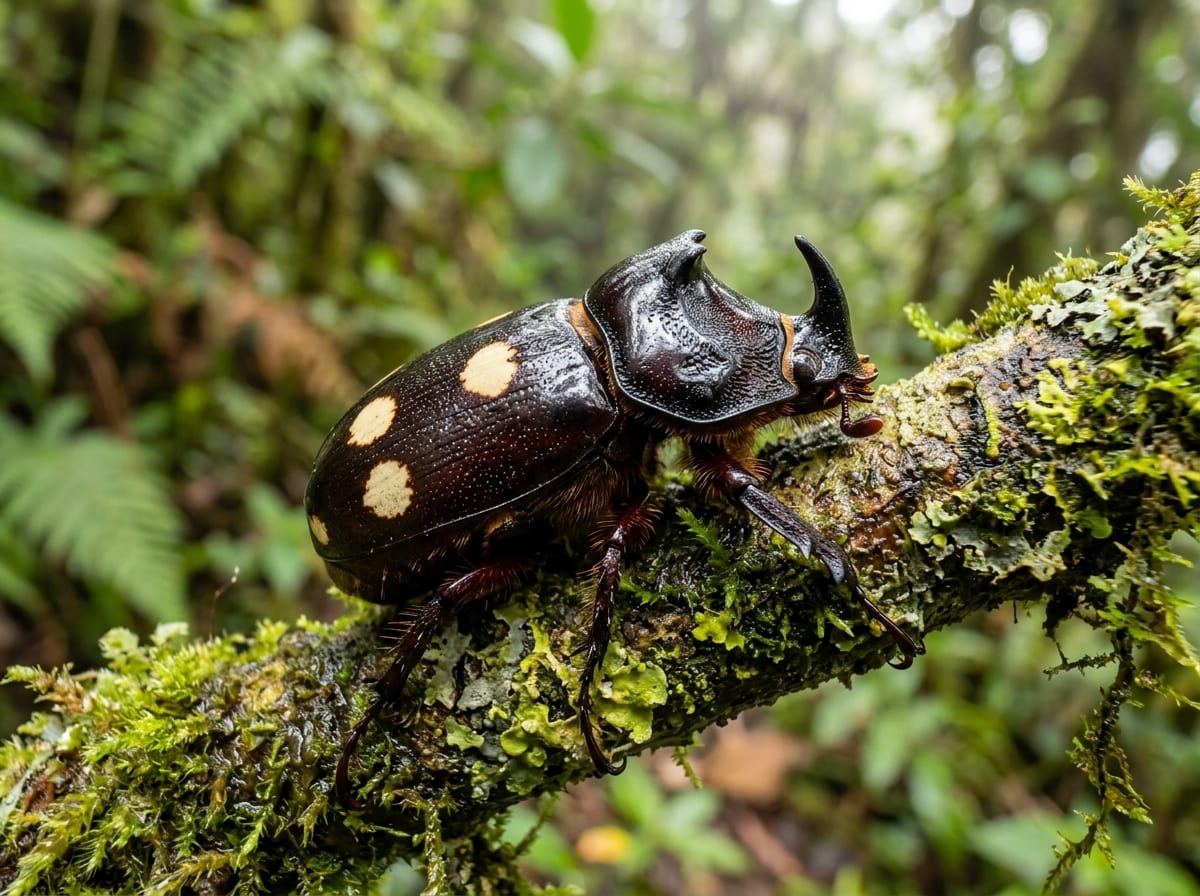
Four-spotted rhinoceros beetle
The four-spotted rhinoceros beetle is a small beetle species recorded on the eastern slopes of the Andes in Peru, Ecuador, and Colombia. Its species name refers to the four spots on its body and was first described by Waterhouse in 1881. Very little information exists about its captive care or life history, and it rarely appears in the hobby, making it a genuinely rare find. Because so little is documented, keeping this species is considered a challenge best suited to experienced keepers. Its compact build and distinctive markings make it a rewarding beetle to observe precisely because so much about it remains unknown.
View Four-spotted rhinoceros beetle encyclopedia →Breeder Wanted!
List on BreederDirect and sell directly to customers nationwide!
BreederDirect's 6 Transparency Commitments
When listing Insects, Breeders disclose the following. We guarantee transparency on growth stage and breeding unit.
- Life Stage Clarity
- Generation Info
- Real Photos
- Breeding Unit
- Country of Origin
- Body Length (mm)
Browse all 336 breeds
Verified breeders wanted for Insects
Breeders are signing up now ahead of launch. Subscribe to be notified when new listings go live.
Getting alerts is free with a member account. When new listings match your saved search, we'll notify you by email and in-app.
Browse other categories
Verified breeders (preview)
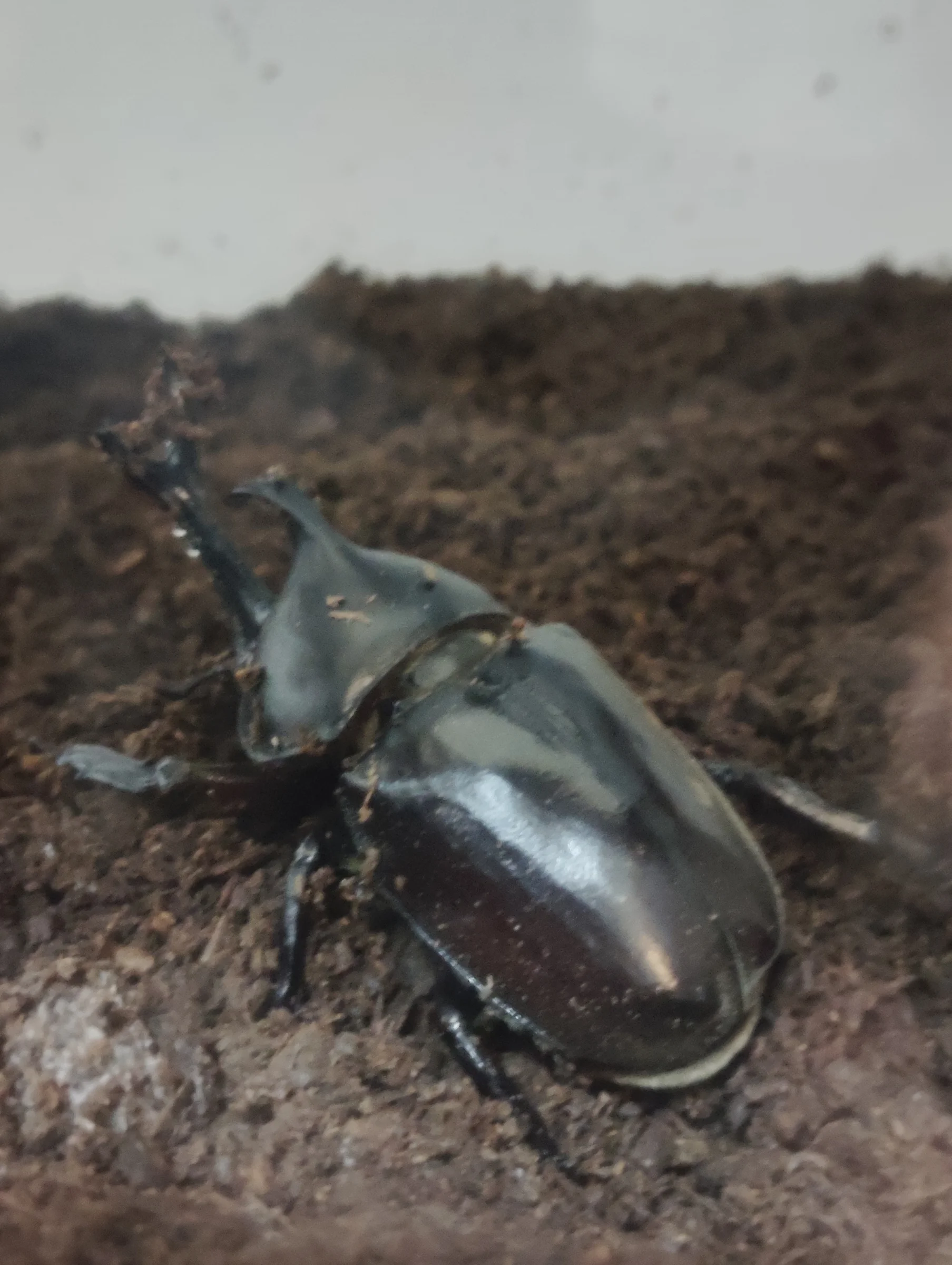
Four-spotted rhinoceros beetle key facts
- Care level
- Advanced
- Lifespan
- Little data
- Size
- Little data
- Diet
- Adults take beetle jelly; larvae eat fermented substrate
- Temperature & Humidity
- There is little numeric temperature data. Many records come from the eastern Andean slopes, so keep it away from places where summer heat builds up.
- Breeding & Egg-laying
- Little is published on breeding. Provide deep fermented substrate for laying and rear larvae in the same.
- Cohabitation
- Keep adults singly and together only for mating.
- Lifespan & Rearing Period
- Larval duration and adult lifespan are poorly documented.
- Health & Notes
- Importing foreign stag and rhinoceros beetles is regulated by the Plant Protection Act and the Invasive Alien Species Act (species-name certificate), with each species needing clearance from the Plant Protection Station, so domestically bred stock is the safe choice. Never release captive beetles.
About Four-spotted rhinoceros beetle
The four-spotted rhinoceros beetle is a rare, small beetle from the eastern Andes of Peru, Ecuador, and Colombia, recommended for experienced keepers only.
7 things to know before welcoming a Four-spotted rhinoceros beetle
1Best Suited to Experienced Keepers
This species is recommended for experienced keepers because so much about its biology remains undocumented. If you're new to beetle keeping, it's best to build experience with more common rhinoceros beetles first.
2A Poorly Documented Species
Little is known about the Four-spotted rhinoceros beetle's lifespan or adult size, since both specimens and research on it are scarce. Expect to fill in the gaps yourself through careful day-to-day observation of your beetle's condition.
3Native to the Andes
This beetle has been recorded on the eastern slopes of the Andes in Peru, Ecuador, and Colombia. Since detailed habitat data is limited, temperature and humidity should be adjusted carefully, drawing on general rhinoceros beetle husbandry experience.
4Rarely Available
Both specimens and information on this species are scarce, so simply finding one to keep can be a challenge in itself. Checking regularly for availability is worthwhile if you're hoping to bring one home.
5Larval Care Matters Most
As with most rhinoceros beetles, how the larvae are raised strongly affects the adult beetle's condition. Keep a close eye on substrate changes and shifts in temperature or humidity throughout this stage.
6An Adult Built for Observation
The beetle's namesake spots and compact, well-proportioned build are its main appeal. This is a species better enjoyed through quiet observation than frequent handling.
7Keep Gathering Information
Because so little is documented about this species, connecting with other keepers and drawing on general beetle-keeping knowledge is invaluable. Make a habit of seeking out current information both before and after bringing one home.
Frequently asked questions about Four-spotted rhinoceros beetle
- Q.How difficult is it to keep a Four-spotted rhinoceros beetle?
- A.This species is considered suitable only for experienced keepers. Because so little documentation exists on its care and biology, you'll need to draw on experience with other rhinoceros beetles and adjust conditions through trial and observation.
- Q.How long do they live, and how big do adults get?
- A.Reliable data on both lifespan and adult size is currently very limited, so neither is well established. You'll need to observe your own beetle's condition as you go, since general figures aren't yet available.
- Q.Where does this species come from?
- A.It has been recorded on the eastern slopes of the Andes Mountains in Peru, Ecuador, and Colombia. Its species name refers to the four spots on its body and was first described by Waterhouse in 1881.
- Q.Is the Four-spotted rhinoceros beetle covered by CITES?
- A.No, the Four-spotted rhinoceros beetle falls outside CITES. Many live foreign Scarabaeoidea (stag beetles, rhinoceros beetles, flower chafers and relatives) are quarantine pests whose import is banned under Japan's Plant Protection Act, and even importable species require a species-name certificate from a foreign government body under the Invasive Alien Species Act (entry only via designated airports, never by international post). Whether a species may enter must be checked with the Plant Protection Station in advance, so choose domestically bred stock and never release captive beetles.
- Q.Can beginners keep this species?
- A.Since so little is documented about this beetle and it's considered a species for experienced keepers, it isn't recommended as a first species for someone new to insect keeping. It's better to first learn the basics with a more common, well-documented rhinoceros beetle before attempting this one.
Useful tools for Four-spotted rhinoceros beetle care
Learn more about Four-spotted rhinoceros beetle in the encyclopedia
View Four-spotted rhinoceros beetle encyclopedia entry →
Care difficulty, lifespan, size and diet — all basics covered.
More in this category
Can't find the one you're looking for?
Post your wishes for free and breeders with matching animals will contact you with introductions.