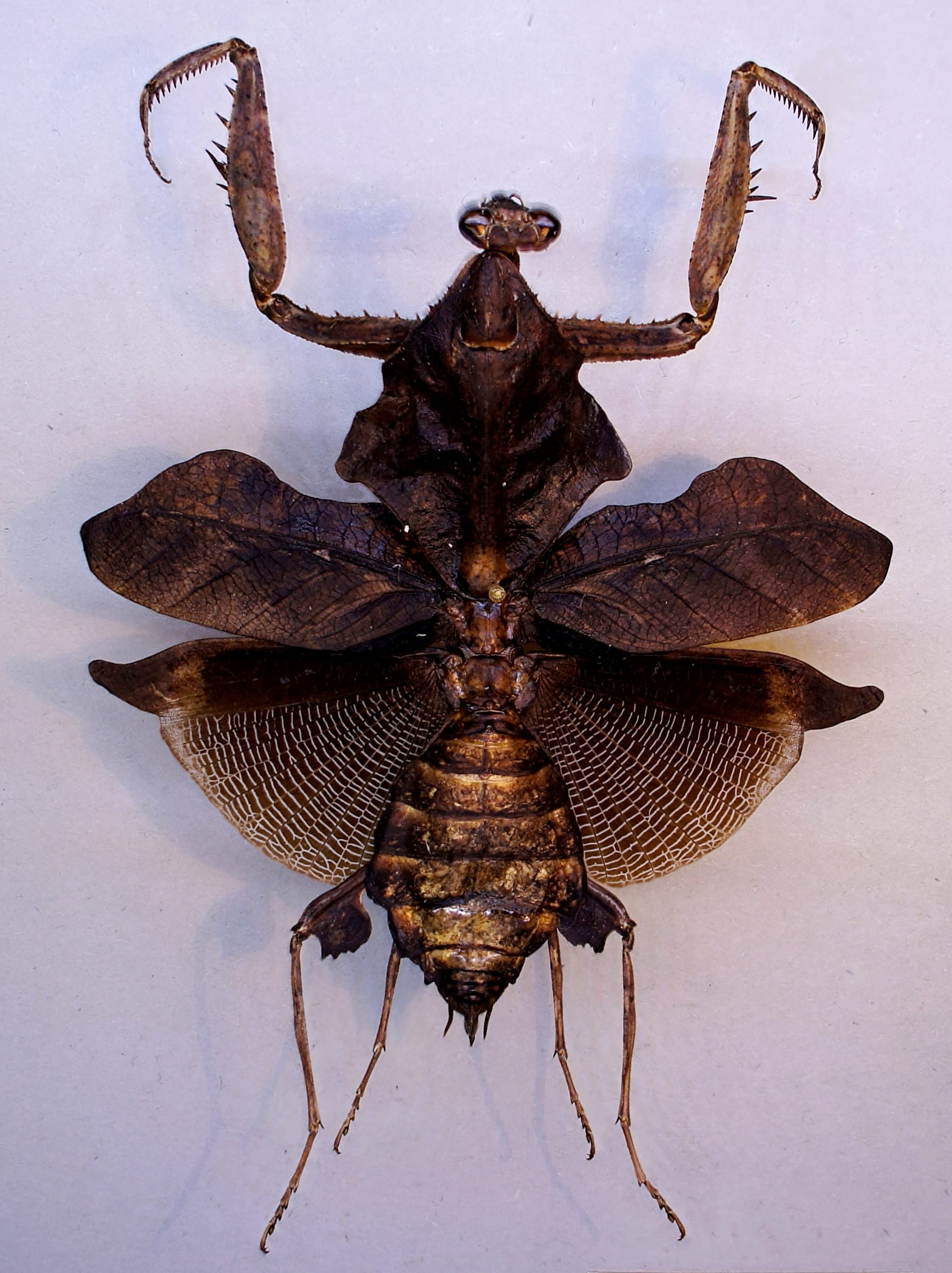
 © Tanja Popp / CC BY-SA 4.0
Dead Leaf Mantis (lobata)
The Dead Leaf Mantis (Deroplatys lobata) is a ground-dwelling mantis native to the humid tropical forests of the Malay Peninsula and Borneo. Its broad, diamond-shaped pronotum and mottled gray-brown coloring let it disappear almost perfectly among fallen leaves on the forest floor. Females reach 65–70mm while males are smaller at around 45mm, and both tend to move at an unhurried pace. Because it needs relatively high humidity to thrive, it's considered better suited to keepers with some experience — but its striking camouflage makes it a rewarding species to watch.
View Dead Leaf Mantis (lobata) encyclopedia →0% commission on your first sales!Register by September 30, 2026 and your first 2 sales are commission-free!
Breeder Wanted!
List on BreederDirect and sell directly to customers nationwide!
6 Transparency Standards You Can Trust
When listing Insects, Breeders disclose the following. We guarantee transparency on growth stage and breeding unit.
- Life Stage Clarity
- Generation Info
- Real Photos
- Breeding Unit
- Country of Origin
- Body Length (mm)
Browse all 296 breeds
Verified breeders wanted for Insects
Breeders are signing up now ahead of launch. Subscribe to be notified when new listings go live.
Getting alerts is free with a member account. When new listings match your saved search, we'll notify you by email and in-app.
Browse other categories
Verified breeders (preview)
Dead Leaf Mantis (lobata) key facts
- Care level
- Intermediate
- Lifespan
- Adults 8-14 months
- Size
- Females 65-70mm, males about 45mm
- Temperature
- 25℃
- Humidity
- 50〜80%
- Diet
- Prefers flying prey such as flies and moths (fruit flies for nymphs, then flies and locusts)
- Temperature & Humidity
- Keep around 25C, using a heat mat if the room is cold. Hold humidity at 50-80%, a little higher than for other species because the shield-shaped prothorax can hinder moulting. Mist the walls daily for humidity and drinking.
- Breeding & Egg-laying
- From the fourth instar sex by shield shape and abdominal segments (six in females, eight in males). Adult females have a large angular shield, males a small round one. Pair a well-fed female with the male and separate them if she turns aggressive.
- Cohabitation
- Adults eat their own kind, so house singly. Nymphs are fairly reserved, but adult females are fierce.
- Lifespan & Rearing Period
- Adulthood follows six to nine moults, and the genus is regarded as large and relatively long-lived.
- Health & Notes
- Failed moults are the main cause of death, so give a cage at least three times its length in height. It prefers flying prey: fruit flies for nymphs, then flies, moths and locusts. Dry leaves set off its camouflage.
About Dead Leaf Mantis (lobata)
A dead-leaf-mimicking mantis from the humid tropical forests of the Malay Peninsula and Borneo, known for its diamond-shaped pronotum and mottled gray-brown coloring. An intermediate-level species; females grow to 65–70mm, males to about 45mm.
7 things to know before welcoming a Dead Leaf Mantis (lobata)
1Leaf-mimicking camouflage
The broad, diamond-shaped pronotum and mottled gray-brown pattern let this mantis vanish among fallen leaves on the forest floor. Adding dried leaves and bark to the enclosure lets it put this camouflage to good use. Expect long stretches of stillness — that's simply how this species behaves.
2Needs relatively high humidity
Coming from the humid tropical forests of the Malay Peninsula and Borneo, this species needs relatively high humidity. Mist the enclosure regularly while still allowing enough airflow to avoid stagnant, overly damp air. Letting it dry out too much can cause problems during molting.
3Sexes differ in size
Females grow to 65–70mm while males top out around 45mm, making females noticeably larger. Because of this size gap, space needs differ somewhat between the sexes, so it's worth confirming which you're getting.
4Needs live insect prey
As a carnivorous insect, it needs a steady supply of live prey such as crickets or flies sized appropriately for its body. Sourcing and managing feeder insects is an ongoing task worth planning for before bringing one home.
5Housed individually
Like other mantises, this species is prone to cannibalism, so each individual needs its own separate enclosure. Keeping several means preparing a matching number of cages.
6Care around molting
Like other insects, it grows through a series of molts, so it needs a calm, undisturbed environment just before and after each one. Provide branches or mesh it can hang from securely while shedding its old exoskeleton.
7Why it suits experienced keepers
Because of the extra attention humidity control and regular feeding demand, this species is considered better suited to keepers with some prior insect-keeping experience. It's a good fit for those who can keep up with attentive, regular care.
Frequently asked questions about Dead Leaf Mantis (lobata)
- Q.Can beginners keep this mantis?
- A.It's classified as a species for intermediate keepers, since humidity control requires some experience. First-time insect keepers may want to start with an easier species before taking this one on.
- Q.How big does it get?
- A.Females reach about 65–70mm, while males grow to around 45mm. Females end up noticeably larger than males.
- Q.Can multiple mantises be kept together?
- A.No — mantises are prone to cannibalism, so they can't share the same enclosure. Each individual needs its own separate cage.
- Q.What should it be fed?
- A.It needs a regular supply of live prey such as crickets or flies, sized to match its body. Keep in mind that sourcing feeder insects is an ongoing responsibility.
- Q.Are there any legal restrictions on keeping it?
- A.This species is not subject to CITES.
Useful tools for Dead Leaf Mantis (lobata) care
Learn more about Dead Leaf Mantis (lobata) in the encyclopedia
View Dead Leaf Mantis (lobata) encyclopedia entry →
Care difficulty, lifespan, size and diet — all basics covered.
More in this category
Can't find the one you're looking for?
Post your wishes for free and breeders with matching animals will contact you with introductions.