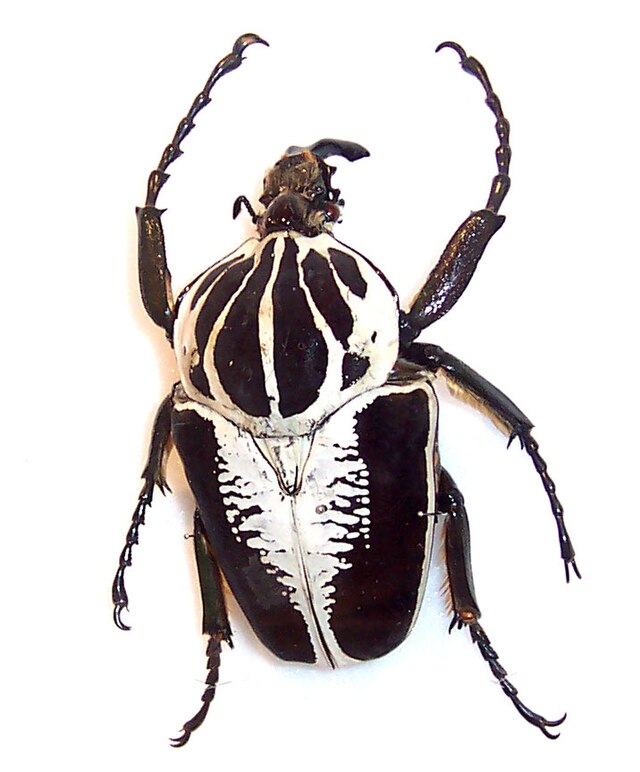
Goliath Beetle
The Goliath beetle is one of the largest scarab beetles in the world, native to Africa. Adults reach 60 to 110mm in length and rank among the heaviest insects known. Their glossy, robust bodies and the males' impressive horn-like projections make them a striking centerpiece for any collection. They tend to be calm and slow-moving, which makes for easy observation, but their size calls for a spacious enclosure and careful temperature and humidity control. With an adult lifespan of roughly three to six months, they're best suited to keepers who already have experience with large beetles.
View Goliath Beetle encyclopedia →0% commission on your first sales!Register by September 30, 2026 and your first 2 sales are commission-free!
Breeder Wanted!
List on BreederDirect and sell directly to customers nationwide!
6 Transparency Standards You Can Trust
When listing Insects, Breeders disclose the following. We guarantee transparency on growth stage and breeding unit.
- Life Stage Clarity
- Generation Info
- Real Photos
- Breeding Unit
- Country of Origin
- Body Length (mm)
Browse all 296 breeds
Verified breeders wanted for Insects
Breeders are signing up now ahead of launch. Subscribe to be notified when new listings go live.
Getting alerts is free with a member account. When new listings match your saved search, we'll notify you by email and in-app.
Browse other categories
Verified breeders (preview)
Goliath Beetle key facts
- Care level
- Advanced
- Lifespan
- Adult 3-6 months
- Size
- 60-110mm
- Temperature
- 24〜28℃
- Diet
- Insect jelly, Banana
- Growth
- The larvae need a high-protein diet
- Temperature & Humidity
- Native to African rainforest, it does best at 24-28°C. Keep the temperature stable so it never gets too cold.
- Housing
- Larvae reach 80-100 g, making this one of the largest beetles in the world, so keep it in a large case with ample space and substrate.
- Diet & Feeding
- Adults feed mainly on sap and fruit and readily take beetle jelly or banana. Give larvae high-protein food such as cat food.
- Health & Cautions
- Husbandry information is scarce and it is challenging. Adults live only 3-6 months, so plan ahead including larval rearing.
About Goliath Beetle
The Goliath beetle is one of the world's largest scarab beetles, reaching 60-110mm with a 3-6 month adult lifespan. Learn key facts, care tips, and FAQs for this advanced-level giant beetle.
7 things to know before welcoming a Goliath Beetle
1Advanced-Level Species
The Goliath beetle is large-bodied and requires careful attention to temperature, humidity, and enclosure setup, making it best suited to experienced keepers. If you're new to beetle keeping, it's a good idea to start with an easier species first and build up your skills before taking one on.
2Needs a Spacious Enclosure
With adults reaching 60-110mm, they need a noticeably larger enclosure than typical stag or rhinoceros beetles. Use a deep layer of substrate and make sure the container has good ventilation.
3Temperature and Humidity Control
Being native to Africa, they do best in a moderate environment that avoids extremes of heat and humidity. Both excessive dryness and excessive dampness can affect their health, so check enclosure conditions regularly as the seasons change.
4Diet: Jelly and Banana
Adults mainly eat insect jelly and fruit such as bananas. Serving food on a small dish helps keep the enclosure clean and slows substrate degradation. Remove leftovers promptly to prevent mold and bacteria.
5A 3-6 Month Adult Lifespan
Adult Goliath beetles typically live for about three to six months. Because that time is limited, it helps to plan ahead so you can enjoy observing and documenting them without regrets.
6Calm but Powerfully Strong
Their movements are generally slow and calm, but their legs are surprisingly powerful, so hold them securely if handling by hand. They can move suddenly and forcefully if startled, so handle with care.
7Prepare Before Bringing One Home
Set up a sufficiently large enclosure, insect substrate, and a food dish before your beetle arrives so it can settle in comfortably from day one. Having the environment ready in advance reduces stress on the animal.
Frequently asked questions about Goliath Beetle
- Q.Can beginners keep a Goliath beetle?
- A.They're considered an advanced-level species because of their large size and the careful temperature and humidity control they need. Keepers with prior beetle-keeping experience are a better fit; if you're new to the hobby, starting with an easier species first is a good idea.
- Q.How long do adults live?
- A.Adult Goliath beetles typically live for about three to six months. That's a relatively short window compared to the time spent as larvae.
- Q.What do they eat?
- A.Their main food is insect jelly along with fruit such as bananas. Serving it on a small dish keeps the substrate cleaner, and leftovers should be removed promptly.
- Q.How big do they get?
- A.Adults reach 60 to 110mm, making them one of the largest scarab beetles in the world. There's some individual variation, so watching them grow is part of the fun.
- Q.Do males and females look different?
- A.Males have a distinctive horn-like projection that gives them a powerful look, while females lack horns and tend to have a rounder body shape. This is a common way to tell the sexes apart.
Useful tools for Goliath Beetle care
Learn more about Goliath Beetle in the encyclopedia
View Goliath Beetle encyclopedia entry →
Care difficulty, lifespan, size and diet — all basics covered.
Goliath Beetle related articles
Goliath Beetle (Goliathus goliatus) Care Guide | Larval Management, Adult Feeding, and Acquisition Methods
A guide to caring for Goliath beetles, one of the world's heaviest insects. Includes larval rearing with high-protein substrate, adult fruit feeding, temperature management, and breeding basics.
Goliath Beetle Care Guide | How to Care for the World's Heaviest Insect in Japan
Complete guide to caring for the Goliath beetle (Goliathus goliatus), the world's heaviest insect, in Japan. Detailed coverage of high-protein dog food substrate for larvae, adult feeding methods, temperature management, acquisition methods, and legal considerations.
More in this category
Can't find the one you're looking for?
Post your wishes for free and breeders with matching animals will contact you with introductions.