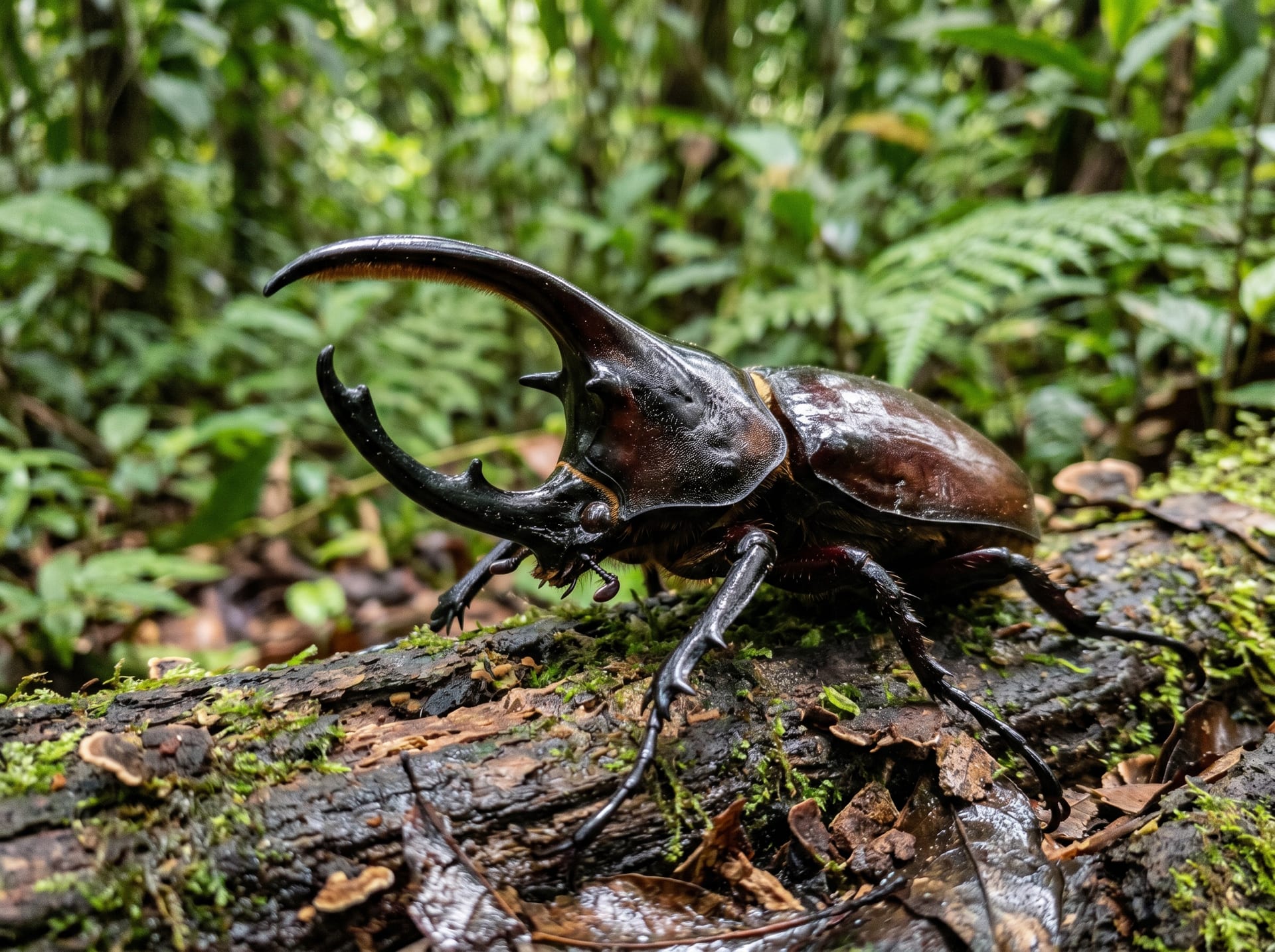
Centaurus Beetle
The Centaurus Beetle is a large rhinoceros beetle native to west-central Africa, named after the centaur of Greek mythology. Males carry an imposing three-pronged horn reminiscent of the Caucasus beetle, giving the species a commanding presence often described as the king of African beetles. Adults grow to 40-100mm, making for a truly striking specimen. While generally calm in temperament, keeping this species well calls for some hands-on experience with temperature and humidity control, which is why it's considered a good match for intermediate keepers rather than first-time insect owners.
View Centaurus Beetle encyclopedia →Breeder Wanted!
List on BreederDirect and sell directly to customers nationwide!
BreederDirect's 6 Transparency Commitments
When listing Insects, Breeders disclose the following. We guarantee transparency on growth stage and breeding unit.
- Life Stage Clarity
- Generation Info
- Real Photos
- Breeding Unit
- Country of Origin
- Body Length (mm)
Browse all 336 breeds
Verified breeders wanted for Insects
Breeders are signing up now ahead of launch. Subscribe to be notified when new listings go live.
Getting alerts is free with a member account. When new listings match your saved search, we'll notify you by email and in-app.
Browse other categories
Verified breeders (preview)
Centaurus Beetle key facts
- Care level
- Intermediate
- Lifespan
- Adult 3-6 months
- Size
- 40-100mm
- Temperature
- 22〜28℃
- Diet
- Tree sap, beetle jelly
- Housing
- Keep in a large case with a deep layer of fermented substrate. Horned males tip over easily, so add footholds.
- Temperature & Humidity
- Maintain 22-28°C. As a tropical forest species it dislikes dryness, so keep the substrate moist.
- Diet & Feeding
- Feed adults beetle jelly. Adults live about 3-6 months, so keep jelly available after emergence.
- Breeding & Egg-laying
- Eggs are laid in the substrate and larvae are raised in fermented substrate. To produce large adults, provide ample volume and nutritious substrate.
- Notes
- One of the most popular African beetle species
About Centaurus Beetle
A large African rhinoceros beetle with an imposing three-pronged horn, growing 40-100mm as an adult with a 3-6 month adult lifespan. A striking species suited to intermediate keepers.
7 things to know before welcoming a Centaurus Beetle
1Best Suited to Intermediate Keepers
The Centaurus Beetle is generally considered a species for intermediate keepers. Familiarity with basic rhinoceros beetle care — temperature, humidity, and substrate management — makes day-to-day care much smoother. First-time insect keepers are encouraged to build up some basic knowledge before bringing one home.
2An Impressive Three-Pronged Horn
Males carry a striking three-pronged horn on the head and thorax, reminiscent of the Caucasus beetle. How fully the horn develops varies between individuals and can be influenced by rearing conditions and nutrition. Because horns can be damaged in clashes between individuals, take care when housing more than one beetle together.
3Adults Live About 3-6 Months
Once beetles reach adulthood, they typically live for around 3 to 6 months. The full life cycle including the larval stage is much longer, but the adult stage itself is relatively short, so it's worth observing your beetle closely and caring for it attentively during this time.
4Enclosure and Substrate Setup
As a large species, the Centaurus Beetle benefits from a reasonably spacious enclosure and a good depth of insect substrate. Keeping the substrate at an appropriate humidity, without letting it dry out, is key to a healthy setup.
5Watch the Temperature
Coming from west-central Africa, this species tends to be sensitive to very low temperatures. Choose a location where the temperature stays relatively stable, and pay extra attention to seasonal temperature swings.
6A Relatively Calm Temperament
Despite its imposing size, the Centaurus Beetle is generally considered fairly calm in temperament. That said, its size and horn mean real strength, so handle it gently to avoid stressing the beetle or straining yourself.
7What to Prepare Beforehand
Before bringing one home, have the basics ready — an enclosure, substrate, and food such as insect jelly. Since this is a large species, it's also worth checking you have enough space and that the setup will be easy to maintain.
Frequently asked questions about Centaurus Beetle
- Q.Is the Centaurus Beetle subject to CITES?
- A.No, the Centaurus Beetle is not subject to CITES. There are no special CITES-related procedures to worry about.
- Q.Is this beetle suitable for beginners?
- A.The Centaurus Beetle is generally considered a species for intermediate keepers. Some basic experience with rhinoceros beetle care helps, so first-timers are encouraged to learn the fundamentals of temperature and humidity management before getting started.
- Q.How long do adults live?
- A.Adults typically live for around 3 to 6 months. The full life cycle is longer once you include the larval stage, but the adult period itself is relatively limited.
- Q.How big does it get?
- A.Adults reach roughly 40 to 100mm. Individual size varies quite a bit, and males in particular look more imposing as their horns develop.
- Q.Is it aggressive?
- A.Despite its imposing appearance, the Centaurus Beetle is generally considered fairly calm. It is strong and has a substantial horn, though, so avoid applying excessive force when handling it.
Useful tools for Centaurus Beetle care
Learn more about Centaurus Beetle in the encyclopedia
View Centaurus Beetle encyclopedia entry →
Care difficulty, lifespan, size and diet — all basics covered.
More in this category
Can't find the one you're looking for?
Post your wishes for free and breeders with matching animals will contact you with introductions.