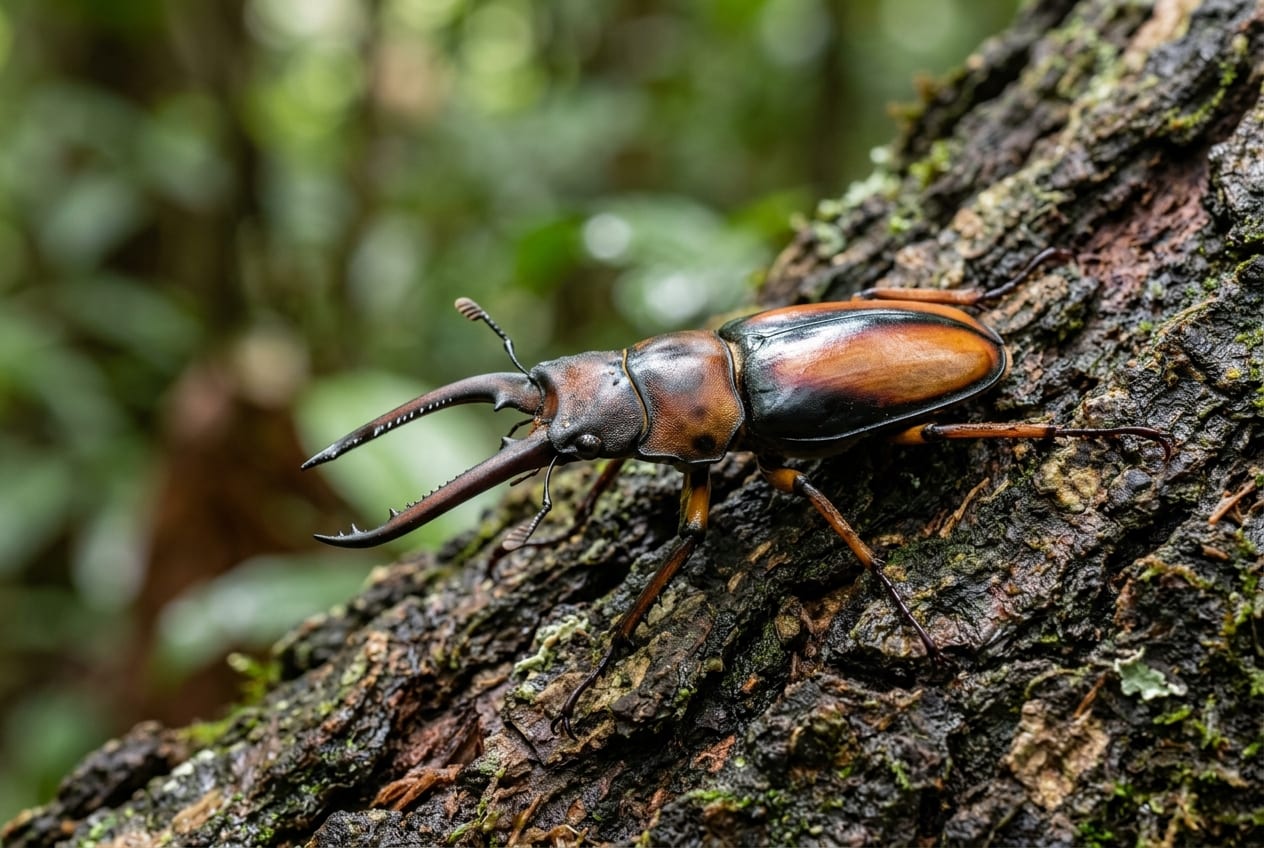
Sericeus Saw Stag Beetle
The Sericeus Saw Stag Beetle is a stag beetle native to the Sundaland region, found across Borneo, Sumatra, and Java. Its species name, sericeus, means "silky," a nod to the beetle's lustrous sheen. Alongside the nominate form, a subspecies called taronii is known from the Malay Peninsula, but successful multi-generational captive breeding has rarely been reported. Keeping one through to a strong adult is achievable, but taking the next step—breeding a new generation—calls for real experience and careful trial and error, making this a species that rewards patient, advanced keepers.
View Sericeus Saw Stag Beetle encyclopedia →0% commission on your first sales!Register by September 30, 2026 and your first 2 sales are commission-free!
Breeder Wanted!
List on BreederDirect and sell directly to customers nationwide!
6 Transparency Standards You Can Trust
When listing Insects, Breeders disclose the following. We guarantee transparency on growth stage and breeding unit.
- Life Stage Clarity
- Generation Info
- Real Photos
- Breeding Unit
- Country of Origin
- Body Length (mm)
Browse all 296 breeds
Verified breeders wanted for Insects
Breeders are signing up now ahead of launch. Subscribe to be notified when new listings go live.
Getting alerts is free with a member account. When new listings match your saved search, we'll notify you by email and in-app.
Browse other categories
Verified breeders (preview)
Sericeus Saw Stag Beetle key facts
- Care level
- Advanced
- Lifespan
- Adults 2-3 months
- Diet
- Sap of broadleaf trees; beetle jelly
- Temperature & Humidity
- It lives in Sundaland rainforest, so as with other saw stags from the region, avoid extreme heat and keep the substrate from drying out.
- Breeding & Egg-laying
- Follow the general method for the genus: an egg-laying set of firmly packed, fully fermented substrate.
- Cohabitation
- Males fight hard, so keep them singly. House a pair together only briefly for mating and separate them once it has been seen. Do not mix the species with others.
- Lifespan & Rearing Period
- As with saw stags in general, expect adults to live a few months.
- Health & Notes
- The nominate form and subspecies taronii come from different areas, so do not breed unlabelled stock together. Importing live beetles requires the species identification certificate demanded for live Scarabaeoidea.
About Sericeus Saw Stag Beetle
Learn about the Sericeus Saw Stag Beetle, a Sundaland species from Borneo, Sumatra, and Java rarely bred across generations in captivity — an advanced-keeper species.
7 things to know before welcoming a Sericeus Saw Stag Beetle
1Native Range & Habitat
This species lives across the Sundaland region—Borneo, Sumatra, and Java—in equatorial rainforest. Because its native habitat is warm and humid year-round, captive care should aim to replicate consistent warmth and humidity.
2A Name Meaning "Silky"
The species name sericeus is Latin for "silky," referring to the distinctive lustrous sheen on the beetle's body. The way light catches its surface shifts subtly depending on the angle, rewarding close observation.
3Known Subspecies
Besides the nominate form, a subspecies called taronii is known from the Malay Peninsula. Body proportions can vary slightly by locality, so knowing an individual's provenance adds another layer of interest.
4Multi-Generation Breeding Is Hard
Reports of successfully breeding this species across multiple generations in captivity are scarce, and no established breeding protocol exists. Keeping an adult healthy and successfully breeding the next generation should be treated as two separate challenges.
5An Advanced Species, Data Is Scarce
Availability is limited, and domestic care records are still sparse for this species. Keepers generally need to draw on experience with closely related species and work out the right conditions themselves.
6Handle the Mandibles with Care
Like other saw stag beetles, it has well-developed mandibles, and gripping it too firmly can injure its legs or jaws. Support the thorax gently when lifting it to avoid putting unnecessary stress on the beetle.
7Research Before You Bring One Home
Because so little breeding data exists, it's worth seeking out reliable sources and experienced keepers' records before acquiring one. Go in expecting some trial and error, and approach the process with patient observation.
Frequently asked questions about Sericeus Saw Stag Beetle
- Q.Is this beetle suitable for beginners?
- A.It's generally considered a species for advanced keepers, since successful multi-generation breeding is rarely documented and care information is still limited. It's a good idea to gain experience with closely related species first.
- Q.Where does the name "Sericeus" come from?
- A.The species name sericeus is Latin for "silky," referring to the beetle's lustrous body surface. The common name is simply a transliteration of that scientific name.
- Q.Where is this species found in the wild?
- A.It's native to the Sundaland region, including Borneo, Sumatra, and Java. Besides the nominate form, a subspecies called taronii is known from the Malay Peninsula.
- Q.Can it be bred across multiple generations?
- A.Reports of successful multi-generation captive breeding are scarce, so no reliable, established method exists. Keeping an adult is achievable, but breeding calls for considerable trial and error.
- Q.Is this species subject to CITES?
- A.The Sericeus Saw Stag Beetle is not subject to CITES.
Useful tools for Sericeus Saw Stag Beetle care
Learn more about Sericeus Saw Stag Beetle in the encyclopedia
View Sericeus Saw Stag Beetle encyclopedia entry →
Care difficulty, lifespan, size and diet — all basics covered.
More in this category
Can't find the one you're looking for?
Post your wishes for free and breeders with matching animals will contact you with introductions.