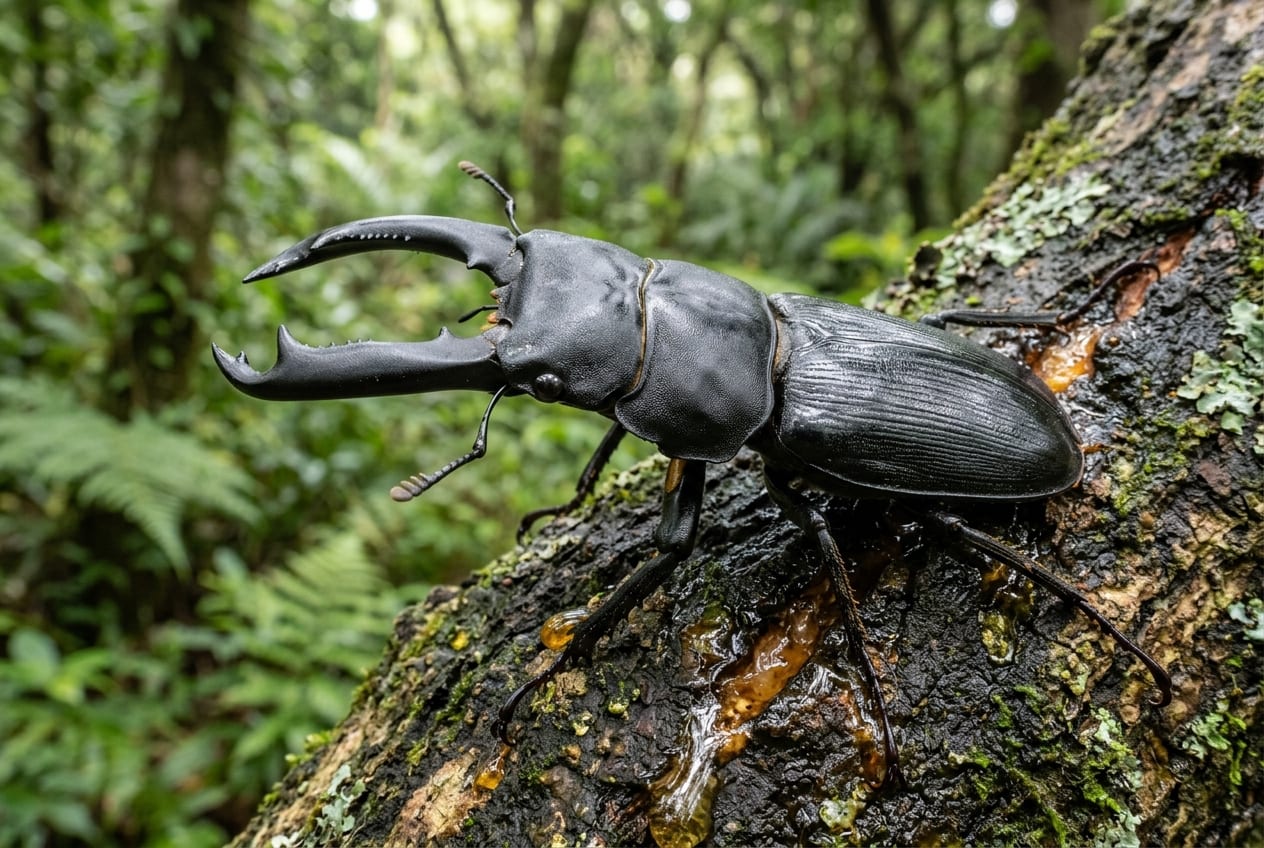
Amami Flat Stag Beetle
The Amami Flat Stag Beetle is a subspecies of flat stag beetle found only on the Amami Islands in southern Japan. It tends to grow larger than other Japanese flat stag beetle subspecies, and males often show faint longitudinal ridges on their elytra reminiscent of the Sujibuto Flat Stag Beetle, a species that shares its habitat on Amami Oshima. Calm in temperament, it has a broad, flattened body and powerful mandibles that make it striking to keep and observe. Captive-bred individuals have reached the 81mm class, offering the reward of raising an exceptionally large specimen, while its one-to-three-year adult lifespan is relatively long for a stag beetle, making it a species keepers can enjoy over time.
View Amami Flat Stag Beetle encyclopedia →0% commission on your first sales!Register by September 30, 2026 and your first 2 sales are commission-free!
Breeder Wanted!
List on BreederDirect and sell directly to customers nationwide!
6 Transparency Standards You Can Trust
When listing Insects, Breeders disclose the following. We guarantee transparency on growth stage and breeding unit.
- Life Stage Clarity
- Generation Info
- Real Photos
- Breeding Unit
- Country of Origin
- Body Length (mm)
Browse all 296 breeds
Verified breeders wanted for Insects
Breeders are signing up now ahead of launch. Subscribe to be notified when new listings go live.
Getting alerts is free with a member account. When new listings match your saved search, we'll notify you by email and in-app.
Browse other categories
Verified breeders (preview)
Amami Flat Stag Beetle key facts
- Care level
- Intermediate
- Lifespan
- Adults 1-3 years
- Size
- Males 23-81.8 mm (including captive; wild up to 75.0 mm) / females 29-40 mm
- Temperature
- 20〜26℃
- Diet
- Sap of Castanopsis and Mallotus, beetle jelly
- Temperature & Humidity
- Keep at about 20-26 C. From subtropical Amami, so avoid extreme cold indoors in winter. Keep the substrate moist enough to clump when squeezed.
- Breeding & Egg-laying
- Like other Japanese flat stags it lays in both logs and fermented substrate; pack fine-grained substrate firmly. Larvae grow in fungus bottles or substrate and take 1-2 years.
- Cohabitation
- Males are aggressive and may kill females during pairing. Keep singly, house together only a few days and separate once mating is confirmed.
- Lifespan & Rearing Period
- Adults live 1-3 years. The season runs May-October, and newly emerged adults rest in the pupal cell before becoming active.
- Health & Notes
- It shares Amami with Dorcus metacostatus and a hybrid has been recorded, so never house the two together. Genetic contamination from released beetles is a concern, so never release captive stock.
About Amami Flat Stag Beetle
The Amami Flat Stag Beetle, a subspecies endemic to Japan's Amami Islands, is known for its large size, with captive-bred records near 81mm. Learn its traits, care difficulty, and what to know before bringing one home.
7 things to know before welcoming a Amami Flat Stag Beetle
1Endemic to the Amami Islands
The Amami Flat Stag Beetle is a subspecies found naturally only on the Amami Islands, with no wild populations elsewhere. It shares its habitat with the Sujibuto Flat Stag Beetle, whose elytra pattern can look similar.
2Large for a Japanese subspecies
This is one of the larger flat stag beetle subspecies found in Japan, with males reaching 23 to 81.8mm, including captive-bred individuals (wild specimens are recorded up to 75.0mm). Growing a large individual is part of the appeal of keeping this beetle.
3Adults live one to three years
Adult lifespan runs roughly one to three years, making this a beetle you can enjoy for longer than many other insects. Keeping temperatures stable and the environment calm helps it live a full life.
4Best suited to intermediate keepers
Ongoing care such as temperature and humidity control and substrate replacement is needed, so this species is considered suitable for intermediate keepers. First-time stag beetle owners should research care basics before bringing one home.
5Males and females differ in size
Males range from 23 to 81.8mm while females range from 29 to 40mm, with males showing much greater size and mandible variation. If keeping a pair, choose an enclosure that accounts for this size difference.
6Prefers a cool, quiet spot
Keep the enclosure out of direct sunlight and away from heat and humidity, in a cool, well-ventilated spot. Check the substrate regularly so it doesn't dry out too much.
7Gather supplies before bringing one home
Have an enclosure, insect substrate, food such as insect jelly, and climbing branches ready before your beetle arrives. Handle males carefully, as their large mandibles can pinch fingers.
Frequently asked questions about Amami Flat Stag Beetle
- Q.How big does the Amami Flat Stag Beetle get?
- A.Males typically reach 23 to 81.8mm and females 29 to 40mm, including captive-bred individuals (wild specimens are recorded up to 75.0mm). Final size varies with rearing conditions and diet.
- Q.How long do they live?
- A.Adult lifespan is roughly one to three years. Stable temperatures and a calm environment help them live a full, healthy life.
- Q.Is this species difficult to keep?
- A.It's considered suitable for intermediate keepers. Ongoing care like temperature and humidity control and substrate changes is required, so it helps to research care basics beforehand.
- Q.How is it different from the Sujibuto Flat Stag Beetle?
- A.Both live on the Amami Islands and can show similar faint ridges on the elytra, but they are distinct subspecies. Because their ranges overlap, telling them apart can take some expertise.
- Q.Are there any legal restrictions on keeping this species?
- A.The Amami Flat Stag Beetle is not subject to CITES.
Useful tools for Amami Flat Stag Beetle care
Learn more about Amami Flat Stag Beetle in the encyclopedia
View Amami Flat Stag Beetle encyclopedia entry →
Care difficulty, lifespan, size and diet — all basics covered.
More in this category
Can't find the one you're looking for?
Post your wishes for free and breeders with matching animals will contact you with introductions.