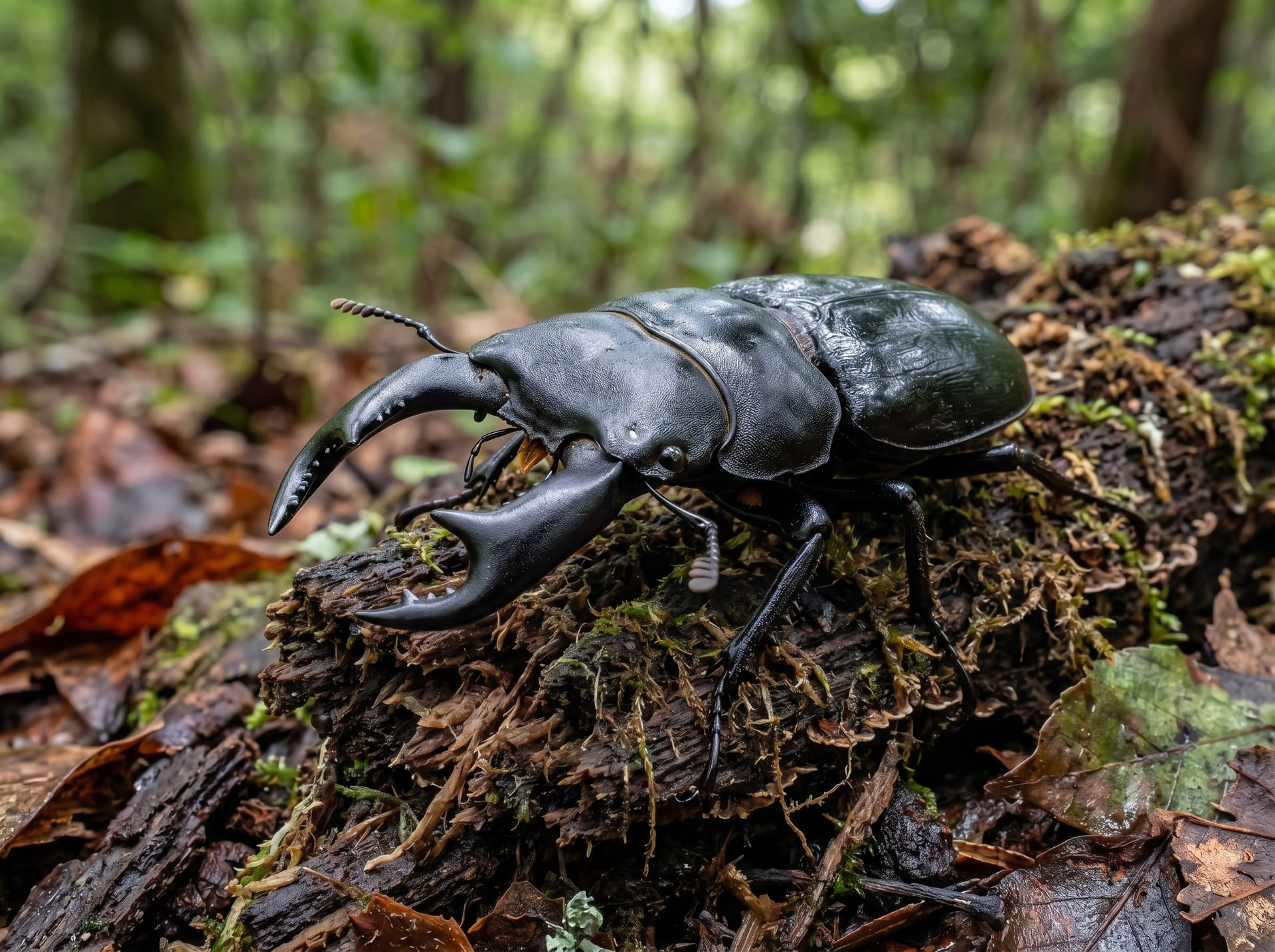
Grandis Giant Stag Beetle
The Grandis Giant Stag Beetle is the largest species in the stag beetle genus, native to India and Myanmar. It resembles Japan's native stag beetles but grows noticeably larger, reaching 40 to 90mm as an adult — the powerful mandibles of a mature male are a real showpiece for insect enthusiasts. Its temperament is relatively calm, and it feeds readily on insect jelly, making daily care manageable. Adults can live one to three years, offering plenty of time to enjoy keeping one. Because it's considered suitable for intermediate keepers, it helps to understand the basics of temperature management before bringing one home.
View Grandis Giant Stag Beetle encyclopedia →0% commission on your first sales!Register by September 30, 2026 and your first 2 sales are commission-free!
Breeder Wanted!
List on BreederDirect and sell directly to customers nationwide!
6 Transparency Standards You Can Trust
When listing Insects, Breeders disclose the following. We guarantee transparency on growth stage and breeding unit.
- Life Stage Clarity
- Generation Info
- Real Photos
- Breeding Unit
- Country of Origin
- Body Length (mm)
Browse all 296 breeds
Verified breeders wanted for Insects
Breeders are signing up now ahead of launch. Subscribe to be notified when new listings go live.
Getting alerts is free with a member account. When new listings match your saved search, we'll notify you by email and in-app.
Browse other categories
Verified breeders (preview)
Grandis Giant Stag Beetle key facts
- Care level
- Intermediate
- Lifespan
- Adult 1-3 years
- Size
- 40-90mm
- Temperature
- 20〜26℃
- Diet
- Insect jelly
- Notes
- Care follows that of the Japanese giant stag beetle
- Temperature & Humidity
- Maintain 20-26°C. Like the Japanese giant stag beetle, it keeps steadily indoors as long as extreme heat is avoided.
- Diet & Feeding
- Feed adults beetle jelly. Adults live a fairly long 1-3 years, and jelly satisfies their taste for sap and fruit juice.
- Breeding & Egg-laying
- Use sawtooth or konara oak logs for egg laying. Adults are long-lived and breed readily, but selecting large bloodlines matters if you want big specimens.
- Housing
- Raising larvae in fungus bottles can produce large adults. Some grow larger than the Japanese giant stag beetle, and it is approachable even for beginners.
About Grandis Giant Stag Beetle
The largest stag beetle species, native to India and Myanmar. Adults reach 40-90mm and live 1-3 years, kept on insect jelly. Best suited to intermediate keepers.
7 things to know before welcoming a Grandis Giant Stag Beetle
1Suited to Intermediate Keepers
The Grandis Giant Stag Beetle is considered suitable for intermediate keepers. Basic knowledge of insect care — such as temperature and humidity management and choosing an appropriate enclosure — will help you look after it with confidence. If this is your first insect, it's worth researching care basics beforehand.
2Adult Size Ranges Widely, 40-90mm
Adult size varies widely, from 40 to 90mm. Individual variation is significant even within the same species, and larger individuals tend to have more impressive mandibles. It's worth checking each individual's size and features before bringing one home.
3Adults Live 1-3 Years
Once they reach adulthood, they can live for one to three years — considerably longer than many other insects, meaning you can enjoy their company through daily care over an extended period. Keeping the environment stable is the foundation for helping them stay healthy.
4Insect Jelly Is the Main Food
Their diet is based on commercially available insect jelly. Place it in a dedicated holder inside the enclosure and replace it regularly as it's consumed. No special preparation is needed, which makes daily feeding easy to fit into a routine.
5Watch for Fights Between Males' Mandibles
Males have large, powerful mandibles. When keeping multiple beetles, housing two males together in the same enclosure can easily lead to fighting and pinching injuries, so keeping them individually is generally the safer approach.
6Temperature and Humidity Are Key
Native to the warm regions of India and Myanmar, they don't tolerate extreme heat, dryness, or cold well. Place the enclosure away from direct sunlight and sudden temperature swings, and check the substrate's moisture level regularly.
7Prepare the Enclosure Before Arrival
Before your beetle arrives, it's smart to have an enclosure with insect substrate, a jelly holder, and a piece of wood or bark for hiding ready to go. Having a settled environment prepared in advance is the first step toward keeping it healthy.
Frequently asked questions about Grandis Giant Stag Beetle
- Q.How is the Grandis different from Japan's native stag beetle?
- A.Its appearance resembles Japan's native stag beetle, but the Grandis is considered the largest species in the genus and tends to grow larger, reaching 40 to 90mm as an adult. It also originates from a different region — India and Myanmar rather than Japan.
- Q.Can a first-time insect keeper care for one?
- A.It's considered suitable for intermediate keepers. If you learn the basics of temperature and humidity management and insect-jelly feeding beforehand, it's an approachable species even for a first-timer.
- Q.How long do adults typically live?
- A.Adults typically live about one to three years after reaching maturity. Lifespan varies by individual and by care environment, so keeping conditions stable helps support a longer life.
- Q.Is it okay to keep more than one together?
- A.Males in particular tend to fight using their large mandibles, so it's best to avoid housing multiple beetles in the same enclosure and instead keep each one individually.
- Q.Do I need a permit to keep a Grandis Giant Stag Beetle?
- A.The Grandis Giant Stag Beetle is not subject to CITES. This page does not provide information on permit requirements for keeping it.
Useful tools for Grandis Giant Stag Beetle care
Learn more about Grandis Giant Stag Beetle in the encyclopedia
View Grandis Giant Stag Beetle encyclopedia entry →
Care difficulty, lifespan, size and diet — all basics covered.
More in this category
Can't find the one you're looking for?
Post your wishes for free and breeders with matching animals will contact you with introductions.