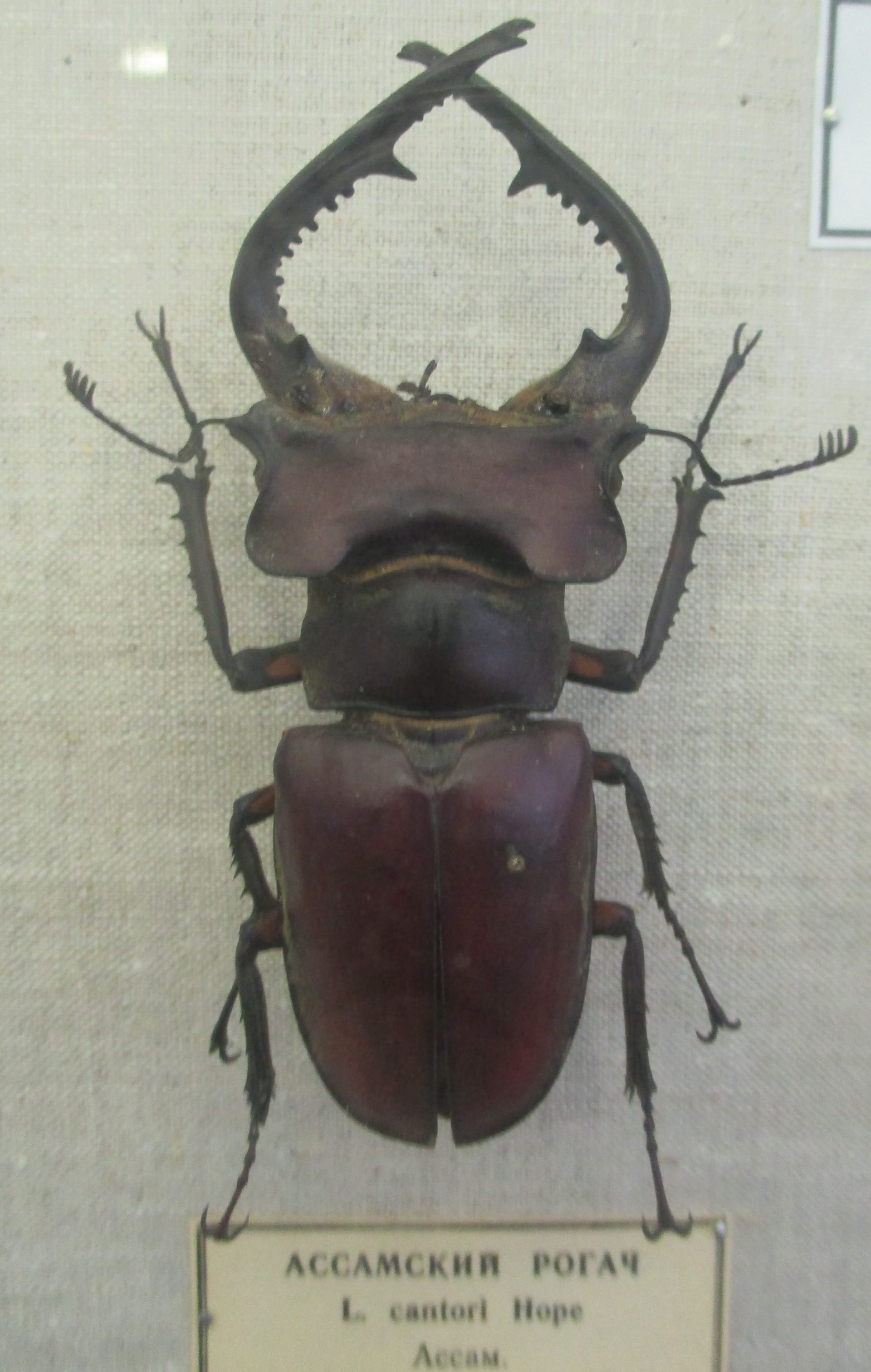
 © Thomon / CC BY-SA 4.0
Cantor's Stag Beetle
Cantor's Stag Beetle is a stag beetle species native to the Himalayan region, known for its broad, sturdy build. In the wild, individuals have been recorded reaching up to 90.0mm, making it a large species, but the largest specimen raised in captivity has reached only 69.5mm — a notable gap between wild and captive-bred sizes. This gap is thought to reflect how sensitive the species is to rearing conditions, such as larval temperature management and the state of the mushroom-log substrate. Combined with the general keeping challenges typical of Lucanus stag beetles, this species has its own quirks, making it best suited to experienced keepers who have already built up stag beetle husbandry skills. Its imposing build and the challenge of raising a large specimen are part of what draws enthusiasts to it.
View Cantor's Stag Beetle encyclopedia →0% commission on your first sales!Register by September 30, 2026 and your first 2 sales are commission-free!
Breeder Wanted!
List on BreederDirect and sell directly to customers nationwide!
6 Transparency Standards You Can Trust
When listing Insects, Breeders disclose the following. We guarantee transparency on growth stage and breeding unit.
- Life Stage Clarity
- Generation Info
- Real Photos
- Breeding Unit
- Country of Origin
- Body Length (mm)
Browse all 296 breeds
Verified breeders wanted for Insects
Breeders are signing up now ahead of launch. Subscribe to be notified when new listings go live.
Getting alerts is free with a member account. When new listings match your saved search, we'll notify you by email and in-app.
Browse other categories
Verified breeders (preview)
About Cantor's Stag Beetle
A large stag beetle native to the Himalayas, with a wild record of 90.0mm versus a 69.5mm captive best — a species suited to experienced keepers.
7 things to know before welcoming a Cantor's Stag Beetle
1Advanced keeping difficulty
Cantor's Stag Beetle is classified as an advanced-level species to keep. It's best to build up a solid understanding of the temperature and humidity sensitivity typical of Lucanus stag beetles before bringing one home.
2Gap between wild and captive size
While wild individuals have reached 90.0mm, the captive record stands at 69.5mm. This gap is largely attributed to environmental factors during the larval stage, so raising a large adult requires careful, attentive management.
3Broad, wide-bodied build
Native to the Himalayan region, this species stands out among Lucanus stag beetles for its noticeably broad, wide body shape. Its sturdy, robust silhouette is part of its visual appeal.
4Strict temperature control
Lucanus stag beetles are generally considered sensitive to high temperatures, so avoiding locations with unstable ambient temperatures is important. When choosing where to keep the enclosure, factor in seasonal room temperature changes.
5Larval care is the key stage
Adult size is heavily influenced by how the larva is raised. How much attention you can give to larval care — timing of mushroom-log replacement, temperature conditions, and so on — plays a big role in how satisfying the hobby will be.
6Handle adults gently
Avoid applying excessive force to the mandibles or legs when handling an adult. It also helps to set up the enclosure layout with footholds that make it easy for the beetle to right itself if it flips over.
7Prepare the setup in advance
It's reassuring to have the enclosure, insect substrate, and mushroom logs ready before the beetle arrives. Since this is an advanced-level species, it's also worth checking the temperature conditions of the keeping space beforehand.
Frequently asked questions about Cantor's Stag Beetle
- Q.Can a first-time beetle keeper raise this species?
- A.This species is classified as advanced-level, best suited to keepers who already have stag beetle experience and are comfortable managing temperature and humidity. First-time keepers may want to build up basic skills with an easier species first.
- Q.How large can this species grow?
- A.Wild individuals have been recorded reaching up to 90.0mm, making it a large species, but the captive-bred record stands at 69.5mm. Reaching wild-level sizes in captivity tends to be difficult.
- Q.Why don't captive-bred individuals get as large as wild ones?
- A.Adult size is thought to be strongly influenced by rearing conditions during the larval stage, such as temperature and the state of the mushroom-log substrate. It's believed that fully replicating natural wild conditions in captivity is difficult, which contributes to this gap.
- Q.Are there any legal restrictions to worry about when keeping this species?
- A.Cantor's Stag Beetle is not subject to CITES. There is no need to worry about special procedures on this front.
- Q.What does the "broad, wide-bodied" build actually look like?
- A.Among Lucanus stag beetles from the Himalayan region, this species stands out for its noticeably wide, sturdy build. Comparing it side by side with other Lucanus species makes this difference in physique easy to spot.
Useful tools for Cantor's Stag Beetle care
Learn more about Cantor's Stag Beetle in the encyclopedia
View Cantor's Stag Beetle encyclopedia entry →
Care difficulty, lifespan, size and diet — all basics covered.
More in this category
Can't find the one you're looking for?
Post your wishes for free and breeders with matching animals will contact you with introductions.