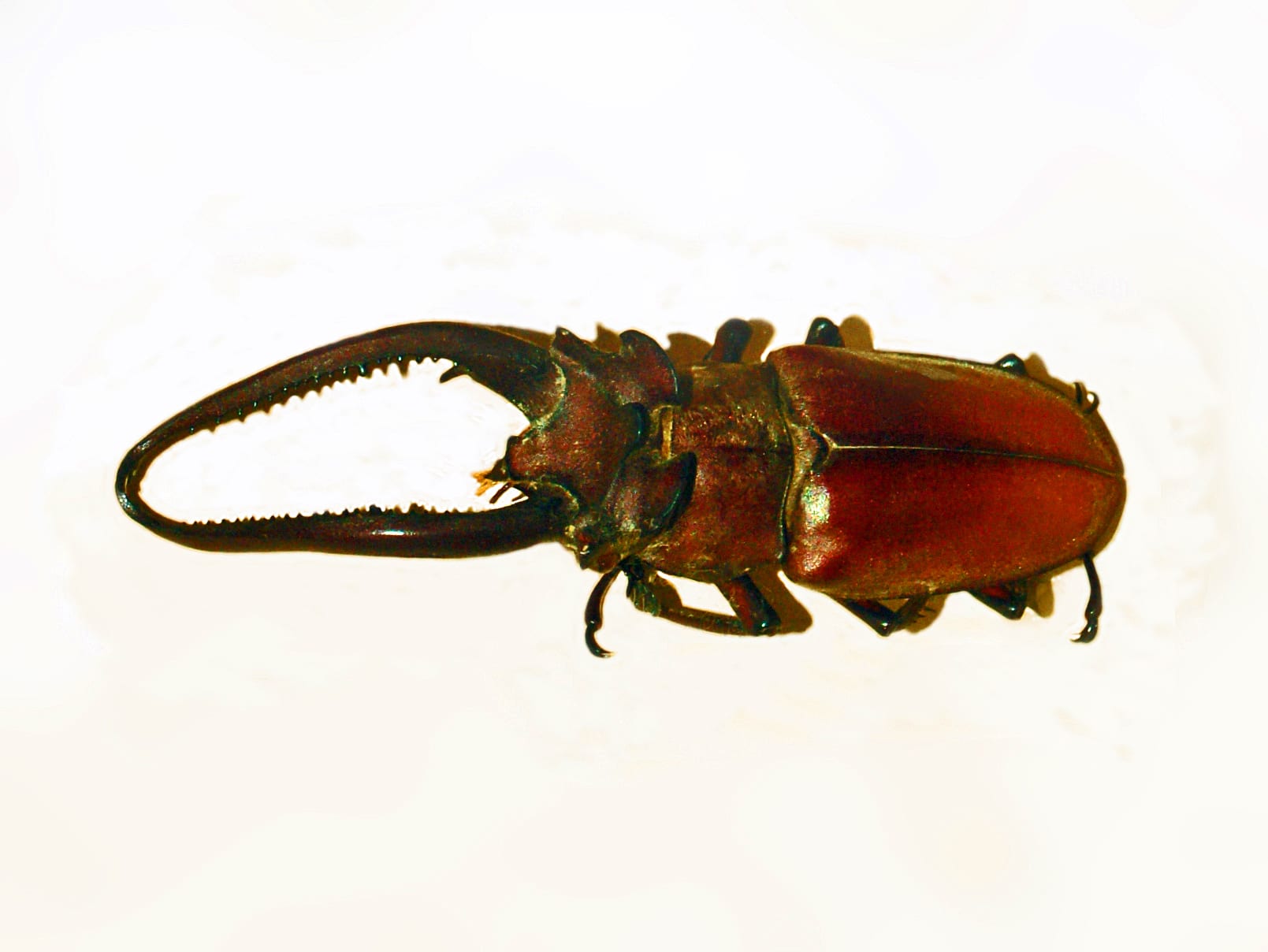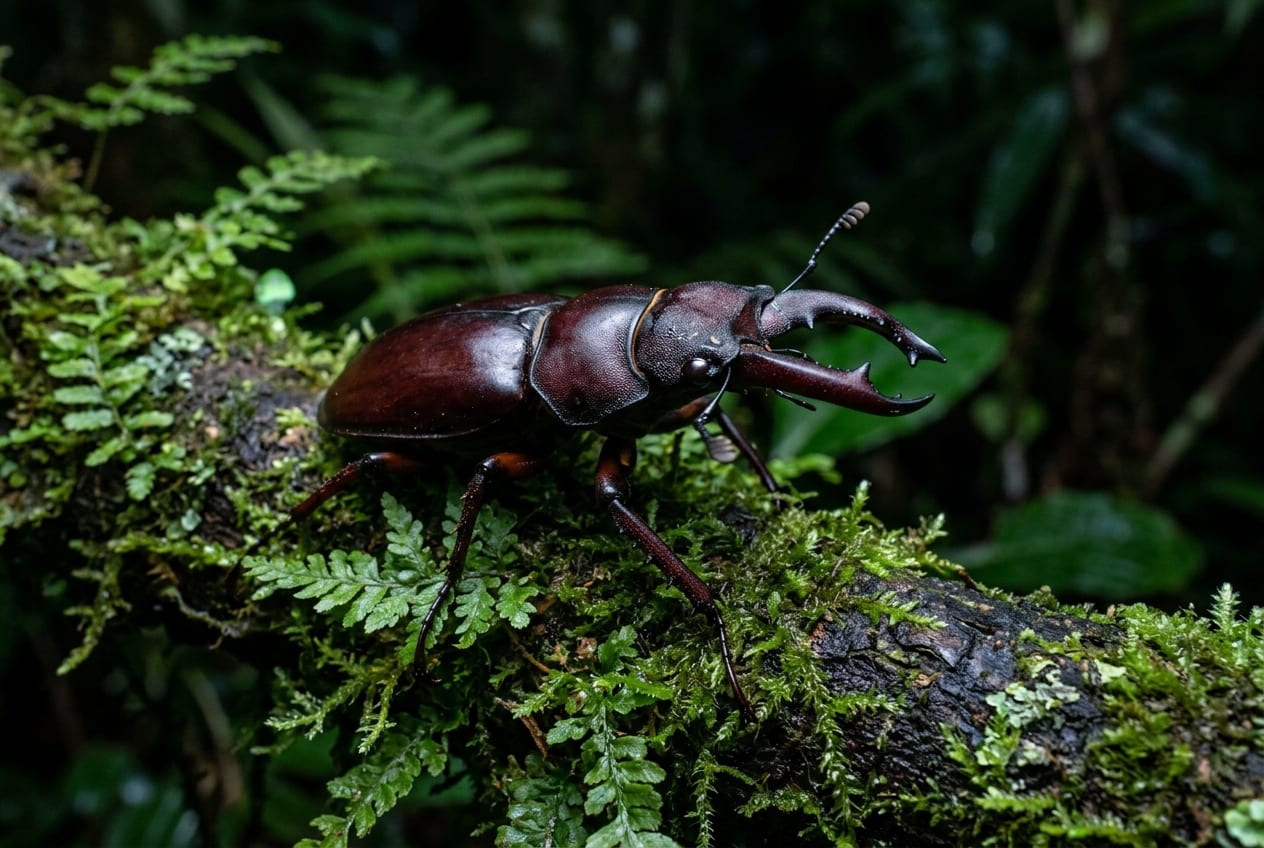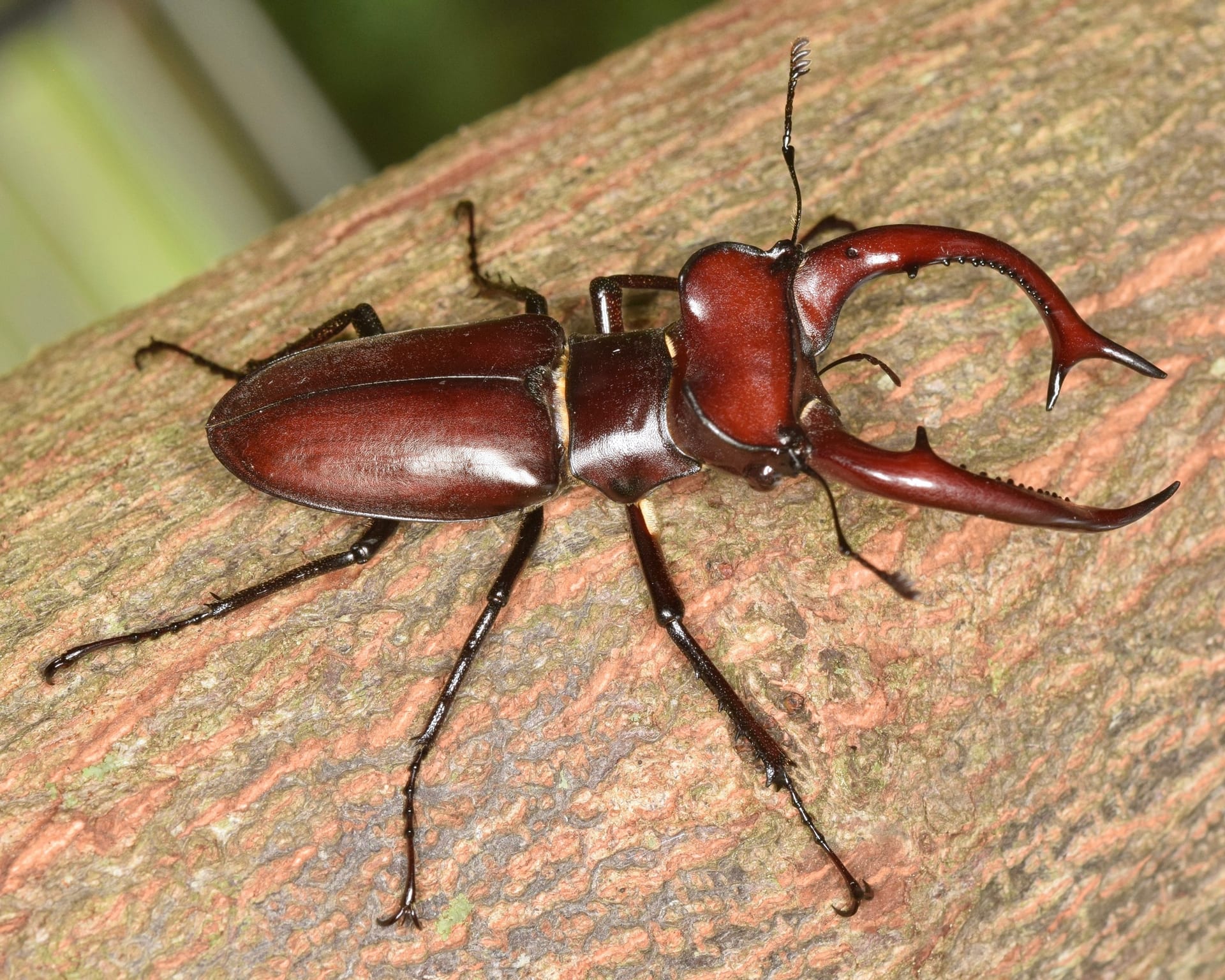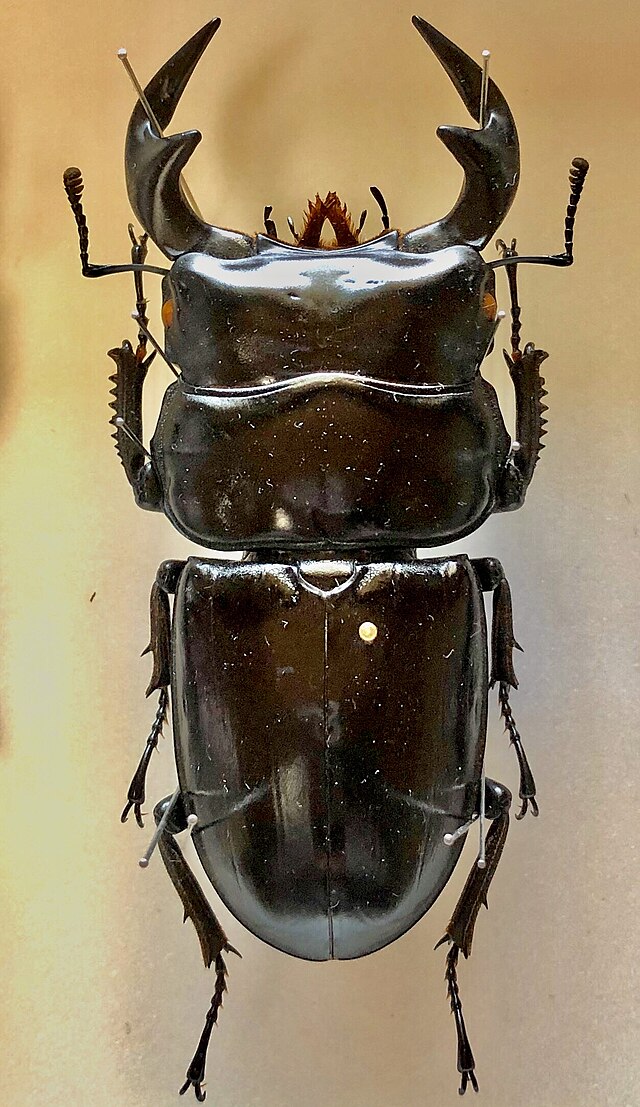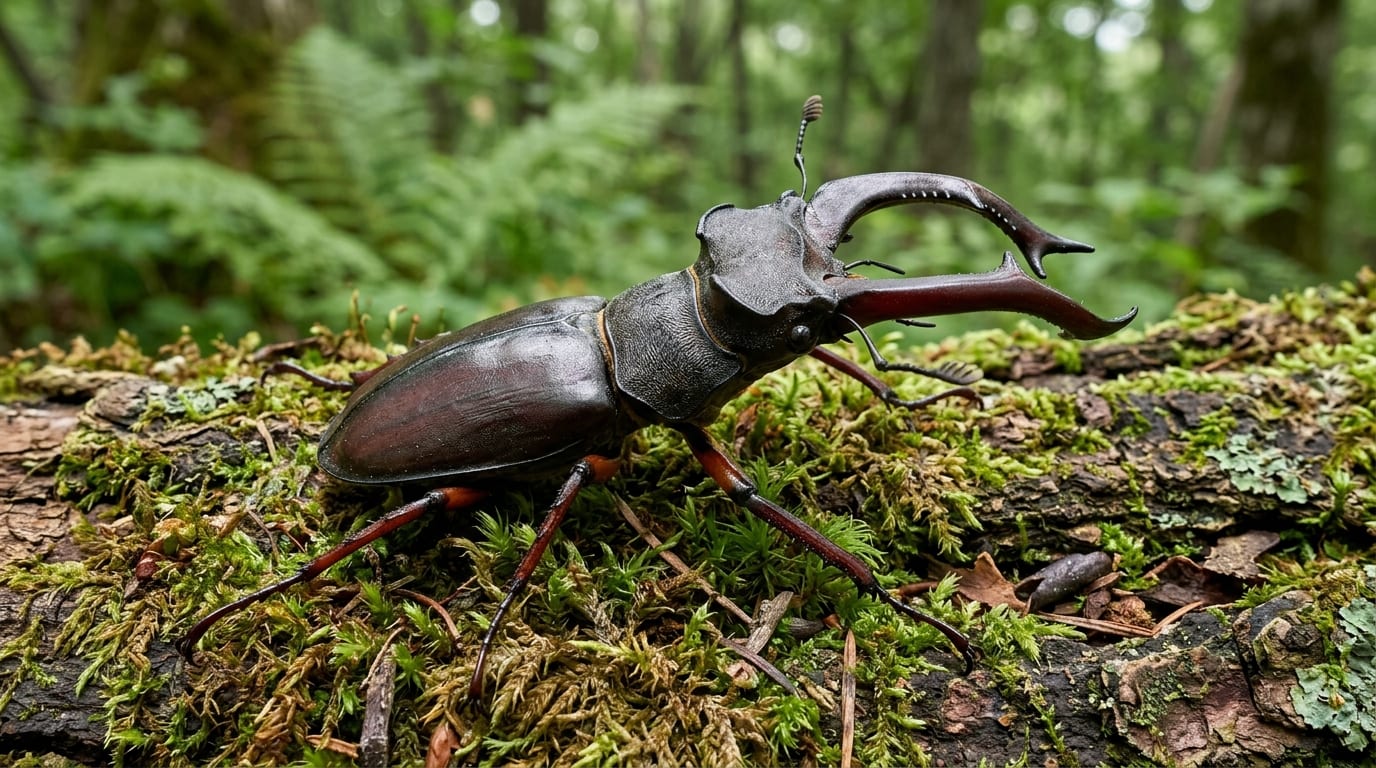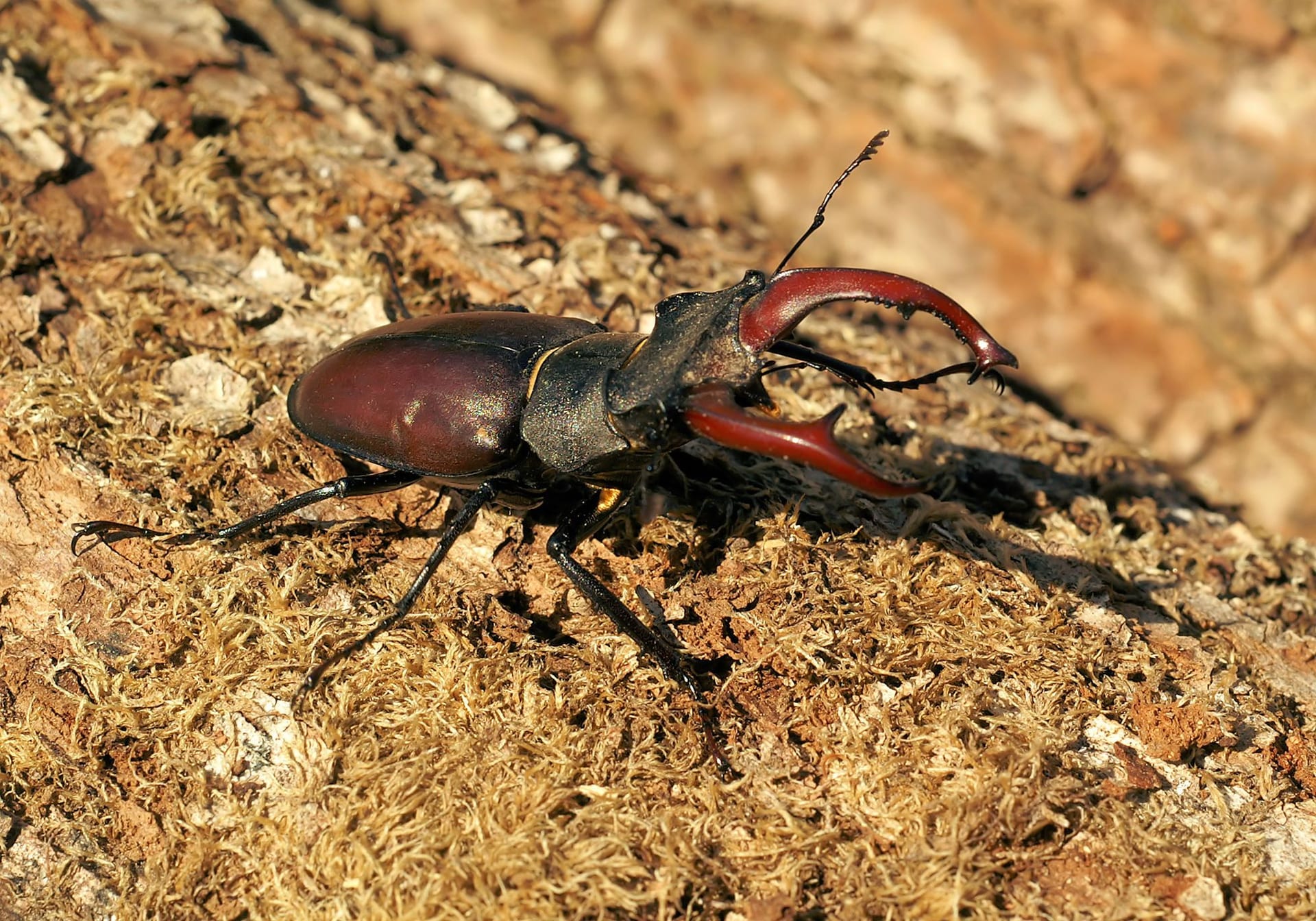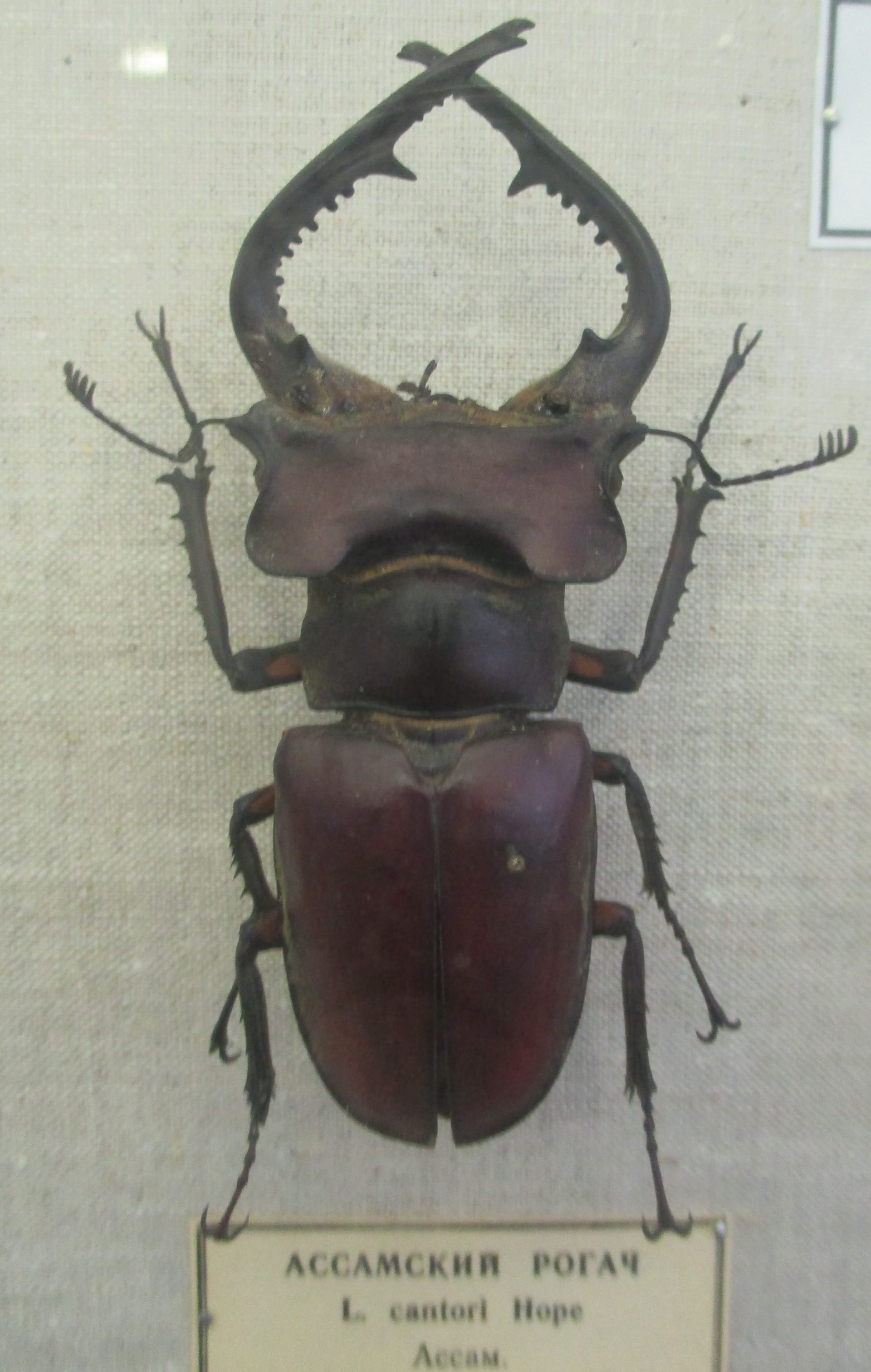
Source: Wikimedia Commons
Cantor's Stag Beetle
AdvancedLucanus cantori
A broad-bodied Lucanus of the Himalayan region. The wild record reaches 90.0mm, yet the best captive beetle stands at 69.5mm, a wide gap between the two.
Difficulty
Advanced
Temperature
20〜28℃
Lifespan
Adults 2-4 months
Size
Wild record 90.0mm, captive record 69.5mm
Humidity
60〜80%
Diet
Adults take beetle jelly; larvae eat fermented substrate
About
Lucanus cantori is a broad-bodied stag beetle of the Himalayan region, also known in Japanese as kanta miyama kuwagata. GBIF holds 30 records from India along with a few from China and Bhutan. The BE-KUWA 2025 edition registers a captive record of 69.5mm against a wild record of 90.0mm, an unusually wide gap between the two. The expected maximum is put at 95mm, which captive rearing does not come close to. It reaches Japan as an imported stag beetle but never in quantity.
Source: Wikipedia (CC BY-SA 4.0)
Lifespan of the Cantor's Stag Beetle
The Cantor's Stag Beetle lives Adults 2-4 months.
Size of the Cantor's Stag Beetle
The Cantor's Stag Beetle grows to Wild record 90.0mm, captive record 69.5mm.
Basic Info
Origin
The Himalayan region, chiefly India, with records also from China and Bhutan
Lifespan
Adults 2-4 months
Size
Wild record 90.0mm, captive record 69.5mm
Temperature
20〜28℃
Humidity
60〜80%
Care Specifications
Breeding Records & Localities
Captive record (♂)
69.5 mm
Wild record (♂)
90 mm
Record source: BE-KUWA 2025 edition, captive records for foreign stag beetles (Cantor, nominate subspecies: captive 69.5mm, Shuichi Yamashita, registered 2022; wild 90.0mm, expected maximum 95mm)
Notable localities
IndiaChinaBhutan
Generation codes
- WD
- Wild-caught
- WF1
- Offspring of a wild-caught female
- F1〜
- Captive generations (same locality)
- CBF1
- Cross-locality captive-bred (reset)
Sources: BE-KUWA Certified Breeding Records (Mushi-sha, FY2025 edition PDF, JA)
References & Sources
Edited & verified by: BreederDirect editorial team
The taxonomic, regulatory, and husbandry data on this page are compiled and verified against the authoritative primary sources below.
Taxonomy & Authority
Accepted name: Lucanus cantori Hope, 1842
Authority databases: GBIF
Nomenclature follows global taxonomic authority databases.
Regulations & Conservation Status
Not CITES-listed
Sources: CITES Appendix (checklist.cites.org)
Regulations may change. Always verify the latest information with the relevant authorities.
Cantor's Stag Beetle Listings
Loading latest listingsFind listings for this species