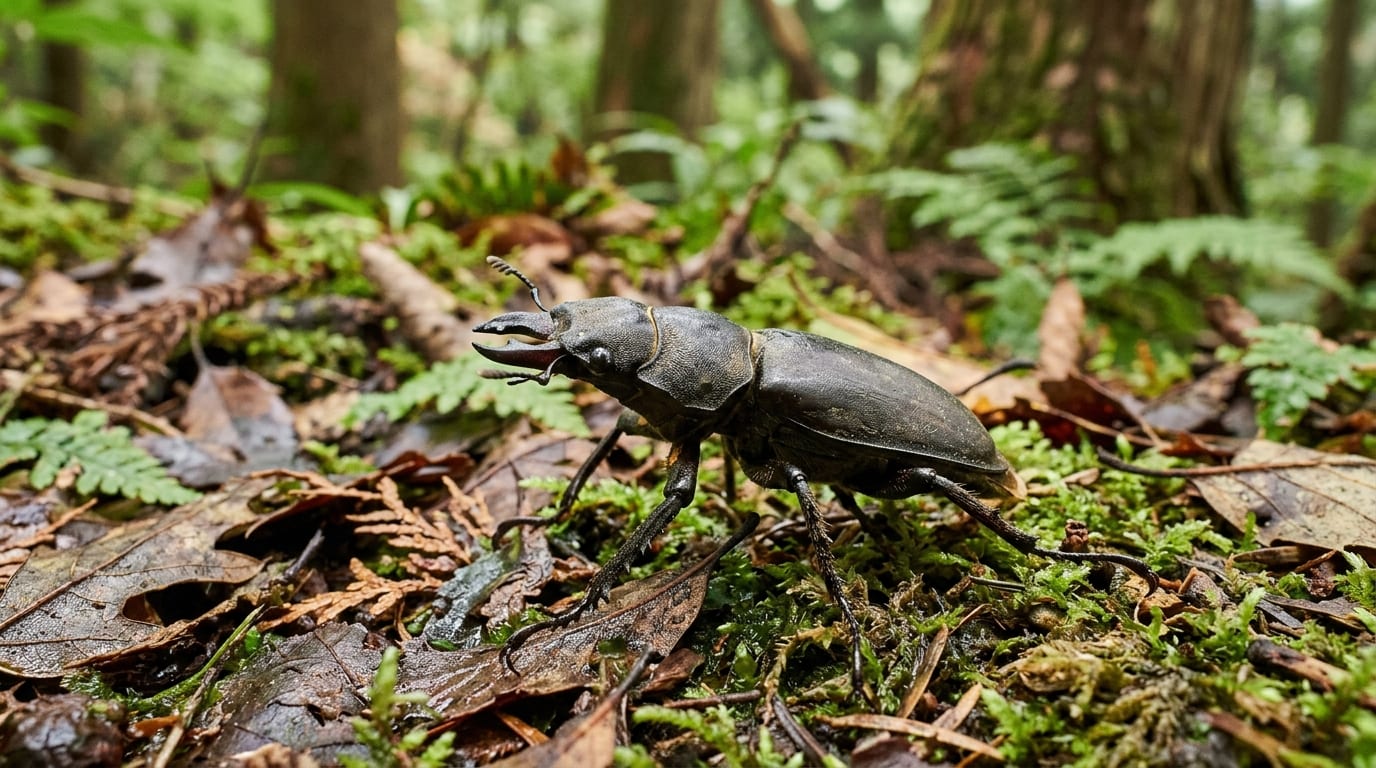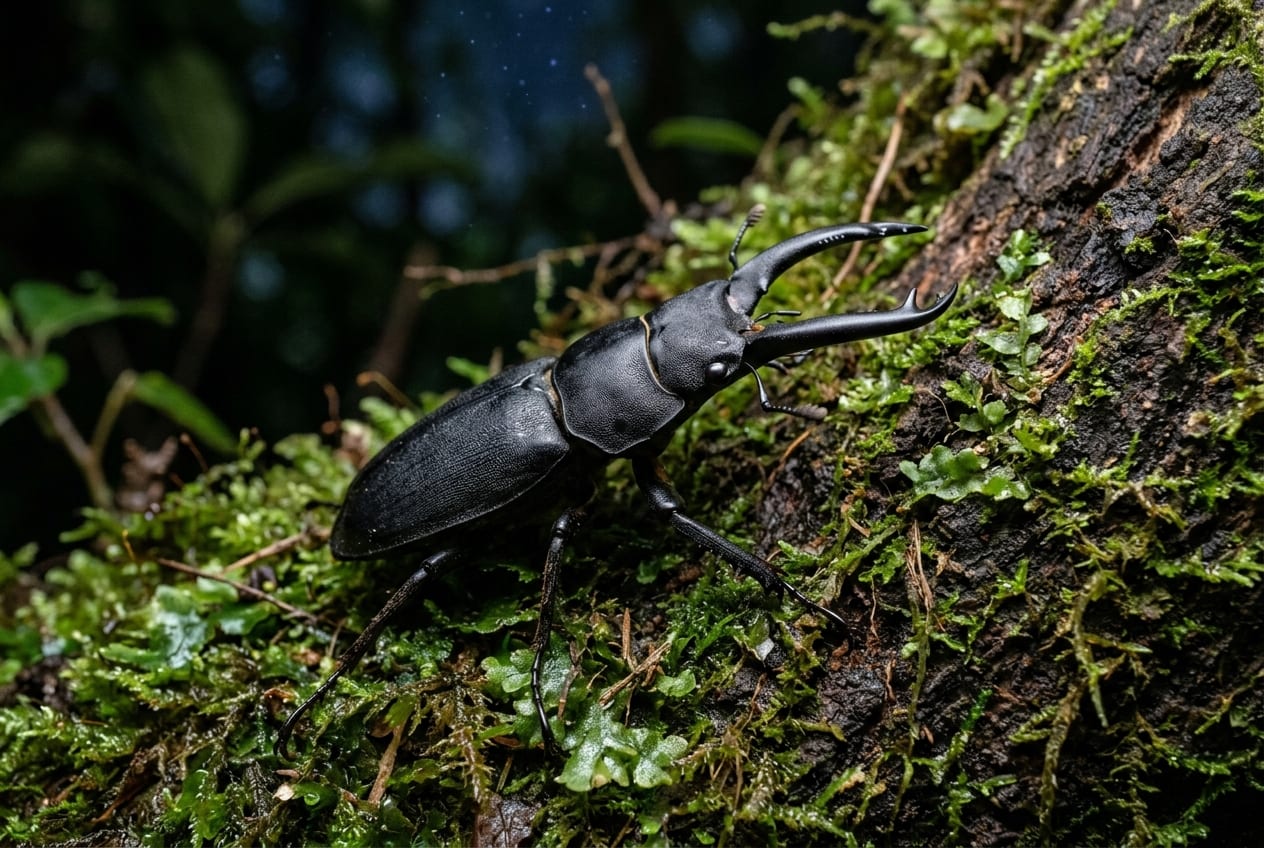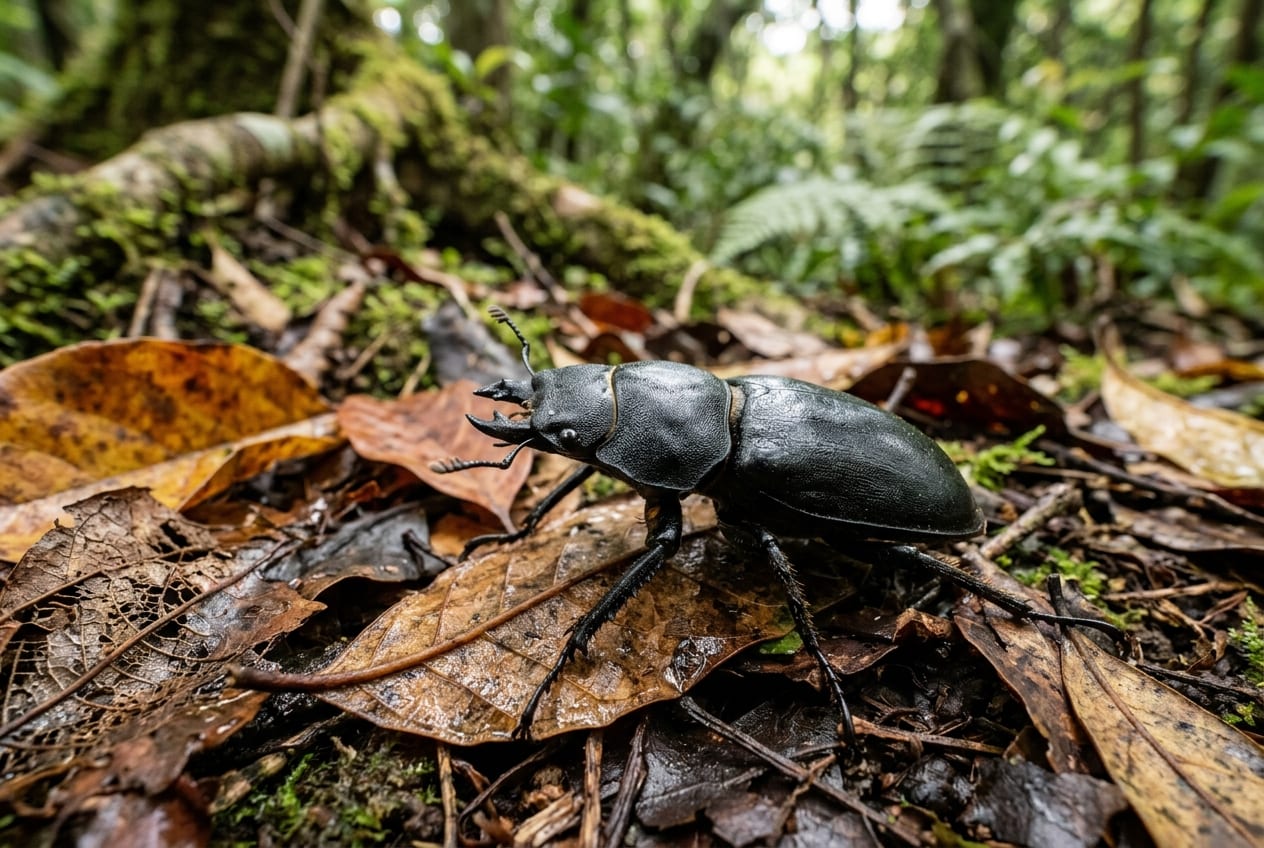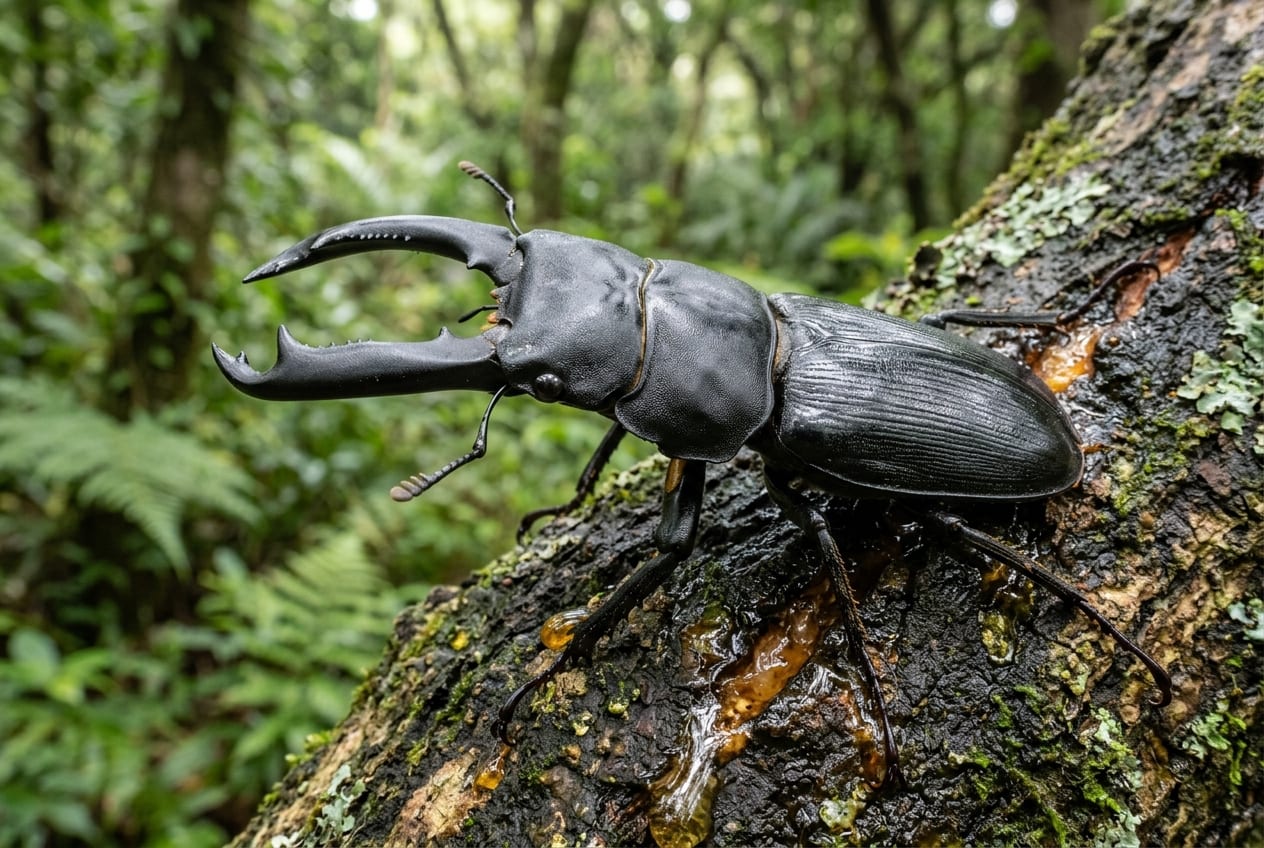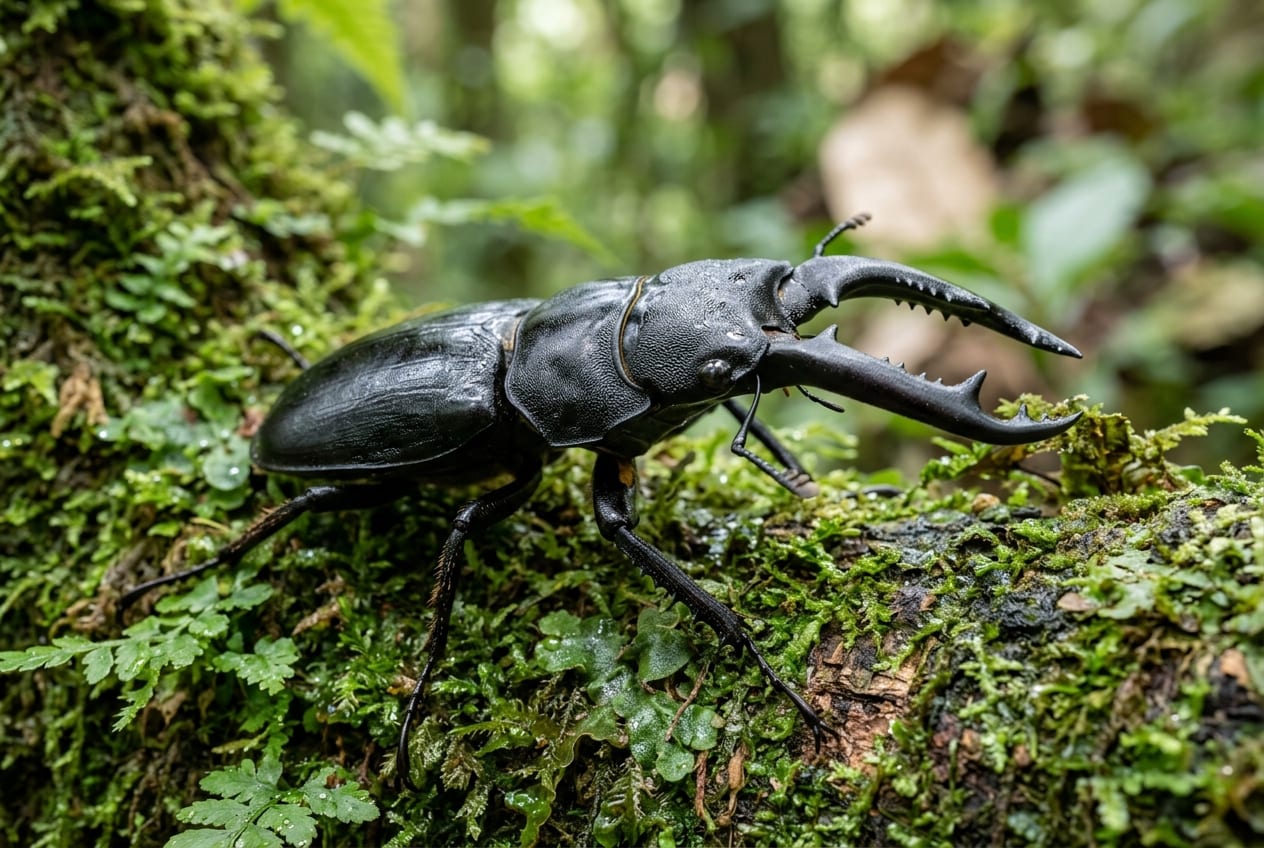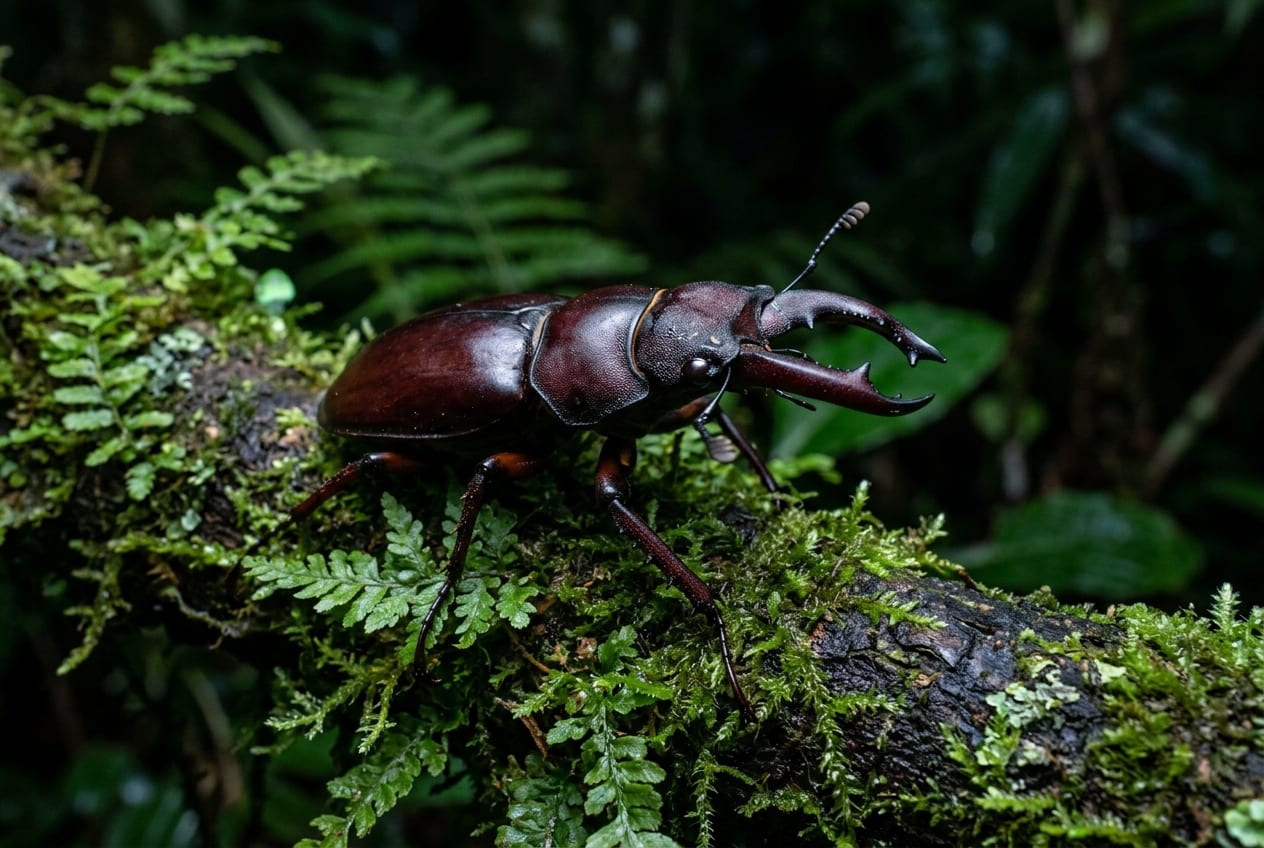
AI-generated image
Amami Miyama Stag Beetle
AdvancedLucanus ferriei
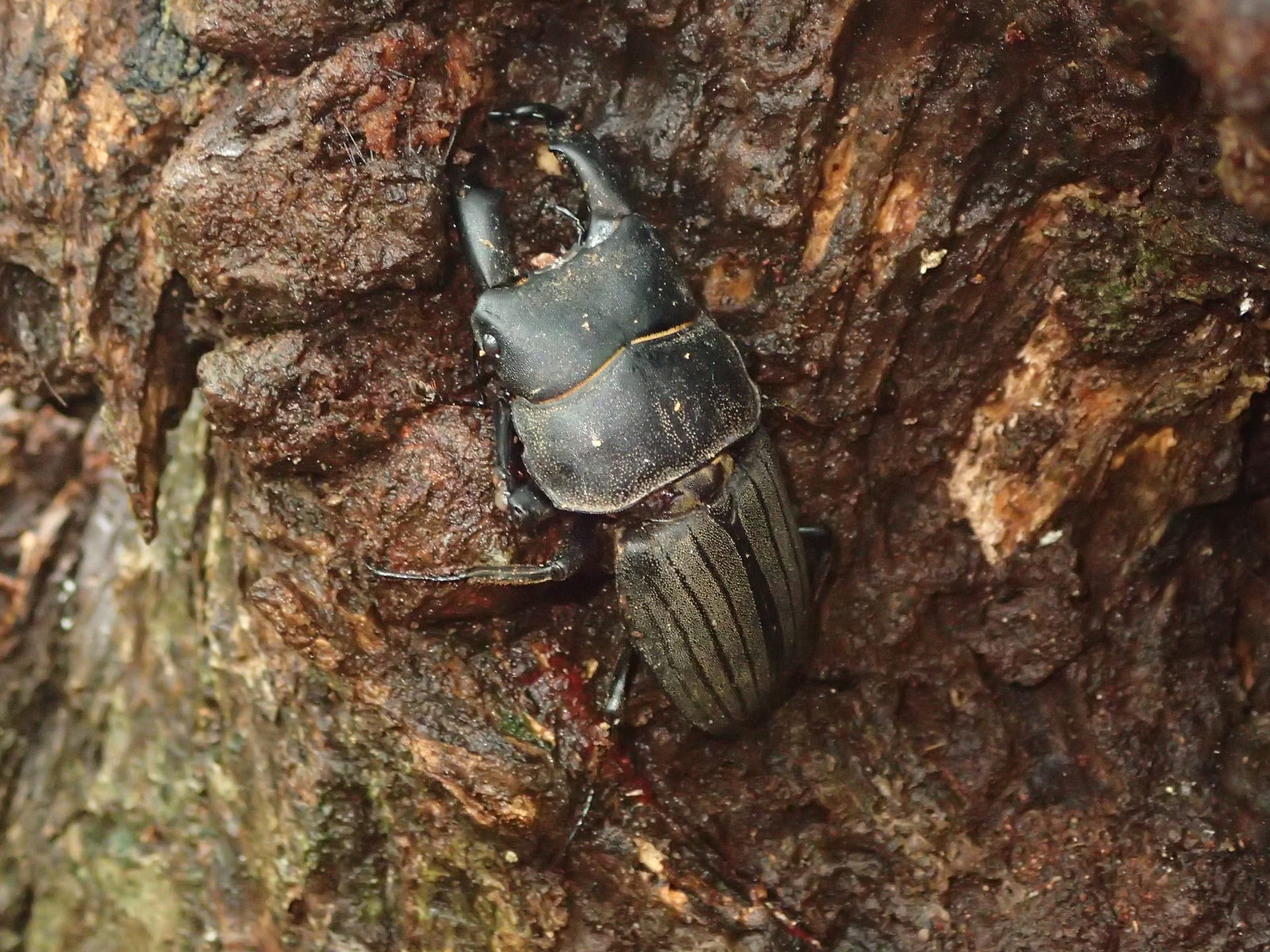
A Lucanus found nowhere in the world but Amami-Oshima. It is far smaller than the mainland Japanese species and, lacking the golden hairs of that beetle, shows a conspicuous reddish-brown body. It is strictly nocturnal.
Difficulty
Advanced
Temperature
20〜28℃
Lifespan
Short-lived as an adult
Size
Under 50mm even in large males and under 40mm in females (captive record 56.2mm, wild record 51.0mm)
Humidity
60〜80%
Diet
Adults take the sap of Castanopsis and beetle jelly; larvae eat humus and wood on the forest floor
About
Lucanus ferriei occurs nowhere in the world but Amami-Oshima. The only other stag beetle in Japan confined to a single island is the Hachijo form of Prosopocoilus inclinatus. It is far smaller than the mainland Japanese Lucanus, with even large males under 50 mm and females under 40 mm. The mandibles fork at the tip as in that species but the inner teeth stay small, the basal tooth is absent, and the shape recalls the Taiwanese Lucanus. Where the mainland beetle is covered in fine golden hairs, this one has almost none, so its reddish-brown colour stands out. Females are black as in the mainland species, but for every few dozen males collected only one or two females are said to be found. Unlike the mainland beetle it is strictly nocturnal and appears from July to September. On the island the males gather in the tops of tall trees on comparatively high ground and also come to the sap of Castanopsis. The larvae grow on humus and wood on the forest floor.
Source: Wikipedia (CC BY-SA 4.0)
Size of the Amami Miyama Stag Beetle
The Amami Miyama Stag Beetle grows to Under 50mm even in large males and under 40mm in females (captive record 56.2mm, wild record 51.0mm).
Basic Info
Origin
Japan (Amami-Oshima only)
Lifespan
Short-lived as an adult
Size
Under 50mm even in large males and under 40mm in females (captive record 56.2mm, wild record 51.0mm)
Temperature
20〜28℃
Care Specifications
Semi-aggressiveSolitaryBreeding: Hard
Sources: Lucanus ferriei - Wikipedia (JA; range, size, morphology, nocturnal habits and season, larval diet, the collecting ban from 2013 and Red List status) / GBIF subspecies page for Lucanus maculifemoratus ferriei Planet, 1898 / BE-KUWA Certified Breeding Records (Mushi-sha, FY2025 edition PDF, JA)
Breeding Records & Localities
Captive record (♂)
56.2 mm
Wild record (♂)
51 mm
Record source: BE-KUWA 2025 edition, captive records for medium and large Japanese stag beetles (Amami miyama: captive 56.2 mm, Kensuke Kamijo, registered 2015, expected maximum 59 mm; wild 51.0 mm, Seiichiro Hiragita)
Notable localities
Amami-Oshima
Generation codes
- WD
- Wild-caught
- WF1
- Offspring of a wild-caught female
- F1〜
- Captive generations (same locality)
- CBF1
- Cross-locality captive-bred (reset)
Sources: BE-KUWA Certified Breeding Records (Mushi-sha, FY2025 edition PDF, JA) / Lucanus ferriei - Wikipedia (JA; range, size, morphology, nocturnal habits and season, larval diet, the collecting ban from 2013 and Red List status)
References & Sources
Edited & verified by: BreederDirect editorial team
The taxonomic, regulatory, and husbandry data on this page are compiled and verified against the authoritative primary sources below.
Taxonomy & Authority
Accepted name: Lucanus ferriei Planet, 1898
Synonyms: Lucanus maculifemoratus ferriei
Authority databases: GBIF
Nomenclature follows global taxonomic authority databases.
Regulations & Conservation Status
Not CITES-listed
Sources: CITES Appendix (checklist.cites.org)
Regulations may change. Always verify the latest information with the relevant authorities.
Amami Miyama Stag Beetle Listings
Loading latest listingsFind listings for this species