Source: Wikimedia Commons
Ridged Flat Stag Beetle
IntermediateDorcus metacostatus
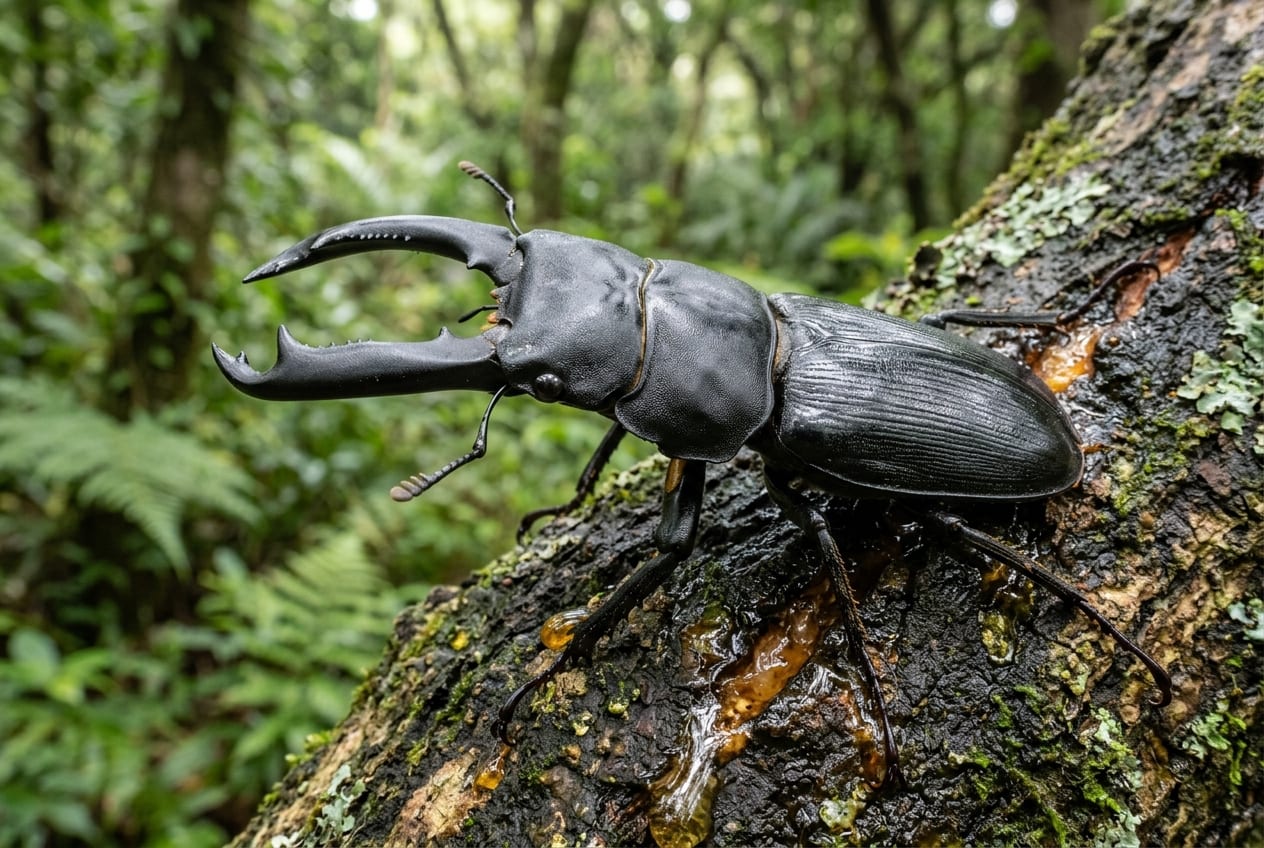
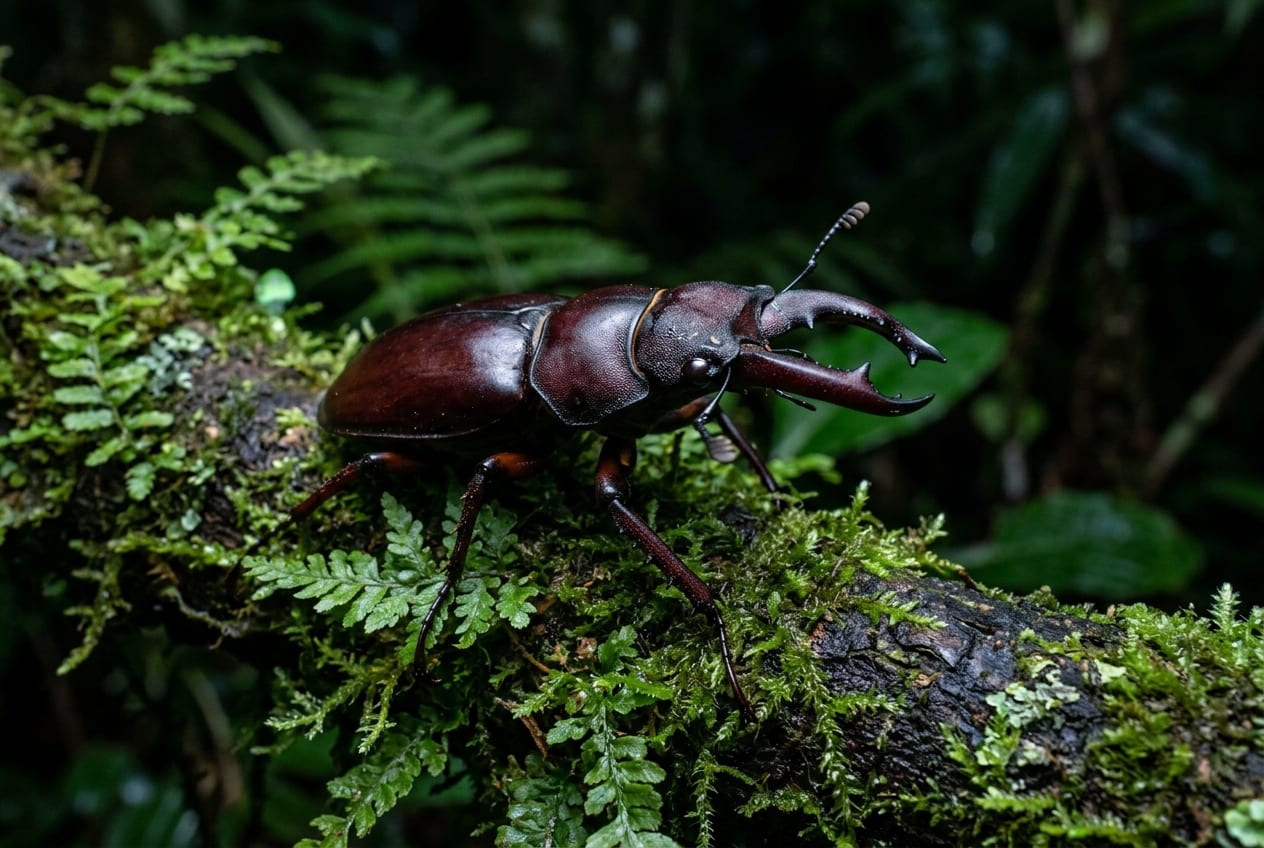
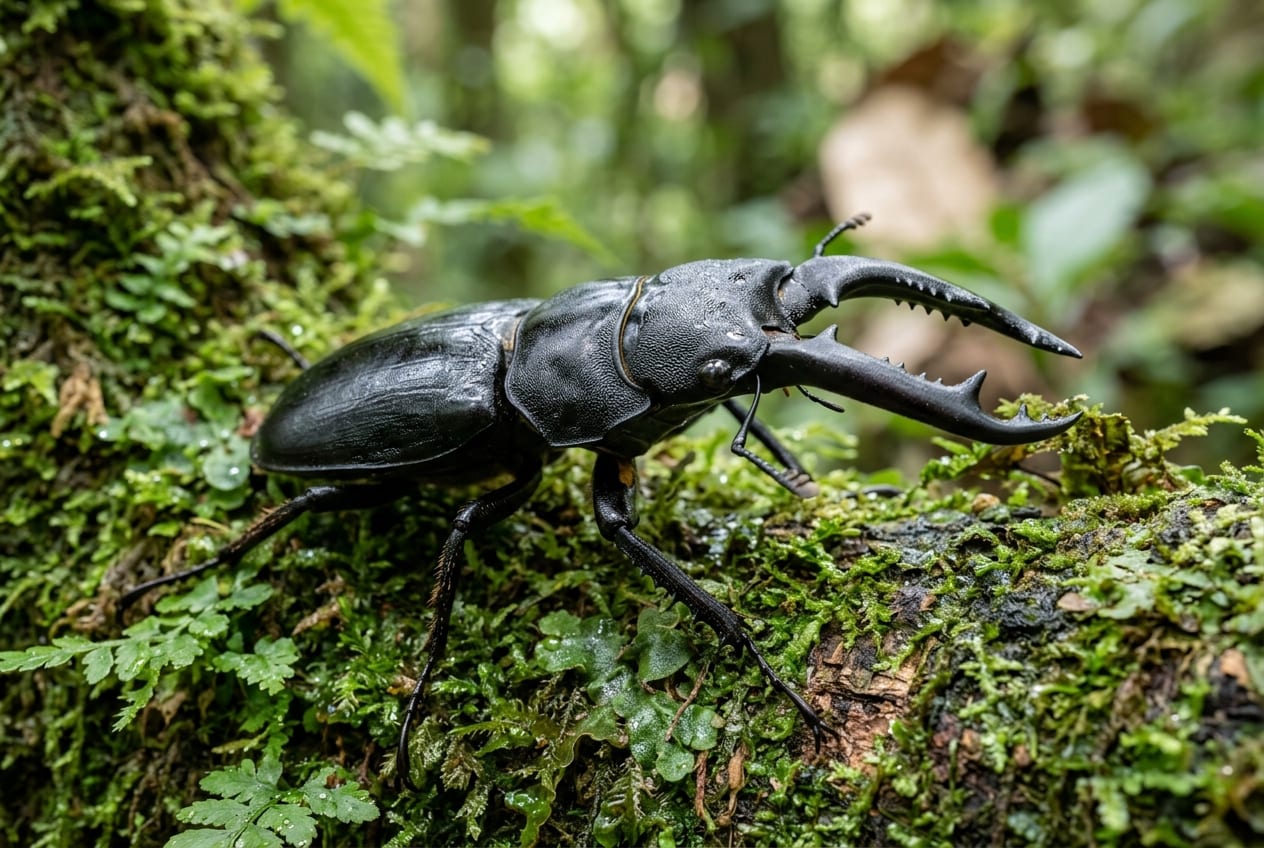
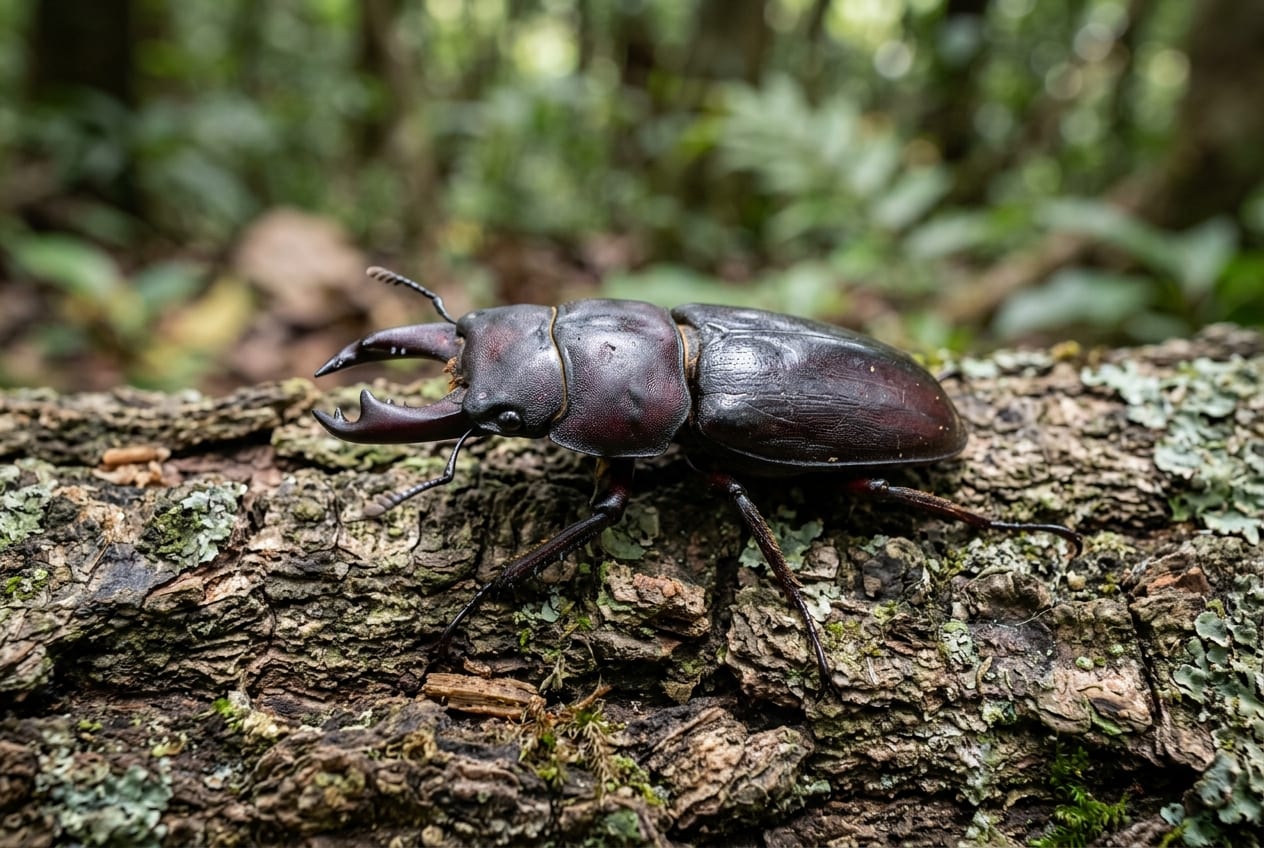
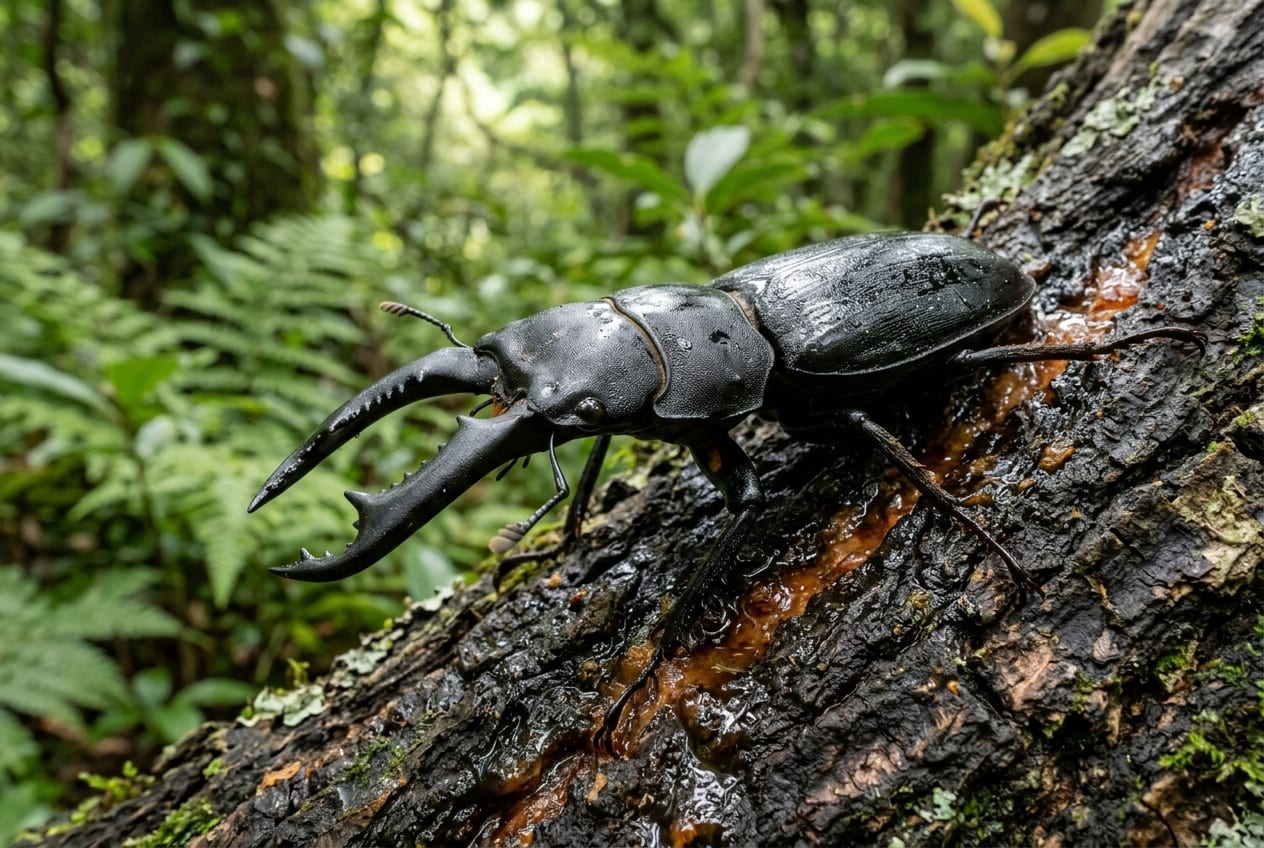
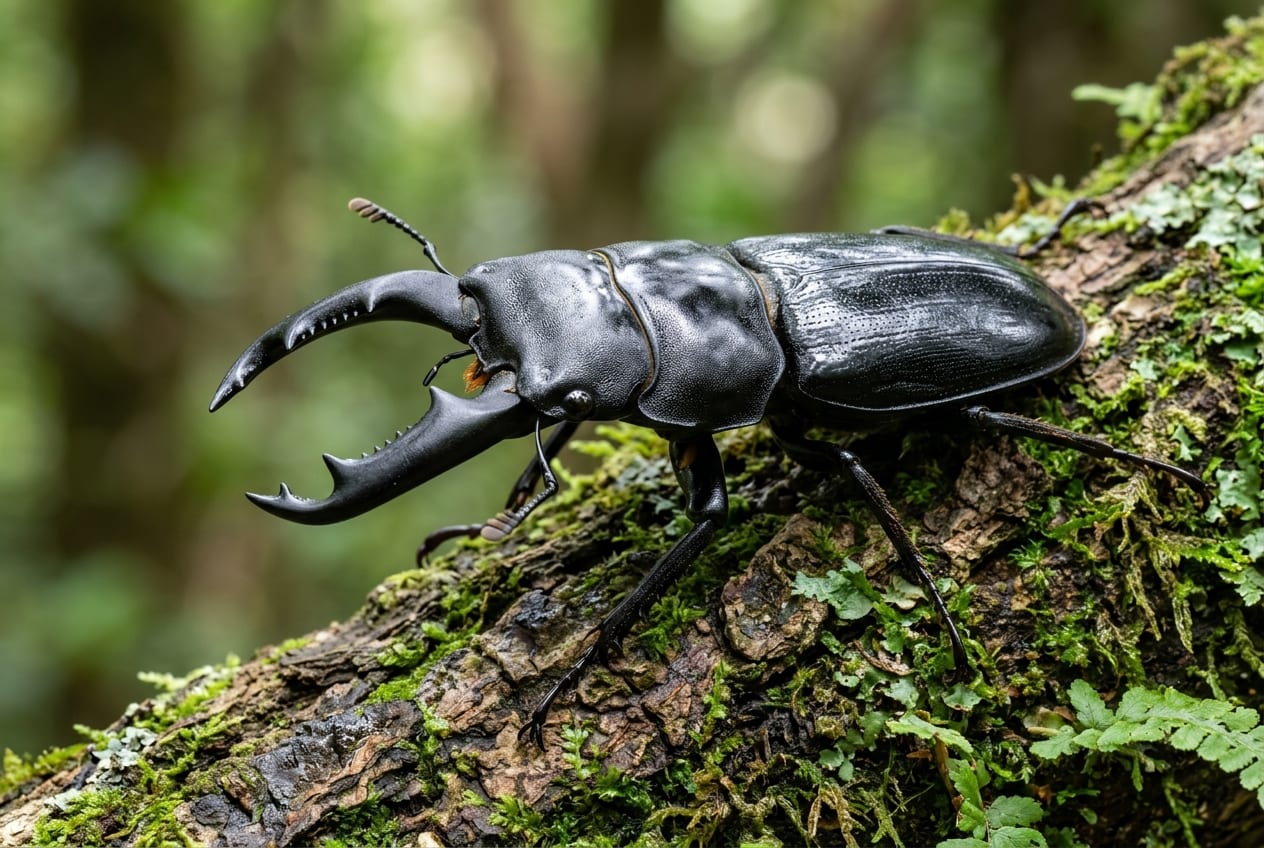
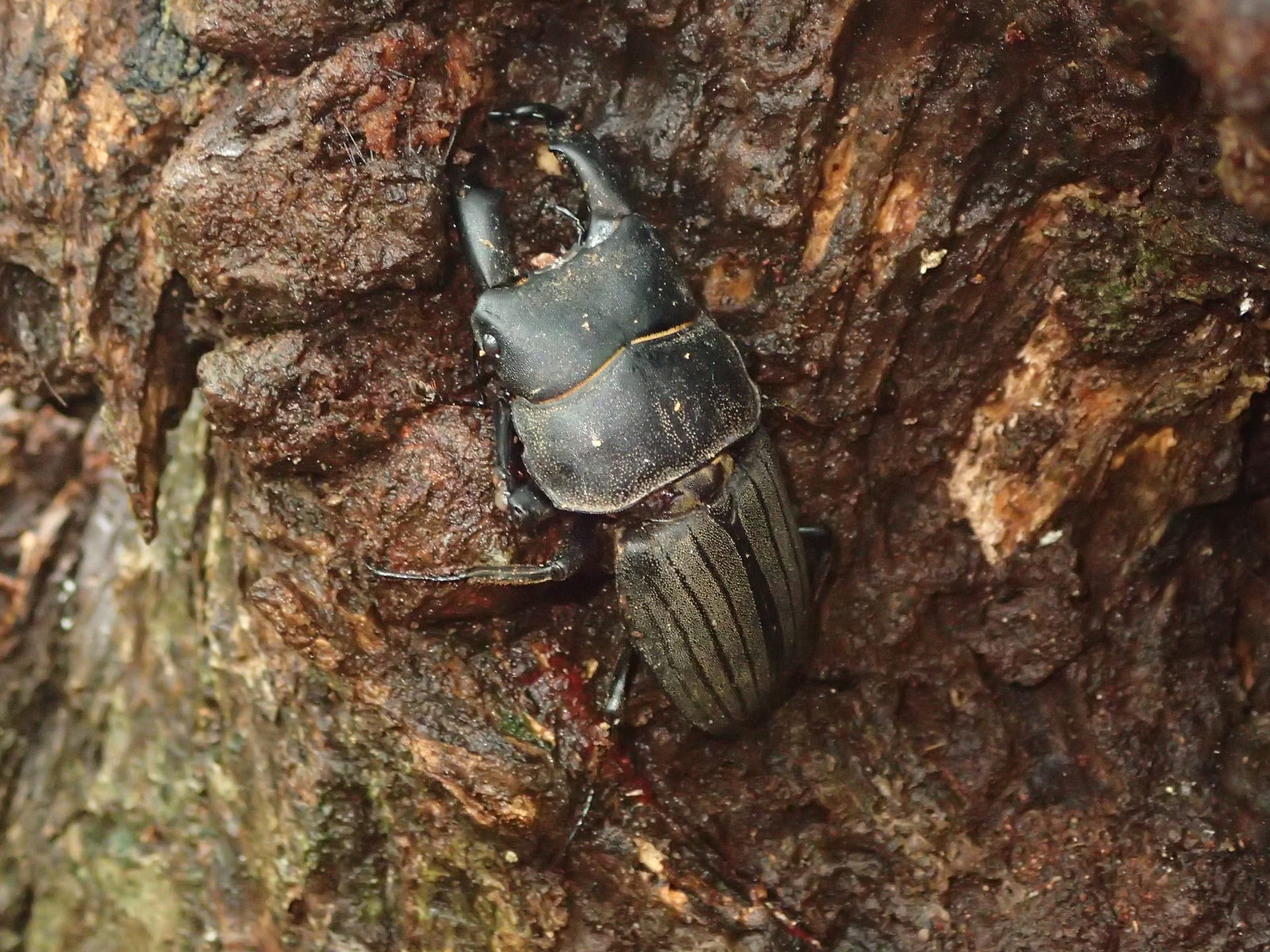
A Japanese endemic from the Amami Islands. It is the only Dorcus with eight distinct heavy ridges on its elytra, and both sexes are so aggressive that pairing is the hardest step in breeding it over generations.
Difficulty
Intermediate
Temperature
20〜26℃
Lifespan
Adults 1-3 years
Size
Males 45-74.6 mm / females 25-47 mm (another source gives males 32-70 mm, females 27-37 mm)
Humidity
60〜80%
Diet
Tree sap (Castanopsis, Mallotus japonicus and others), beetle jelly
About
The ridged flat stag (Dorcus metacostatus) is endemic to Amami Oshima, Kakeromajima, Yorojima, Ukejima and Tokunoshima, and carries eight distinct heavy ridges on its elytra. It is said to be the only Dorcus that shows this pattern at large size; the ridges are sharpest on females and small males and grow shallower as males get bigger. Males measure 45-74.6 mm and females 25-47 mm, though wild males are usually in the 40s, with few over 55 mm. It lives in broadleaf forest, is active from late April to October with a July peak, and gathers at the sap of Castanopsis and Mallotus japonicus. Females lay in damp rotten wood in the buried base of dead trees and under fallen logs, and larvae take about a year. Egg-laying and larval rearing are easy on either fungus bottles or fortified fermented substrate, but both sexes are so aggressive that males frequently kill females, so pairing them without injury is the key to breeding it over generations.
Source: Wikipedia (CC BY-SA 4.0)
Lifespan of the Ridged Flat Stag Beetle
The Ridged Flat Stag Beetle lives Adults 1-3 years.
Size of the Ridged Flat Stag Beetle
The Ridged Flat Stag Beetle grows to Males 45-74.6 mm / females 25-47 mm (another source gives males 32-70 mm, females 27-37 mm).
Temperature & humidity for the Ridged Flat Stag Beetle
The ideal temperature for the Ridged Flat Stag Beetle is 20〜26℃.
Basic Info
Origin
Endemic to Japan (Amami Islands, Kagoshima: Amami Oshima, Kakeromajima, Yorojima, Ukejima, Tokunoshima)
Care Specifications
AggressiveSolitaryBreeding: Moderate
Sources: Mushinavi - Ridged flat stag (JA) / beetlebreeding.ch - The Breeding/Rearing of Dorcus titanus palawanicus by Kay (general guidance for flat stags) / Dorcus metacostatus - Wikipedia (JA)
Breeding Records & Localities
Captive record (♂)
76.2 mm
Wild record (♂)
70.1 mm
Record source: BE-KUWA 2025 edition (Ridged flat stag, captive 76.2 mm, 松野匡記 2024 / wild 70.1 mm, 原島真二; projected maximum 76 mm. Females: captive 53.4 mm, 3464 2024 / wild 42.7 mm, 土屋利行 2022)
Notable localities
Amami Oshima (Kagoshima)Tokunoshima (Kagoshima)Kakeromajima (Kagoshima)
Treated as a full species rather than a subspecies of Dorcus titanus. DNA places it relatively close to the Taiwanese Dorcus kyanrauensis group.
Generation codes
- WD
- Wild-caught
- WF1
- Offspring of a wild-caught female
- F1〜
- Captive generations (same locality)
- CBF1
- Cross-locality captive-bred (reset)
Sources: BE-KUWA Certified Breeding Records (Mushi-sha, FY2025 edition PDF, JA) / Dorcus metacostatus - Wikipedia (JA)
References & Sources
Edited & verified by: BreederDirect editorial team
The taxonomic, regulatory, and husbandry data on this page are compiled and verified against the authoritative primary sources below.
Taxonomy & Authority
Accepted name: Dorcus metacostatus Kikuta, 1985
Synonyms: Serrognathus costatus, Serrognathus metacostatus
Authority databases: GBIF
Nomenclature follows global taxonomic authority databases.
Regulations & Conservation Status
Not CITES-listed
Sources: CITES Appendix (checklist.cites.org)
Regulations may change. Always verify the latest information with the relevant authorities.
Ridged Flat Stag Beetle Listings
Loading latest listingsFind listings for this species