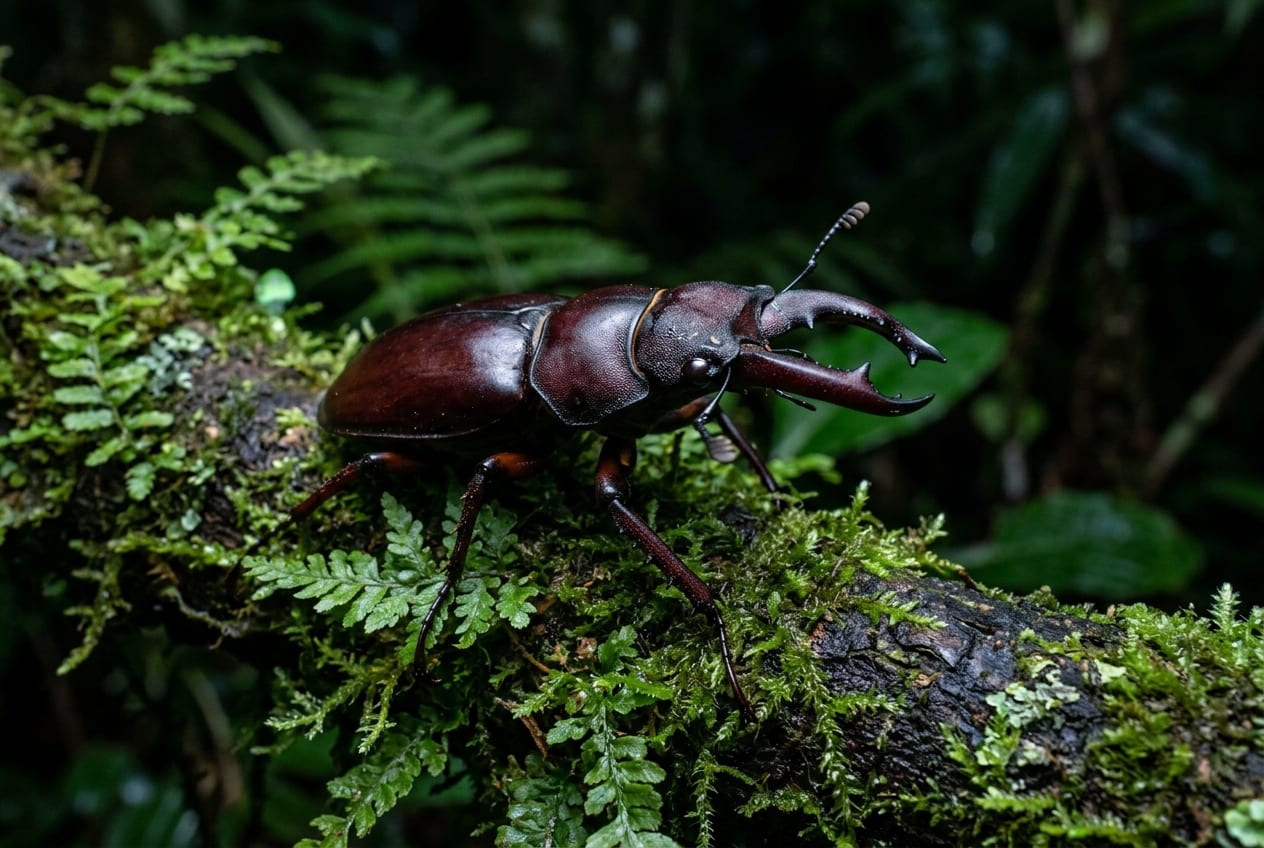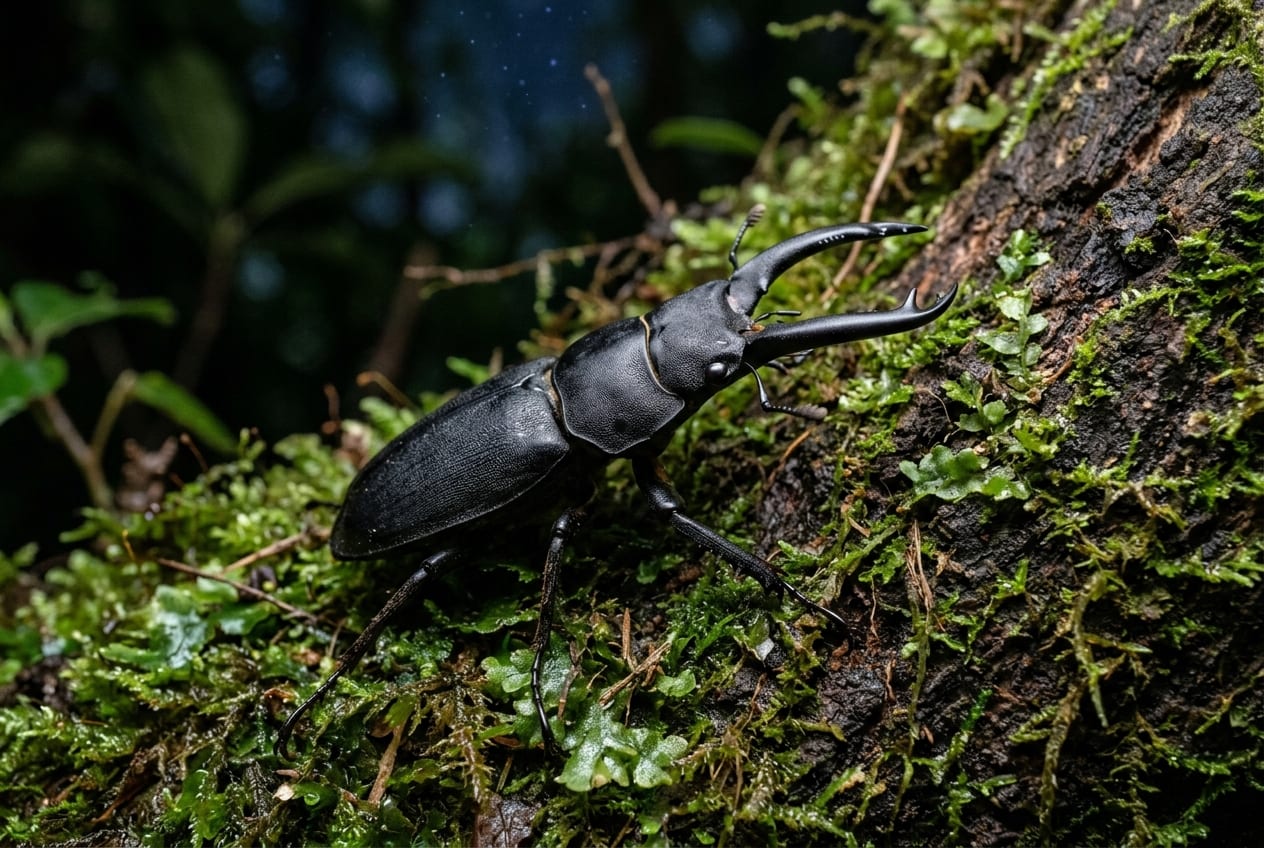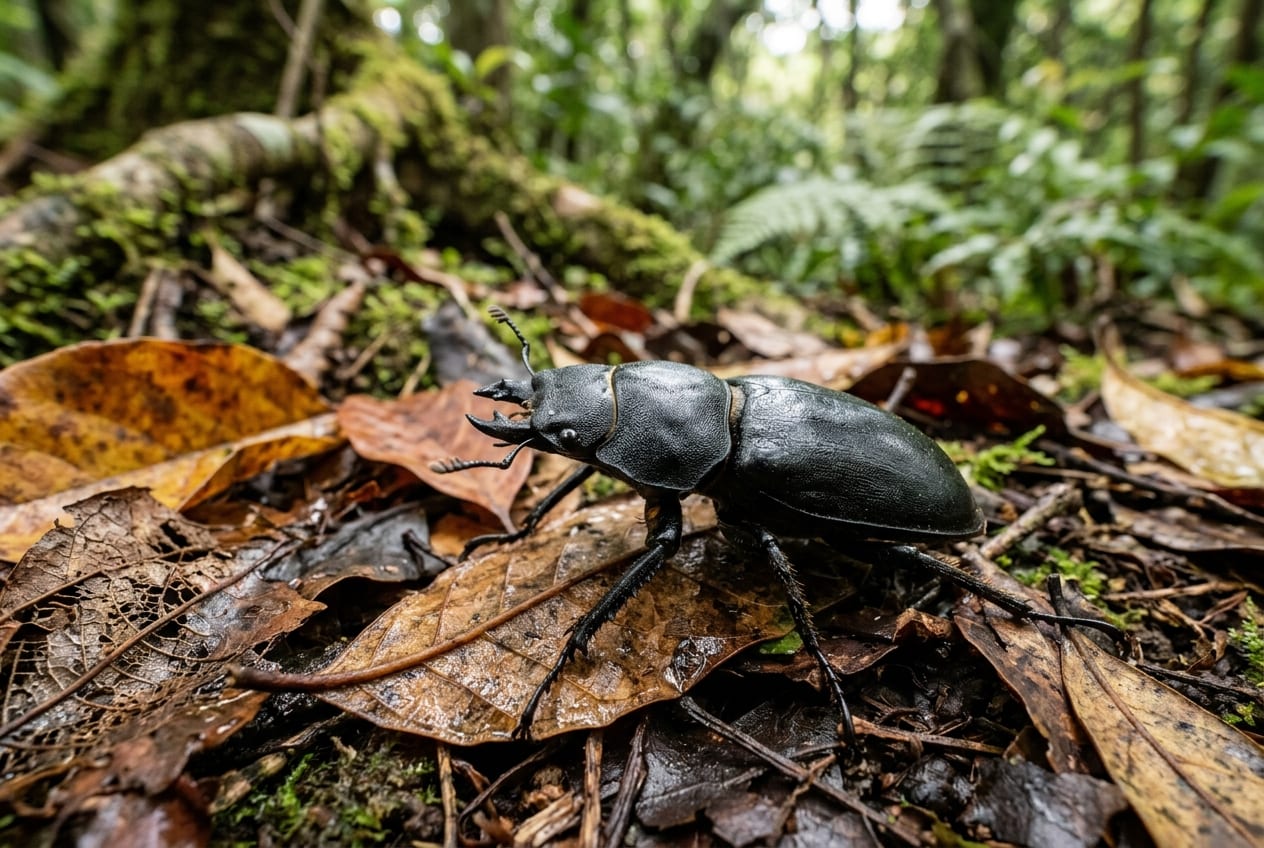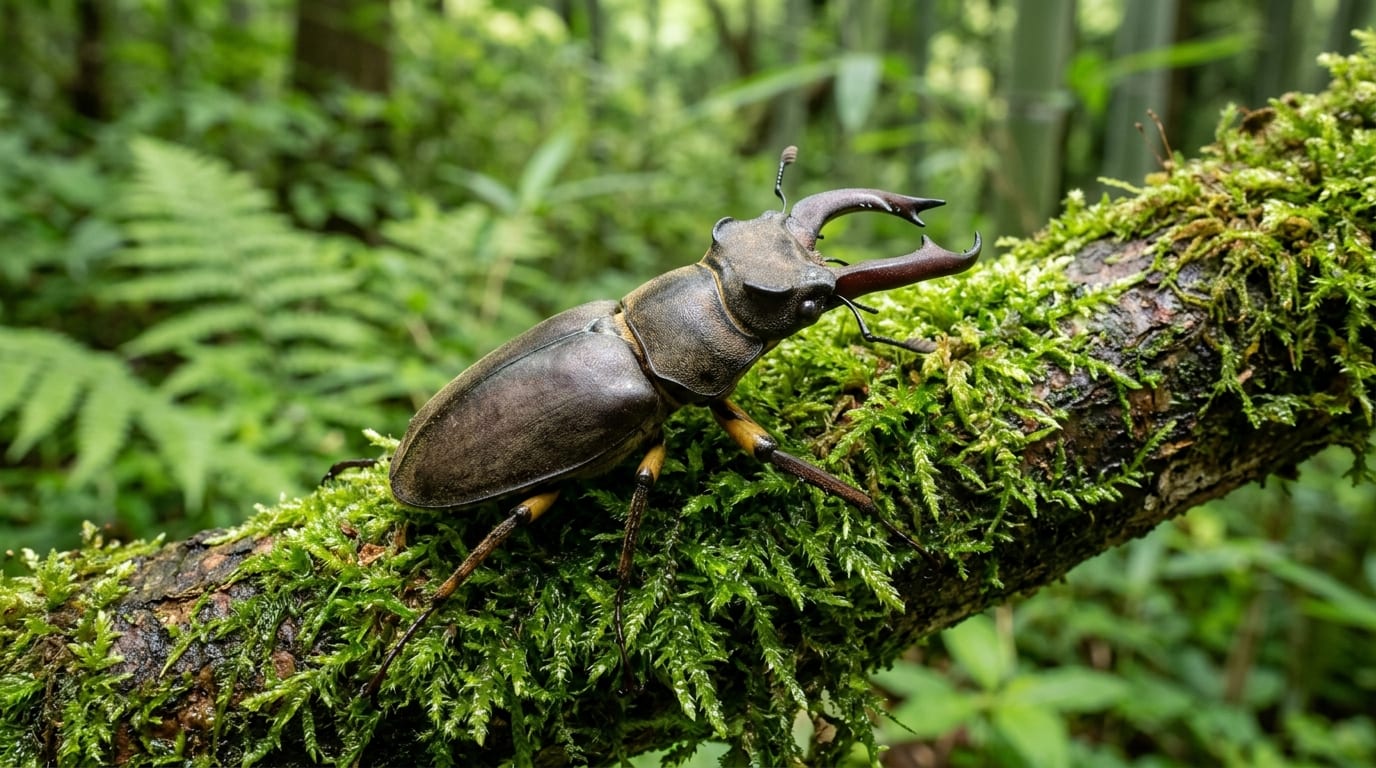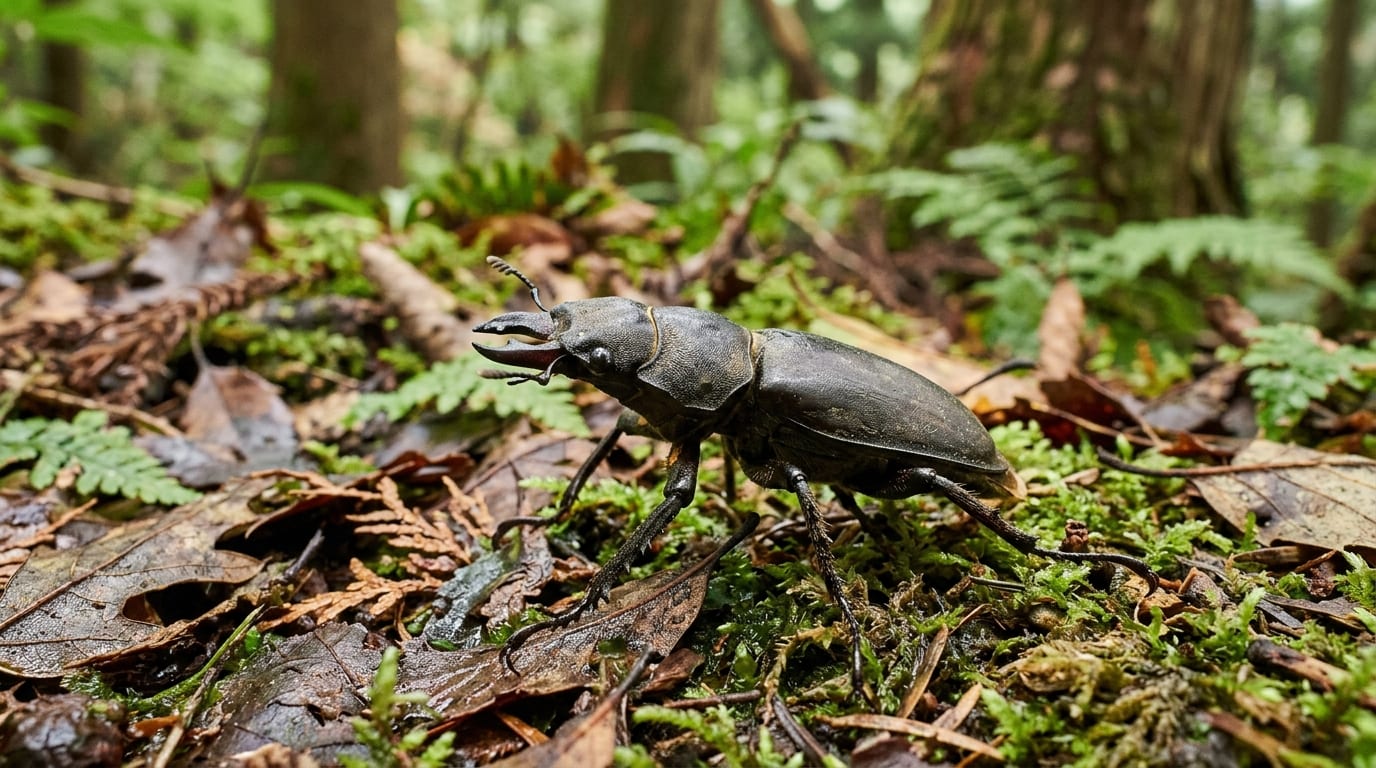
AI-generated image
Mikura Miyama Stag Beetle
AdvancedLucanus gamunus
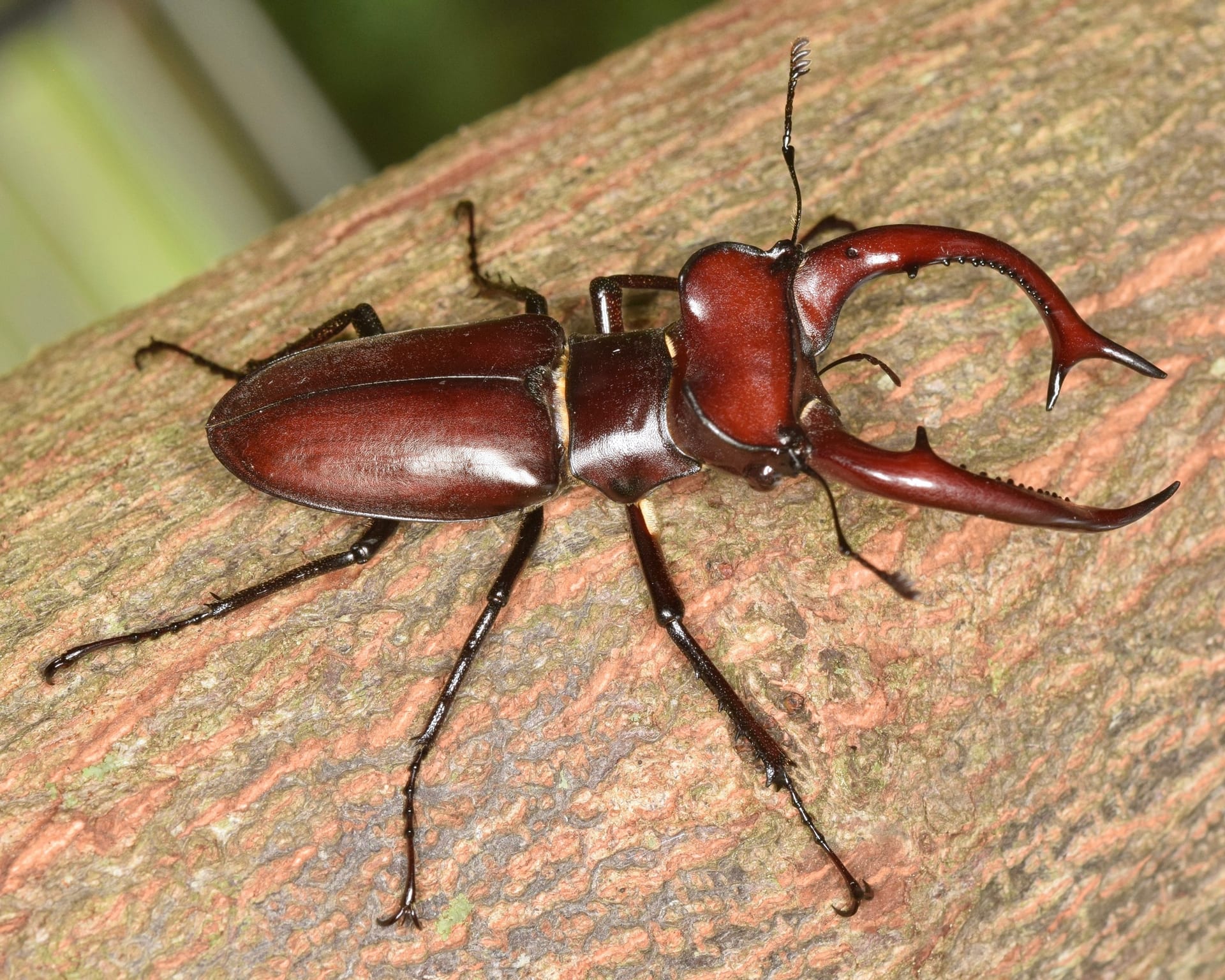
A small Lucanus found only on Mikurajima and Kozushima in Tokyo. The male's ear-like process is little developed. Unable to fly, it walks to get about, a relict adapted to small islands.
Difficulty
Advanced
Temperature
20〜28℃
Lifespan
About a month once active
Size
Wild maximum 34.7mm (captive record 40.8mm, from Kozushima stock)
Humidity
60〜80%
Diet
Larvae eat soil formed from decaying broadleaf litter; adults take beetle jelly and the like
About
Lucanus gamunus is a Lucanus found only on Mikurajima and Kozushima in Tokyo, and its Japanese name comes from the island where it was discovered. The ear-like process that large males of the genus carry is little developed here, and the largest beetle taken in the wild measures 34.7 mm, making it a small species. Kozushima stock tends to grow larger than Mikurajima stock, and the captive maximum, 40.8 mm, comes from Kozushima. The elytra are black, though some beetles are tinged red or yellow, and the yellow-marked form is considered uncommon in the wild yet is heritable in captivity, with lines that produce it in numbers. Its nearest relatives, L. parryi in Fujian and L. chengyuani in Taiwan, live far away, and a species with such a distribution is called a relict. The larvae live mainly in soil formed from decaying broadleaf litter, feed on it, and take one to two years to mature. The adults fly poorly, in fact cannot fly at all, and walk to get about.
Source: Wikipedia (CC BY-SA 4.0)
Size of the Mikura Miyama Stag Beetle
The Mikura Miyama Stag Beetle grows to Wild maximum 34.7mm (captive record 40.8mm, from Kozushima stock).
Basic Info
Origin
Japan (Mikurajima and Kozushima, Tokyo)
Lifespan
About a month once active
Size
Wild maximum 34.7mm (captive record 40.8mm, from Kozushima stock)
Temperature
20〜28℃
Care Specifications
PeacefulSolitaryBreeding: Hard
Sources: Lucanus gamunus - Wikipedia (JA; range, size and captive maximum, the yellow-marked form, larval diet and period, season, flightlessness, lifespan, ordinances and Red List status) / GBIF species page for Lucanus gamunus Sawada & Watanabe, 1960 / BE-KUWA Certified Breeding Records (Mushi-sha, FY2025 edition PDF, JA)
Breeding Records & Localities
Captive record (♂)
40.8 mm
Wild record (♂)
34.7 mm
Record source: BE-KUWA 2025 edition, captive records for medium and large Japanese stag beetles (Mikura miyama: captive 40.8 mm, Takashi Hanafusa, registered 2024, expected maximum 45 mm; wild 34.7 mm, Yoshihiko Narukawa). The Japanese Wikipedia likewise gives 40.8 mm from Kozushima stock as the captive maximum
Notable localities
MikurajimaKozushima
Generation codes
- WD
- Wild-caught
- WF1
- Offspring of a wild-caught female
- F1〜
- Captive generations (same locality)
- CBF1
- Cross-locality captive-bred (reset)
Sources: BE-KUWA Certified Breeding Records (Mushi-sha, FY2025 edition PDF, JA) / Lucanus gamunus - Wikipedia (JA; range, size and captive maximum, the yellow-marked form, larval diet and period, season, flightlessness, lifespan, ordinances and Red List status)
References & Sources
Edited & verified by: BreederDirect editorial team
The taxonomic, regulatory, and husbandry data on this page are compiled and verified against the authoritative primary sources below.
Taxonomy & Authority
Accepted name: Lucanus gamunus Sawada & Watanabe, 1960
Authority databases: GBIF
Nomenclature follows global taxonomic authority databases.
Regulations & Conservation Status
Not CITES-listed
Sources: CITES Appendix (checklist.cites.org)
Regulations may change. Always verify the latest information with the relevant authorities.
Mikura Miyama Stag Beetle Listings
Loading latest listingsFind listings for this species