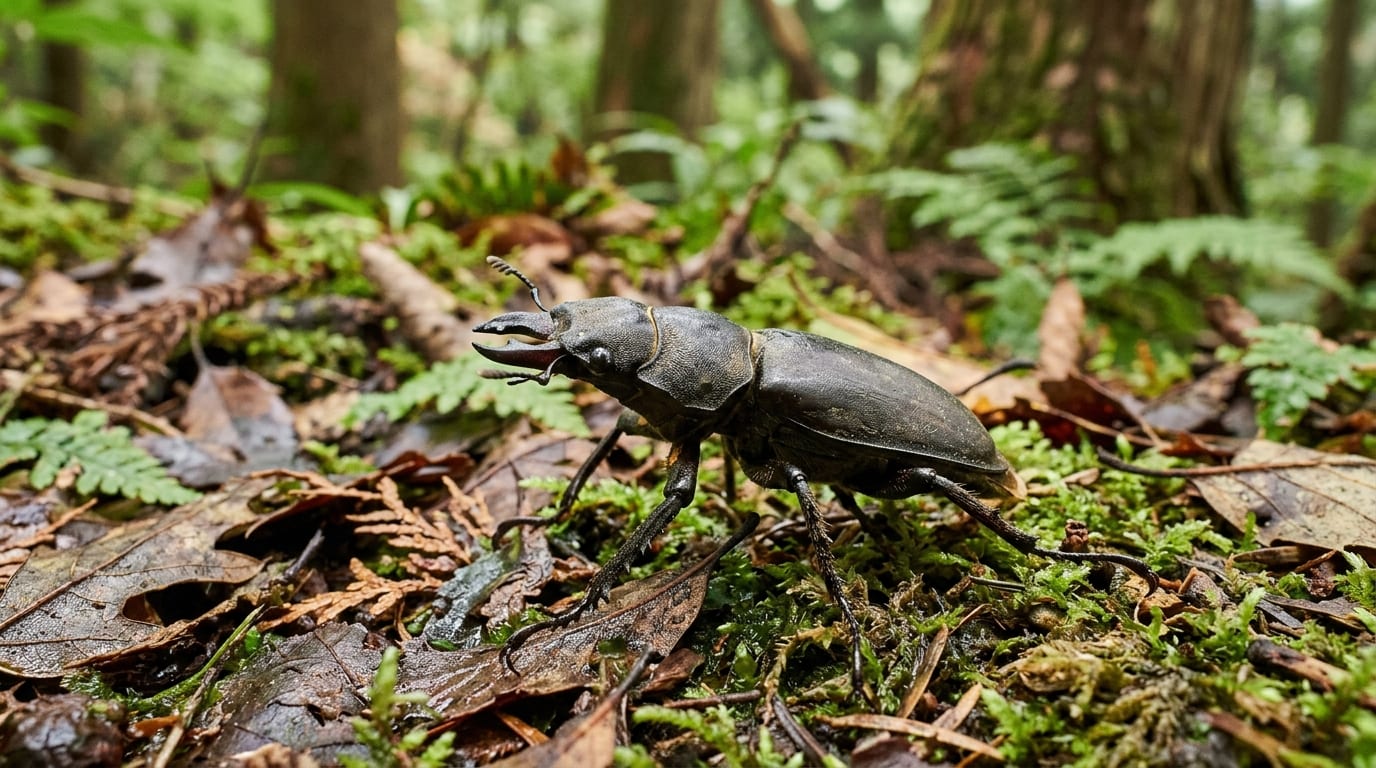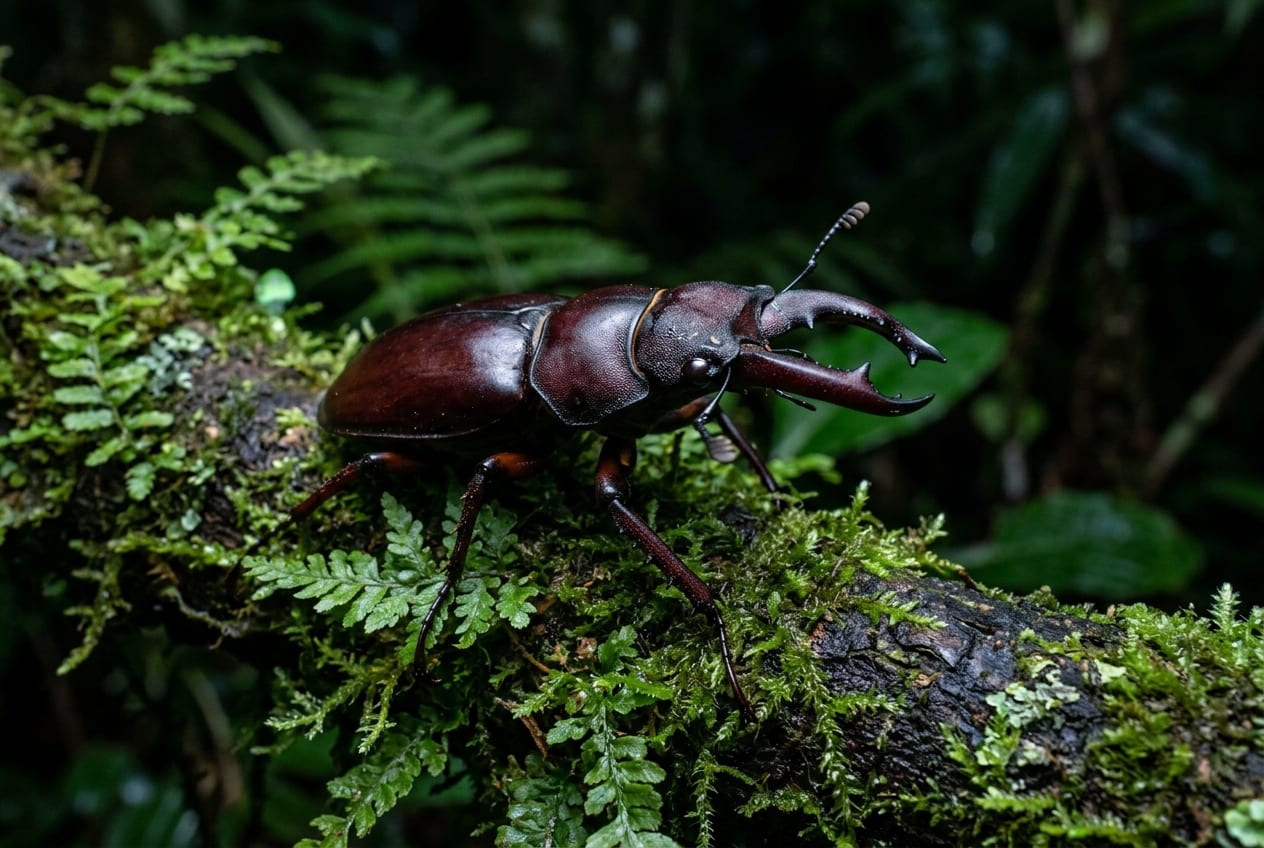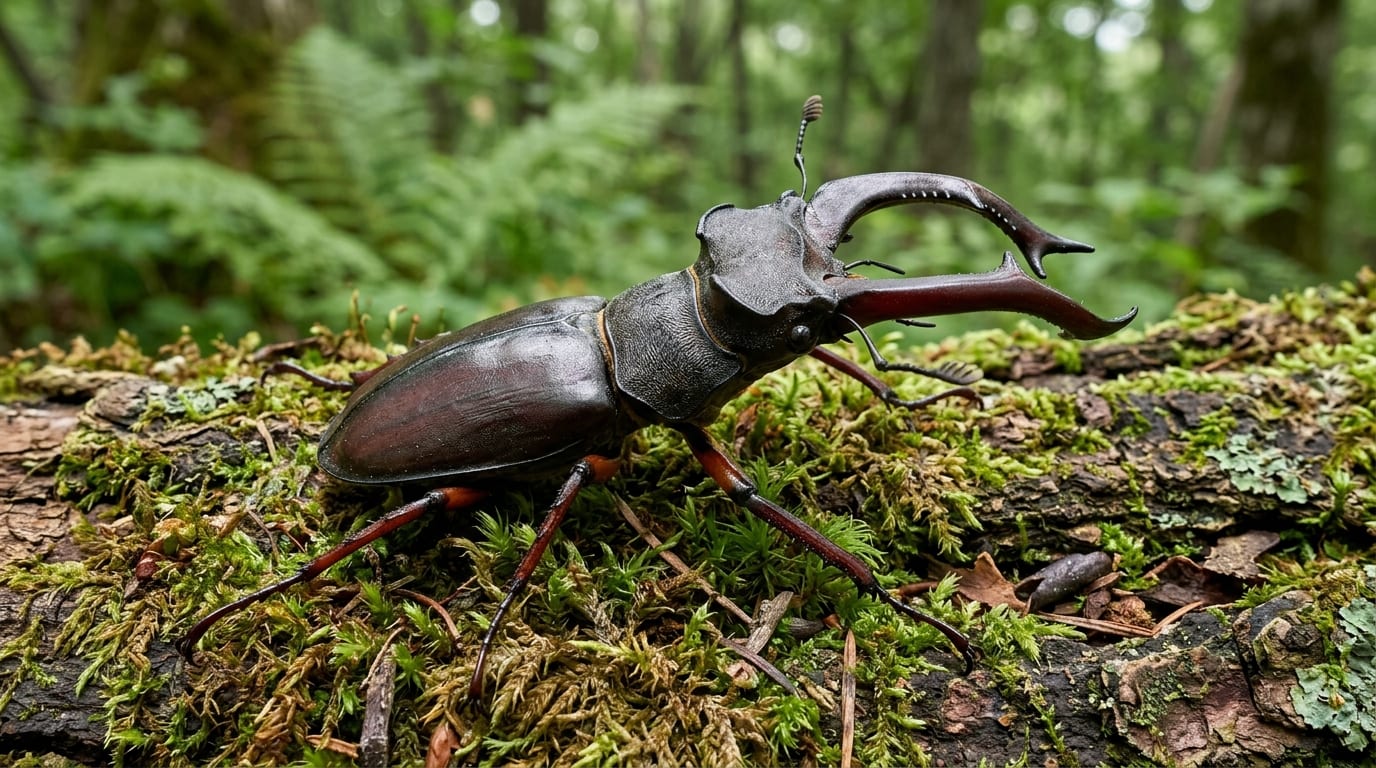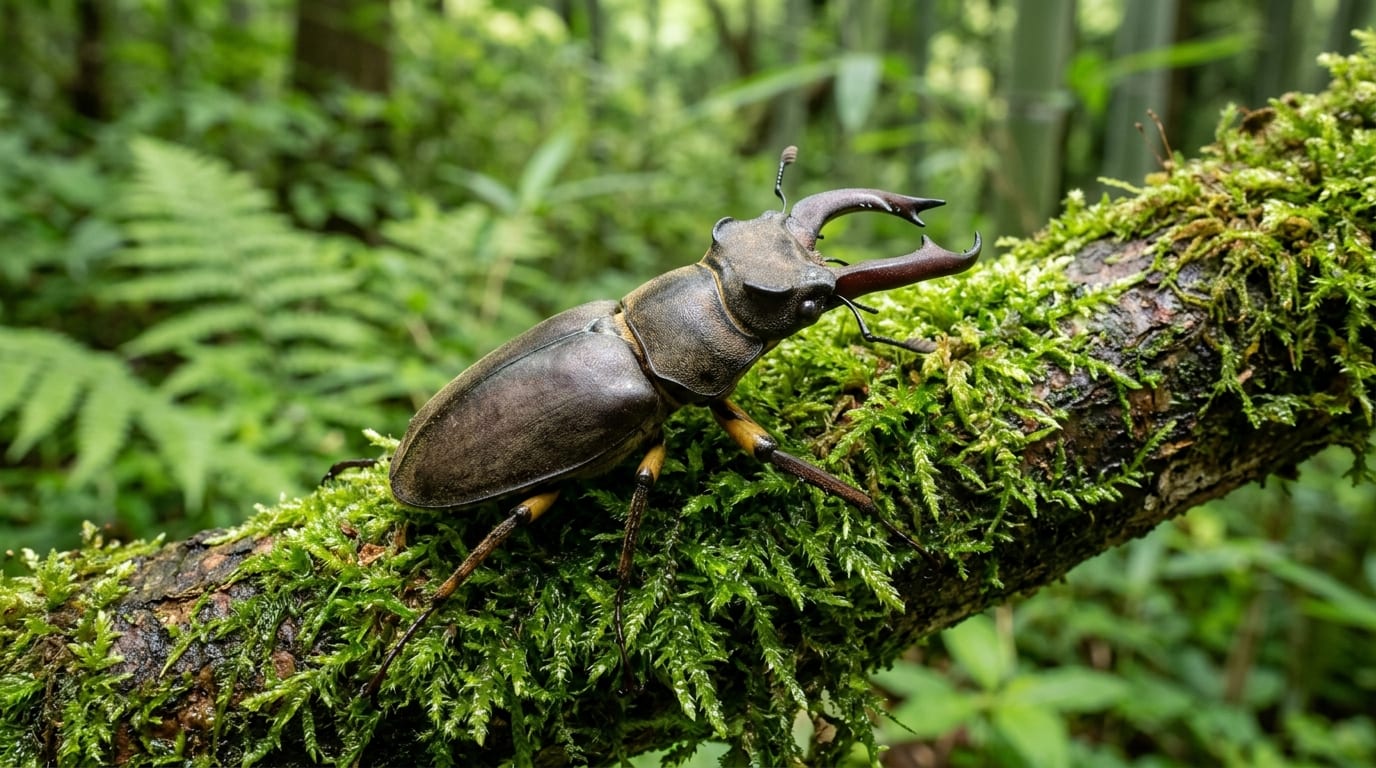
AI-generated image
Izu Miyama Stag Beetle
AdvancedLucanus maculifemoratus adachii
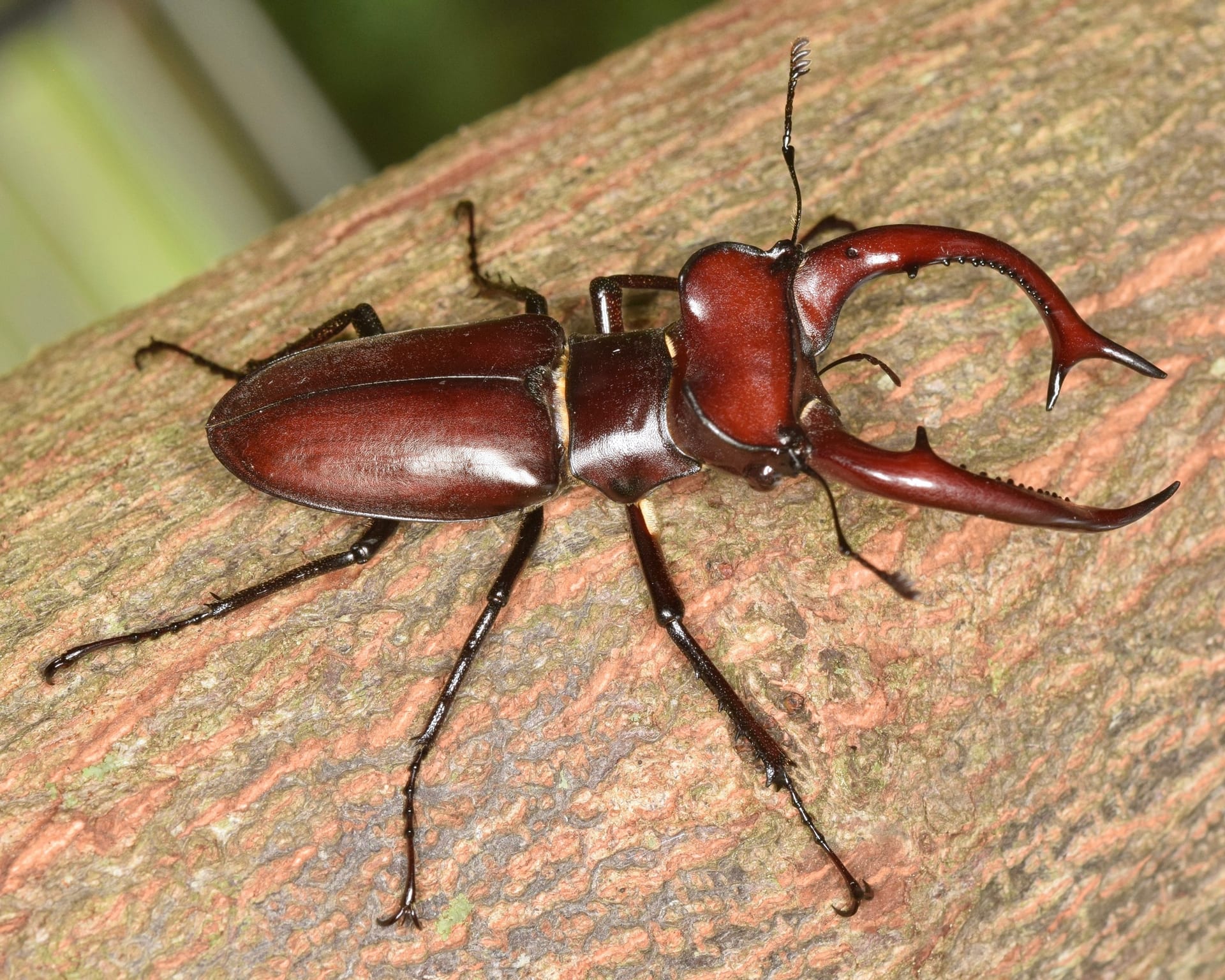
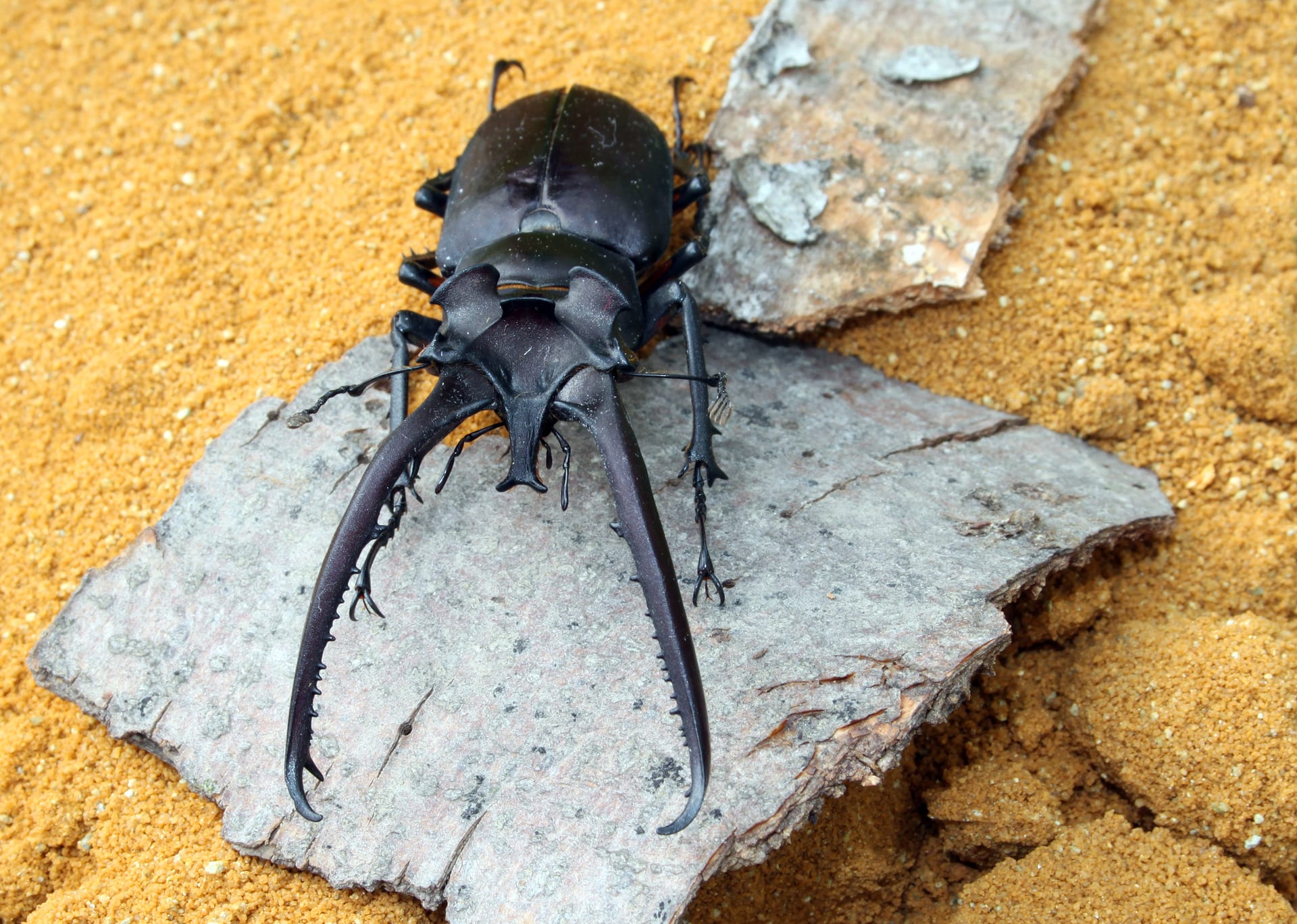
A subspecies of the Japanese miyama stag beetle endemic to the Izu Islands. Its mandibles are short and thick and always of the fuji type, and the ear-like process is less flared than in the nominate form. The forebody is small and the rear heavy, and the yellow-brown marking on the femora is well developed.
Difficulty
Advanced
Temperature
25℃
Lifespan
About two to three months once active (a figure for the species as a whole)
Size
Males 33.8-70.0mm, females 25.0-43.9mm (captive maximum 68.7mm)
Humidity
60〜80%
Diet
Adults take tree sap and beetle jelly; larvae eat well-rotted substrate
About
The Izu miyama stag beetle is the subspecies of Lucanus maculifemoratus found in the Izu Islands, known from Izu Oshima, Toshima, Niijima, Kozushima and Miyakejima. It has not been recorded from Mikurajima or Hachijojima, and the type locality is Mount Mihara on Izu Oshima. Males measure 33.8-70.0mm and females 25.0-43.9mm. Wild males average 50-53mm, with anything above 58mm counted large, and no beetle over 65mm has been recorded away from Izu Oshima. The mandibles are shorter and thicker than in the nominate form, finely forked at the tip, and always of the fuji type without the variation seen on the mainland. The ear-like process on the head is weakly developed and barely flares outward. The abdomen is fairly large with a rounded tip, so the beetle reads as small in front and heavy behind. In both sexes the yellow-brown marking on the femora is well developed. Adults appear from July to September, peaking in August, and gather day and night at the sap of trees such as Alnus sieboldiana and Zanthoxylum ailanthoides.
Source: Wikipedia (CC BY-SA 4.0)
Size of the Izu Miyama Stag Beetle
The Izu Miyama Stag Beetle grows to Males 33.8-70.0mm, females 25.0-43.9mm (captive maximum 68.7mm).
Temperature & humidity for the Izu Miyama Stag Beetle
The ideal temperature for the Izu Miyama Stag Beetle is 25℃.
Basic Info
Origin
Japan (Izu Oshima, Toshima, Niijima, Kozushima and Miyakejima in the Izu Islands)
Lifespan
About two to three months once active (a figure for the species as a whole)
Care Specifications
AggressiveSolitaryBreeding: Hard
Sources: Lucanus maculifemoratus - Wikipedia (JA; the adachii subspecies range, size, morphology and season, plus captive breeding and lifespan) / GBIF: Lucanus maculifemoratus adachii Tsukawaki, 1995 / BE-KUWA Certified Breeding Records (Mushi-sha, FY2025 edition PDF, JA)
Breeding Records & Localities
Captive record (♂)
68.7 mm
Wild record (♂)
70 mm
Record source: BE-KUWA 2025 edition, captive records for medium and large Japanese stag beetles (Izu miyama: captive 68.7mm, Takashi Kumada, registered 2016, expected maximum 77mm; wild 70.0mm, Akihiko Toba). The Japanese Wikipedia likewise gives a captive maximum of 68.7mm and minimum of 29.9mm
Notable localities
Izu OshimaToshimaNiijimaKozushimaMiyakejima
The type locality is Mount Mihara on Izu Oshima. No beetle of 65mm or more has been recorded from any island other than Izu Oshima.
Generation codes
- WD
- Wild-caught
- WF1
- Offspring of a wild-caught female
- F1〜
- Captive generations (same locality)
- CBF1
- Cross-locality captive-bred (reset)
Sources: BE-KUWA Certified Breeding Records (Mushi-sha, FY2025 edition PDF, JA)
References & Sources
Edited & verified by: BreederDirect editorial team
The taxonomic, regulatory, and husbandry data on this page are compiled and verified against the authoritative primary sources below.
Taxonomy & Authority
Accepted name: Lucanus maculifemoratus adachii Tsukawaki, 1995
Authority databases: GBIF
Nomenclature follows global taxonomic authority databases.
Regulations & Conservation Status
Not CITES-listed
Sources: CITES Appendix (checklist.cites.org)
Regulations may change. Always verify the latest information with the relevant authorities.
Izu Miyama Stag Beetle Listings
Loading latest listingsFind listings for this species