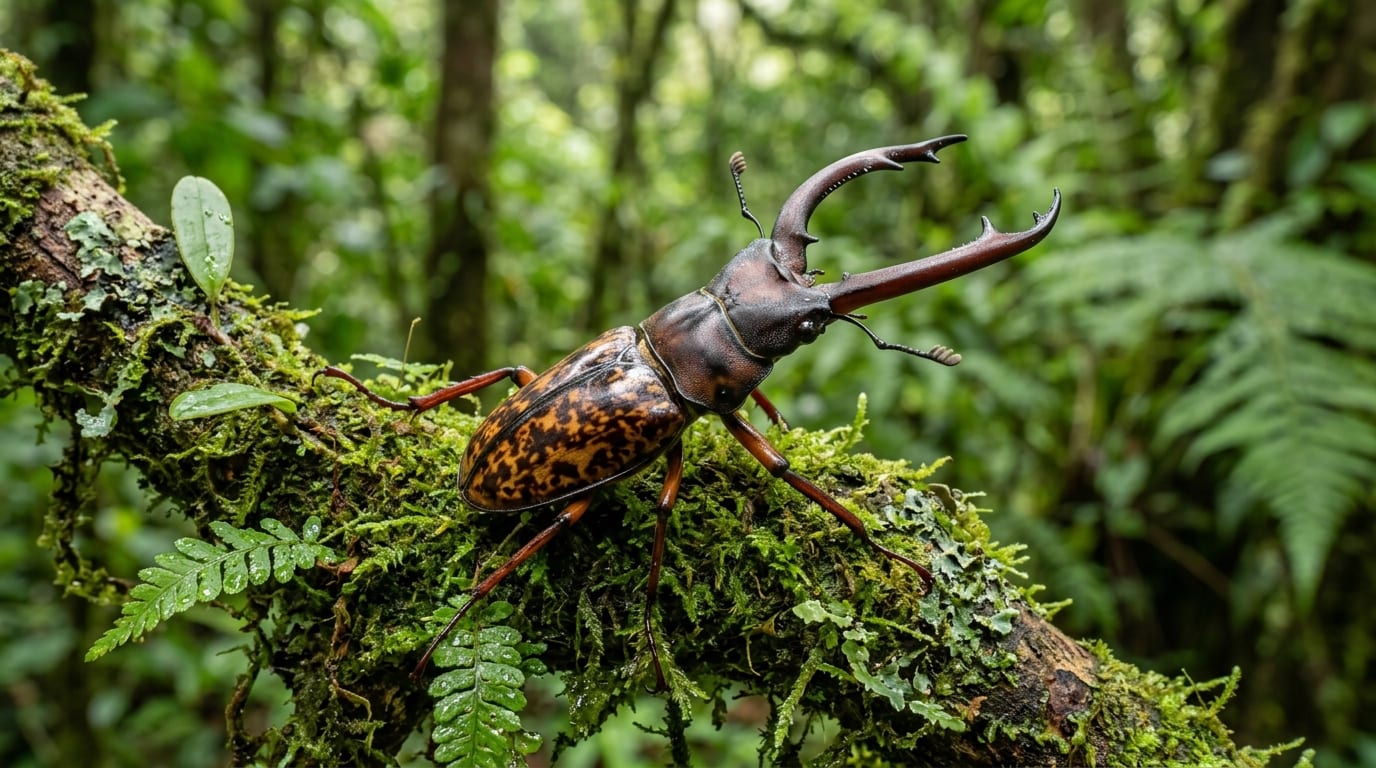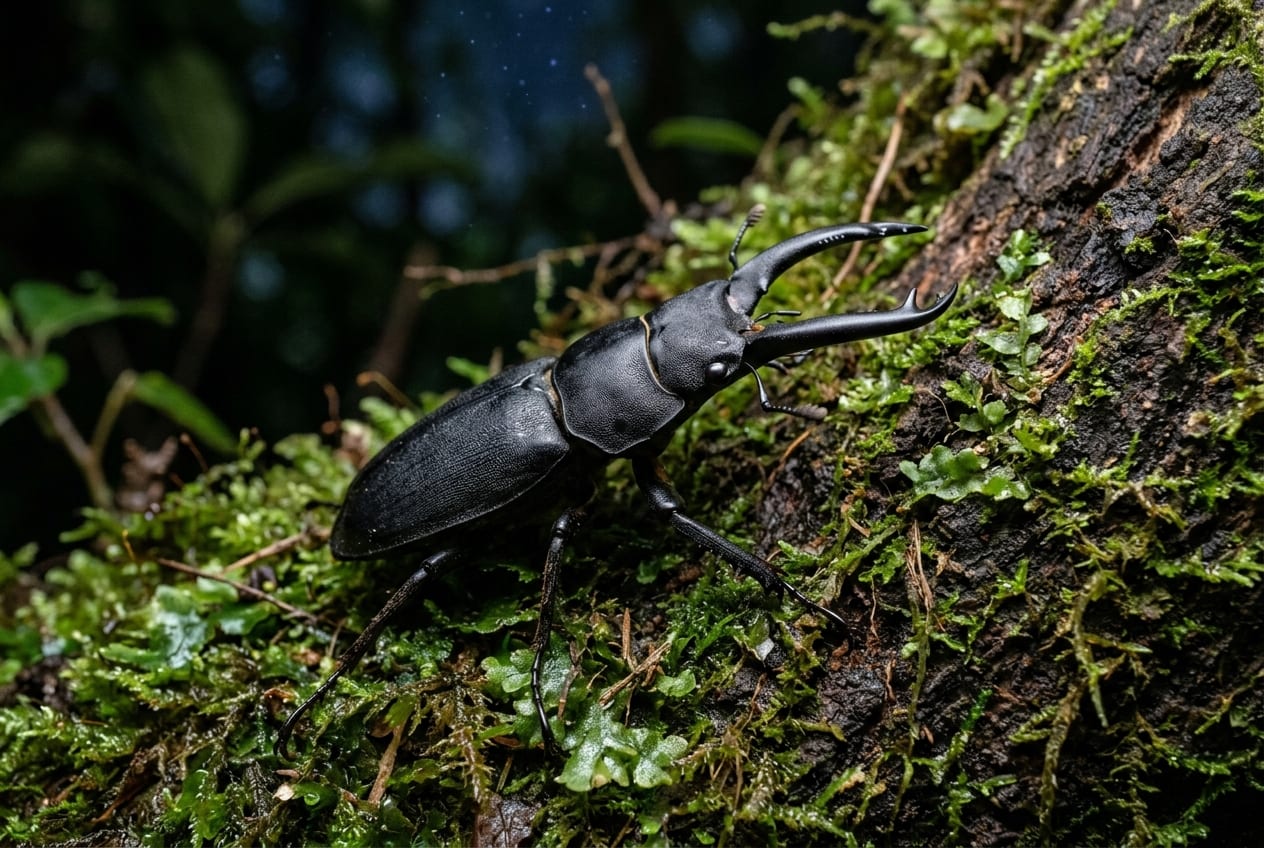
AI-generated image
Amami Deer Stag Beetle
IntermediateRhaetulus recticornis
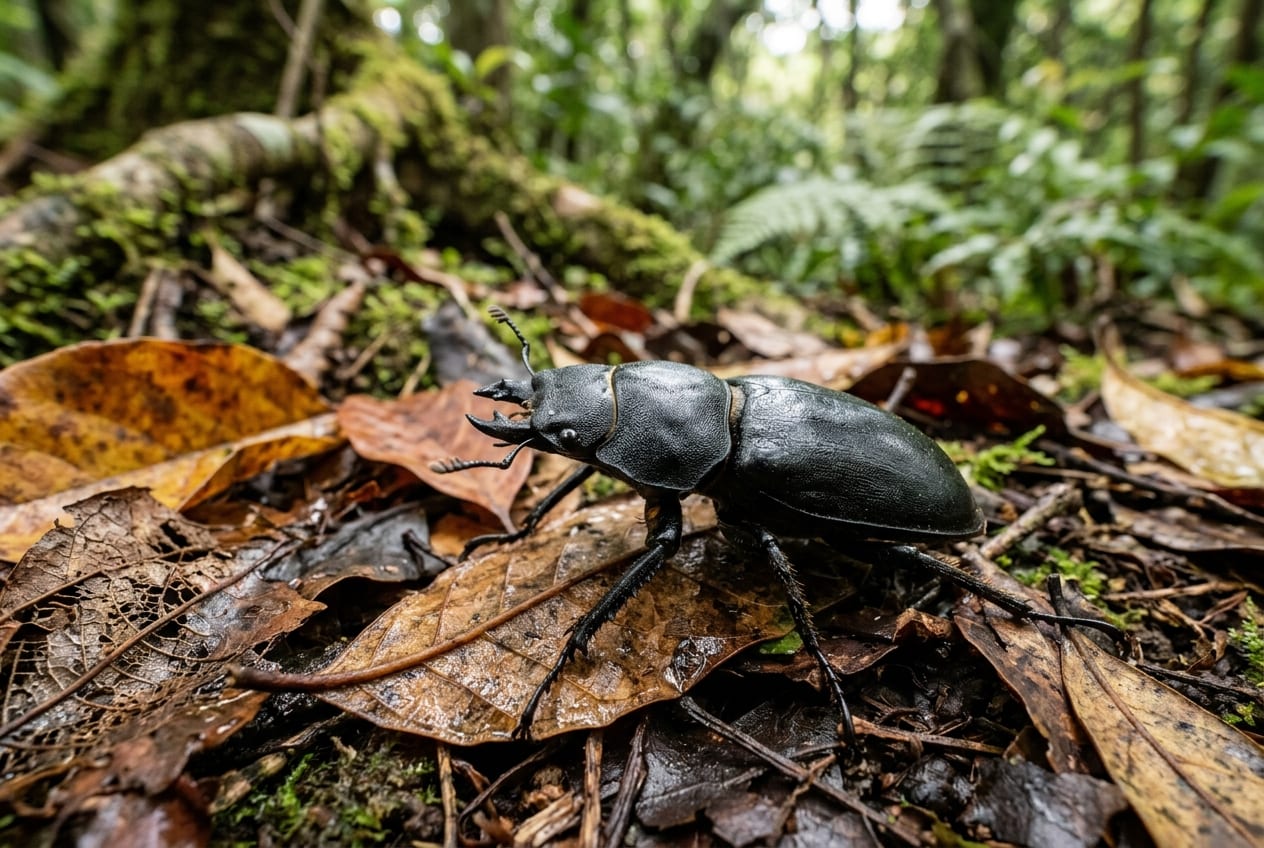
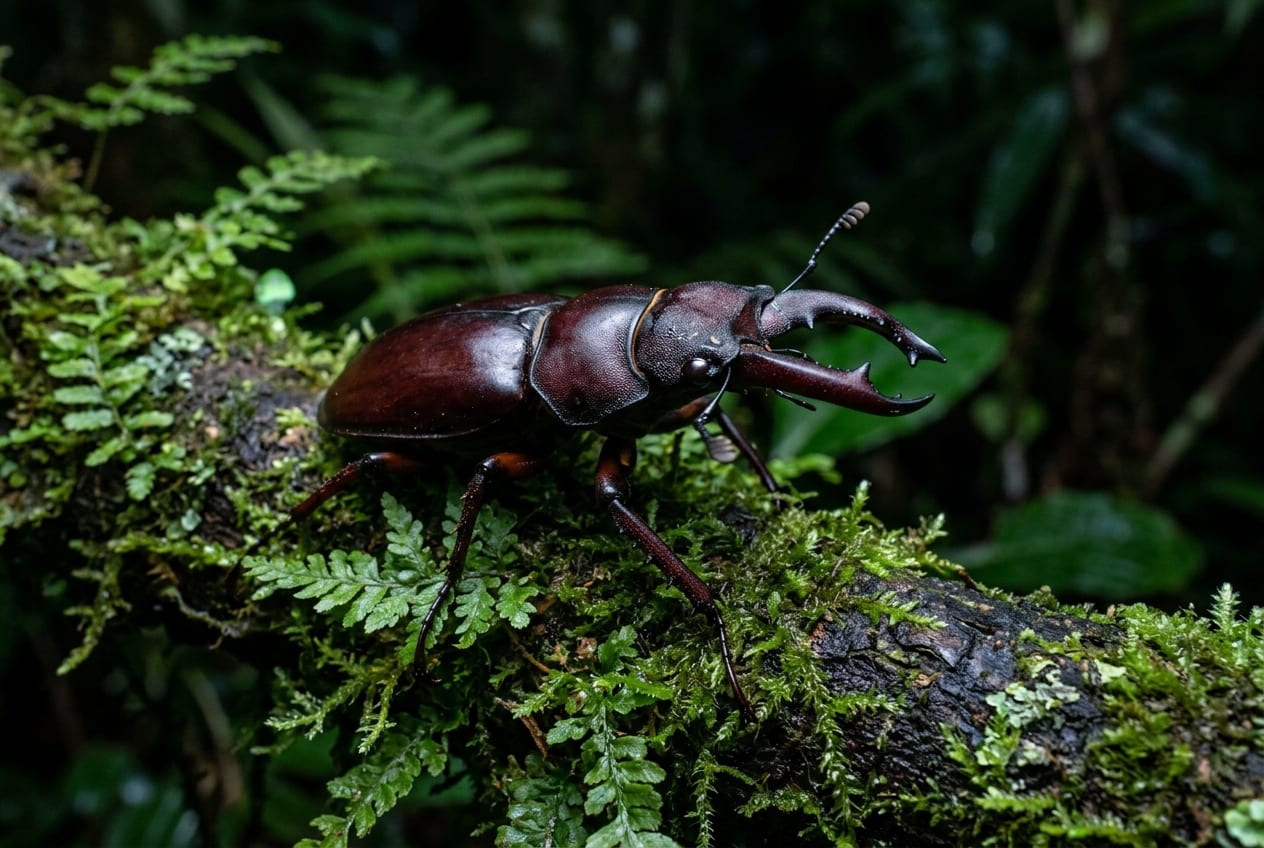
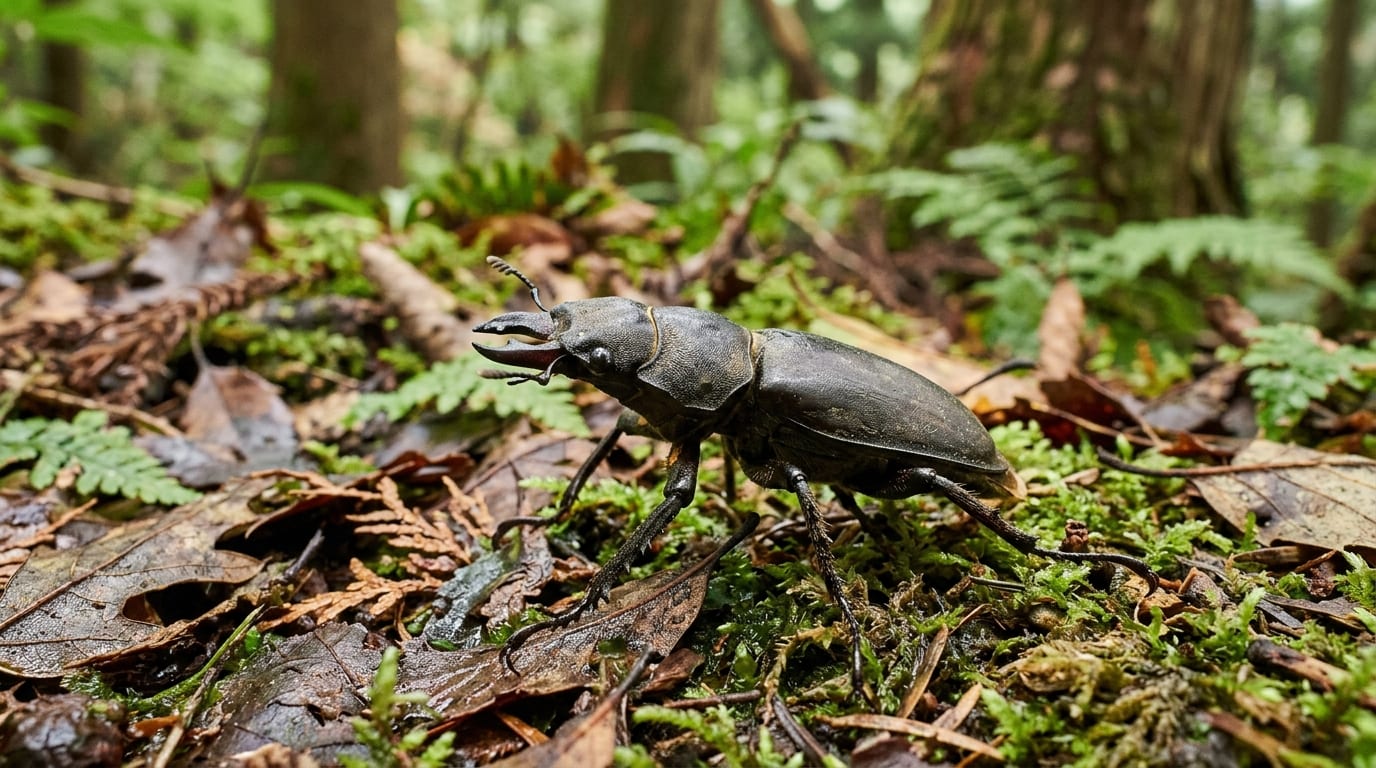
The only deer stag beetle in Japan and the smallest member of its genus. Males are matt black, and in large individuals the mandibles curve as strongly as in the Taiwanese species. It is endemic to the Amami islands.
Difficulty
Intermediate
Temperature
20〜28℃
Lifespan
Adults 6 months to 1 year
Size
Males 18.1-48.0mm, females 19-32mm (captive record 56.0mm)
Humidity
60〜80%
Diet
Adults take the sap of Castanopsis and beetle jelly; larvae take mycelium or fermented substrate
About
Rhaetulus recticornis is the only deer stag beetle in Japan, the smallest species in its genus and endemic to the Amami islands. Males run 18.1 to 48.0 mm and females 19 to 32 mm, and the captive maximum on record is 56.0 mm. Small and medium males do not have the strongly curved, deer-like mandibles of the genus, but large ones curve as strongly as the Taiwanese species. Males are matt black with fine dense punctures on the elytra, while females are glossy black with coarse punctures and longitudinal striae. In the wild the adults are active from around May to September, mainly in evergreen broadleaf forest above about 300 m. They are often seen at sap running from the thin branches of Castanopsis and come readily to lights and fruit traps. Wild beetles are mostly small, but in captivity large individuals are easily raised in mycelium bottles or fermented substrate.
Source: Wikipedia (CC BY-SA 4.0)
Lifespan of the Amami Deer Stag Beetle
The Amami Deer Stag Beetle lives Adults 6 months to 1 year.
Size of the Amami Deer Stag Beetle
The Amami Deer Stag Beetle grows to Males 18.1-48.0mm, females 19-32mm (captive record 56.0mm).
Basic Info
Origin
Japan (Amami-Oshima, Tokunoshima, Kakeromajima and Ukejima in Kagoshima Prefecture)
Lifespan
Adults 6 months to 1 year
Size
Males 18.1-48.0mm, females 19-32mm (captive record 56.0mm)
Care Specifications
Breeding Records & Localities
Captive record (♂)
56 mm
Wild record (♂)
48 mm
Record source: BE-KUWA 2025 edition, captive records for medium and large Japanese stag beetles (Amami deer stag: captive 56.0 mm, Kohei Abe, registered 2009, expected maximum 59 mm; wild 48.0 mm, Yuji Tanaka). The Japanese Wikipedia also gives 56.0 mm as the captive maximum
Notable localities
Amami-OshimaTokunoshimaKakeromajimaUkejima
Generation codes
- WD
- Wild-caught
- WF1
- Offspring of a wild-caught female
- F1〜
- Captive generations (same locality)
- CBF1
- Cross-locality captive-bred (reset)
Sources: BE-KUWA Certified Breeding Records (Mushi-sha, FY2025 edition PDF, JA) / Rhaetulus recticornis - Wikipedia (JA; size, captive maximum, morphology, habits, range, collecting ban from 2013)
References & Sources
Edited & verified by: BreederDirect editorial team
The taxonomic, regulatory, and husbandry data on this page are compiled and verified against the authoritative primary sources below.
Taxonomy & Authority
Accepted name: Rhaetulus recticornis Kurosawa, 1964
Authority databases: GBIF
Nomenclature follows global taxonomic authority databases.
Regulations & Conservation Status
Not CITES-listed
Sources: CITES Appendix (checklist.cites.org)
Regulations may change. Always verify the latest information with the relevant authorities.
Amami Deer Stag Beetle Listings
Loading latest listingsFind listings for this species