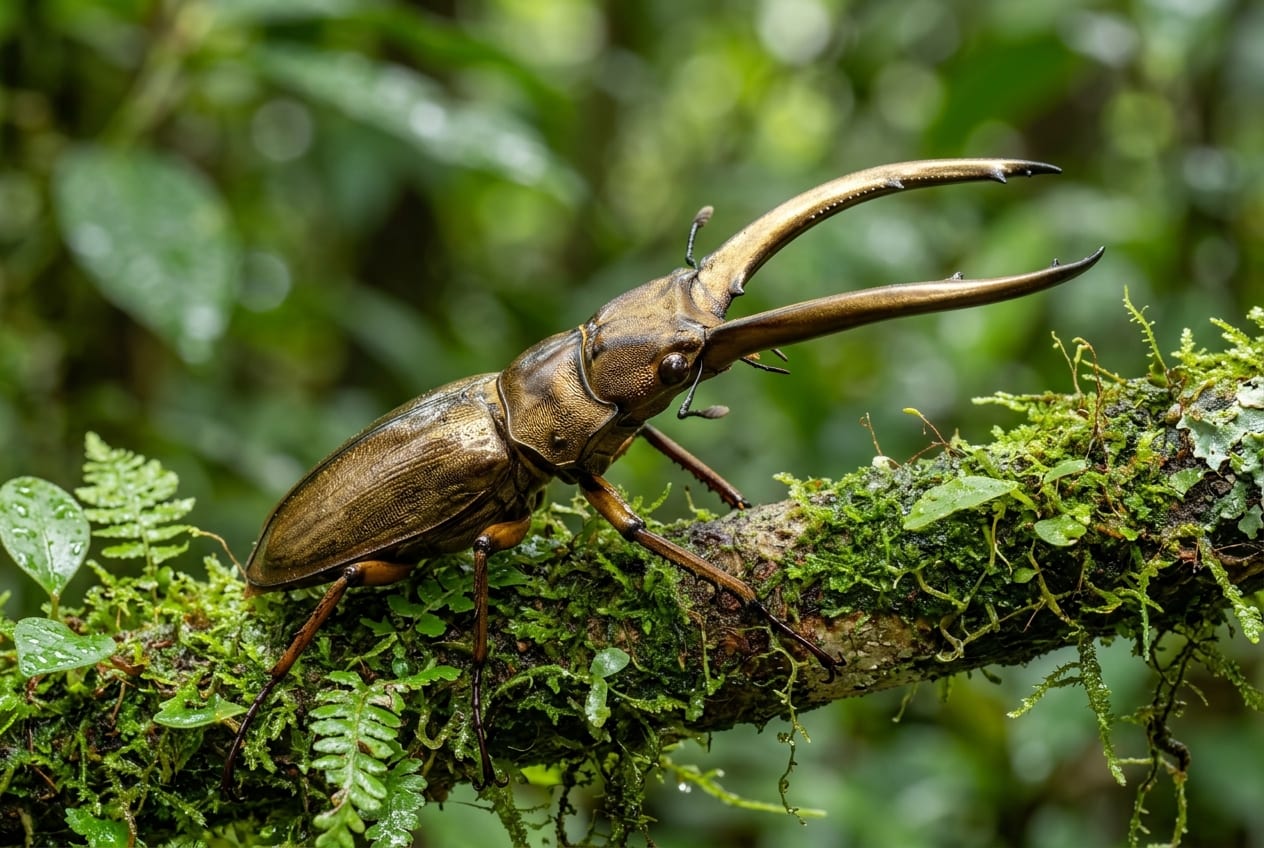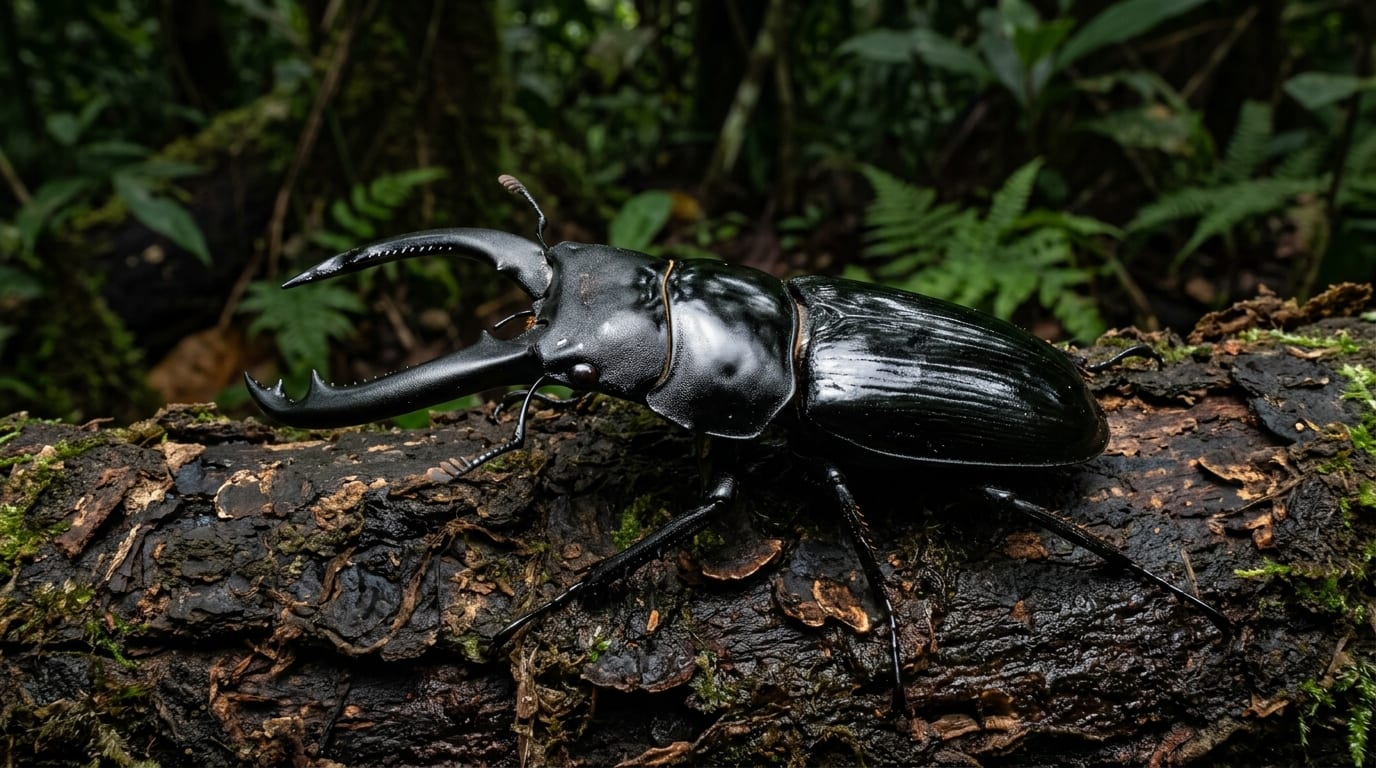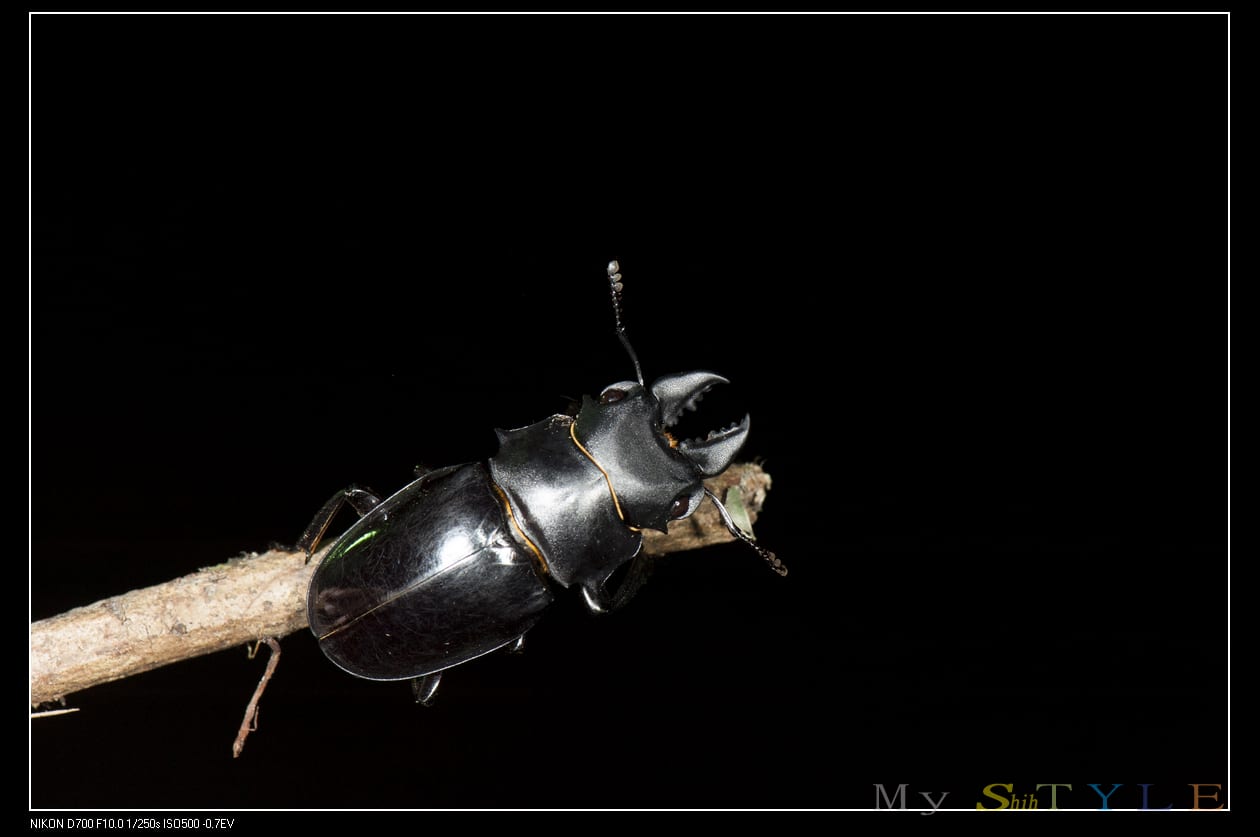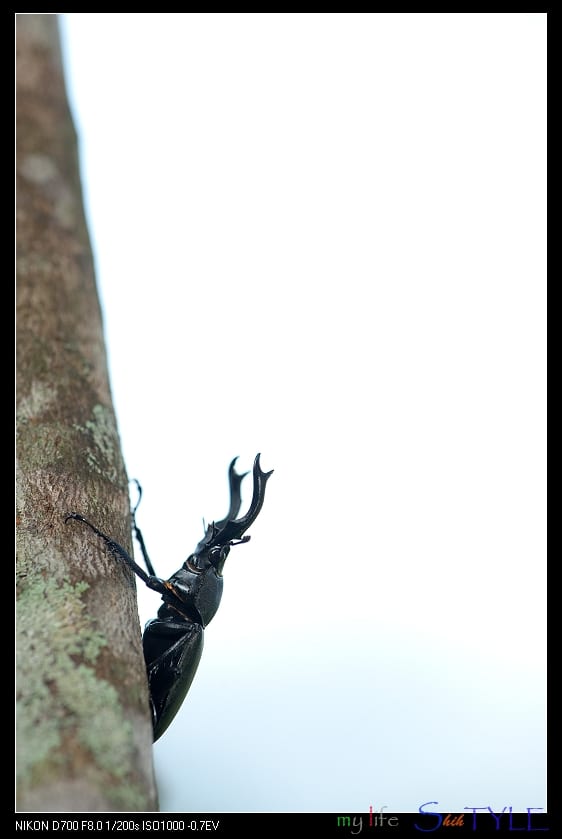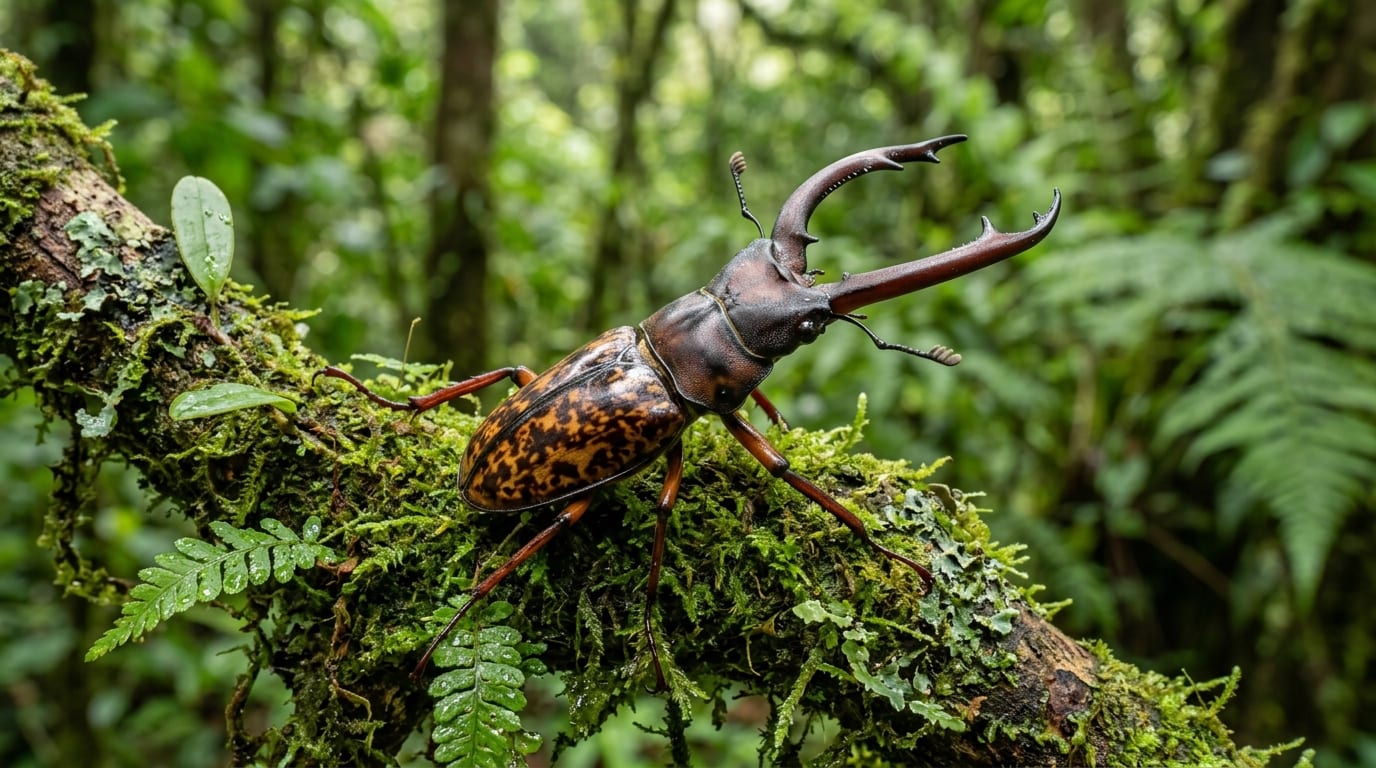
AI-generated image
Speciosus Deer Stag Beetle
IntermediateRhaetulus speciosus
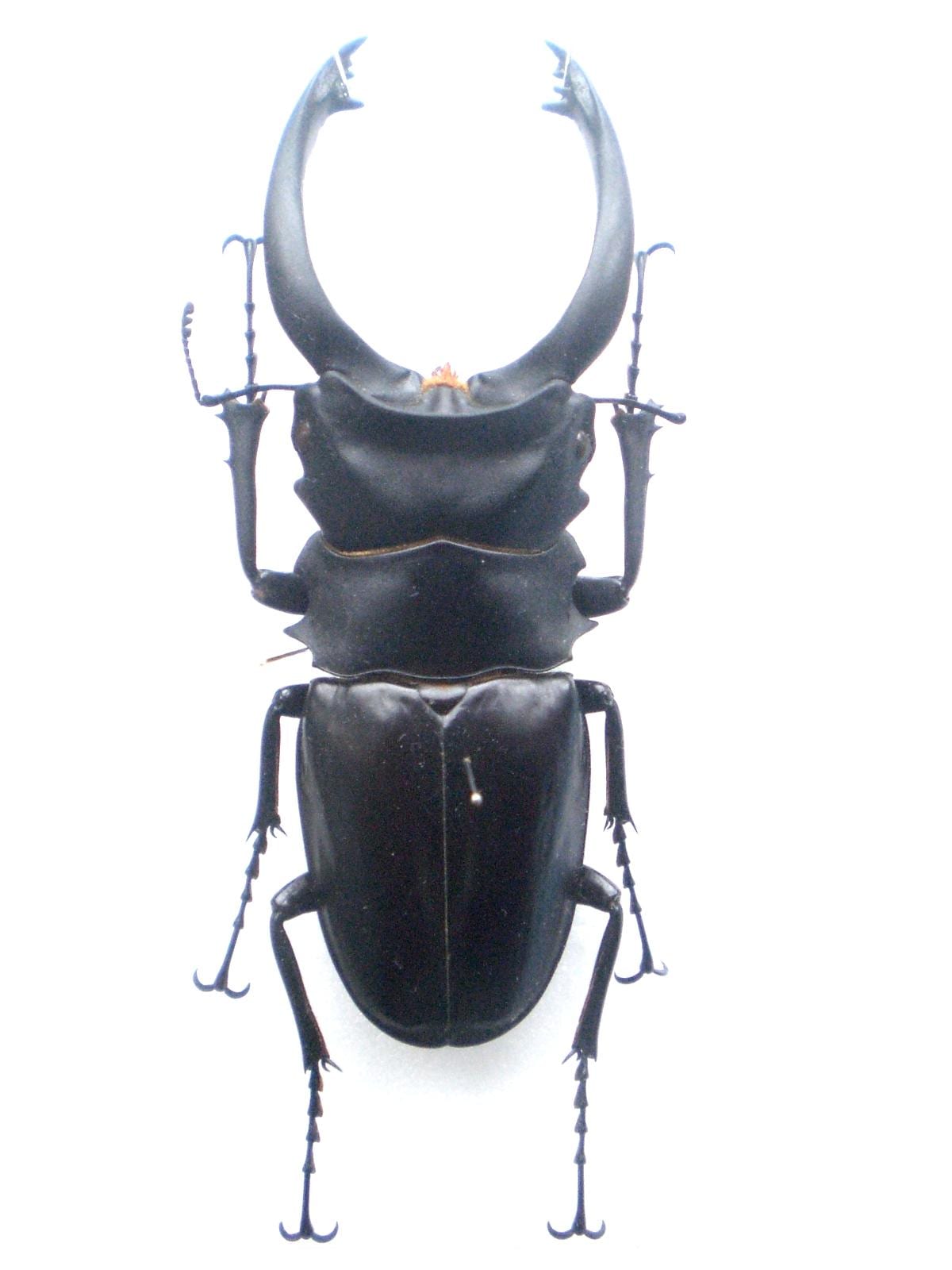
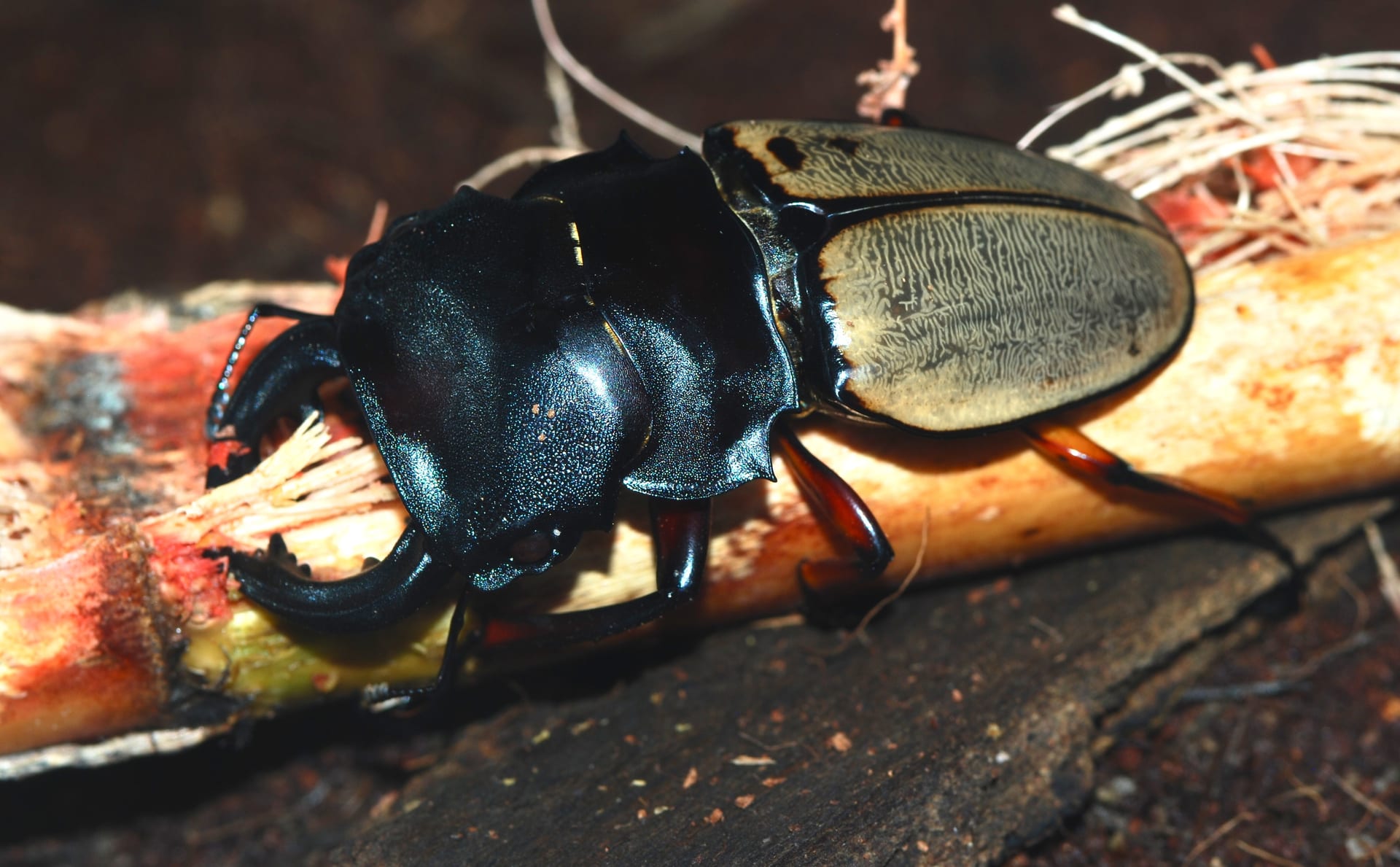
The largest of the deer stag beetles, with strongly marked tortoiseshell patterning on the back. It occurs in Thailand, and Burmese populations have been folded into it. The captive record reaches 72.2 mm.
Difficulty
Intermediate
Temperature
20〜28℃
Lifespan
Six months to a year
Size
Captive record 72.2mm, wild record 70.0mm
Humidity
60〜80%
Diet
Adults take the sap of broadleaf trees and beetle jelly; larvae are reared in mycelium bottles made from beech or konara oak
About
Rhaetulus speciosus is the largest form among the deer stag beetles, with strongly marked tortoiseshell patterning on the back. It is treated as R. crenatus speciosus and occurs in Thailand, though it is sometimes raised to species rank together with kawanoi from northern Vietnam, boileaui from Laos and lehmanni from southern Myanmar. The Burmese form gardneri was synonymised with it in 1997. In this genus the mandibles bend sharply into an L at the base and fork at the tip, and the sides of the pronotum are serrated; the group is placed close to Prosopocoilus and Hexarthrius. It ranges widely across mainland Southeast Asia, and the further south the population the clearer the tortoiseshell markings tend to be. Adults live six months to a year, the cycle from egg to adult takes about a year, and eggs are laid into rotten wood at ground level. The captive record stands at 72.2 mm and the wild record at 70.0 mm.
Source: Wikipedia (CC BY-SA 4.0)
Size of the Speciosus Deer Stag Beetle
The Speciosus Deer Stag Beetle grows to Captive record 72.2mm, wild record 70.0mm.
Basic Info
Origin
Thailand, with Burmese populations also folded into this form
Lifespan
Six months to a year
Size
Captive record 72.2mm, wild record 70.0mm
Temperature
20〜28℃
Humidity
60〜80%
Care Specifications
Semi-aggressiveSolitaryBreeding: Moderate
Sources: Rhaetulus - Wikipedia (JA; mandible form, lifespan, egg-laying and mycelium bottles, temperament, list of subspecies) / Rhaetulus - Wikipedia (EN; placement of the genus and the species list from GBIF) / GBIF subspecies page for Rhaetulus crenatus speciosus Boileau, 1911 / BE-KUWA Certified Breeding Records (Mushi-sha, FY2025 edition PDF, JA)
Breeding Records & Localities
Captive record (♂)
72.2 mm
Wild record (♂)
70 mm
Record source: BE-KUWA 2025 edition, captive records for imported stag beetles (crenatus speciosus: captive 72.2 mm, Taiga Sasaki, registered 2025; wild 70.0 mm; expected maximum 74 mm)
Notable localities
ThailandMyanmar
Generation codes
- WD
- Wild-caught
- WF1
- Offspring of a wild-caught female
- F1〜
- Captive generations (same locality)
- CBF1
- Cross-locality captive-bred (reset)
Sources: BE-KUWA Certified Breeding Records (Mushi-sha, FY2025 edition PDF, JA) / Rhaetulus - Wikipedia (JA; mandible form, lifespan, egg-laying and mycelium bottles, temperament, list of subspecies)
References & Sources
Edited & verified by: BreederDirect editorial team
The taxonomic, regulatory, and husbandry data on this page are compiled and verified against the authoritative primary sources below.
Primary sources
- Wikipedia
- Ministry of the Environment, Invasive Species Act: "Guidance for Those Importing Live Insects in Scarabaeoidea"
- CITES Appendix (checklist.cites.org)
- Rhaetulus - Wikipedia (EN; placement of the genus and the species list from GBIF)
- GBIF subspecies page for Rhaetulus crenatus speciosus Boileau, 1911
- BE-KUWA Certified Breeding Records (Mushi-sha, FY2025 edition PDF, JA)
Taxonomy & Authority
Accepted name: Rhaetulus speciosus Boileau, 1911
Synonyms: Rhaetulus crenatus speciosus, Rhaetulus crenatus gardneri
Authority databases: GBIF
Nomenclature follows global taxonomic authority databases.
Regulations & Conservation Status
Not CITES-listed
Plant Protection Act: When importing live specimens of Scarabaeoidea (including rhinoceros beetles, stag beetles, flower beetles, etc.), a species identification certificate issued by the exporting country government agency or equivalent must be attached in accordance with the Invasive Species Act (import ports are limited to Narita, Chubu, Kansai, Fukuoka, and Kagoshima airports). This species itself is not a designated invasive species, and import is possible upon submission of the certificate.
Sources: Ministry of the Environment, Invasive Species Act: "Guidance for Those Importing Live Insects in Scarabaeoidea" / CITES Appendix (checklist.cites.org)
Regulations may change. Always verify the latest information with the relevant authorities.
Speciosus Deer Stag Beetle Listings
Loading latest listingsFind listings for this species