Source: Wikimedia Commons
Femoralis Shining Stag Beetle
IntermediateOdontolabis femoralis
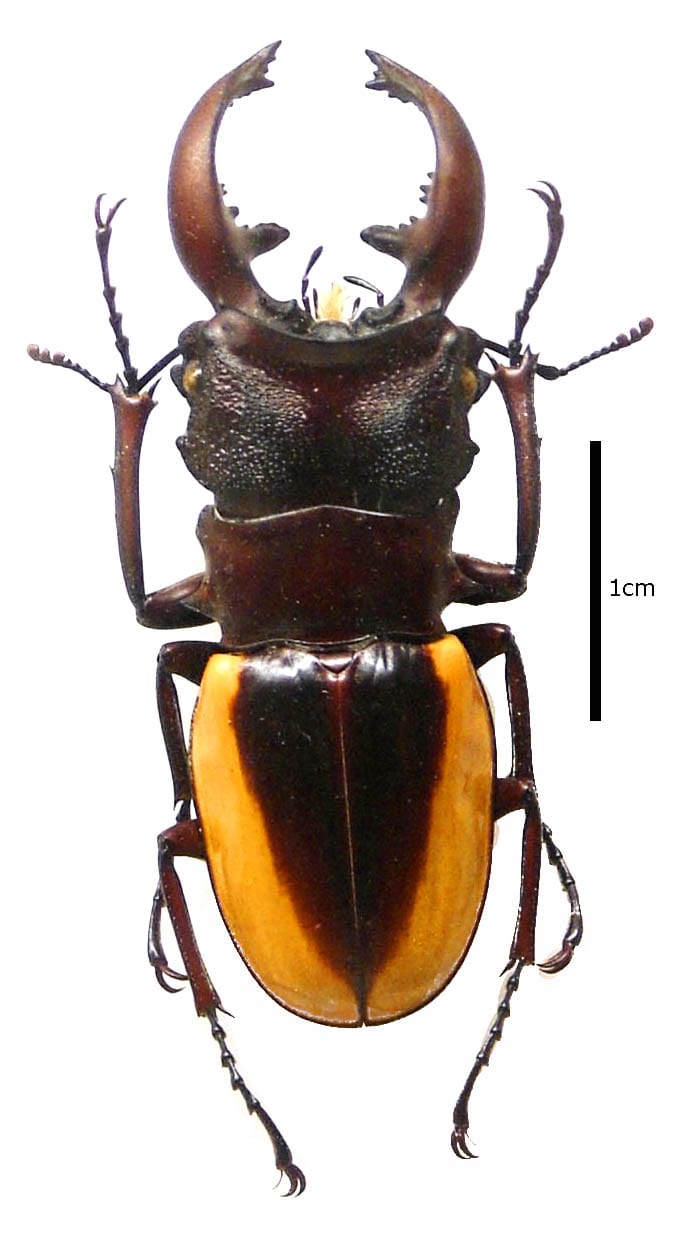
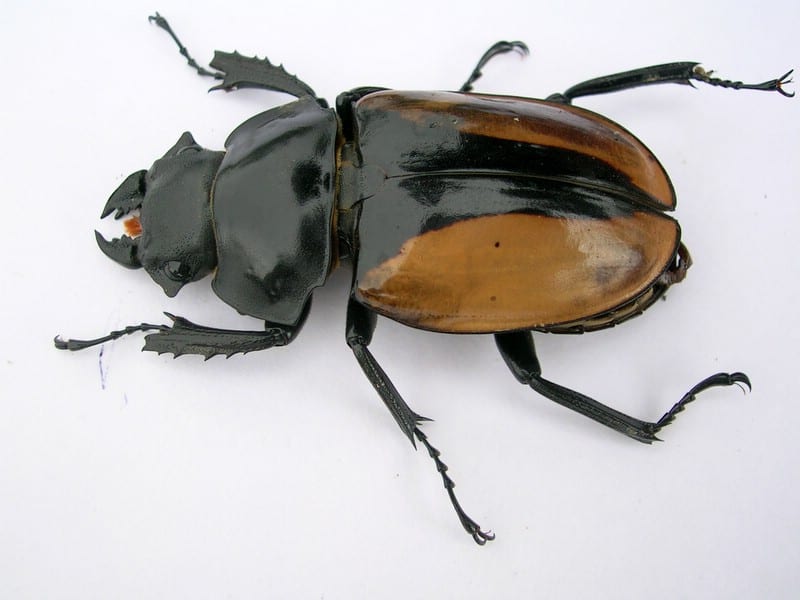
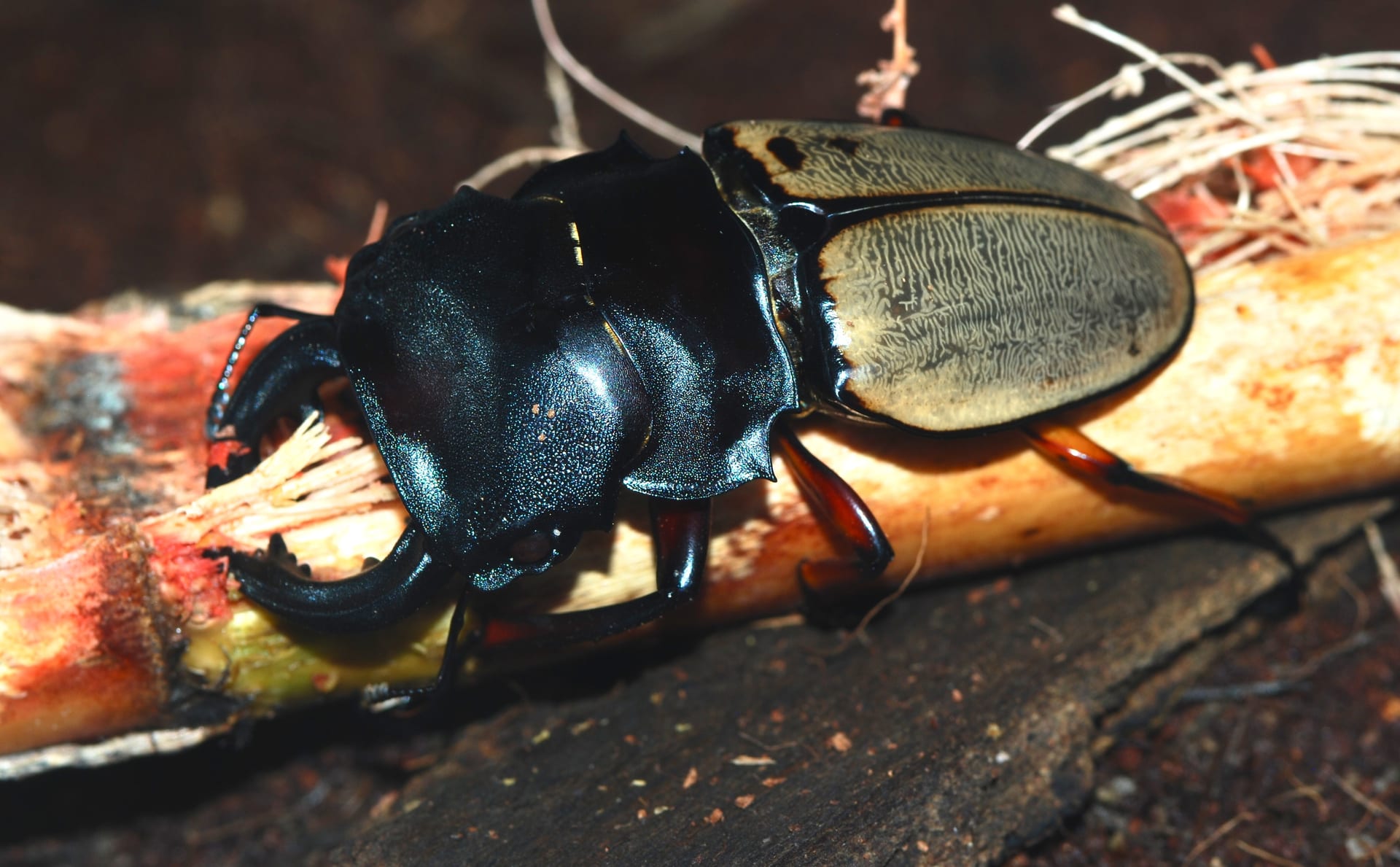
A large Odontolabis with yellow-tinged wing cases and vivid red legs, and some red on the middle of the head as well. Those red legs give it a second Japanese name. It occurs on the Malay Peninsula and Sumatra.
Difficulty
Intermediate
Temperature
20〜28℃
Lifespan
A few months as an adult
Size
Captive records 92.2mm for the nominate form and 91.9mm for Bornean stock (wild records 94.5mm and 99.0mm)
Humidity
60〜80%
Diet
Adults take fermented sap of broadleaf trees and beetle jelly; larvae eat humus close to soil
About
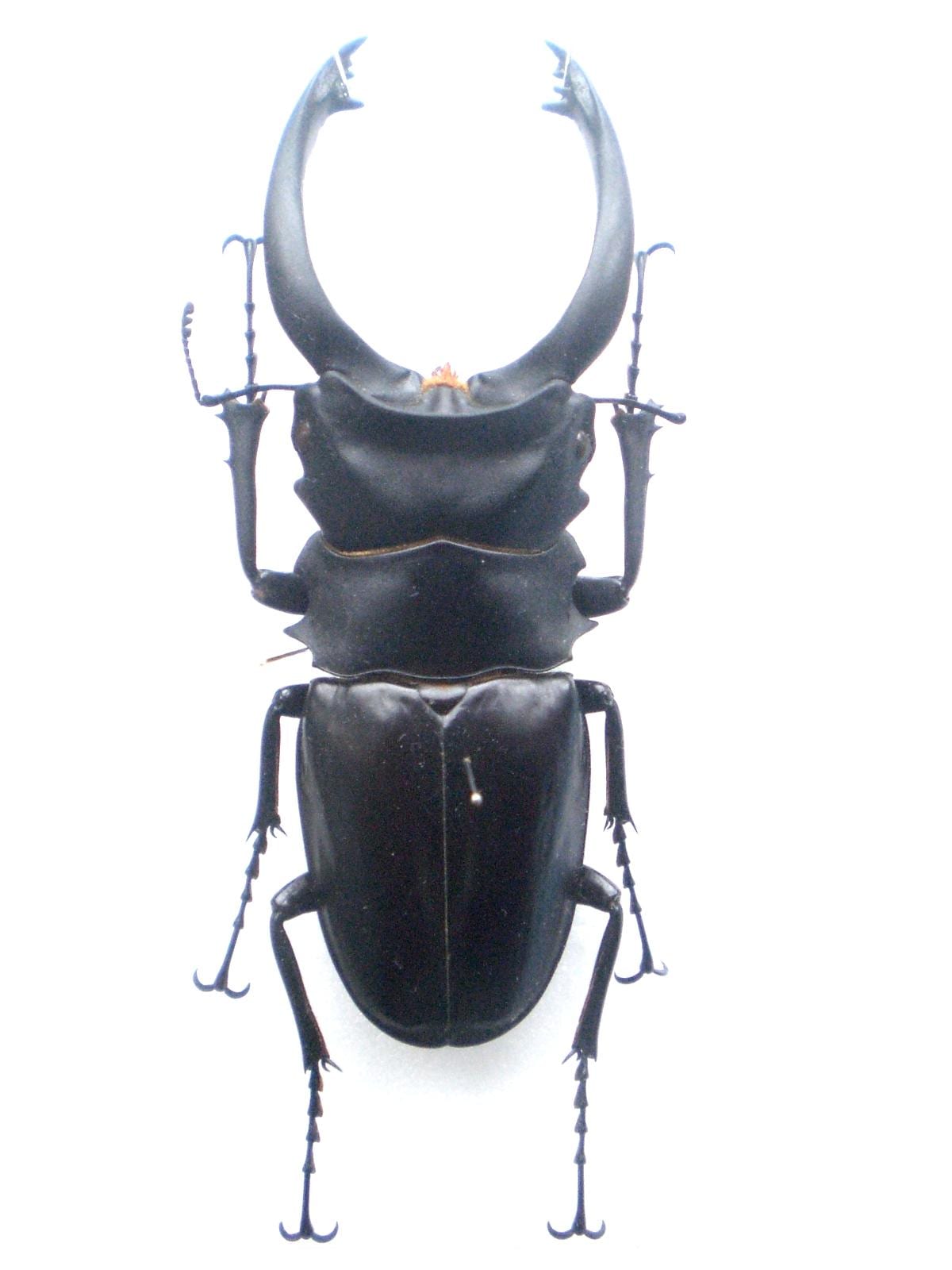
Odontolabis femoralis is a large Odontolabis of the Malay Peninsula and Sumatra, with the subspecies waterstradti on Borneo and palawanicus on Palawan besides the nominate form. The wing cases are washed with yellow and the legs are a vivid red, which is what its second Japanese name refers to, and the middle of the head carries some red as well. The Palawan subspecies is known from a single male holotype and has blackened elytra. As throughout the genus the male's mandibles fall into short, intermediate and long-toothed forms, and which one appears is said to depend partly on the temperature during the prepupal stage. The larvae live in humus formed as broadleaf wood rots down close to soil, hollowing out a jar-shaped chamber that they hold as territory, attacking and sometimes eating insects of their own or other species that enter it. Neither adults nor larvae tolerate cold well. The captive records stand at 92.2 mm for the nominate form and 91.9 mm for Bornean stock.
Source: Wikipedia (CC BY-SA 4.0)
Size of the Femoralis Shining Stag Beetle
The Femoralis Shining Stag Beetle grows to Captive records 92.2mm for the nominate form and 91.9mm for Bornean stock (wild records 94.5mm and 99.0mm).
Basic Info
Origin
The Malay Peninsula and Sumatra (the subspecies waterstradti on Borneo and palawanicus on Palawan)
Lifespan
A few months as an adult
Size
Captive records 92.2mm for the nominate form and 91.9mm for Bornean stock (wild records 94.5mm and 99.0mm)
Temperature
Care Specifications
AggressiveSolitaryBreeding: Moderate
Sources: Odontolabis - Wikipedia (JA; range, biology, the three mandible forms, humus-feeding larvae, per-species difficulty of egg-laying) / Odontolabis - Wikipedia (EN; genus description and per-species distributions) / GBIF species page for Odontolabis femoralis Waterhouse, 1887 / BE-KUWA Certified Breeding Records (Mushi-sha, FY2025 edition PDF, JA)
Breeding Records & Localities
Captive record (♂)
92.2 mm
Wild record (♂)
94.5 mm
Record source: BE-KUWA 2025 edition, captive records for imported stag beetles (femoralis nominate: captive 92.2 mm, Taiga Sasaki, registered 2022, wild 94.5 mm, expected maximum 99 mm; Bornean stock: captive 91.9 mm, Bingyou Chen, registered 2025, wild 99.0 mm, expected maximum 102 mm)
Notable localities
Malay PeninsulaSumatraBorneo
Regional subspecies
- Odontolabis femoralis femoralis(The nominate form of this entry) — Malay Peninsula, Sumatra
- Odontolabis femoralis waterstradti — Borneo
- Odontolabis femoralis palawanicus — Palawan; known from a single male holotype, with blackened elytra
Generation codes
- WD
- Wild-caught
- WF1
- Offspring of a wild-caught female
- F1〜
- Captive generations (same locality)
References & Sources
Edited & verified by: BreederDirect editorial team
The taxonomic, regulatory, and husbandry data on this page are compiled and verified against the authoritative primary sources below.
Primary sources
- Wikipedia
- Ministry of the Environment, Invasive Species Act: "Guidance for Those Importing Live Insects in Scarabaeoidea"
- CITES Appendix (checklist.cites.org)
- Odontolabis - Wikipedia (EN; genus description and per-species distributions)
- GBIF species page for Odontolabis femoralis Waterhouse, 1887
- BE-KUWA Certified Breeding Records (Mushi-sha, FY2025 edition PDF, JA)
Taxonomy & Authority
Accepted name: Odontolabis femoralis Waterhouse, 1887
Synonyms: Odontolabis femoralis femoralis, Odontolabis femoralis waterstradti, Odontolabis femoralis palawanicus
Authority databases: GBIF
Nomenclature follows global taxonomic authority databases.
Regulations & Conservation Status
Not CITES-listed
Plant Protection Act: When importing live specimens of Scarabaeoidea (including rhinoceros beetles, stag beetles, flower beetles, etc.), a species identification certificate issued by the exporting country government agency or equivalent must be attached in accordance with the Invasive Species Act (import ports are limited to Narita, Chubu, Kansai, Fukuoka, and Kagoshima airports). This species itself is not a designated invasive species, and import is possible upon submission of the certificate.
Sources: Ministry of the Environment, Invasive Species Act: "Guidance for Those Importing Live Insects in Scarabaeoidea" / CITES Appendix (checklist.cites.org)
Regulations may change. Always verify the latest information with the relevant authorities.
Femoralis Shining Stag Beetle Listings
Loading latest listingsFind listings for this species