Source: Wikimedia Commons
Taiwanese Deer Stag Beetle
BeginnerRhaetulus crenatus crenatus
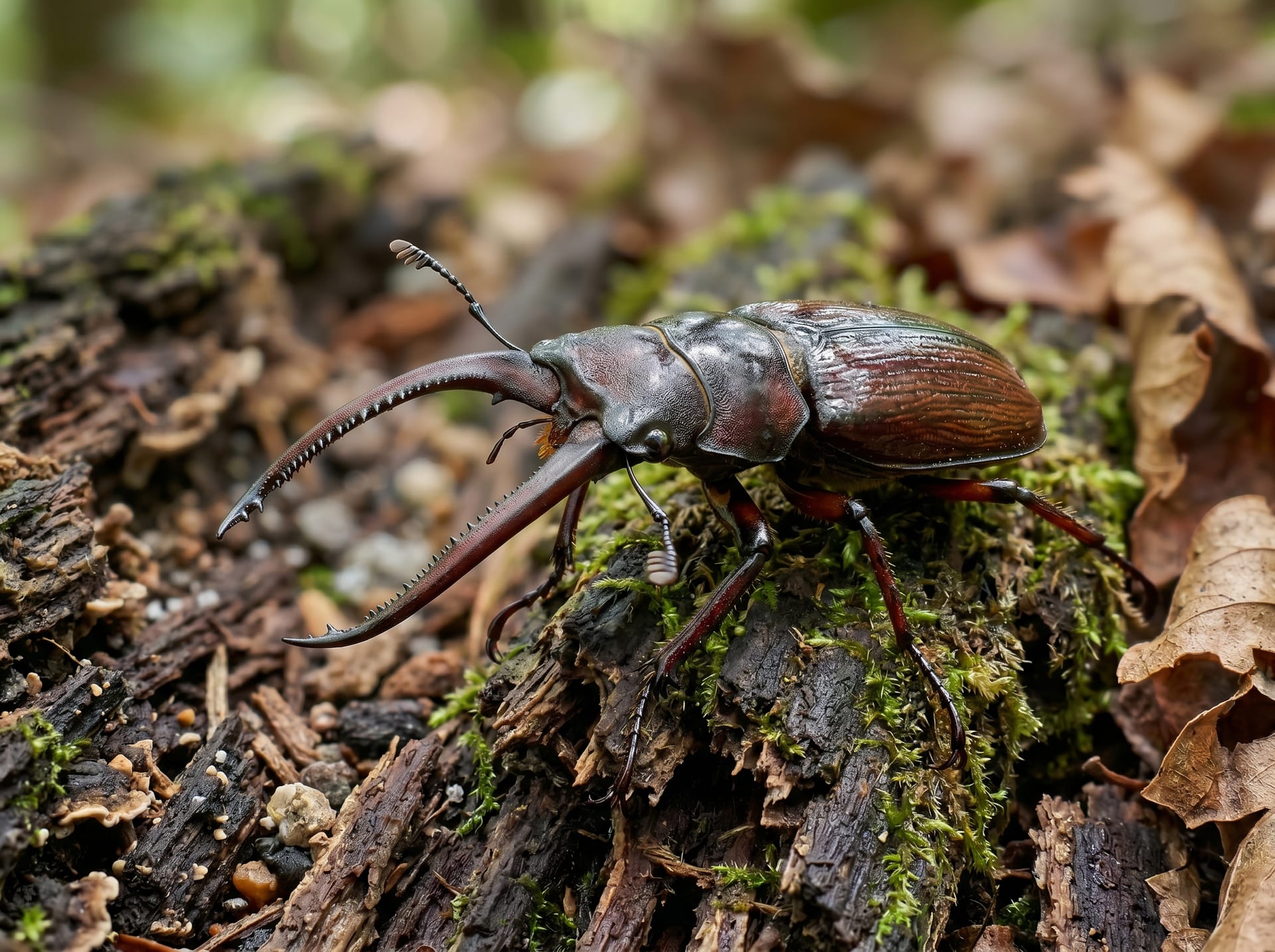
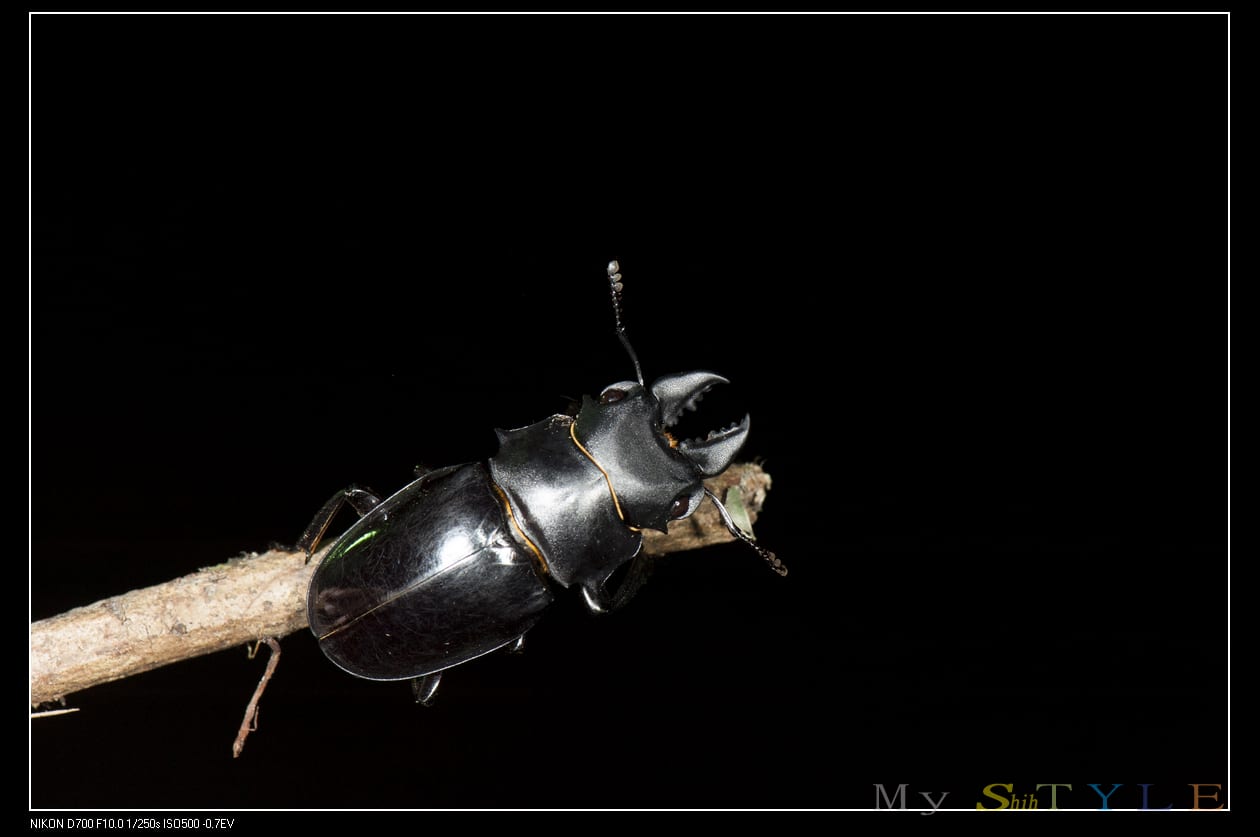
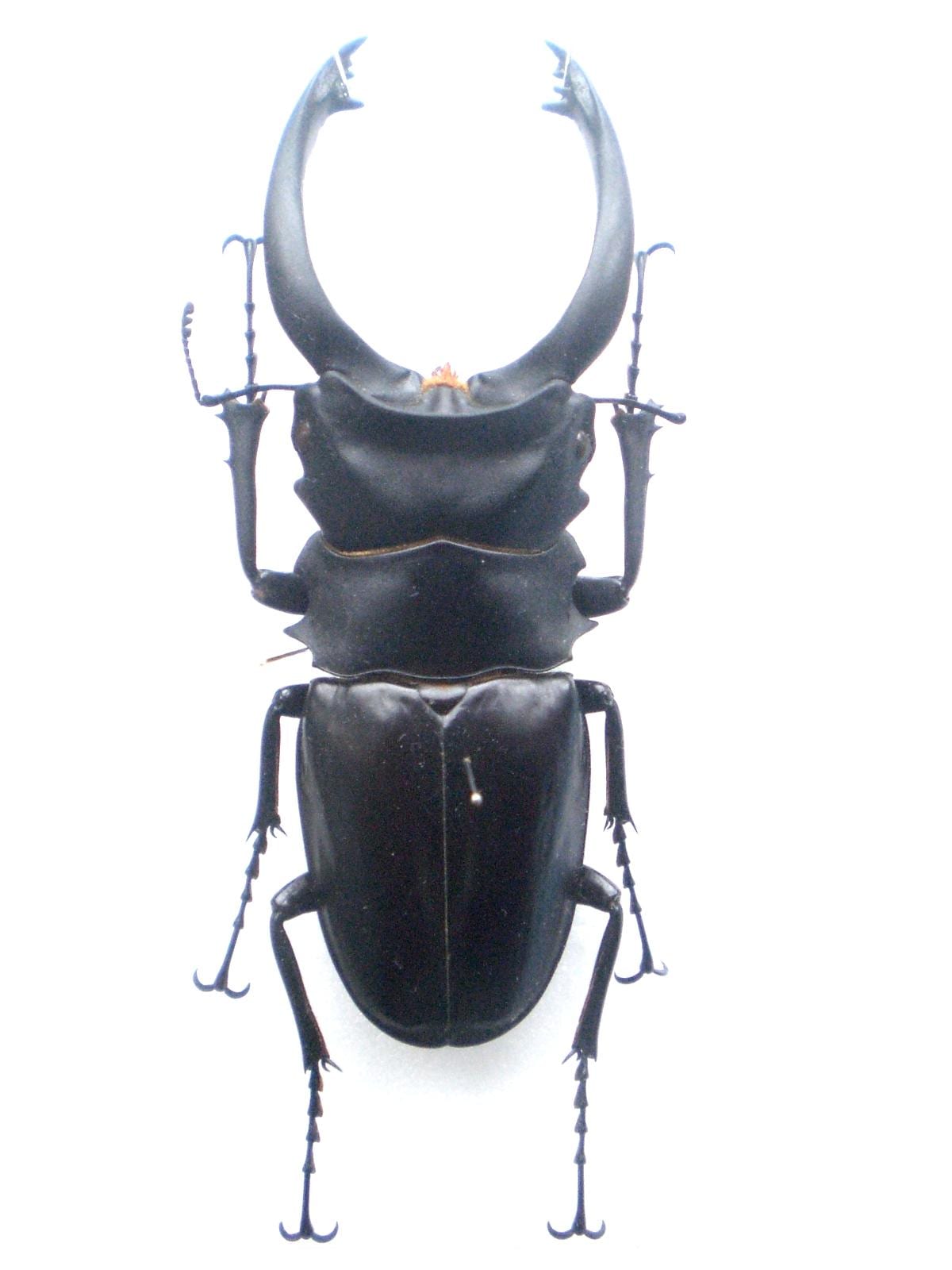
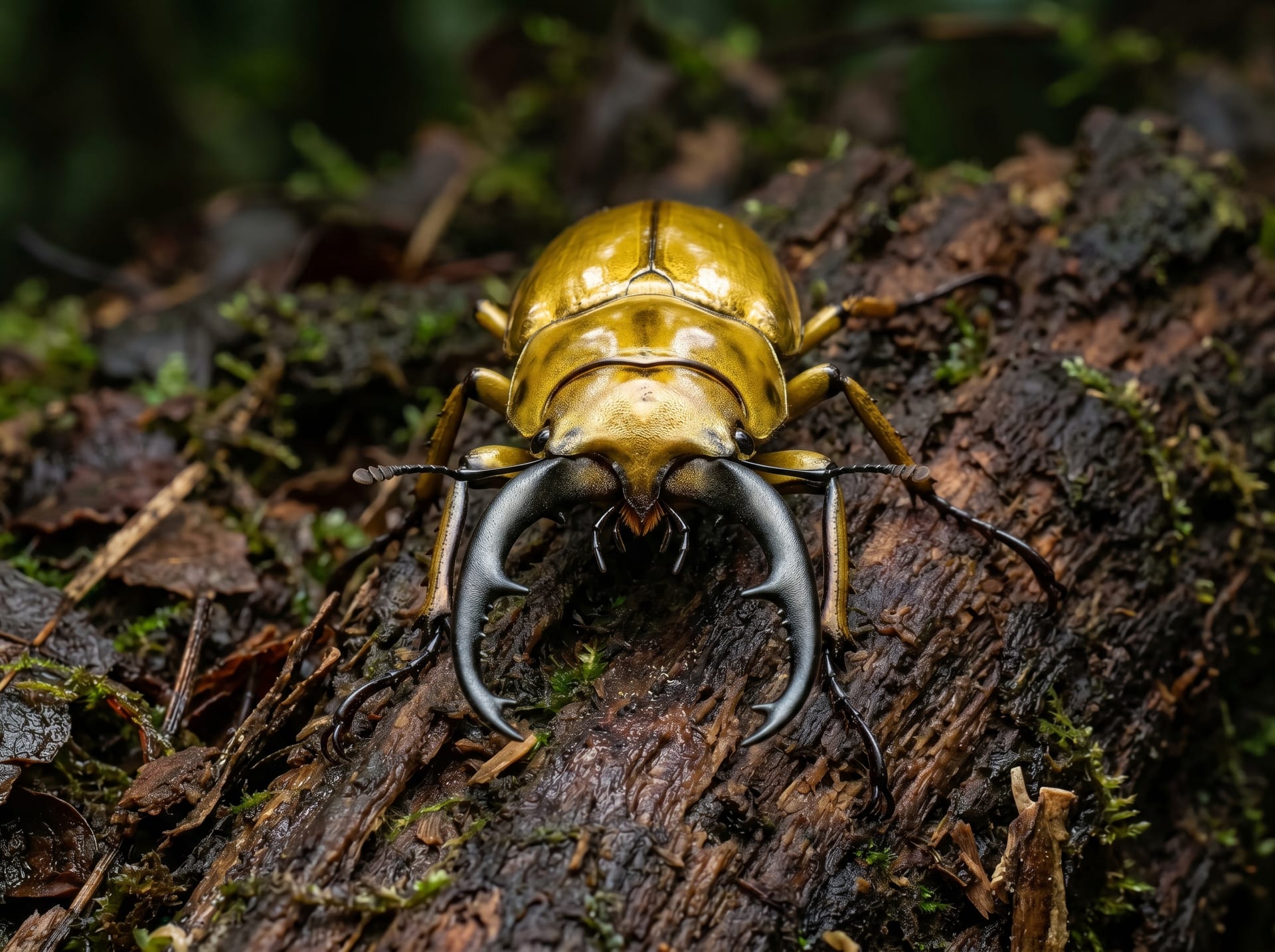
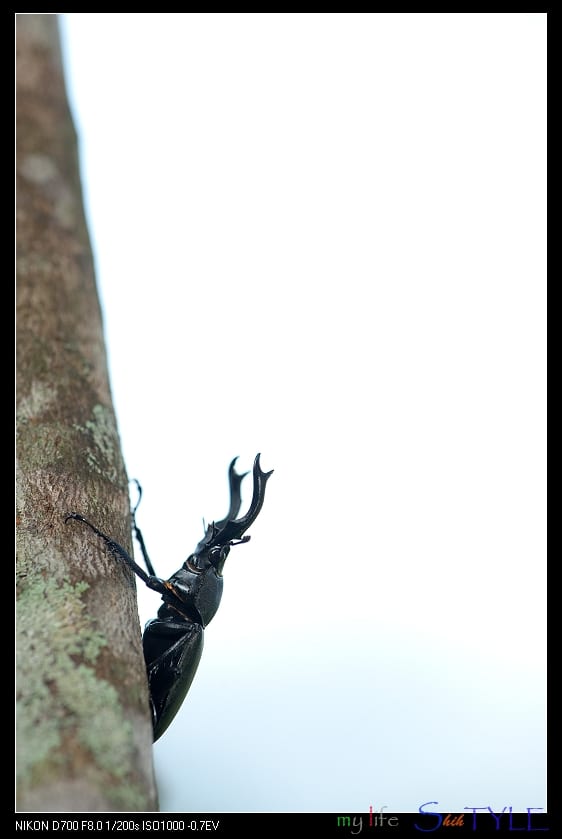
The nominate subspecies of the deer stag beetle, from Taiwan, with the fine antler-like mandibles the group is named for. When people say deer stag beetle they mean this one. Even small males show the mandibles well, and its gloss separates it from the Amami species.
Difficulty
Beginner
Temperature
20〜28℃ (typical for Insect)
Lifespan
About a year, with an active period of around five months
Size
Males 25-57mm, females 27-31mm (captive record 63.2mm, wild record 63.0mm)
Humidity
60〜80%
Diet
Adults take the sap of broadleaf trees and beetle jelly; larvae are reared in mycelium bottles made from beech or konara oak
About
Rhaetulus crenatus crenatus is the nominate subspecies of the deer stag beetle, found in Taiwan and of middling size within its genus. It is known for the fine antler-like mandibles that give the group its Japanese name, and in Japan the plain name deer stag beetle refers to this form. Males run 25 to 57 mm and females 27 to 31 mm; wild males are usually around 40 mm, but captive-bred beetles have eclosed above 60 mm. It resembles the Amami species of Japan but is glossy where that one is matt, and the antler-like mandibles remain conspicuous even in fairly small males. Adults live about a year, and the males, while a little short-tempered, are among the milder members of the genus. Dormancy between eclosion and maturity is short at about three months, and the active period runs around five months. As throughout the genus, eggs are laid into rotten wood at ground level, and the larvae, which do not take to sawtooth oak, grow largest on oyster-mushroom mycelium made from beech or konara oak. The captive record stands at 63.2 mm.
Source: Wikipedia (CC BY-SA 4.0)
Size of the Taiwanese Deer Stag Beetle
The Taiwanese Deer Stag Beetle grows to Males 25-57mm, females 27-31mm (captive record 63.2mm, wild record 63.0mm).
Basic Info
Origin
Taiwan
Lifespan
About a year, with an active period of around five months
Size
Males 25-57mm, females 27-31mm (captive record 63.2mm, wild record 63.0mm)
Temperature
20〜28℃ (typical for Insect)
Care Specifications
Semi-aggressiveSolitaryBreeding: Easy
Sources: Rhaetulus crenatus crenatus - Wikipedia (JA; size, wild and captive maxima, lifespan, dormancy and active period, range) / Rhaetulus - Wikipedia (JA; mandible form, lifespan, egg-laying and mycelium bottles, temperament, list of subspecies) / GBIF subspecies page for Rhaetulus crenatus crenatus Westwood, 1871 / BE-KUWA Certified Breeding Records (Mushi-sha, FY2025 edition PDF, JA)
Breeding Records & Localities
Captive record (♂)
63.2 mm
Wild record (♂)
63 mm
Record source: BE-KUWA 2025 edition, captive records for imported stag beetles (crenatus nominate: captive 63.2 mm, Zhiying Shen, registered 2025; wild 63.0 mm; expected maximum 67 mm)
Notable localities
Taiwan
Regional subspecies
- Rhaetulus crenatus crenatus(The nominate form of this entry) — Taiwan
- Rhaetulus crenatus speciosus — Thailand; the most strongly marked and the largest
- Rhaetulus crenatus kawanoi — Guangxi in China and northern Vietnam
- Rhaetulus crenatus boileaui — Laos
- Rhaetulus crenatus rubrifemoratus — Fujian; the legs are tinged red
Generation codes
- WD
- Wild-caught
- WF1
- Offspring of a wild-caught female
- F1〜
- Captive generations (same locality)
- CBF1
References & Sources
Edited & verified by: BreederDirect editorial team
The taxonomic, regulatory, and husbandry data on this page are compiled and verified against the authoritative primary sources below.
Primary sources
- Wikipedia
- Ministry of the Environment, Invasive Species Act: "Guidance for Those Importing Live Insects in Scarabaeoidea"
- CITES Appendix (checklist.cites.org)
- Rhaetulus - Wikipedia (JA; mandible form, lifespan, egg-laying and mycelium bottles, temperament, list of subspecies)
- GBIF subspecies page for Rhaetulus crenatus crenatus Westwood, 1871
- BE-KUWA Certified Breeding Records (Mushi-sha, FY2025 edition PDF, JA)
Taxonomy & Authority
Accepted name: Rhaetulus crenatus crenatus Westwood, 1871
Synonyms: Rhaetulus crenatus
Authority databases: GBIF
Nomenclature follows global taxonomic authority databases.
Regulations & Conservation Status
Not CITES-listed
Plant Protection Act: When importing live specimens of Scarabaeoidea (including rhinoceros beetles, stag beetles, flower beetles, etc.), a species identification certificate issued by the exporting country government agency or equivalent must be attached in accordance with the Invasive Species Act (import ports are limited to Narita, Chubu, Kansai, Fukuoka, and Kagoshima airports). This species itself is not a designated invasive species, and import is possible upon submission of the certificate.
Sources: Ministry of the Environment, Invasive Species Act: "Guidance for Those Importing Live Insects in Scarabaeoidea" / CITES Appendix (checklist.cites.org)
Regulations may change. Always verify the latest information with the relevant authorities.
Taiwanese Deer Stag Beetle Listings
Loading latest listingsFind listings for this species