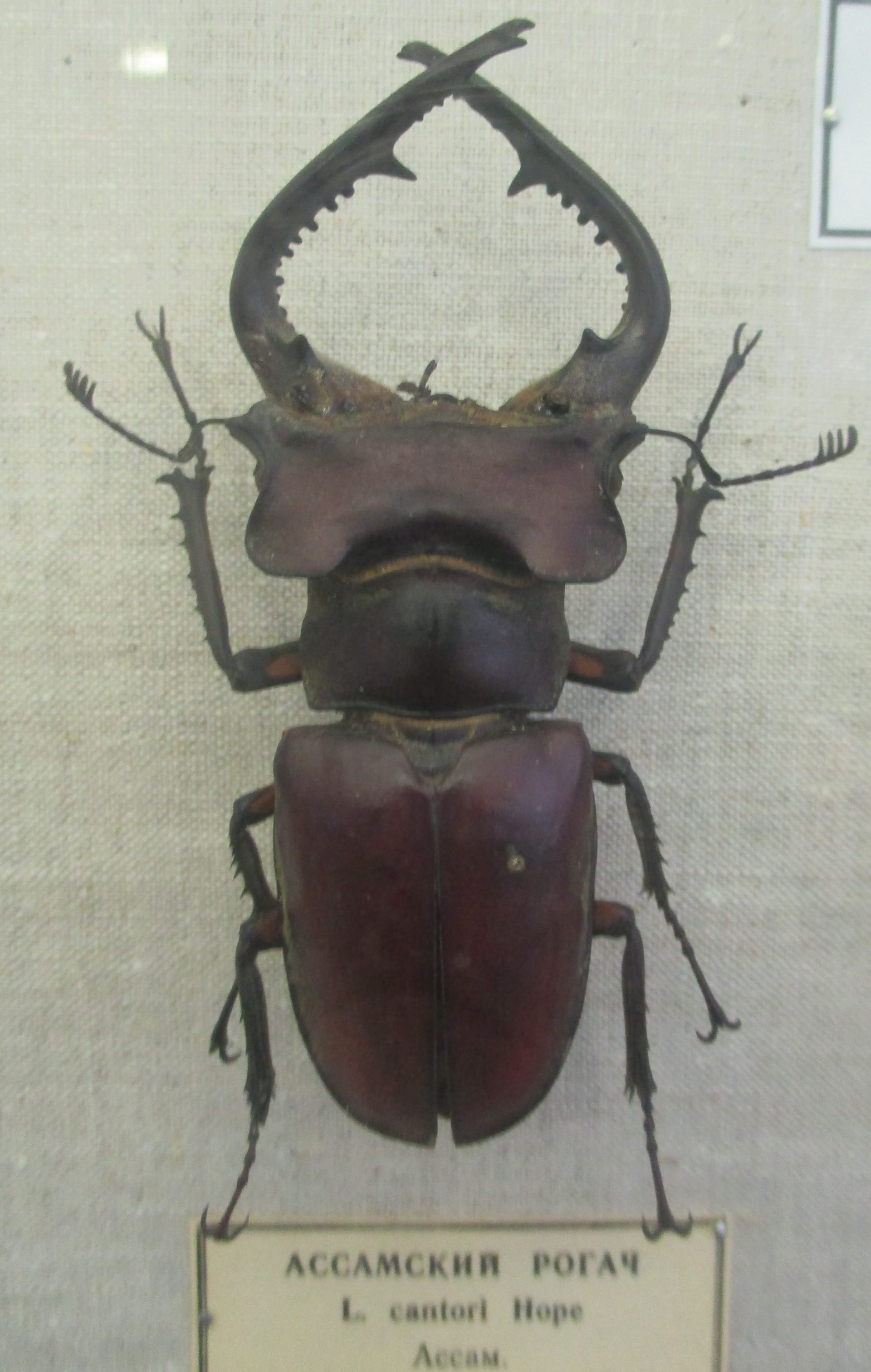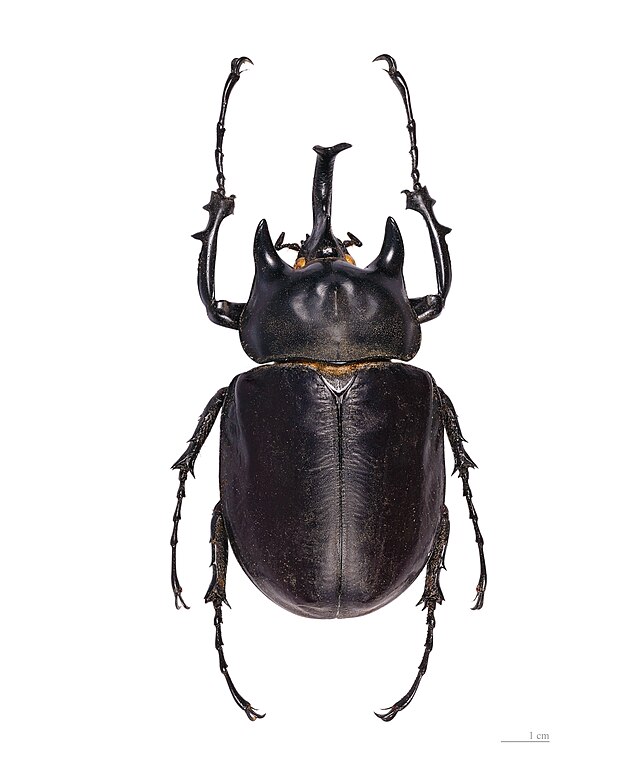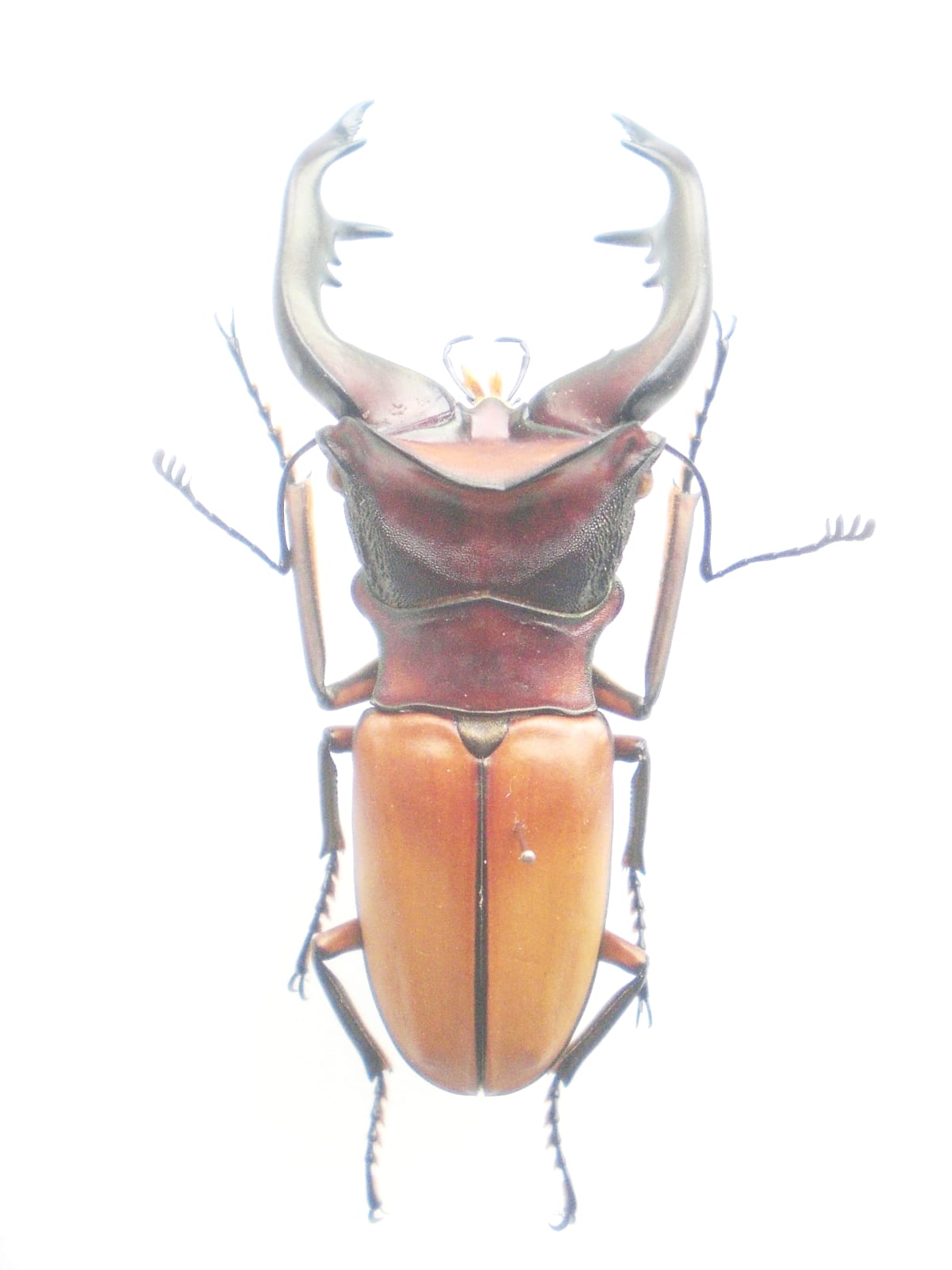
Source: Wikimedia Commons
Antaeus Stag Beetle
IntermediateDorcus antaeus
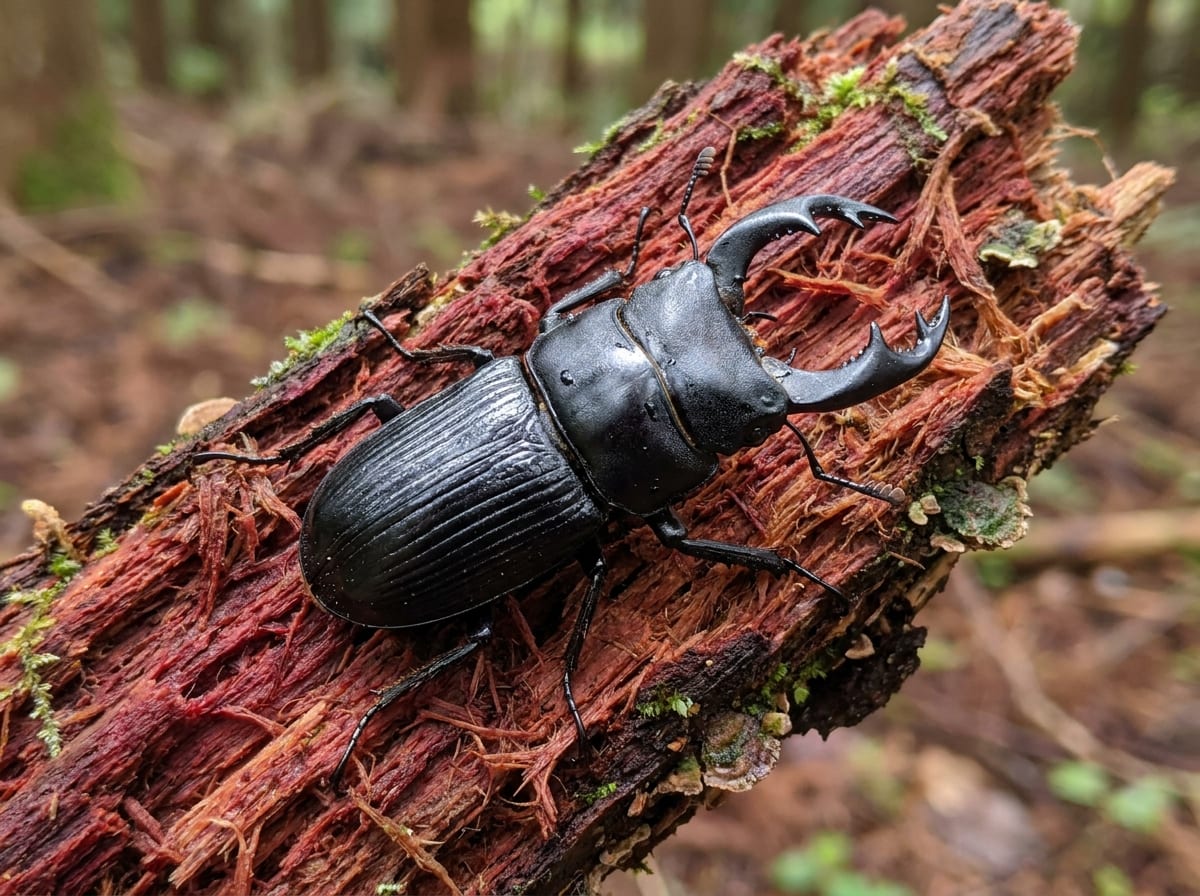
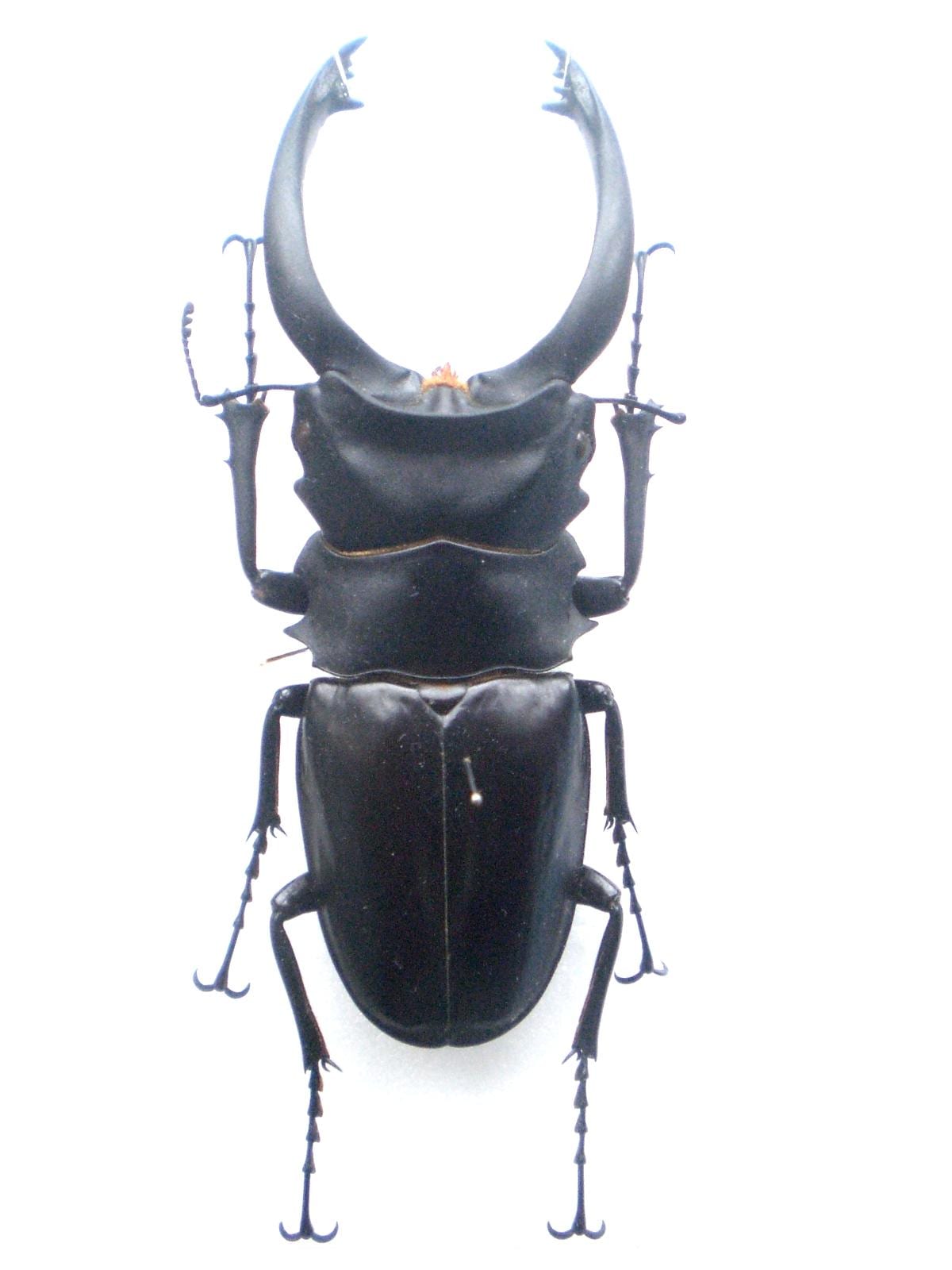
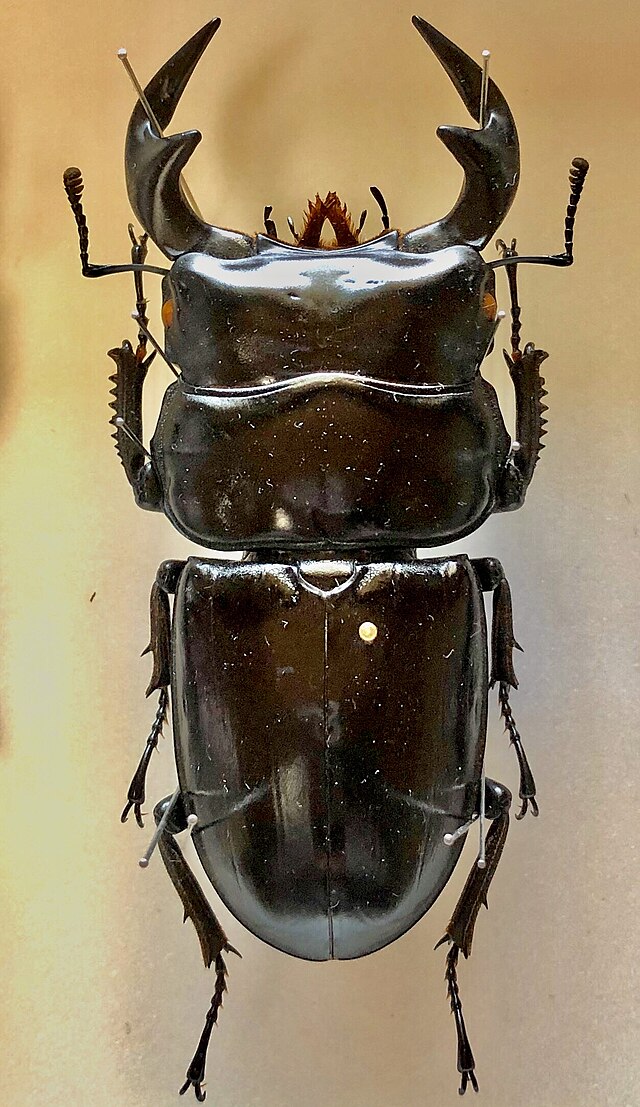
A large stag beetle from Himalayas. Attractive thick short mandibles and heavy body.
Difficulty
Intermediate
Temperature
20〜28℃
Lifespan
Adult 1-3 years
Size
40-90mm
Humidity
60〜80%
Diet
Insect jelly
About
Dorcus antaeus is a large stag beetle of the genus Dorcus, closely related to the Japanese giant stag beetle, distributed across the Himalayan foothills of northeastern India, Nepal, Bhutan, Myanmar, and northern Thailand. It inhabits higher elevations than most Dorcus species. Fungal substrate bottle rearing is effective for larvae and can yield impressively large adults. Egg-laying occurs in hardwood logs. Adults eat beetle jelly. antaeus one of the most popular exotic Dorcus species among collectors.
Lifespan of the Antaeus Stag Beetle
The Antaeus Stag Beetle lives Adult 1-3 years.
Adults have a long lifespan of 1–3 years—similar to the Japanese giant stag—allowing extended captive enjoyment. The combination of familiar Dorcus husbandry methods, long adult lifespan, potential for large specimens, and a distinctive robust physique makes D.
Size of the Antaeus Stag Beetle
The Antaeus Stag Beetle grows to 40-90mm.
Adults reach 40–90 mm in body length, with a deep glossy black body and thick, somewhat shorter mandibles that give the species a heavy, powerful appearance.
Temperature & humidity for the Antaeus Stag Beetle
As a highland species, low-temperature management at 18–23°C is required.
Basic Info
Origin
Himalayan foothills of northeastern India, Nepal, Bhutan, Myanmar, and northern Thailand
Lifespan
Breeding Records & Localities
Captive record (♂)
95.8 mm
Wild record (♂)
88 mm
Record source: BE-KUWA 2025 Edition (nominate subspecies, captive-bred 95.8mm, Kitamura Akito, 2025 / wild 88.0mm)
Notable localities
IndiaNepalBhutanMyanmar (Kachin)
Regional subspecies
- Dorcus antaeus(nominate subspecies) — India to Himalayas
- Dorcus antaeus — Indochina
Size trends differ by subspecies and locality (captive records: nominate subspecies 95.8 / Indochina 86.8 / Malay 83.2mm). Captive records are updated annually in the BE-KUWA (Mushi-sha) contest. Individual value varies significantly by locality, generation (CBF/WF/WD), and size.
Generation codes
- WD
- Wild-caught
- WF1
- Offspring of a wild-caught female
- F1〜
- Captive generations (same locality)
- CBF1
References & Sources
Edited & verified by: BreederDirect editorial team
The taxonomic, regulatory, and husbandry data on this page are compiled and verified against the authoritative primary sources below.
Taxonomy & Authority
Accepted name: Dorcus antaeus Hope, 1842
Authority databases: GBIF
Nomenclature follows global taxonomic authority databases.
Regulations & Conservation Status
Not CITES-listed
Plant Protection Act: When importing live specimens of Scarabaeoidea (including rhinoceros beetles, stag beetles, flower beetles, etc.), a species identification certificate issued by the exporting country government agency or equivalent must be attached in accordance with the Invasive Species Act (import ports are limited to Narita, Chubu, Kansai, Fukuoka, and Kagoshima airports). This species itself is not a designated invasive species, and import is possible upon submission of the certificate.
Sources: Ministry of the Environment, Invasive Species Act: "Guidance for Those Importing Live Insects in Scarabaeoidea" / CITES Appendix (checklist.cites.org)
Regulations may change. Always verify the latest information with the relevant authorities.
Antaeus Stag Beetle Listings
Loading latest listingsFind listings for this species