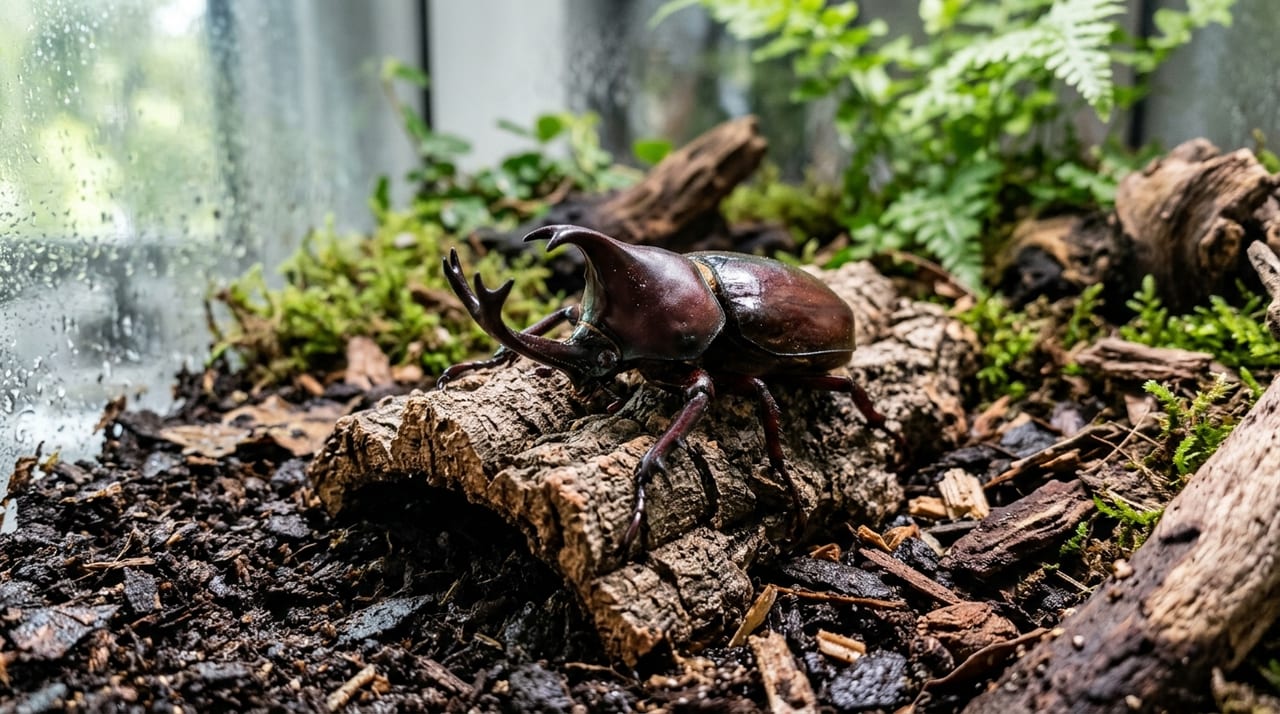
About Dorcus antaeus
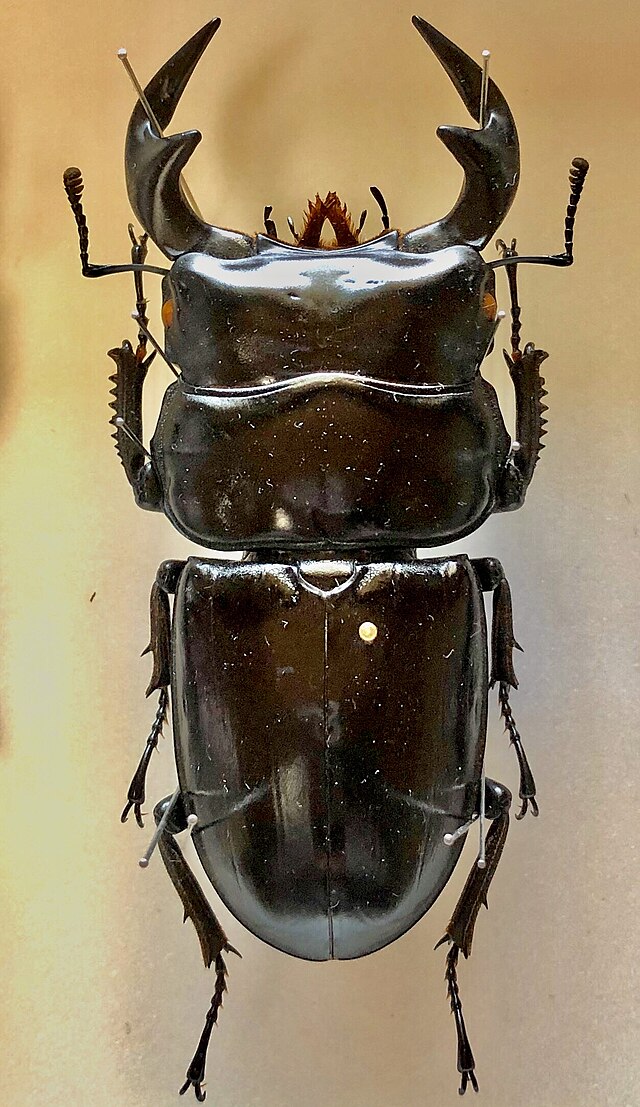
Dorcus antaeus is a large species in the genus Dorcus, distributed throughout northeastern India, Myanmar, Yunnan Province in China, Taiwan, and surrounding regions. As a close relative of the Japanese stag beetle (D. hopei), it is sometimes referred to as the "king of stag beetles" due to its impressively large mandibles with characteristic curves and the ability to exceed 80mm in body length.
Key Characteristics of Dorcus antaeus
- Large mandibles that project forward with beautiful curves, ranging from "straight-tooth" to "inner-tooth developed" forms
- Maximum recorded size in captivity exceeds 90mm, greatly outpacing the Japanese stag beetle in size
- Native to highland elevations of 1,000–2,500m, making low-temperature husbandry essential
- Adults have a long lifespan (3–5 years)
- Wood-spawning breeding behavior
| Item | Details |
|---|
| Scientific Name | Dorcus antaeus |
| Alternative Names | Dorcus antaeus stag beetle, Anteus stag beetle |
| Body Length | Males: 60–90mm / Females: 35–50mm |
| Adult Lifespan | 3–5 years |
| Distribution | Northeastern India, Myanmar, Yunnan Province in China, highland Taiwan |
| Husbandry Temperature | Adults: 15–23°C (low-temperature management is critical) |
| Difficulty Level | Intermediate to Advanced |
Adult Care
Temperature Management (Most Critical)
Because Dorcus antaeus is a highland-dwelling insect, the high summer temperatures in Japan are its greatest challenge.
- Optimal temperature: 18–22°C (cooling is essential during summer)
- Temperatures above 25°C place significant stress on the insect and drastically shorten lifespan
- Home cultivation should utilize wine coolers, coolers, or dark, cool spaces for management
- During winter, maintaining 10–15°C without heating is possible (however, avoid temperatures below 5°C)
Housing and Substrate
| Item | Recommendation |
|---|
| Case Size | Fruit fly-proof container, medium to large (select based on male body length) |
| Substrate | Insect substrate (fermented or non-fermented substrate both acceptable) |
| Substrate Amount | Approximately half the case depth |
| Perches | 1–2 cork bark or Japanese oak (Kunugi) wood pieces |
| Prevent Tipping | Use abundant bark and perches for stability |
Feeding
- Insect jelly (high-nutrition type containing protein and sugars recommended)
- Jelly replacement frequency: once or twice per week
- Since Dorcus antaeus consumes jelly readily, placing multiple jelly cups is acceptable
Post-Emergence Feeding Confirmation
Adults must not be paired until post-emergence feeding (post-eclosion feeding) begins.
- Time from eclosion to post-emergence feeding: 3–6 months (tends to be longer with low-temperature management)
- Method to confirm post-emergence feeding: check daily for bite marks on the jelly
- After confirming post-emergence feeding, wait another 1–2 months before allowing maturation and initiating pairing
Breeding
Pairing
Male Dorcus antaeus are highly aggressive toward females, so safe pairing methods must be selected.
Hand-Pairing Method (Recommended)
- The keeper holds the male and brings the female close
- Once the male mounts the female and assumes mating position, confirm complete (15–30 minutes)
- Once mating is confirmed, transfer the female to the spawning chamber
- If housing them together, always arrange for female isolation (dividing net, etc.) and separate immediately if the male bites the female
Spawning Chamber Setup
Dorcus antaeus is fundamentally a wood-spawning species.
| Item | Details |
|---|
| Spawning Wood | Japanese oak (Kunugi) or konara oak wood (soft to medium-hard) |
| Substrate | Fermented substrate (provides better stability for spawning wood) |
| Number of Logs | 2–3 pieces (vertical placement or partially buried both acceptable) |
| Temperature | 22–24°C |
| Incubation Period | Split/excavate after 2–3 months |
| Expected Eggs | 10–25 (varies by individual and environment) |
Spawning wood should be soaked in water for 1–2 hours, then partially dried in shade for several hours to achieve proper moisture level before use.
Larval Management
Rearing Dorcus antaeus larvae in fungal substrate bottles is the standard method for developing large-sized individuals.
| Stage | Recommended Management |
|---|
| 1st Instar | Fungal substrate cup (120–250ml) or fermented substrate |
| 2nd Instar | Fungal substrate bottle (800ml–1,400ml) |
| 3rd Instar (early to mid) | Fungal substrate bottle (1,400ml–2,300ml) |
| 3rd Instar (late to pre-pupation) | Fermented substrate (to prevent fungal overgrowth) |
- Temperature: Maintaining 20–22°C throughout the larval period is essential for achieving large size
- Elevated temperatures (25°C or higher) tend to cause early emergence and size reduction
- Fungal substrate types: Oyster mushroom and Turkey tail mushroom substrates are common (Lion's Mane also acceptable)
Pupation and Emergence
- Pupation often occurs with the larva self-constructing a pupal chamber within the fungal substrate bottle
- After emergence, allow the adult to rest in the pupal chamber for several weeks before removal
- To prevent emergence deformities, avoid vibration and movement to bright areas once pupation is confirmed
Acquisition and Legal Considerations
While some specimens from Taiwan and China sources are not subject to invasive species regulations, strict containment and husbandry protocols are essential to prevent escapes into the wild. Purchase only from legitimate import channels, and dispose of specimens by freezing followed by standard waste disposal.
Summary
While Dorcus antaeus requires the constraint of low-temperature management, its magnificent mandibles, extended lifespan, and impressive size offer a unique appeal unmatched by other stag beetles. Once equipped with proper temperature control infrastructure and having mastered wood-spawning breeding and low-temperature larval management, Dorcus antaeus offers breeding enthusiasts an advanced and rewarding stage in their stag beetle hobby.