Source: Wikimedia Commons
European Stag Beetle
IntermediateLucanus cervus
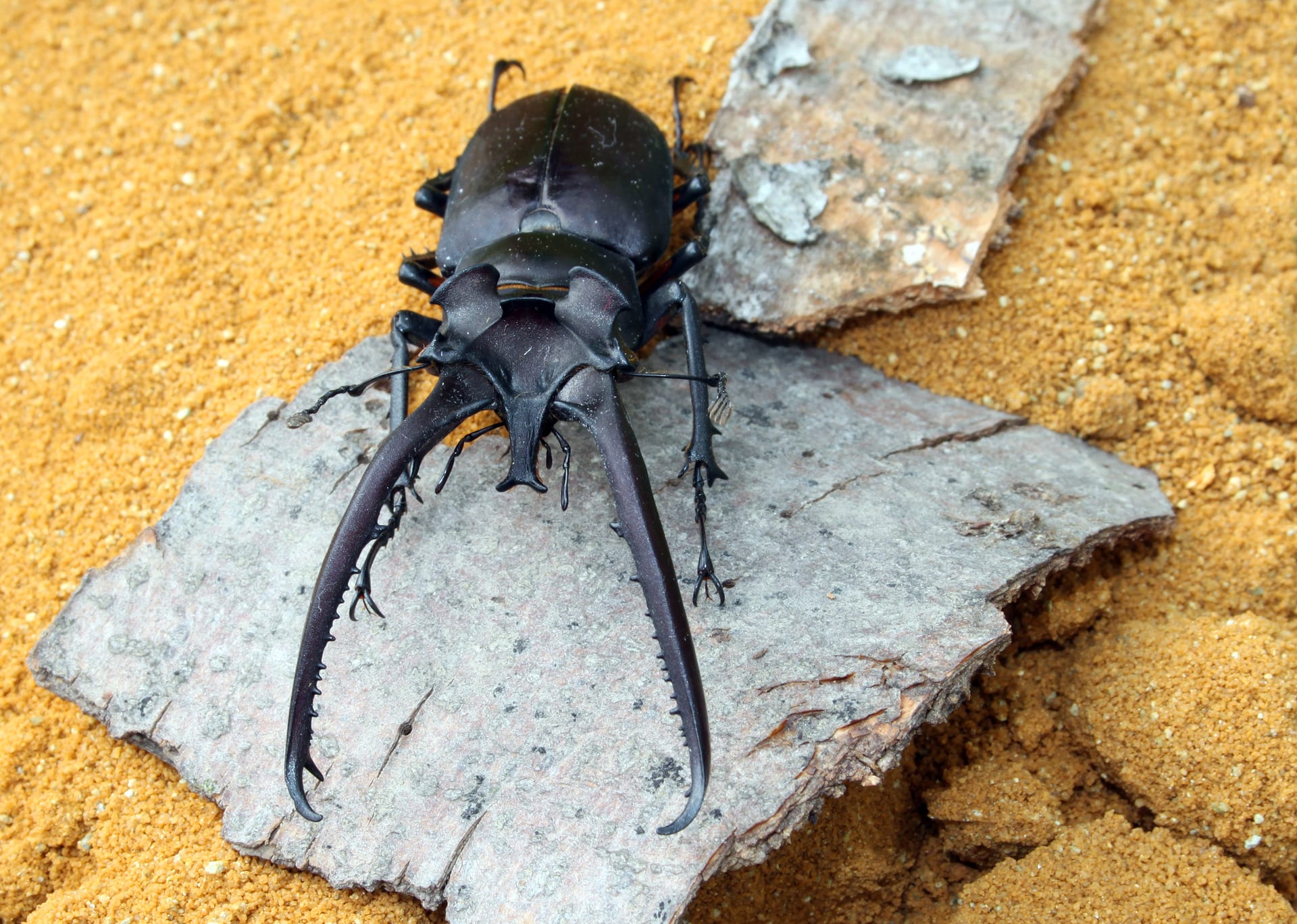
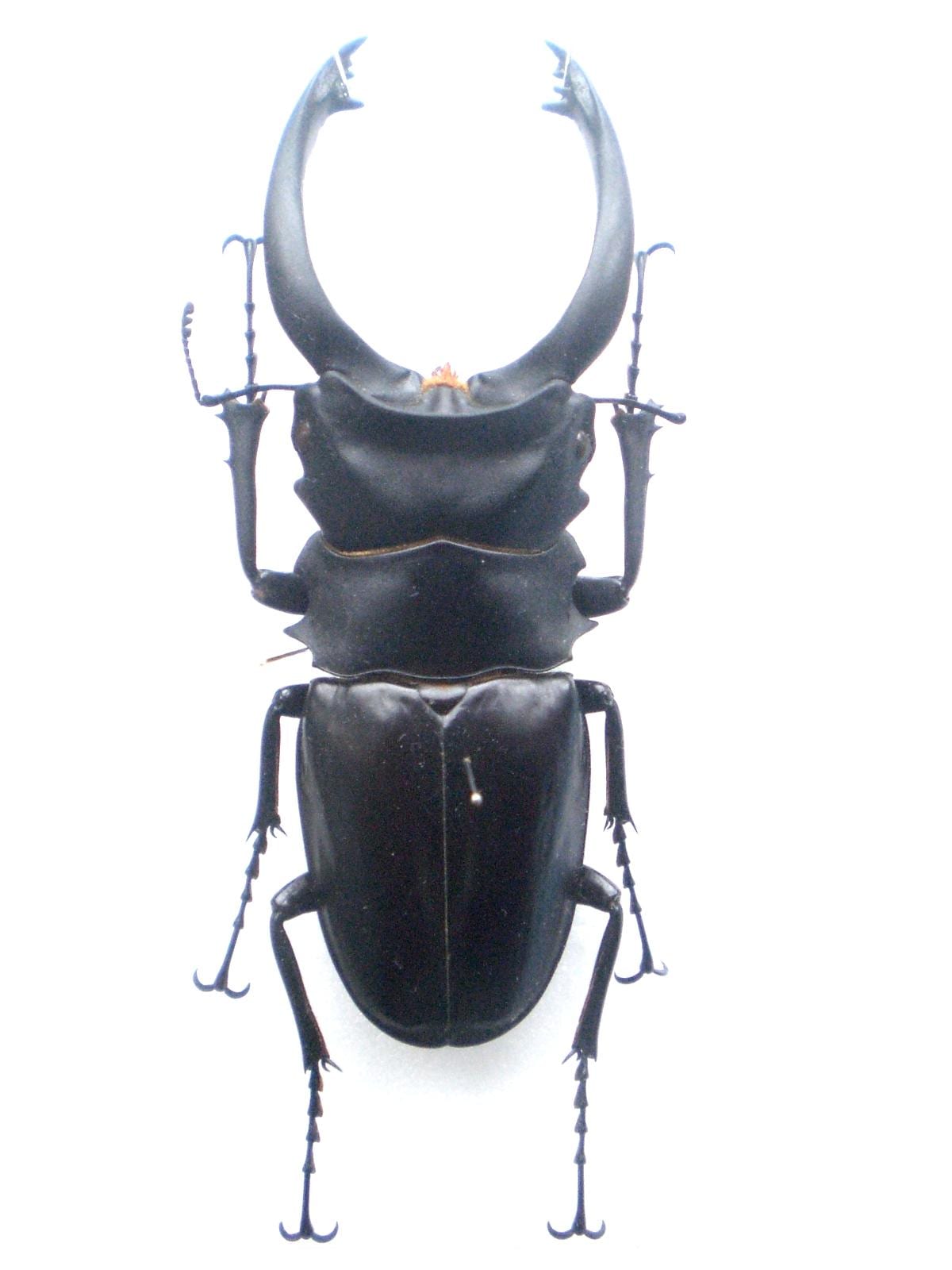
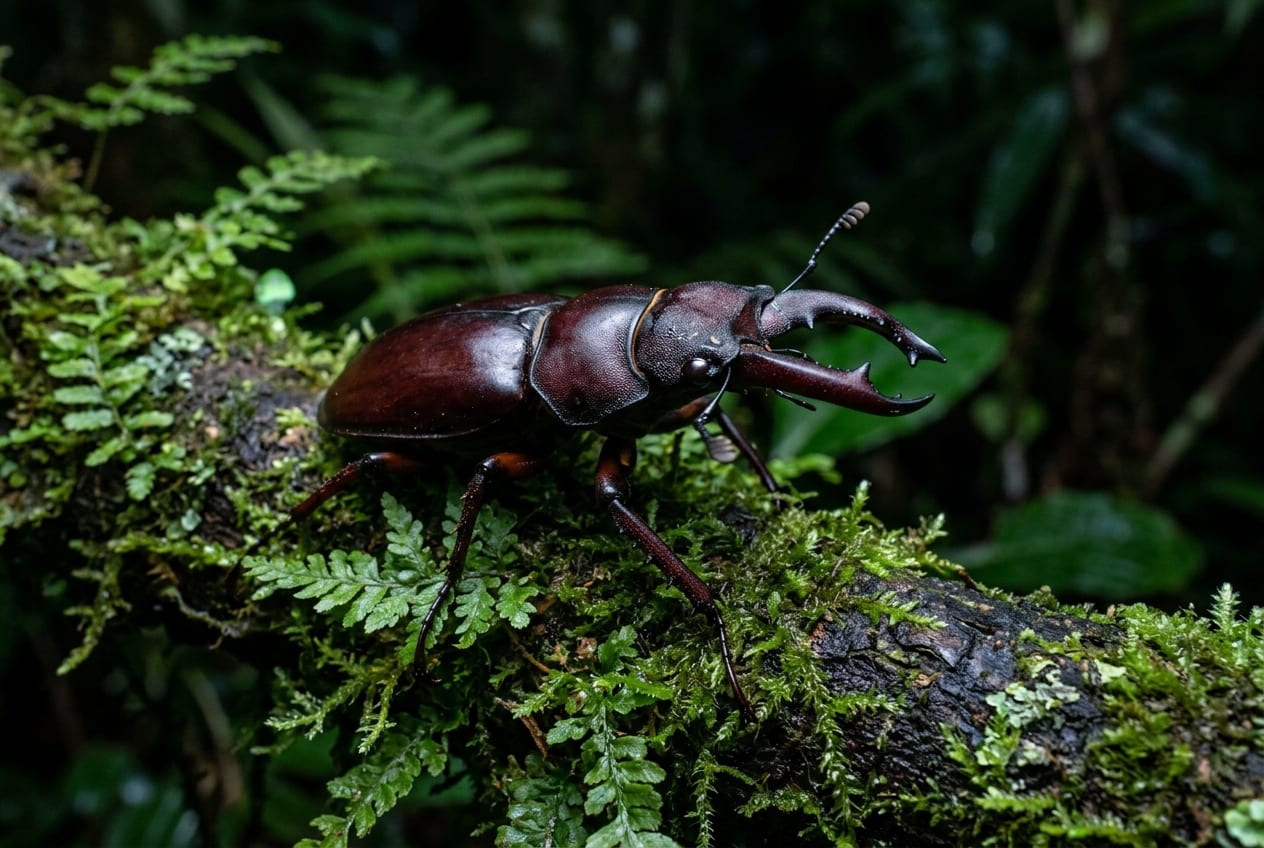
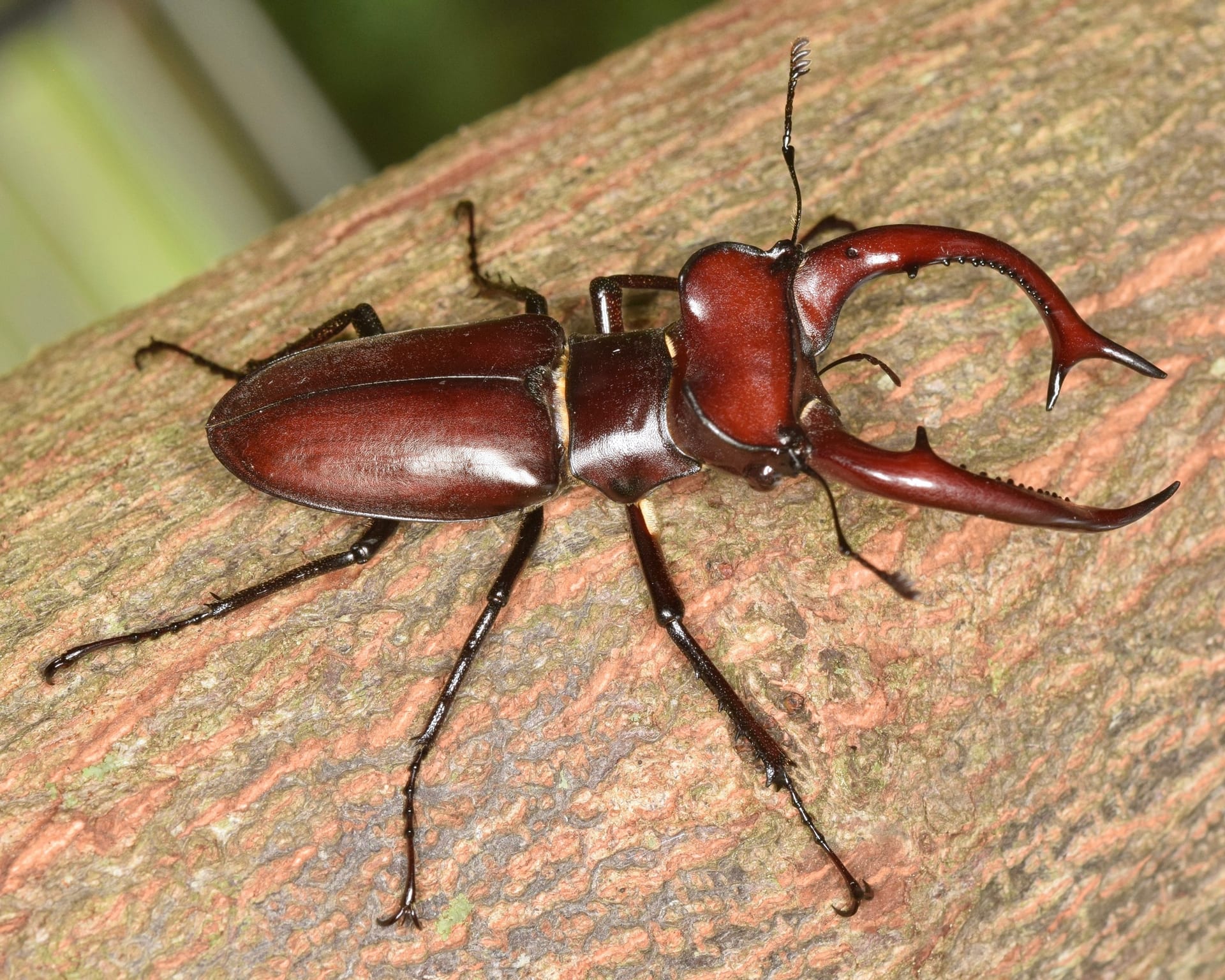
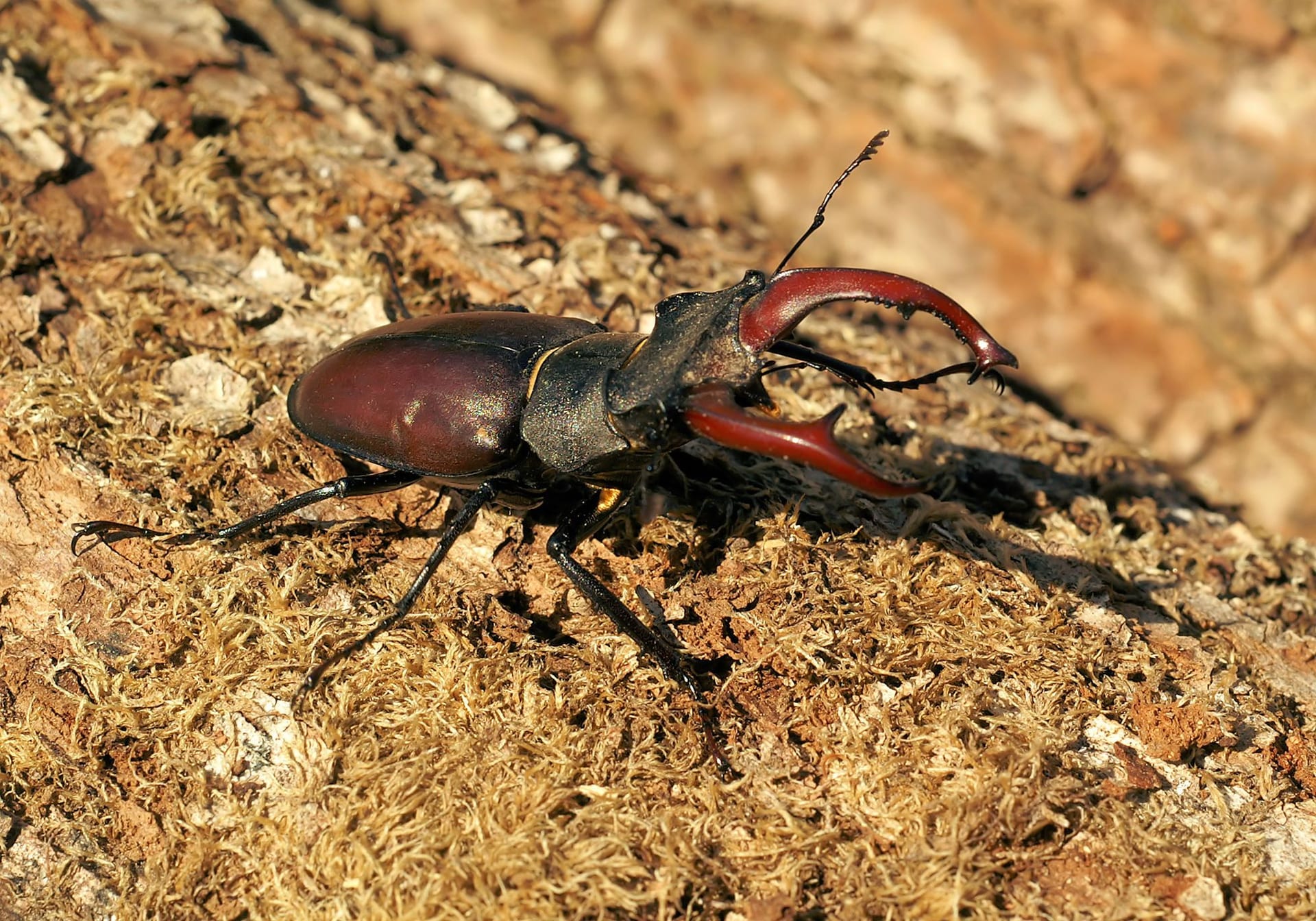
The largest beetle in Europe and the type species of the genus Lucanus. It is reddish black, and the male carries greatly enlarged mandibles held like a stag's antlers. It is broader than the Japanese miyama stag beetle, with a notably large head.
Difficulty
Intermediate
Temperature
25℃
Lifespan
Adults active for two to three months
Size
Males to about 75mm, females 30-50mm (a record beetle of 90.0mm is known from the wild)
Humidity
60〜80%
Diet
Adults take tree sap, fruit juices and beetle jelly; larvae eat well-rotted broadleaf wood
About
Lucanus cervus is the type species of the genus Lucanus and ranges from southern Britain across Europe into Asia Minor and southwestern Russia. It is the largest beetle in Europe, broader overall than the Japanese miyama stag beetle, with a notably large head and little of the fine pubescence seen in that species. The body is reddish black, though some beetles are darker. In large males the clypeal process is well developed, the mandible forks at the tip, one large inner tooth is developed and smaller teeth run like a saw before and behind it; in small males that inner tooth is poorly formed. Adults appear from spring into summer and are gone by the end of August, gathering at the sap of oaks, chestnuts and other broadleaf trees and coming to lights at night. The larvae prefer well-rotted wood to leaf mould. Besides the nominate form, several subspecies are known and traded, among them akbesianus, which exceeds 90mm.
Source: Wikipedia (CC BY-SA 4.0)
Size of the European Stag Beetle
The European Stag Beetle grows to Males to about 75mm, females 30-50mm (a record beetle of 90.0mm is known from the wild).
Temperature & humidity for the European Stag Beetle
The ideal temperature for the European Stag Beetle is 25℃.
Basic Info
Origin
Europe (southern Britain across the continent, plus Asia Minor and southwestern Russia; absent from Ireland)
Lifespan
Adults active for two to three months
Care Specifications
Breeding Records & Localities
Captive record (♂)
93.6 mm
Wild record (♂)
90 mm
Record source: BE-KUWA 2025 edition, captive records for foreign stag beetles (European stag, nominate subspecies: captive 93.6mm, Hiroaki Tanokura, registered 2012; wild 90.0mm, expected maximum 98mm)
Notable localities
Continental EuropeSouthern BritainAsia MinorSouthwestern Russia
Regional subspecies
- Lucanus cervus cervus(The nominate subspecies, with strongly reddish mandibles) — Southern Britain and continental Europe
- Lucanus cervus akbesianus(The akbesianus form; over 90mm, with outsized beetles passing 100mm, the largest in the genus Lucanus) — The Syria-Turkey border region
- Lucanus cervus turcicus(The inner tooth of the mandible curves weakly forward) — European Turkey, Bulgaria, Greece and Romania
- Lucanus cervus judaicus(The judaicus form; the BE-KUWA 2025 edition gives a captive record of 104.8mm) — Western Asia
- Lucanus cervus laticornis — Western Asia
References & Sources
Edited & verified by: BreederDirect editorial team
The taxonomic, regulatory, and husbandry data on this page are compiled and verified against the authoritative primary sources below.
Primary sources
- Wikipedia
- CITES Appendix (checklist.cites.org)
- IUCN Red List (Near Threatened)
- EU Habitats Directive Annex II, Berne Convention Appendix III and Schedule 5 of the UK Wildlife and Countryside Act 1981 (source: Wikipedia)
- BE-KUWA Certified Breeding Records (Mushi-sha, FY2025 edition PDF, JA)
- GBIF: Lucanus cervus (Linnaeus, 1758)
Taxonomy & Authority
Accepted name: Lucanus cervus (Linnaeus, 1758)
Authority databases: GBIF
Nomenclature follows global taxonomic authority databases.
Regulations & Conservation Status
Not CITES-listedIUCN NT · Near Threatened
Sources: CITES Appendix (checklist.cites.org) / IUCN Red List (Near Threatened) / EU Habitats Directive Annex II, Berne Convention Appendix III and Schedule 5 of the UK Wildlife and Countryside Act 1981 (source: Wikipedia)
Regulations may change. Always verify the latest information with the relevant authorities.
European Stag Beetle Listings
Loading latest listingsFind listings for this species