Source: Wikimedia Commons
Hyllus Rhinoceros Beetle
IntermediateDynastes hyllus
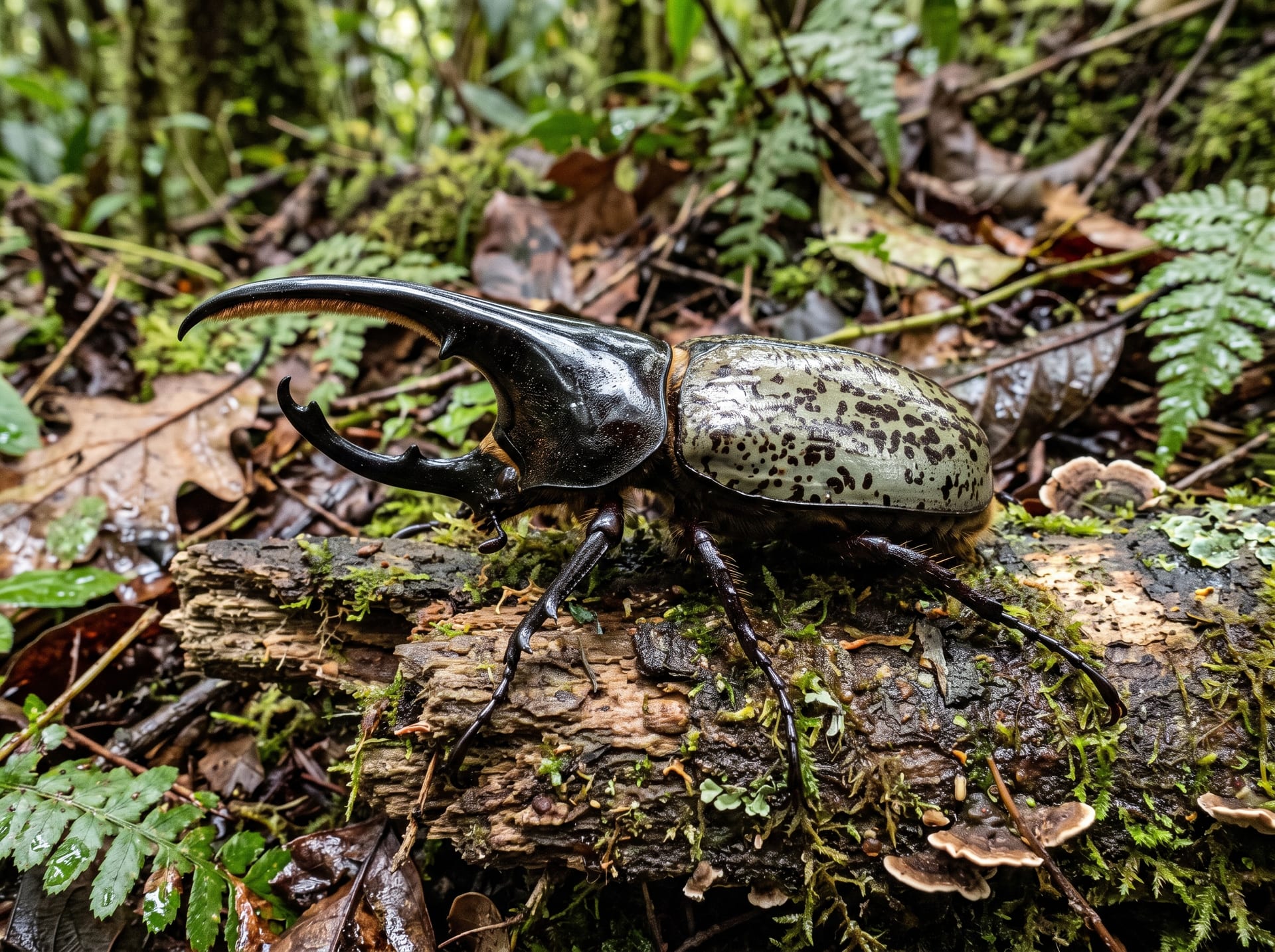
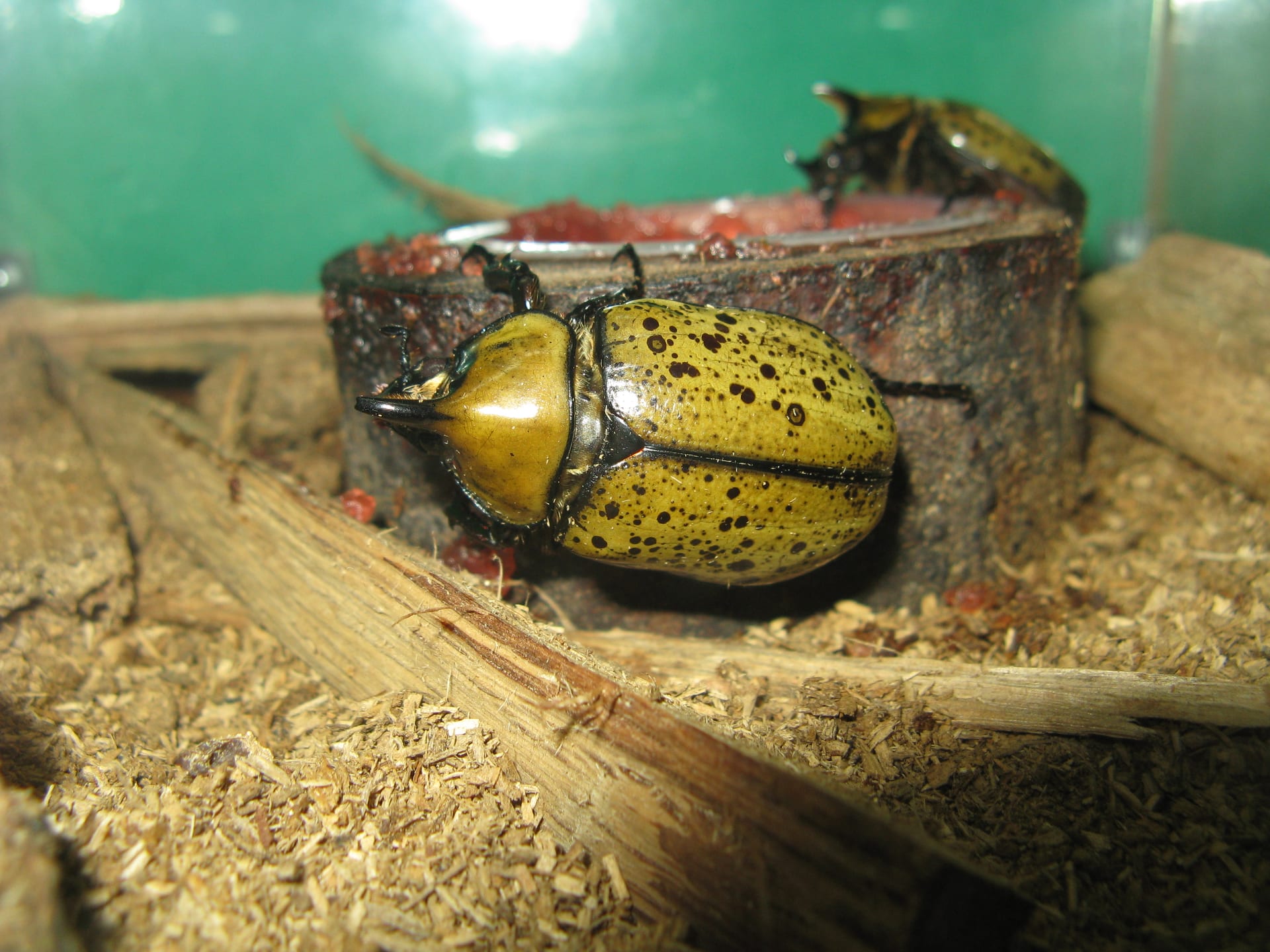
The largest of the white rhinoceros beetles, found in Mexico. Glossy pale yellow-brown with a swollen rear that gives it a pear-shaped outline, the male carries a long head horn and thoracic horn, and captive beetles pass 80mm.
Difficulty
Intermediate
Temperature
18℃
Lifespan
Adults 4-8 months
Size
Males 42-90mm (recorded above 97mm), females 52-61mm
Humidity
60〜80%
Diet
Adults take beetle jelly; larvae eat fermented substrate
About
Dynastes hyllus is a Mexican member of the genus Dynastes, also called the Hyllus rhinoceros beetle. It is thought to stand in a vicariant relationship with D. grantii in the western United States and D. tityus in the east. It is the largest of the beetles called shirokabuto in Japan, males measuring 42-90mm with records above 97mm. The body is a glossy, bright yellow-brown ranging from strongly yellow to pale bluish-white. The male's head horn and thoracic horn both extend well forward, and in large beetles the thoracic horn can exceed the head horn. The swollen rear, which gives a pear-shaped outline, separates it from its close relatives. It is found mainly between 1,000 and 1,600 metres, with adults appearing from May to November and active chiefly from July to October. Wild beetles are usually 55-60mm and rarely over 70mm, yet captive rearing brings out beetles above 80mm without much difficulty.
Source: Wikipedia (CC BY-SA 4.0)
Lifespan of the Hyllus Rhinoceros Beetle
The Hyllus Rhinoceros Beetle lives Adults 4-8 months.
Size of the Hyllus Rhinoceros Beetle
The Hyllus Rhinoceros Beetle grows to Males 42-90mm (recorded above 97mm), females 52-61mm.
Temperature & humidity for the Hyllus Rhinoceros Beetle
The ideal temperature for the Hyllus Rhinoceros Beetle is 18℃.
Basic Info
Origin
Mexico (the nominate subspecies in Veracruz, eastern Puebla, Oaxaca and Chiapas)
Care Specifications
Breeding Records & Localities
Captive record (♂)
98.2 mm
Record source: BE-KUWA 2025 edition, large rhinoceros beetle records (Hyllus shiro, nominate subspecies: captive 98.2mm, Shinichi Sugimoto, registered 2012, expected maximum 105mm). The Japanese Wikipedia likewise gives 98.2mm as the longest captive-reared beetle
Notable localities
Veracruzeastern PueblaOaxacaChiapas
Regional subspecies
- Dynastes hyllus hyllus(nominate subspecies) — Veracruz, eastern Puebla, Oaxaca and Chiapas
- Dynastes hyllus moroni(The moroni beetle; genetic analyses support treating it as the separate species Dynastes moroni) — The Santa Martha massif in southern Veracruz
Besides the two subspecies above, the Japanese Wikipedia records beetles taken in Hidalgo and in Yucatan that appear to be undescribed subspecies, estimated at 57-84mm and 53-87mm respectively.
Generation codes
- WD
- Wild-caught
- WF1
- Offspring of a wild-caught female
- F1〜
- Captive generations (same locality)
- CBF1
References & Sources
Edited & verified by: BreederDirect editorial team
The taxonomic, regulatory, and husbandry data on this page are compiled and verified against the authoritative primary sources below.
Taxonomy & Authority
Accepted name: Dynastes hyllus Chevrolat, 1843
Authority databases: GBIF
Nomenclature follows global taxonomic authority databases.
Regulations & Conservation Status
Not CITES-listed
Sources: CITES Appendix (checklist.cites.org)
Regulations may change. Always verify the latest information with the relevant authorities.
Hyllus Rhinoceros Beetle Listings
Loading latest listingsFind listings for this species