Dynastes granti (Grant's White Rhinoceros Beetle) Care Guide | Management of North American White Rhinoceros Beetles
A detailed guide to caring for Dynastes granti (Dynastes granti), a beautiful white-bodied rhinoceros beetle native to the highlands of North America. This article explains the mechanisms behind the white body color, temperature and humidity management, long-term larval rearing, breeding setup, and post-emergence care, introducing the keys to successful breeding in Japan.
Key Takeaways
A detailed guide to caring for Dynastes granti (Dynastes granti), a beautiful white-bodied rhinoceros beetle native to the highlands of North America. This article explains the mechanisms behind the white body color, temperature and humidity management, long-term larval rearing, breeding setup, and post-emergence care, introducing the keys to successful breeding in Japan.
Related Species
About Dynastes granti
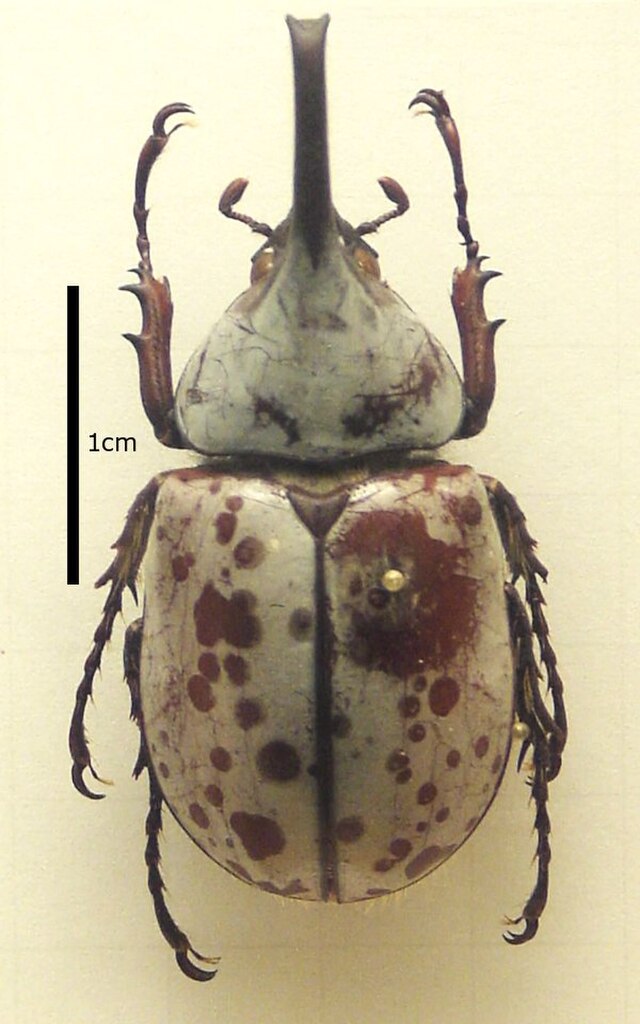
Dynastes granti (English names: White Rhino Beetle / Grant's Rhinoceros Beetle) is a species of rhinoceros beetle native to North America. It belongs to the genus Dynastes, the same as the Hercules beetle, and is among the largest rhinoceros beetles found in North America.
As its name suggests, its entire body is cream to off-white in color (with some individual variation), and it is characterized by extremely long, well-developed horns. While smaller in body size compared to the Hercules beetle, it possesses striking beauty in the ratio of horn length to body size.
Basic Information
| Item | Details |
|---|---|
| Scientific name | Dynastes granti Horn, 1870 |
| English names | Grant's Rhinoceros Beetle / Western Hercules Beetle |
| Distribution | USA (Arizona, New Mexico, Utah, Colorado, etc.) |
| Adult size (Males) | 50-90 mm in length (including horns), body only 35-50 mm |
| Adult size (Females) | 35-50 mm in length |
| Body color | Males: Cream to off-white (may appear greenish depending on humidity), horns and head are black |
| Lifespan (Adults) | Typically 3-9 months |
| Characteristics of native habitat | Adapted to highland and arid environments. In winter, they enter dormancy in low temperature and dry conditions. |
Why Is the Body Color White?
The white body color of Dynastes granti is due to the special microstructure of the elytra (wing covers). This structure scatters light, making the beetle appear white to cream-colored. Interestingly, the beetle has the property that when humidity increases, the body color darkens to dark green or blackish, and returns to white when dried. This is believed to be a color camouflage function that makes the beetle less visible to predators (such as birds).
Rearing Equipment
Rearing Case (Adults)
- Case size: 30 cm (height) × 45 cm (width) × 30 cm (depth) or larger (large case recommended for 2 or more adults)
- Lid lock: A securely locking lid is necessary, as the horns are long and the beetle is strong
- Ventilation: A mesh lid with ventilation holes in the lid and sides is ideal
Substrate (Adults)
- Insect mat: Spread a fine-particle fermented mat (deciduous tree-based) 3-5 cm thick
- Driftwood/Bark material: Install wood as a hiding place. Cork bark is also suitable
Temperature Management (Critical)
Since Dynastes granti originates from highland and semi-arid regions, temperature management is essential for successful rearing.
| Stage | Recommended Temperature | Notes |
|---|---|---|
| Adult active period (Summer-Autumn) | 20-28°C | At this temperature, appetite and activity increase |
| Adult dormancy period | 10-15°C (low temperature) or room temperature | Hibernation at low temperature (10-15°C) is reported to be effective in extending lifespan |
| Larval period (Year-round) | 20-24°C | Raise at stable temperature for slow growth |
Important: High temperatures of 30°C or above are harmful to all Dynastes species. Temperature control is essential during Japanese summers.
Humidity Management
Since they are native to highland and semi-arid regions, they do not prefer humid environments. Care must be taken to prevent the substrate from becoming excessively wet.
- Adult rearing: Keep the substrate lightly moist (moist enough to crumble when squeezed)
- Larval rearing: Keep the larval substrate adequately moist (moist enough to hold together when squeezed)
Feeding (Adults)
| Feed Type | Details |
|---|---|
| Insect jelly (high protein) | Main food. Rhino beetle-specific jelly (brown sugar, high-protein type) |
| Banana | A favorite. Replace within 1 day as it spoils quickly |
| Pineapple/Mango | For vitamin supplementation. Offer small amounts occasionally |
How to feed: Place jelly in a dedicated jelly holder and put it in the case. If the holder tips over and jelly remains stuck, it can cause mold and decay, so change it daily.
Larval Rearing
Setting Up a Breeding Set
- Breeding substrate: Use well-fermented deciduous tree mat (such as Fujicon, Tsukiyono, etc.)
- Substrate depth: 15-20 cm or more (sufficient depth is needed as females burrow deep to lay eggs)
- Breeding setup method: Pack the substrate firmly, then cover with 2-3 cm of softer substrate on top
Larval Management
| Stage | Container Size | Substrate Change Frequency |
|---|---|---|
| 1st instar | 500 cc - 1 L | Every 4-6 weeks |
| 2nd instar | 1-2 L | Every 2-3 months |
| 3rd instar | 2-4 L (800 cc - 4 L) | Every 3-4 months |
Characteristics of Larvae
- Slow growth: The larval period of Dynastes granti is long, typically taking 2-3 years (longer than the Hercules beetle)
- Humus-based diet: Fermented mat is more suitable than fungal substrate bottles
- Cold tolerance: Due to their native environment, they remain active even at low temperatures (10-15°C). Winter rearing is easier to manage
Post-Emergence Care
- Wait for the first feeding: There is a period of 2-3 weeks after emergence when they do not eat anything. Place them without feeding
- Normal management after first feeding: Once they start eating jelly, switch to normal rearing
- Suitable pairing period: 2-3 weeks after first feeding is optimal
Obtaining Them in Japan
Dynastes granti are native to the USA, so attention must be paid to import regulations. While not covered by the Washington Convention (CITES), the import of larvae and eggs is regulated under the Plant Protection Act. Most specimens in domestic circulation are domestically bred (CB) individuals. We recommend obtaining them from breeders or insect specialty shops.
Frequently Asked Questions
"The body color has turned black"
The body color darkens when humidity increases. Check the humidity of your rearing environment. The color will return to white if you increase ventilation in the case and let it dry.
"It won't emerge"
Dynastes granti has a long larval period of 2-3 years. Wait patiently while maintaining appropriate temperature.
"How is it different from the Hercules beetle?"
The Hercules beetle is native to South America (Central/South America) and is adapted to warmer, more humid environments. Grant's is native to North America's highlands and tends toward cooler, drier conditions. The body color is also distinctive, with Grant's white coloration being unique.
Summary
Dynastes granti is a North American rhinoceros beetle characterized by its white body color and long horns. While the larval period is long and rearing requires patience, the beauty of the emerged adults is exceptional. Temperature management (especially avoiding high temperatures) and maintaining a somewhat dry environment are the keys to successful rearing. Try carefully raising healthy individuals obtained from domestic CB breeders.