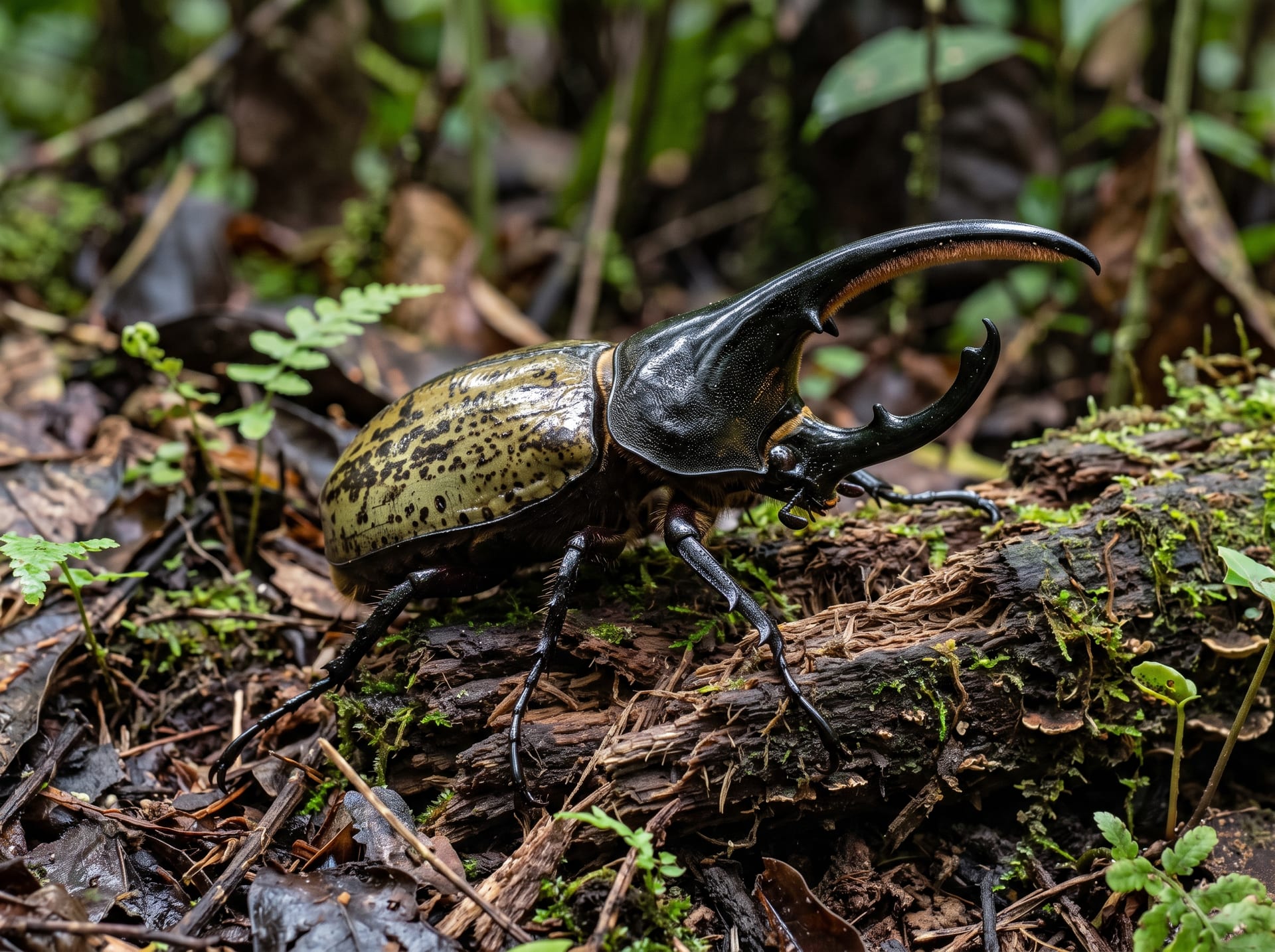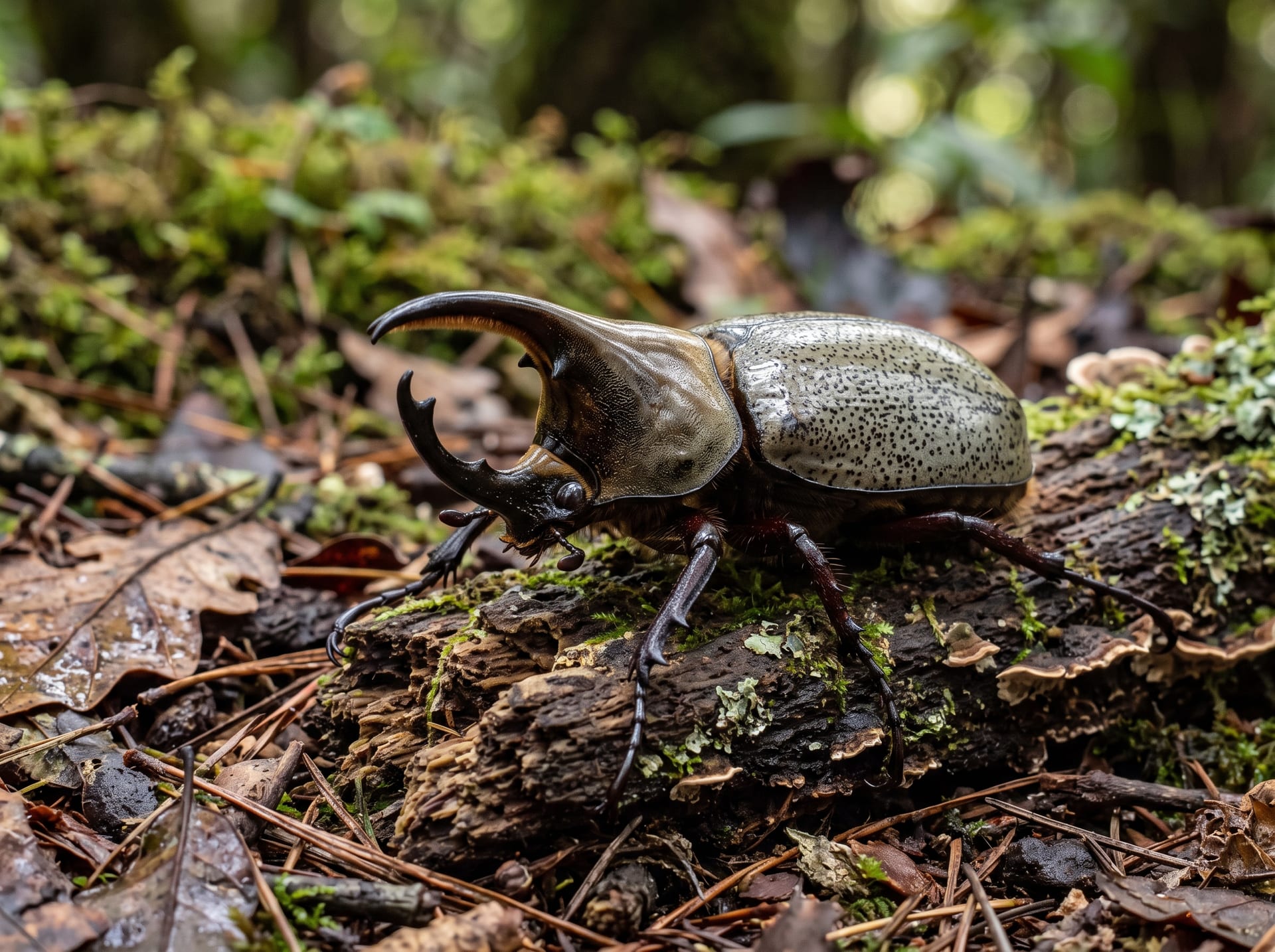
AI-generated image
Morón's Rhinoceros Beetle
AdvancedDynastes moroni
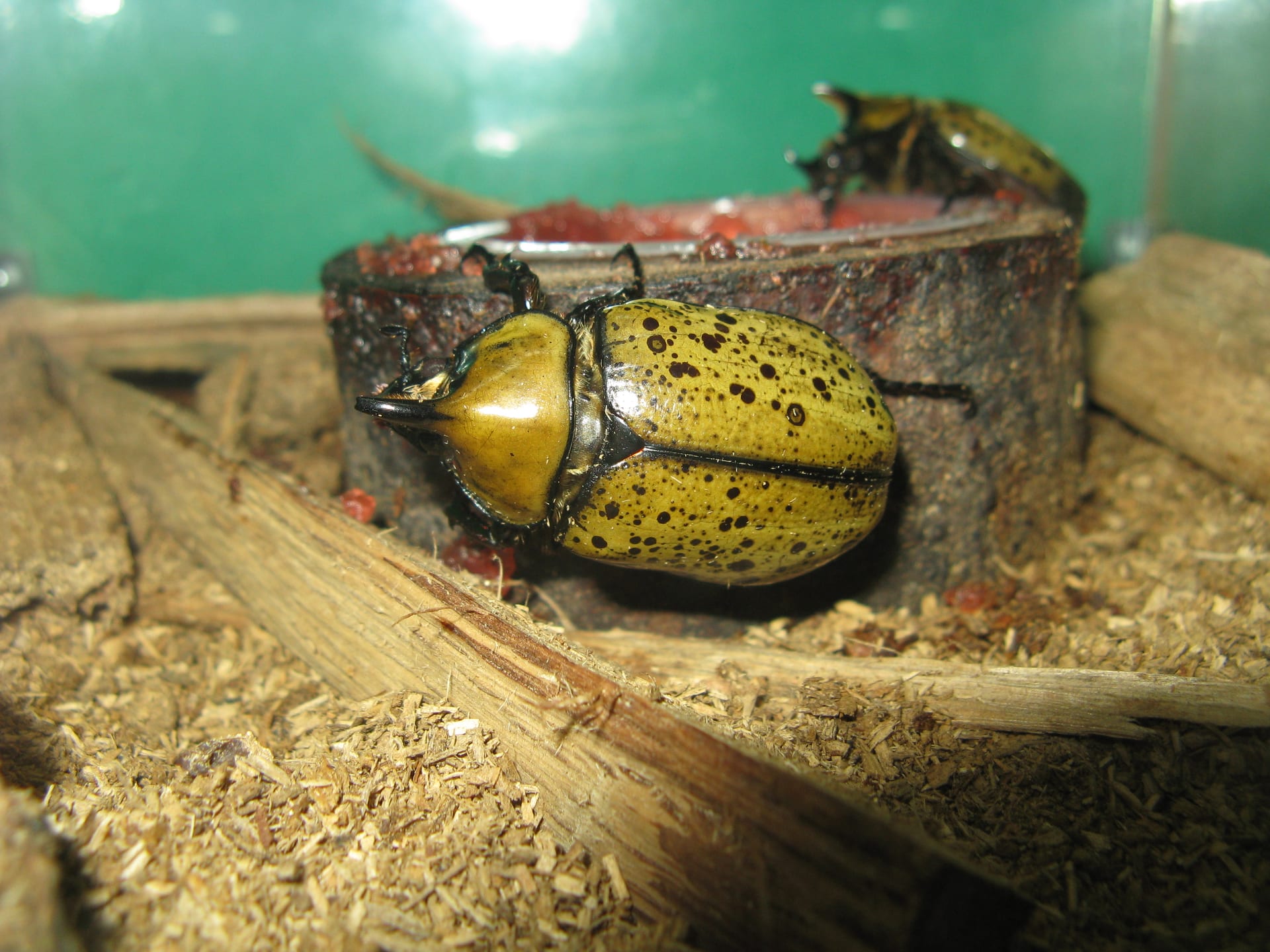
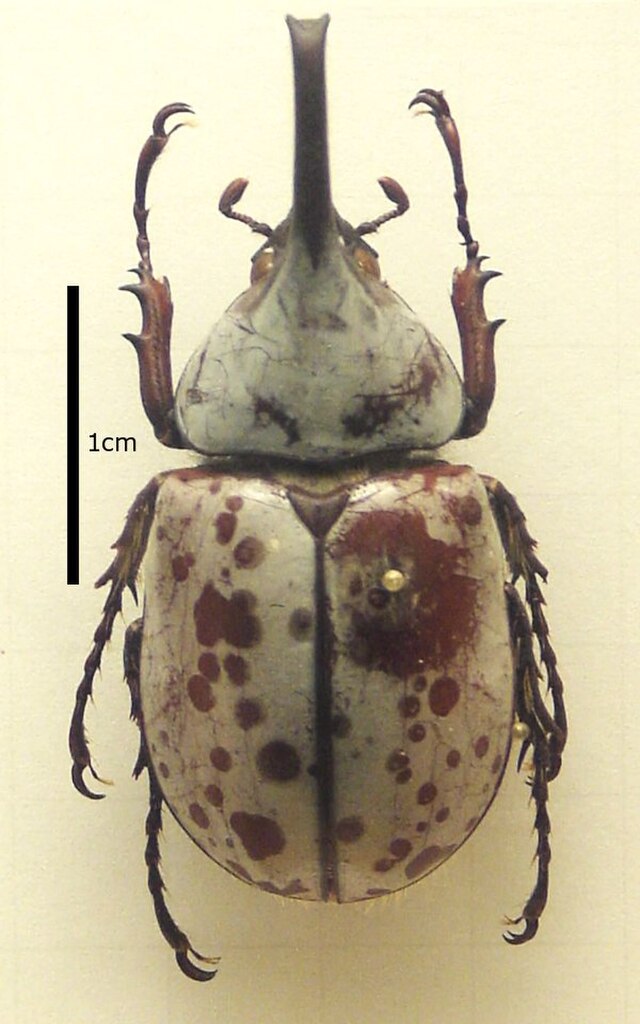
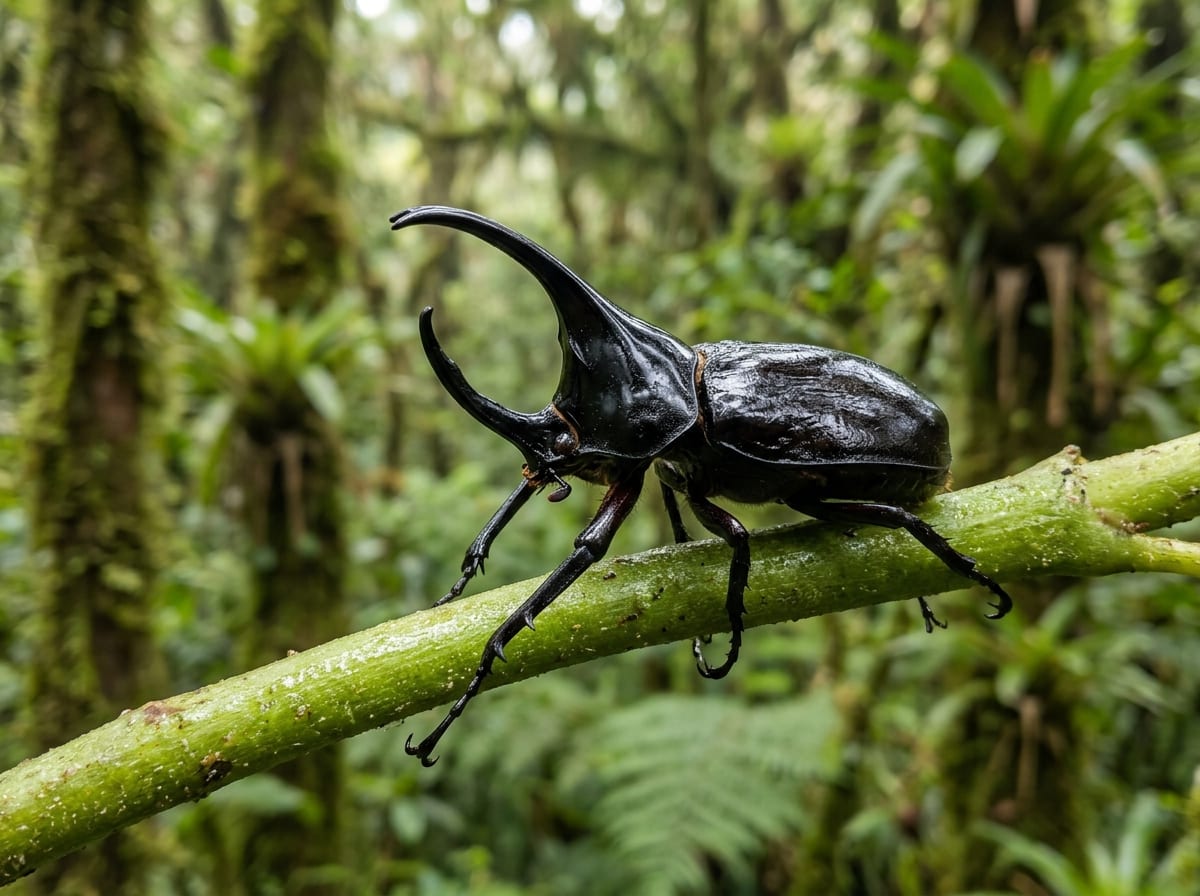
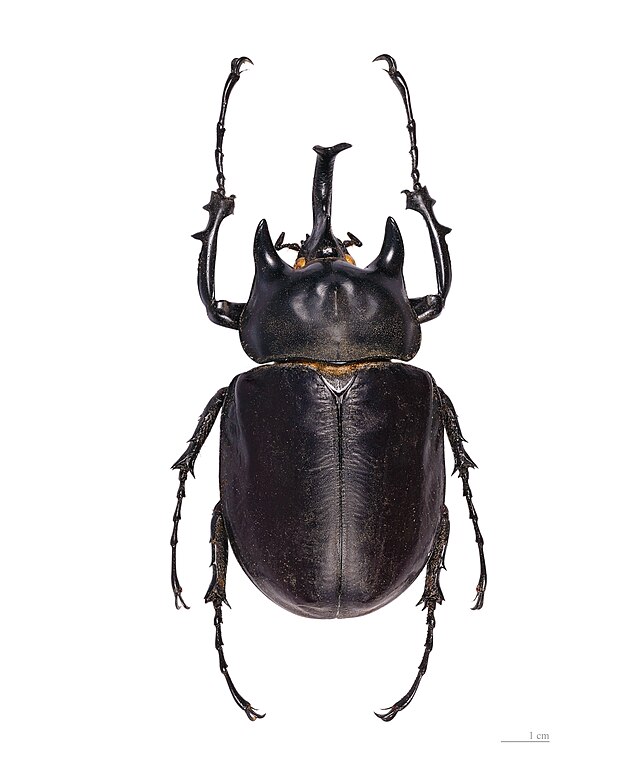
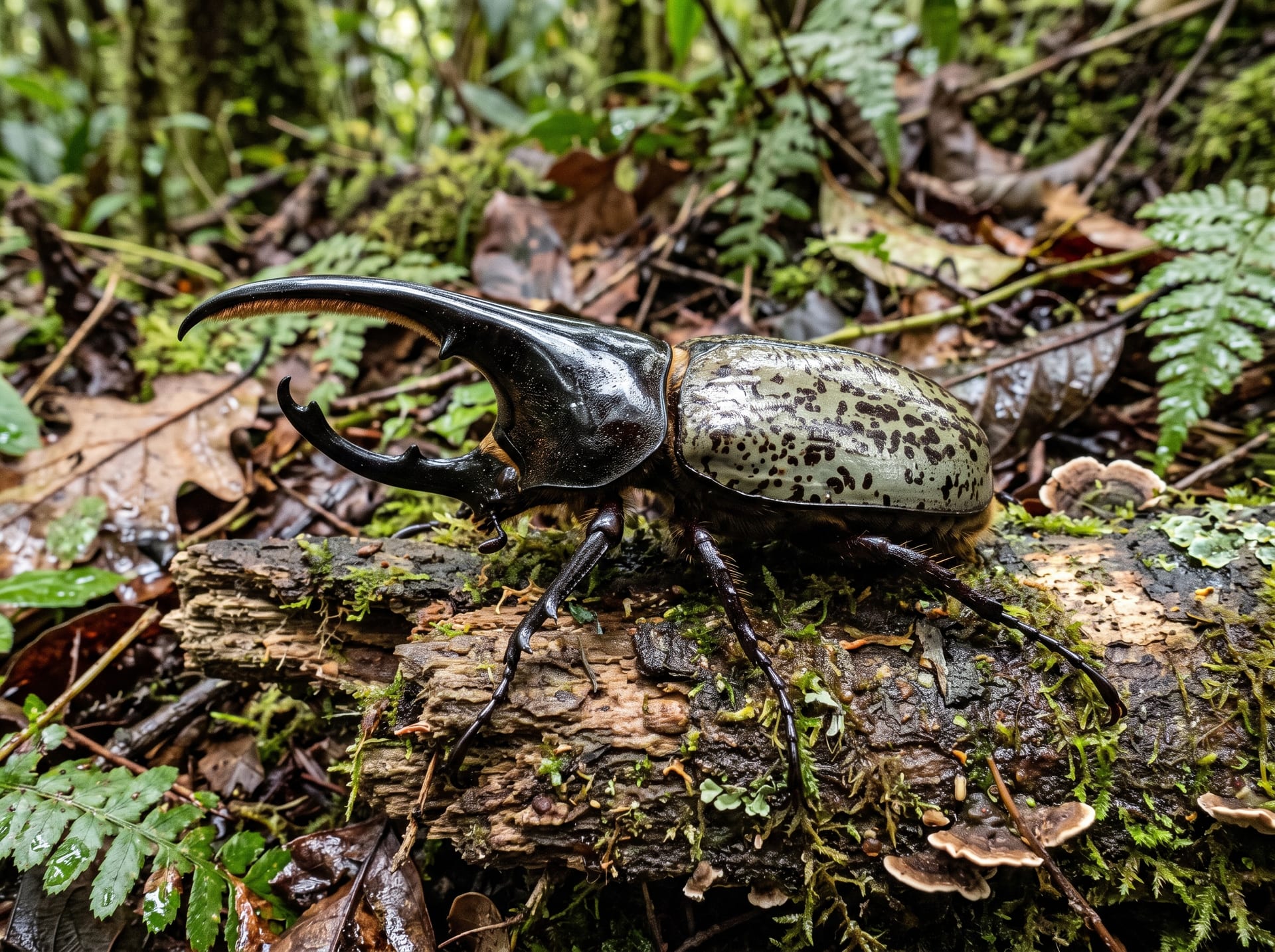
A white rhinoceros beetle confined to the Santa Martha massif in southern Veracruz, Mexico. The male's head and pronotum are black, giving it the look of a small Hercules beetle, and the female too is blackened over much of the body.
Difficulty
Advanced
Temperature
18℃
Lifespan
Adults 4-8 months
Size
Males 53-84.5mm (53-96mm in some references), females 55-60.4mm
Humidity
60〜80%
Diet
Adults take beetle jelly; larvae eat fermented substrate
About
Dynastes moroni is a member of the genus Dynastes recorded from the Santa Martha massif, an isolated range in southern Veracruz, Mexico, and is also called the Morón rhinoceros beetle. It is named for the Mexican scarab specialist Miguel Ángel Morón-Ríos and was first described as a subspecies of D. hyllus. Later genetic work showed it to be close not to D. hyllus but to D. maya, and it is treated as a species in its own right. Males measure 53-84.5mm, or 53-96mm in some references, and females 55-60.4mm. The male's head and pronotum are black, so that it is described either as a small Hercules beetle or as intermediate between D. hyllus and D. hercules. Many females are blackened not only on the head and pronotum but over the front half of the elytra, and this darkening of most of the body is not seen in the females of other white rhinoceros beetles.
Source: Wikipedia (CC BY-SA 4.0)
Lifespan of the Morón's Rhinoceros Beetle
The Morón's Rhinoceros Beetle lives Adults 4-8 months.
Size of the Morón's Rhinoceros Beetle
The Morón's Rhinoceros Beetle grows to Males 53-84.5mm (53-96mm in some references), females 55-60.4mm.
Temperature & humidity for the Morón's Rhinoceros Beetle
The ideal temperature for the Morón's Rhinoceros Beetle is 18℃.
Basic Info
Origin
Mexico (the Santa Martha massif in southern Veracruz, in the Sierra de los Tuxtlas)
Lifespan
Care Specifications
AggressiveSolitaryBreeding: Moderate
Sources: Wikipedia (ja): Dynastes grantii, section covering D. moroni / Wikipedia (en): Dynastes moroni / BE-KUWA Certified Breeding Records (Mushi-sha, FY2025 edition PDF, JA) / GBIF: Dynastes hyllus moroni Nagai, 2005
Breeding Records & Localities
Captive record (♂)
105.1 mm
Record source: BE-KUWA 2025 edition, large rhinoceros beetle records (Hyllus shiro (moroni): captive 105.1mm, Koji Takao, registered 2011, expected maximum 108mm). The Japanese Wikipedia likewise gives 105.1mm as the longest captive-reared beetle
Notable localities
The Santa Martha massif, southern Veracruz
The type locality, Santa Martha, is also where Morón recorded Dynastes hercules tuxtlaensis Morón, 1993, the northernmost subspecies of the Hercules beetle.
Generation codes
- WD
- Wild-caught
- WF1
- Offspring of a wild-caught female
- F1〜
- Captive generations (same locality)
- CBF1
- Cross-locality captive-bred (reset)
Sources: BE-KUWA Certified Breeding Records (Mushi-sha, FY2025 edition PDF, JA) / Wikipedia (ja): Dynastes grantii, section on related species
References & Sources
Edited & verified by: BreederDirect editorial team
The taxonomic, regulatory, and husbandry data on this page are compiled and verified against the authoritative primary sources below.
Taxonomy & Authority
Accepted name: Dynastes moroni Nagai, 2005
Synonyms: Dynastes hyllus moroni
Nomenclature follows global taxonomic authority databases.
Regulations & Conservation Status
Not CITES-listed
Sources: CITES Appendix (checklist.cites.org)
Regulations may change. Always verify the latest information with the relevant authorities.
Morón's Rhinoceros Beetle Listings
Loading latest listingsFind listings for this species