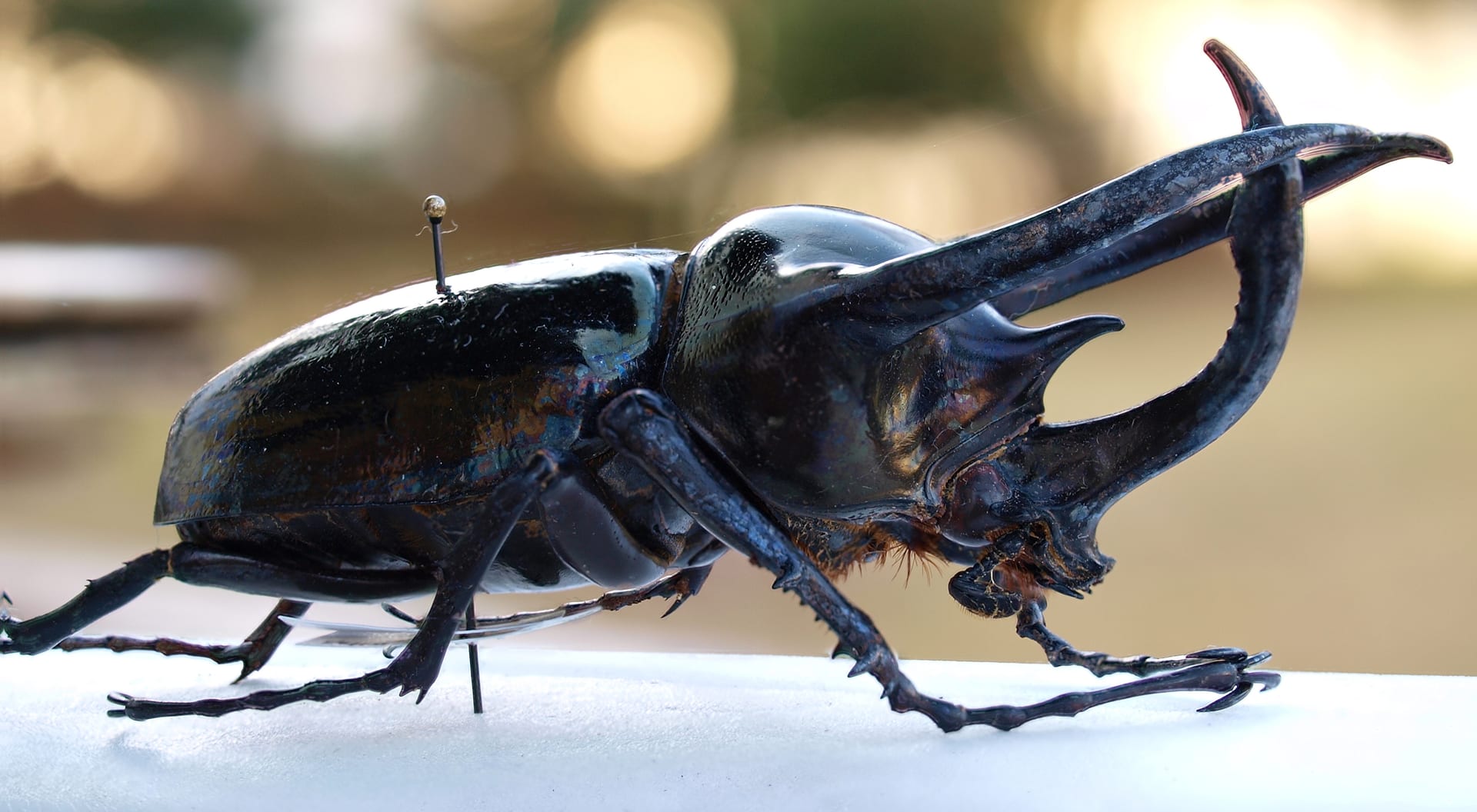
Atlas Beetle (Malay)
BeginnerGolofa tersander
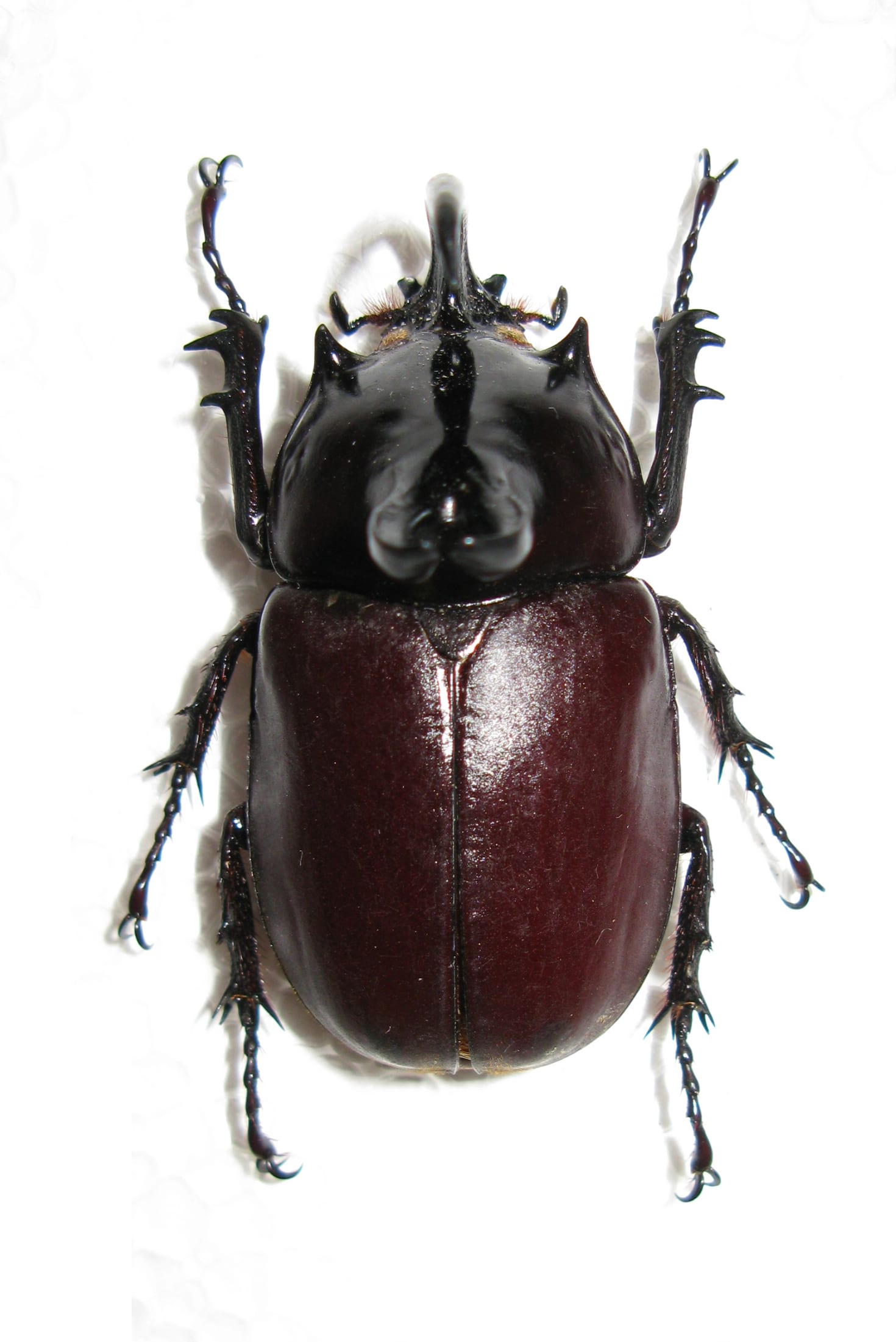
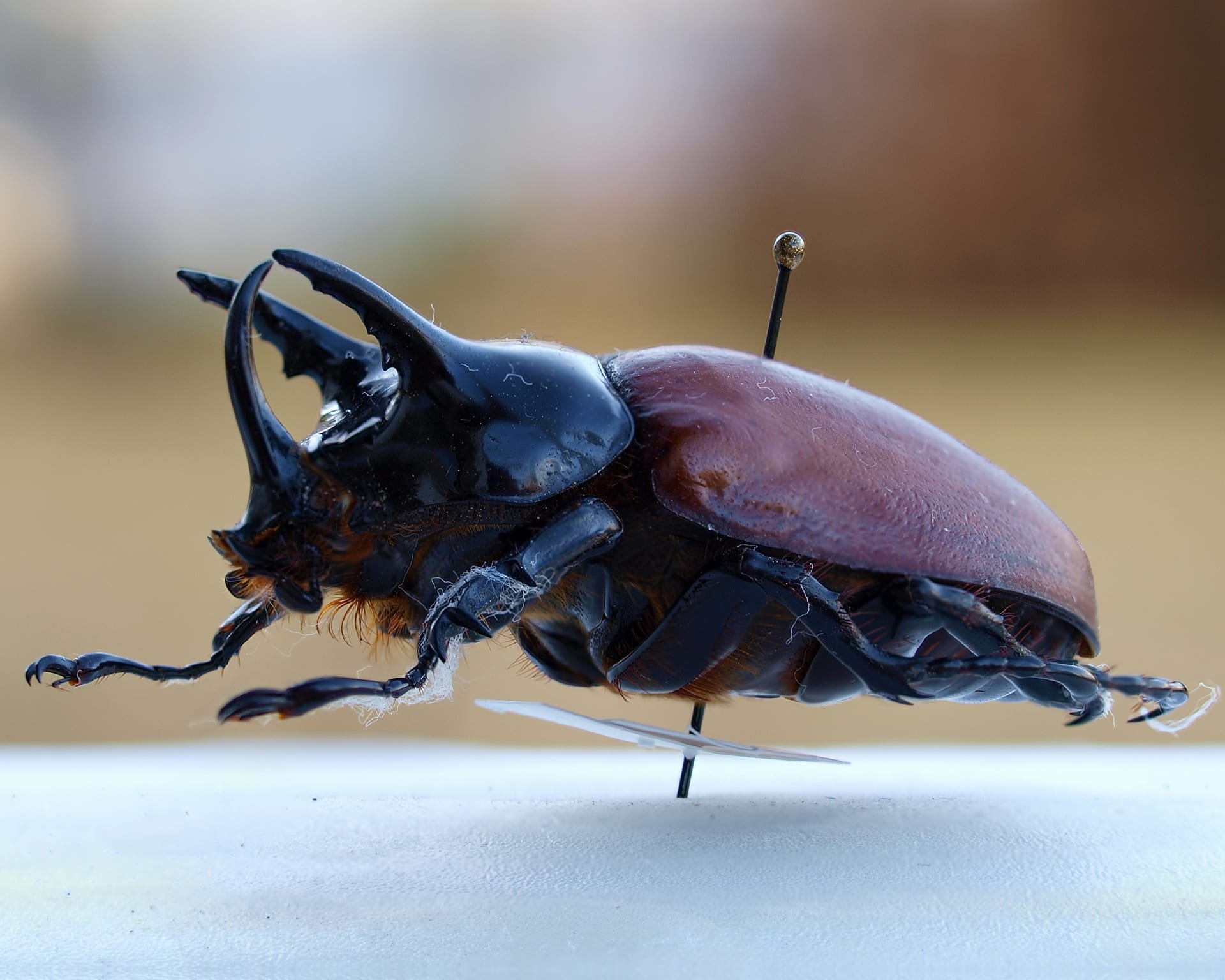
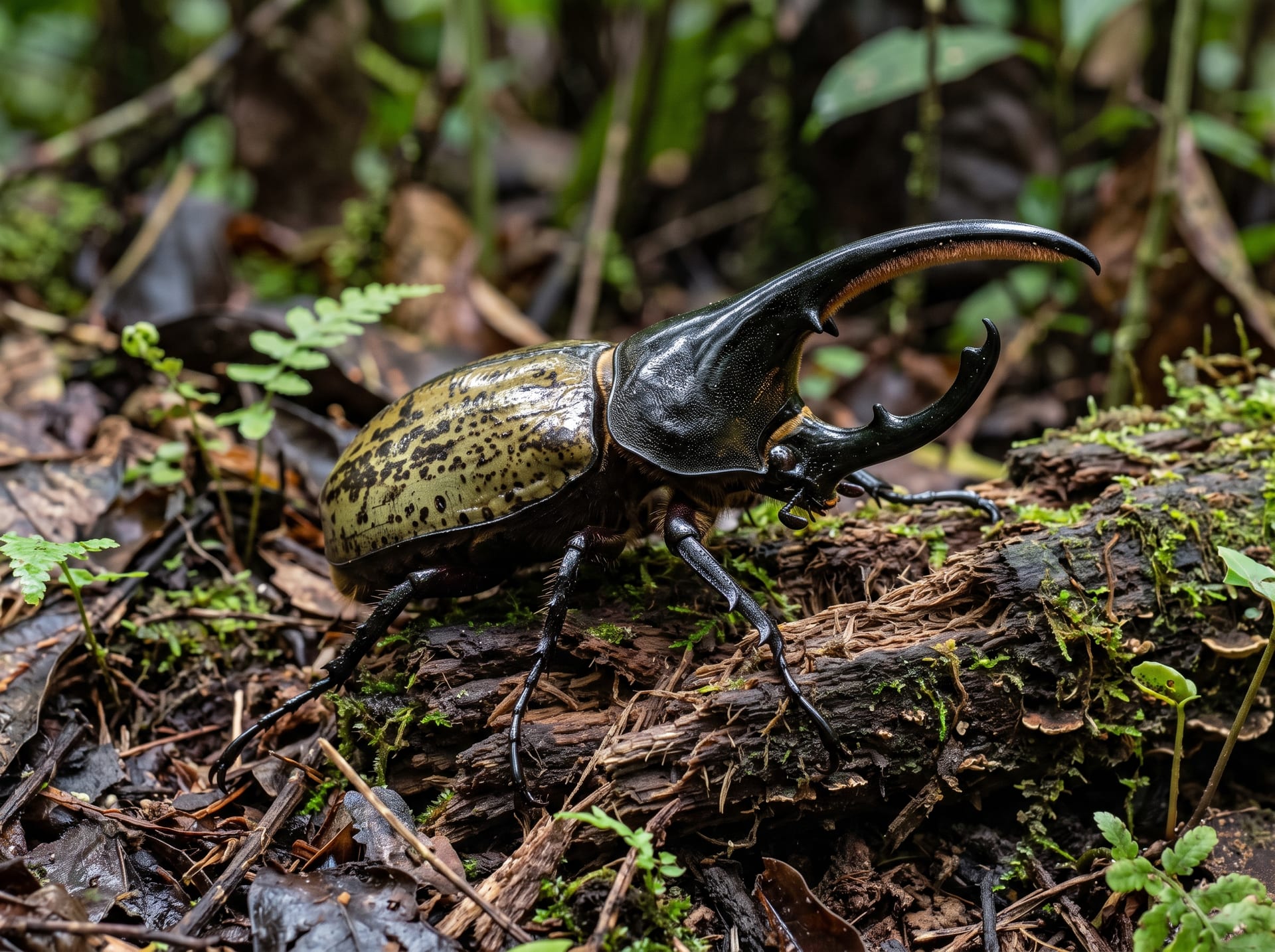
A black-bodied Golofa of southern Mexico and Central America; males carry one horn on the head and one on the pronotum. Its standard Japanese name is kuro-tatezuno-kabuto, and it is also sold as tersander.
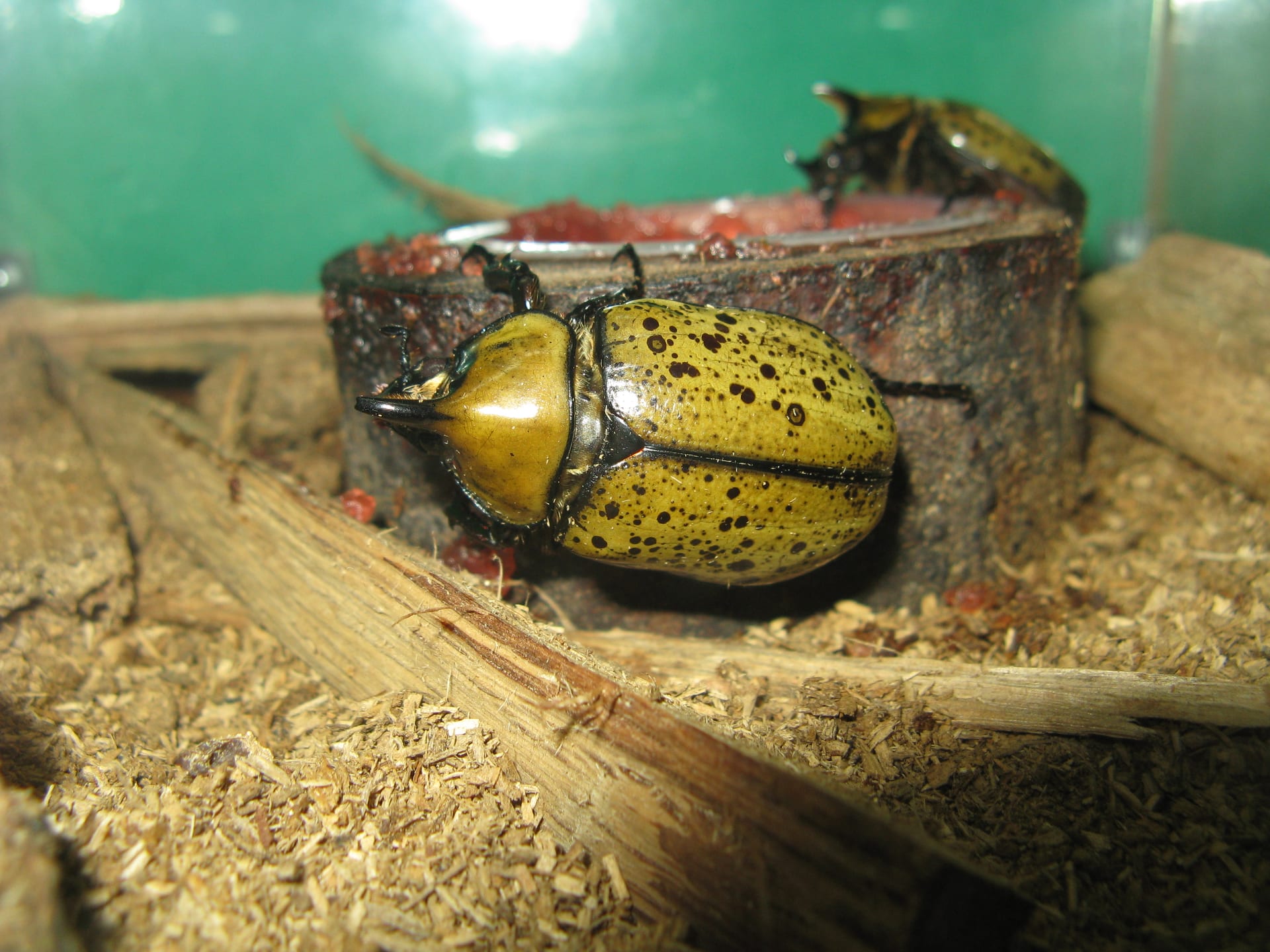
Golofa tersander (Burmeister, 1847) is a rhinoceros beetle (Scarabaeidae: Dynastinae) of the genus Golofa, originally described as Podischnus tersander. In Japanese it is usually called kuro-tatezuno-kabuto (or chibi-tatezuno-kabuto) and described as entirely black. Golofa is a Central and South American genus whose name comes from an indigenous Venezuelan name for these beetles. Males typically carry one horn on the head and another in the middle of the pronotum, often long and curving towards each other. Most GBIF records are from Mexico, concentrated in Chiapas, Veracruz and Oaxaca, with a few from Costa Rica, Nicaragua and elsewhere in Central America. The BE-KUWA 2025 edition has no record for it. Little has been published on its life history, but captive-bred stock from Veracruz, Mexico has been sold in Japan, and specialist shops offer adults and larvae. Since it goes by several trade names, checking the scientific name is the safest way to buy.
Source: Wikipedia (CC BY-SA 4.0)
Origin
Mexico (Chiapas, Veracruz, Oaxaca and others) and Central America
Lifespan
Little data
Size
Little data
Temperature
20〜28℃
Humidity
60〜80%
Adults take beetle jelly; larvae eat fermented substrate
Edited & verified by: BreederDirect editorial team
The taxonomic, regulatory, and husbandry data on this page are compiled and verified against the authoritative primary sources below.
Primary sources
Many live foreign Scarabaeoidea (stag beetles, rhinoceros beetles, flower chafers and relatives) are quarantine pests whose import is banned under Japan's Plant Protection Act, and even importable species require a species-name certificate from a foreign government body under the Invasive Alien Species Act (entry only via designated airports, never by international post). Whether a species may enter must be checked with the Plant Protection Station in advance, so choose domestically bred stock and never release captive beetles.
Sources: Plant Protection Station: Importing Scarabaeoidea (JA) / Plant Protection Station: Importing live insects (JA) / Ministry of the Environment: List of invasive alien species (JA) / Species+ CITES query (no listing)
Regulations may change. Always verify the latest information with the relevant authorities.
Find listings for this species
There is little numeric temperature data. Avoid extremes of heat and cold and keep the substrate from drying out.
Little is published on breeding, but it has been bred in Japan; let females lay in fermented substrate and rear larvae in the same.
Males fight with their long horns, so keep adults singly and together only for mating.
Larval duration and adult lifespan are poorly documented.
It is sold under several names, including tersander, kuro-tatezuno and chibi-tatezuno, so confirm the scientific name Golofa tersander. Importing foreign stag and rhinoceros beetles is regulated by the Plant Protection Act and the Invasive Alien Species Act (species-name certificate), with each species needing clearance from the Plant Protection Station, so domestically bred stock is the safe choice. Never release captive beetles.
Intermediate. This is an intermediate-level species. Some prior experience and knowledge of environmental management are recommended.
Tersander rhinoceros beetle feeds on: Adults take beetle jelly; larvae eat fermented substrate. Aim for a balanced diet with appropriate feeding frequency.
The price of Tersander rhinoceros beetle varies significantly depending on bloodline, size, captive-bred generation, and sex. Check our market price page for the latest pricing information.
Last updated: September 23, 2026