Source: Wikimedia Commons
Burmese five-horned beetle
IntermediateEupatorus birmanicus
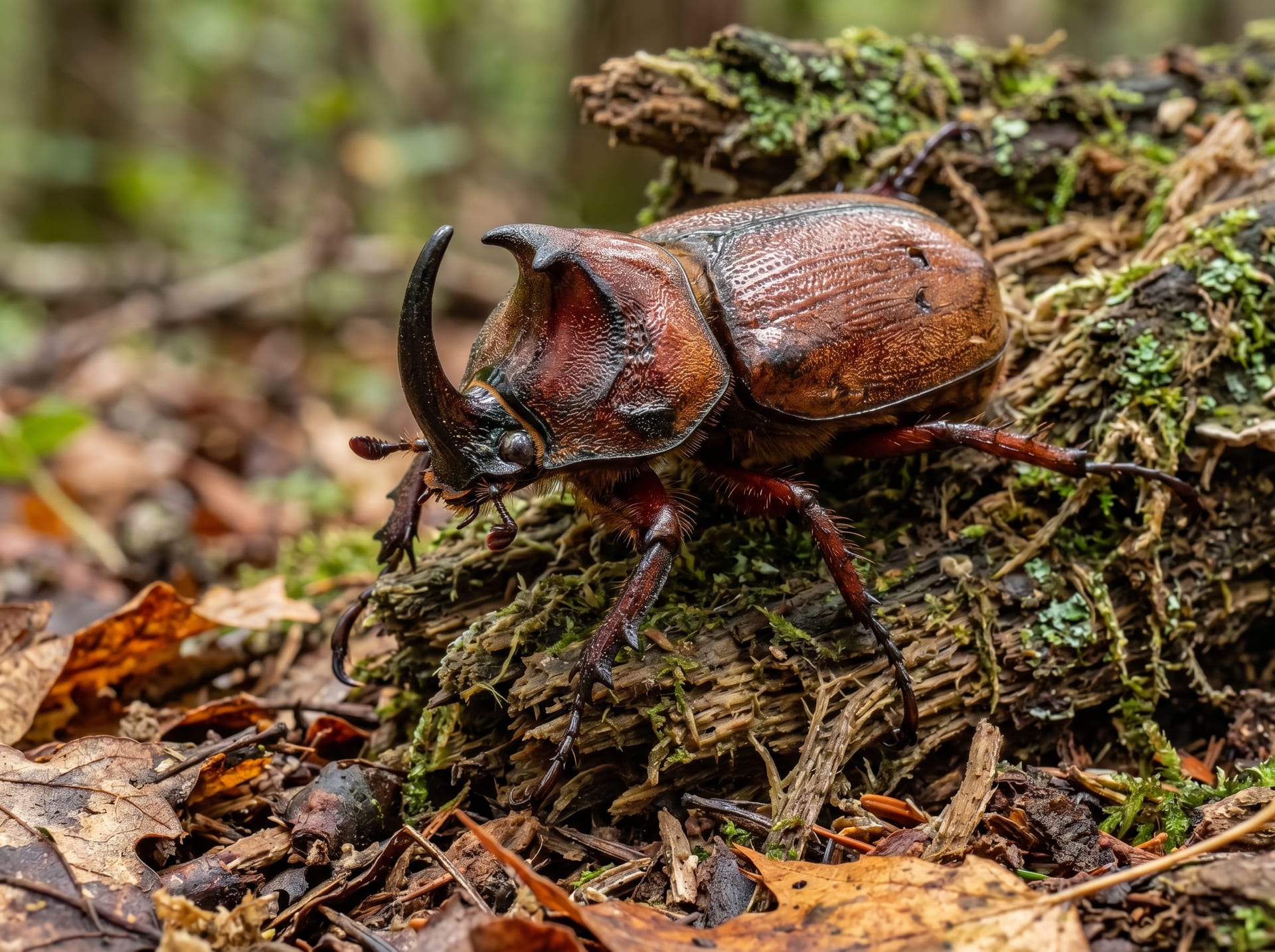
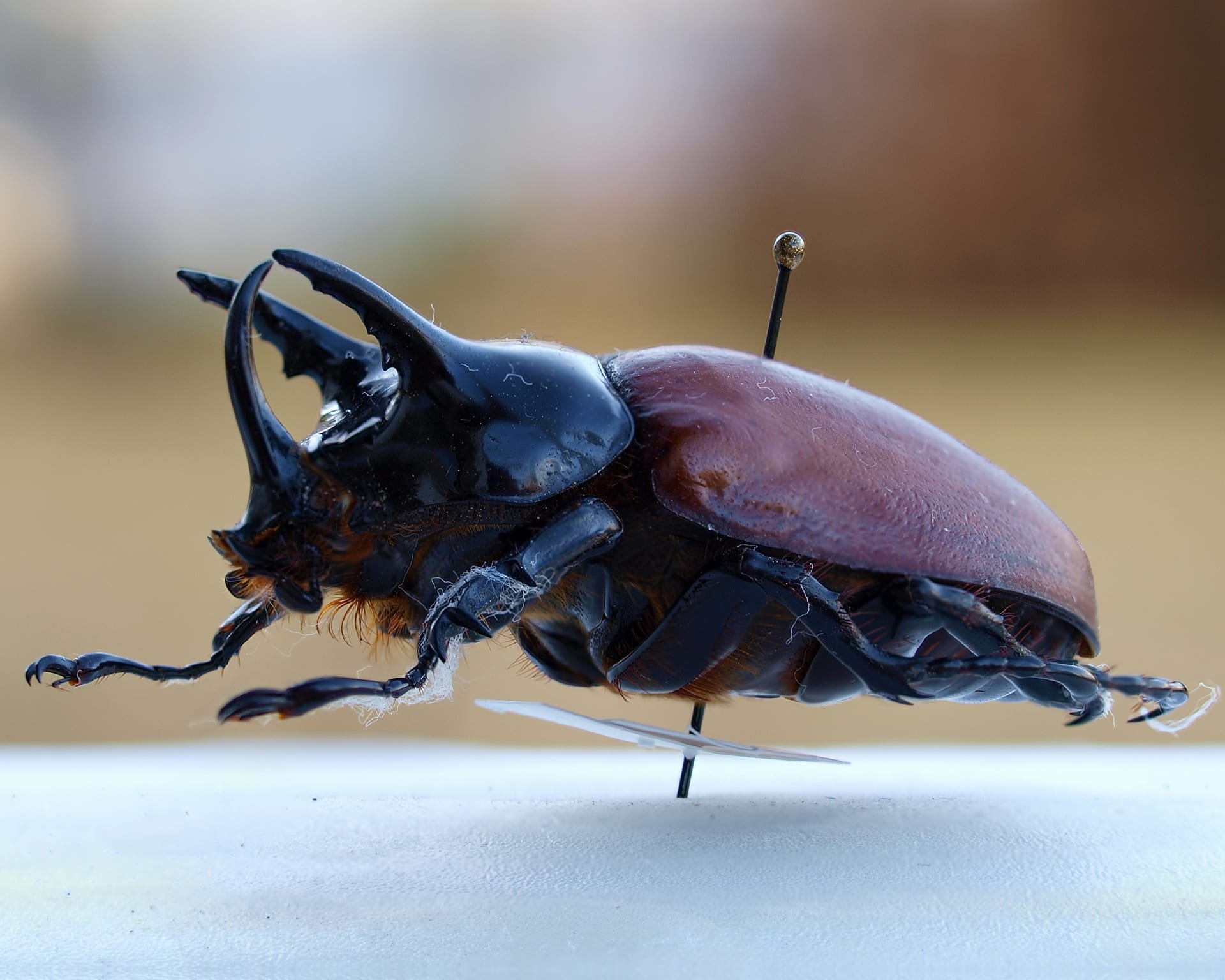
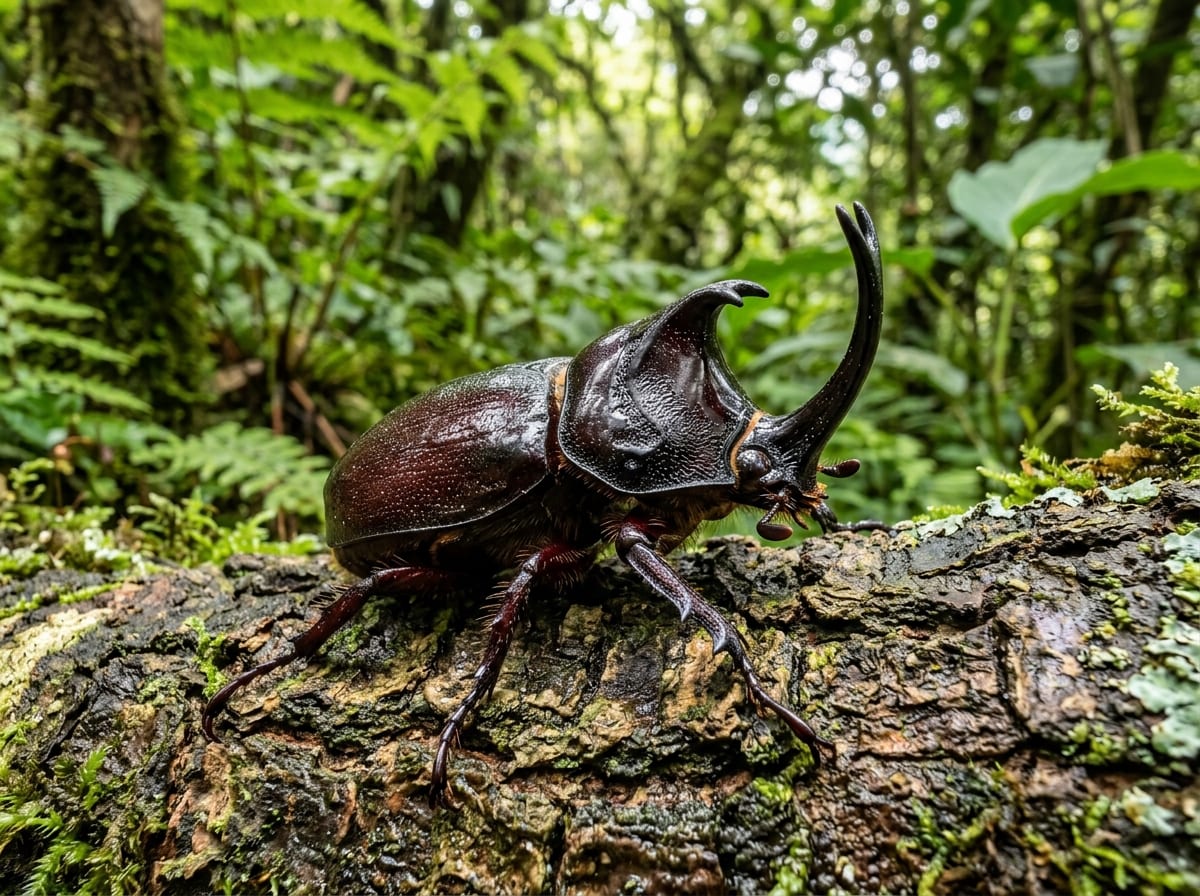
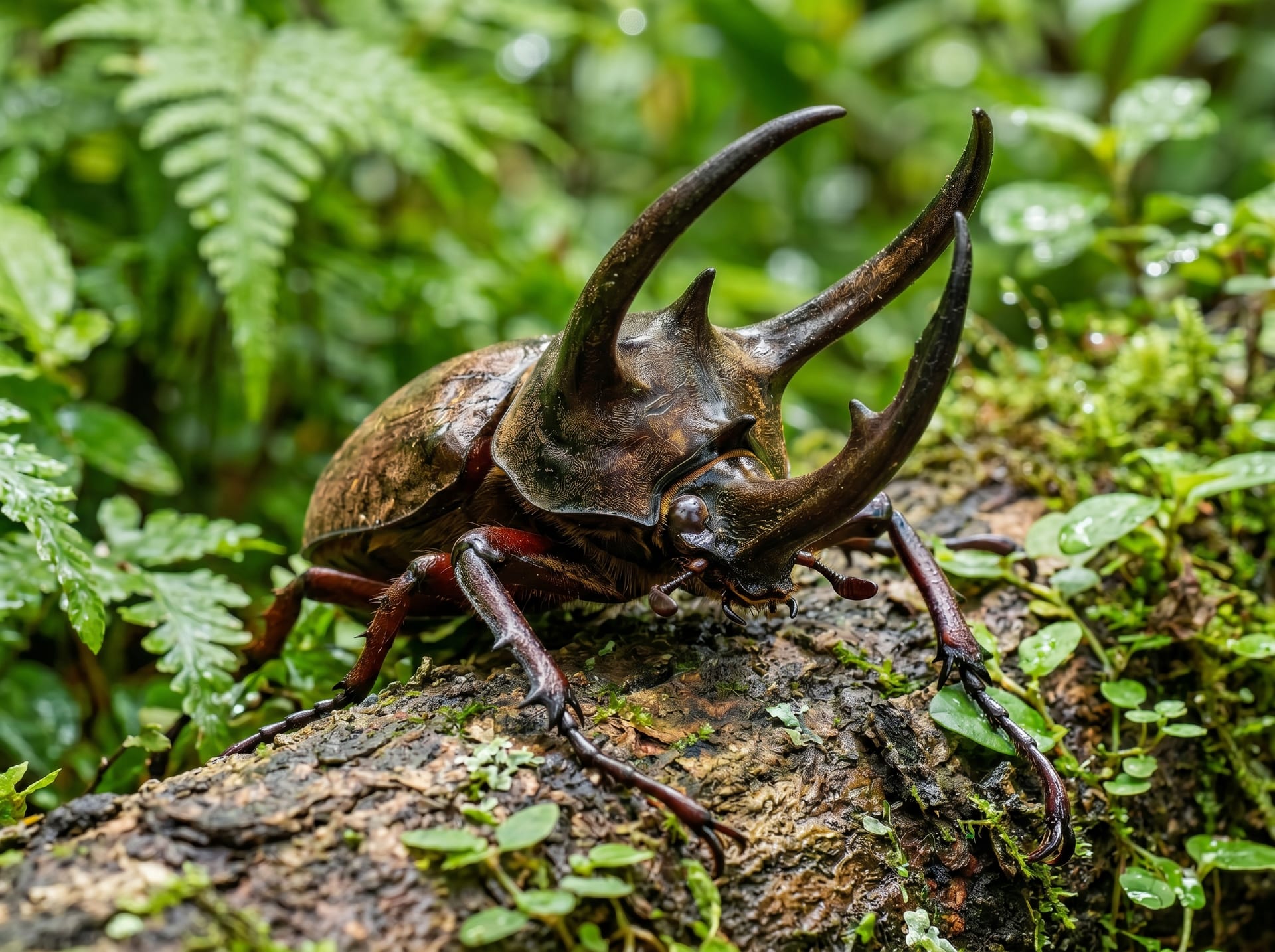
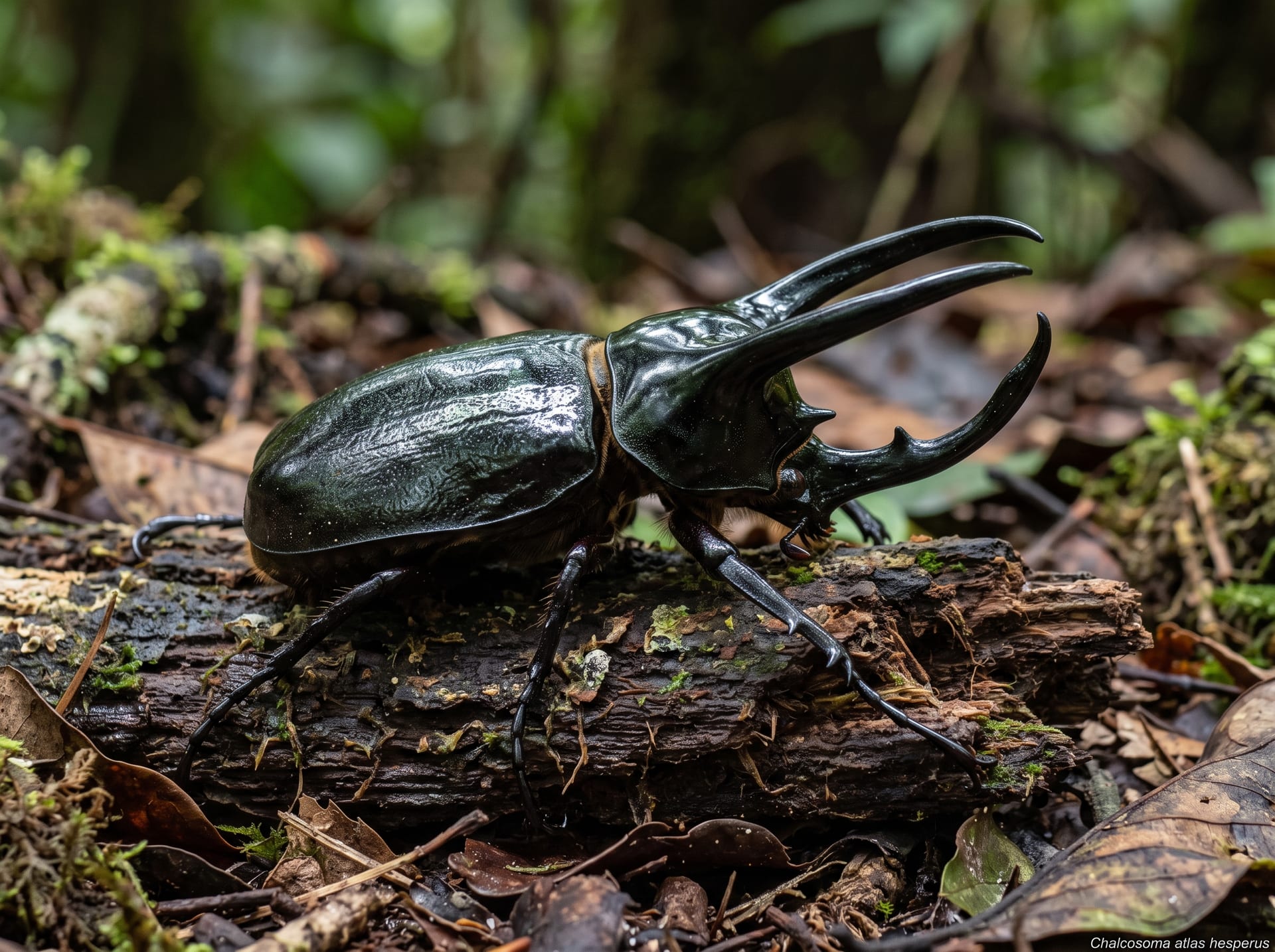
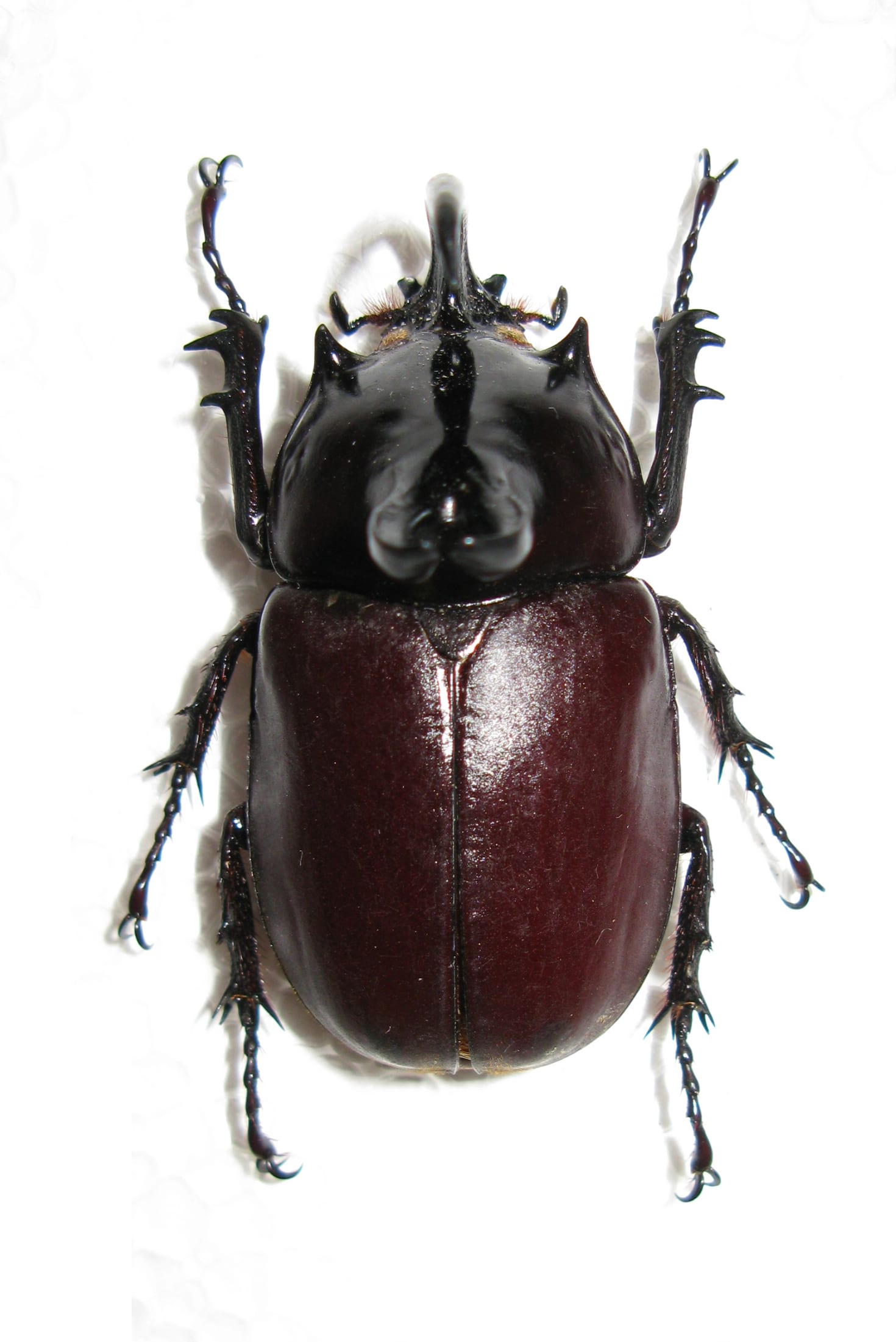
A reddish-brown five-horned beetle with a long curved head horn and long thoracic horns; the inner pair stands up like rabbit ears, hence its English name. It lives in the mountains along the Thai-Myanmar border.
Difficulty
Intermediate
Temperature
20〜28℃
Lifespan
Adults a few months to about half a year (genus accounts)
Size
30-60mm (captive record 66.4mm)
Humidity
60〜80%
Diet
Adults take sap, fruit or beetle jelly (bamboo-shoot sap in the wild); larvae eat fermented substrate
About
Eupatorus birmanicus Arrow, 1908 is a rhinoceros beetle (Scarabaeidae: Dynastinae) of the mountain forests of the Tenasserim Range between Myanmar and Thailand; most GBIF records are Thai. It is reddish brown, and males carry a long curved head horn and long thoracic horns, the inner two rising almost vertically and slightly back like rabbit ears, which gives it the English name rabbit ears beetle. Adults are given as 30-60mm, and the BE-KUWA 2025 captive record is 66.4mm. To tell relatives apart, E. gracilicornis has cream wing cases and five thick, long horns, while E. siamensis has plate-like, flattened inner thoracic horns and reddish-brown wing cases. Members of the genus are placid, feed on the sap of bamboo shoots in bamboo groves and also visit sap and fruit. Adults live from a few months to about half a year. In Japan specialist shops sell it alongside other five-horned beetles, in small numbers.
Source: Wikipedia (CC BY-SA 4.0)
Size of the Burmese five-horned beetle
The Burmese five-horned beetle grows to 30-60mm (captive record 66.4mm).
Basic Info
Origin
Myanmar to western Thailand (mountain forests of the Tenasserim Range)
Lifespan
Adults a few months to about half a year (genus accounts)
Size
30-60mm (captive record 66.4mm)
Temperature
20〜28℃
Humidity
60〜80%
References & Sources
Edited & verified by: BreederDirect editorial team
The taxonomic, regulatory, and husbandry data on this page are compiled and verified against the authoritative primary sources below.
Primary sources
- Wikipedia
- Plant Protection Station: Importing Scarabaeoidea (JA)
- Plant Protection Station: Importing live insects (JA)
- Ministry of the Environment: List of invasive alien species (JA)
- Species+ CITES query (no listing)
- Eupatorus - Wikipedia (JA), genus ecology and related species
- BE-KUWA Certified Breeding Records (Mushi-sha, FY2025 edition PDF, JA)
- GBIF
Taxonomy & Authority
Regulations & Conservation Status
Not CITES-listed
Many live foreign Scarabaeoidea (stag beetles, rhinoceros beetles, flower chafers and relatives) are quarantine pests whose import is banned under Japan's Plant Protection Act, and even importable species require a species-name certificate from a foreign government body under the Invasive Alien Species Act (entry only via designated airports, never by international post). Whether a species may enter must be checked with the Plant Protection Station in advance, so choose domestically bred stock and never release captive beetles.
Sources: Plant Protection Station: Importing Scarabaeoidea (JA) / Plant Protection Station: Importing live insects (JA) / Ministry of the Environment: List of invasive alien species (JA) / Species+ CITES query (no listing)
Regulations may change. Always verify the latest information with the relevant authorities.
Burmese five-horned beetle Listings
Loading latest listingsFind listings for this species