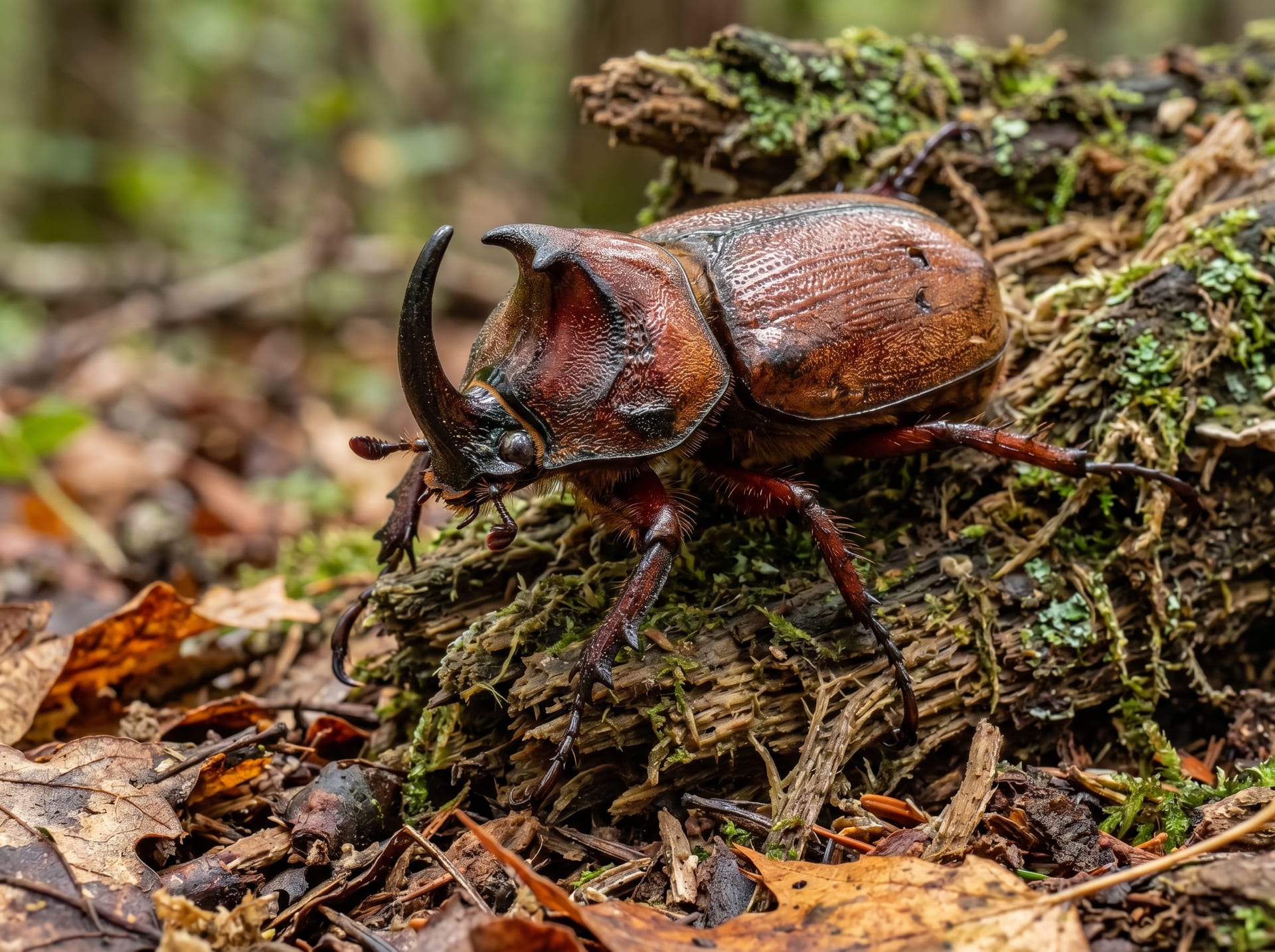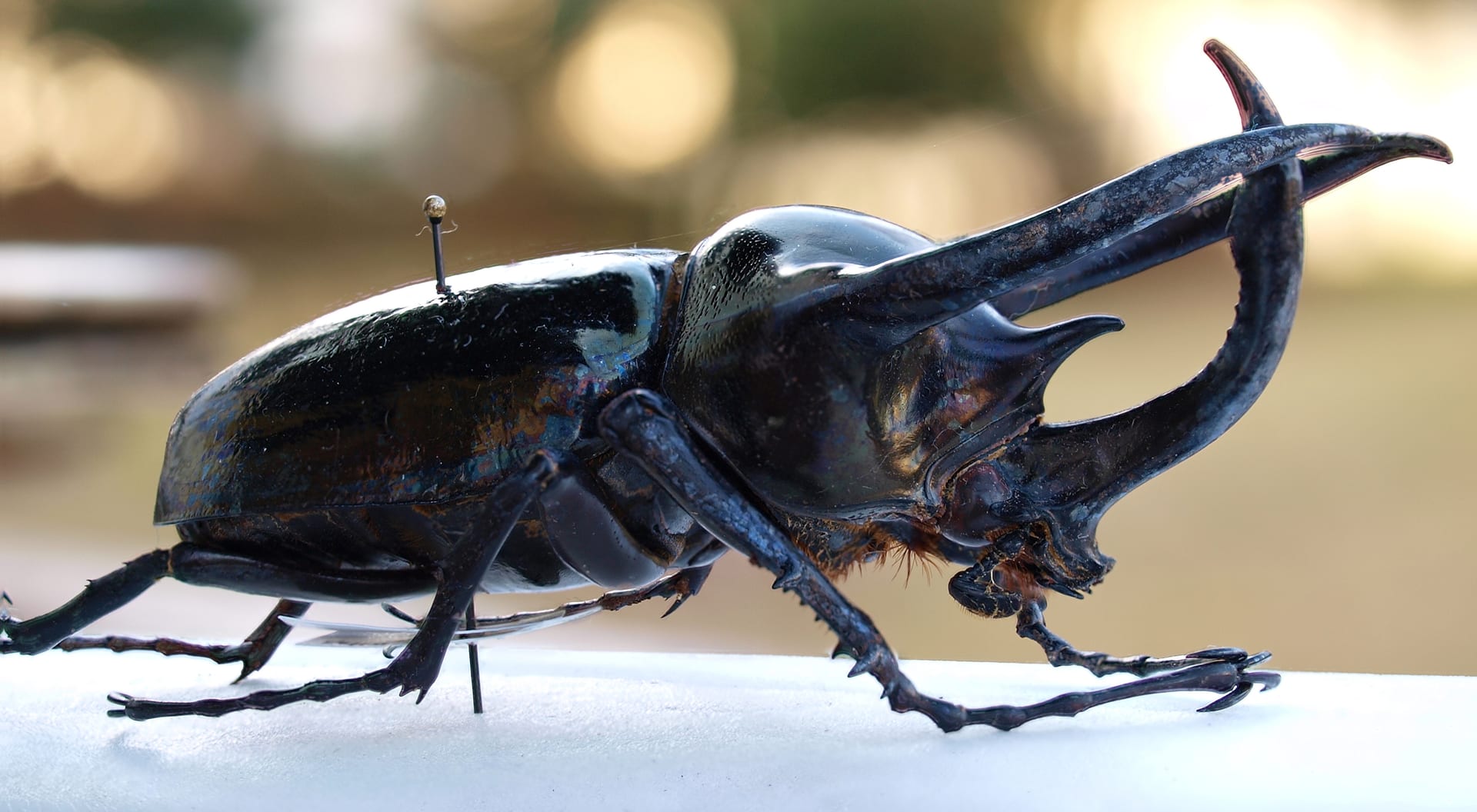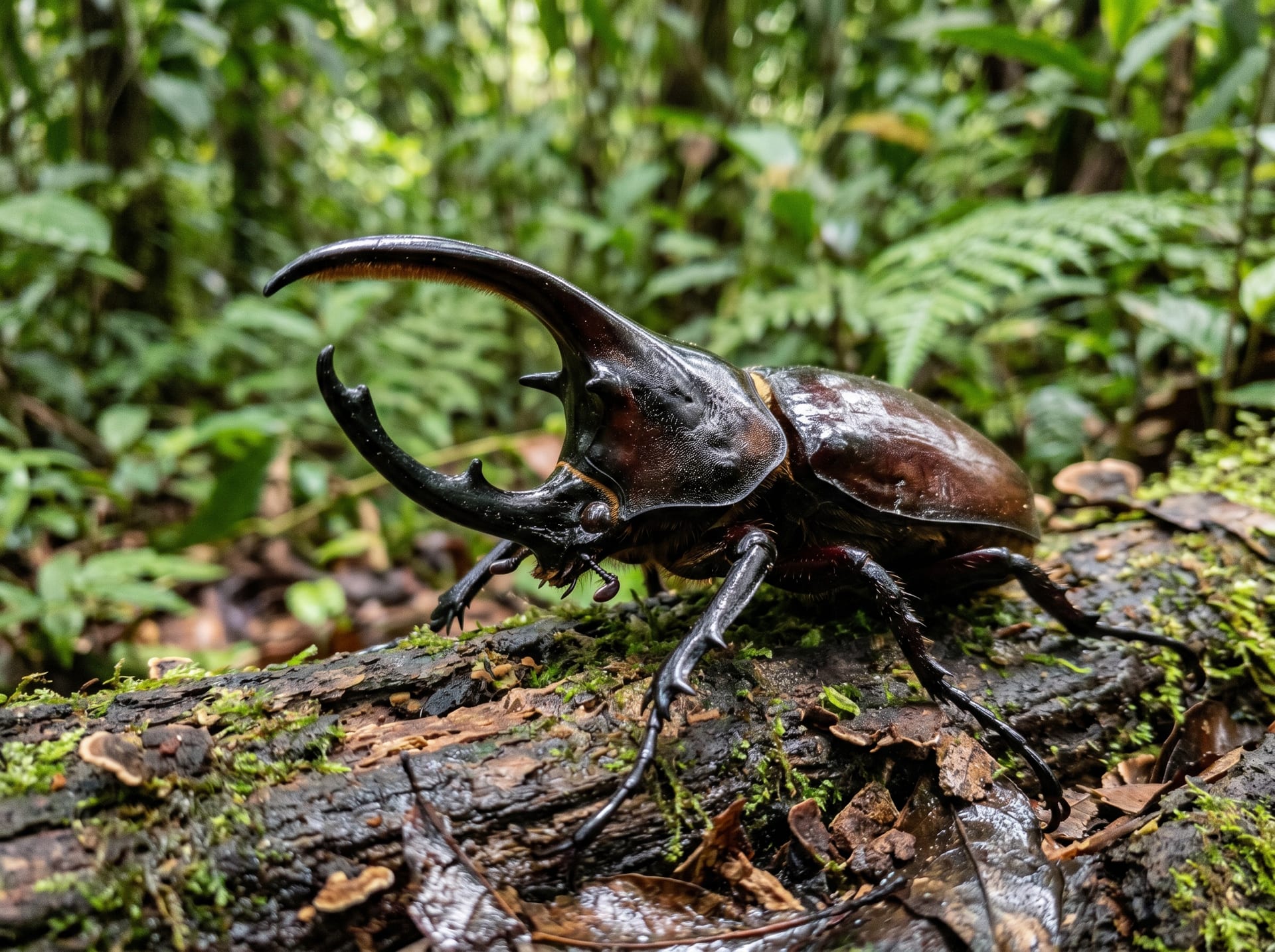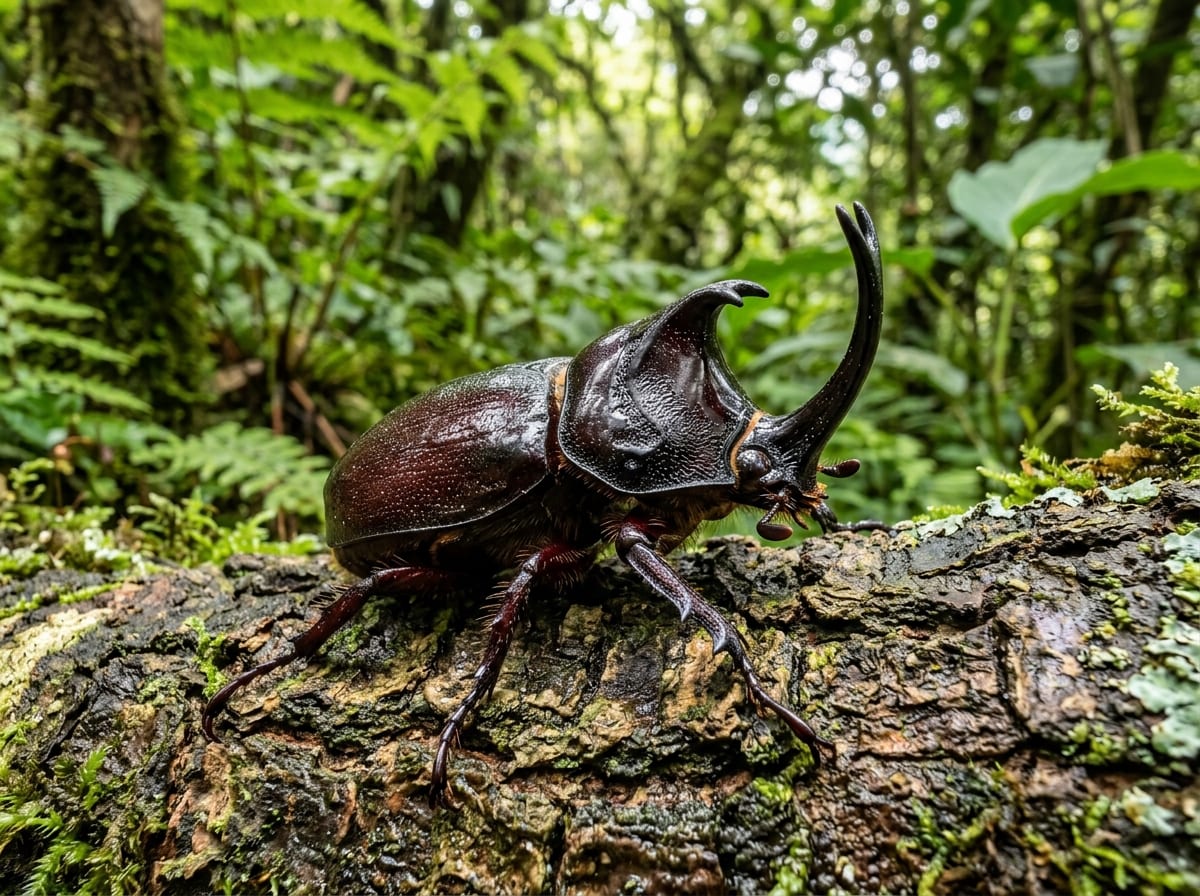
AI-generated image
David's rhinoceros beetle
IntermediateXyloscaptes davidis
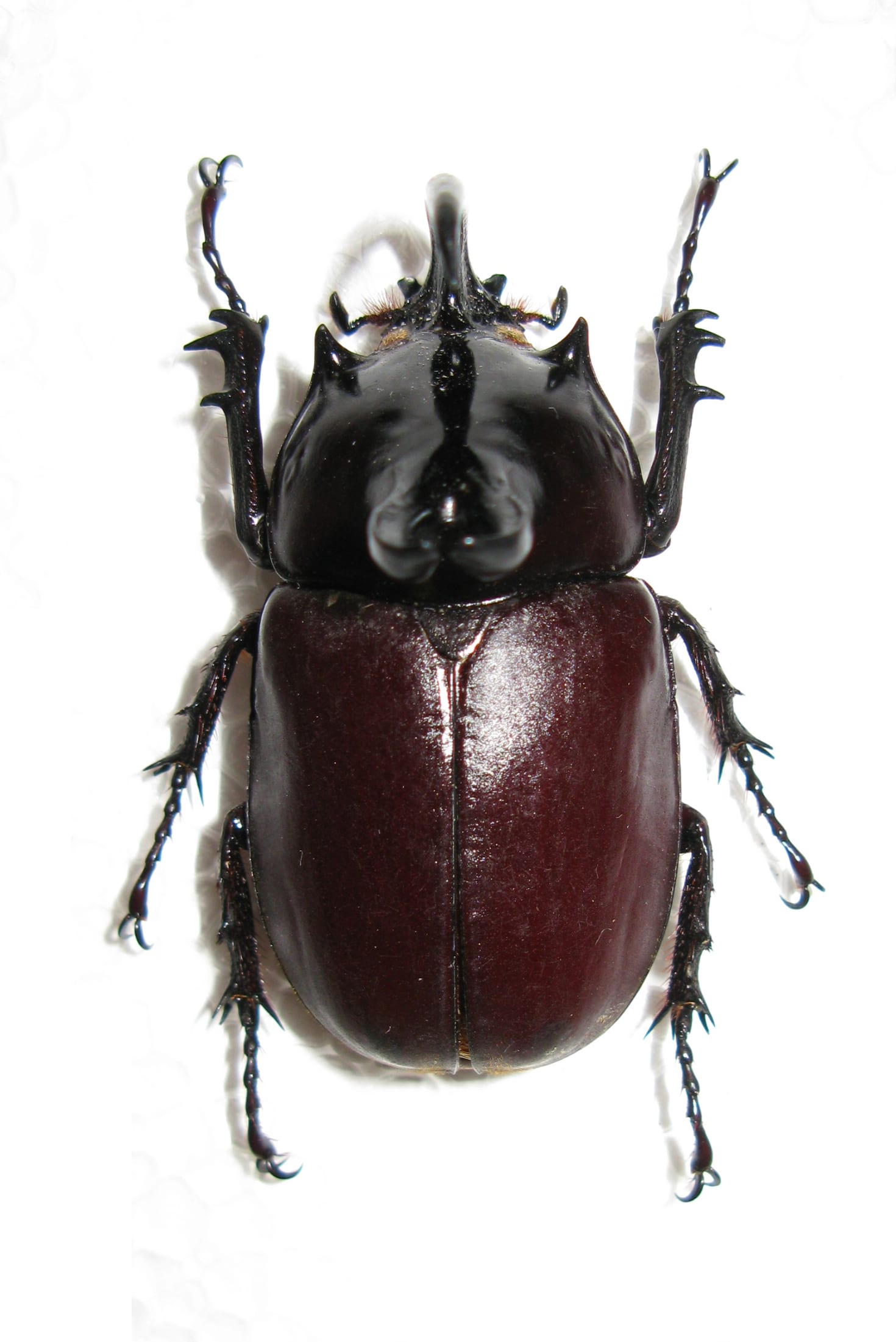
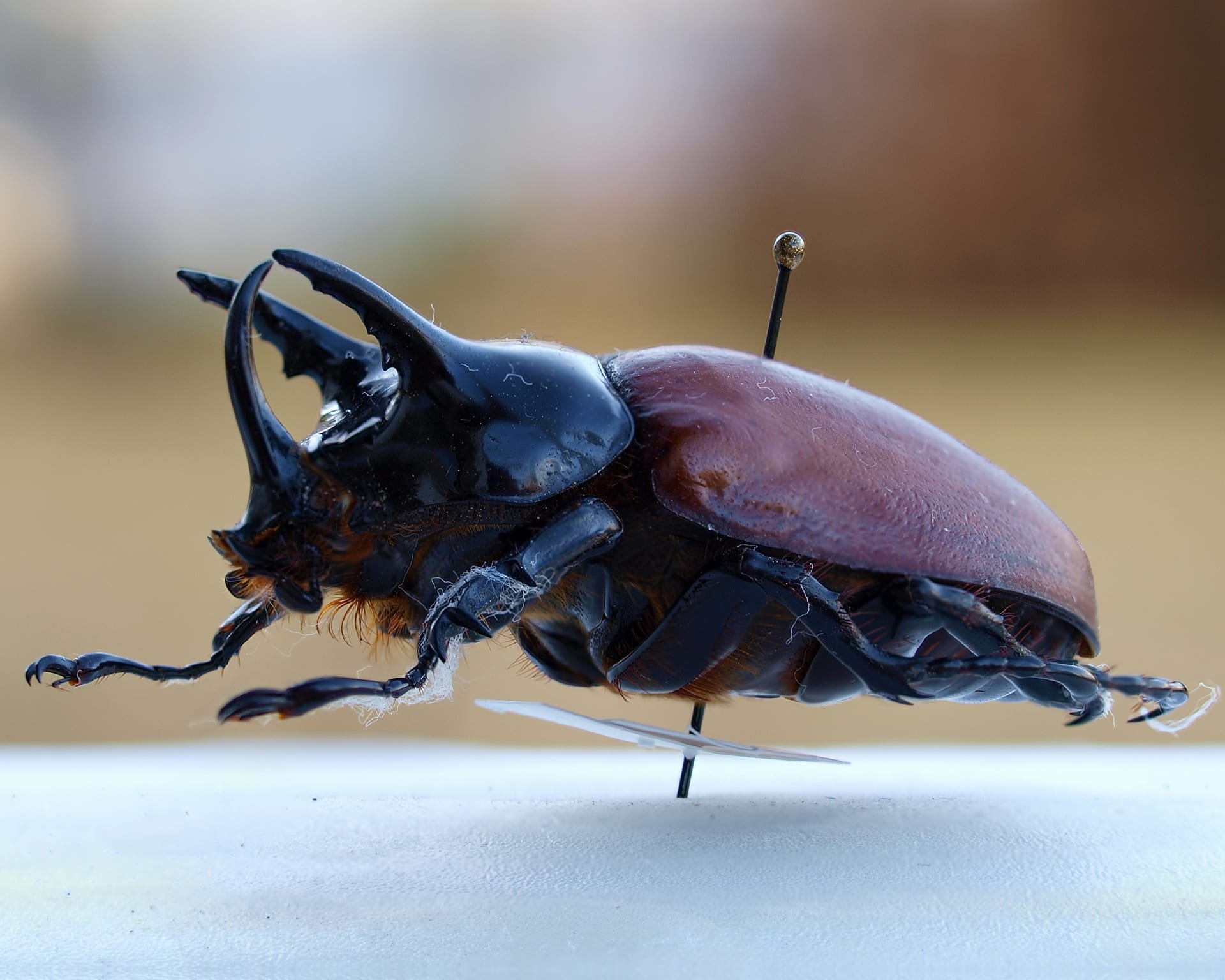
A small rhinoceros beetle of Xyloscaptes, a genus very close to the Japanese rhinoceros beetle, originally described as Xylotrupes davidis. GBIF holds specimen records from Mount Tam Dao in northern Vietnam; distribution data are scarce.
Difficulty
Intermediate
Temperature
20〜28℃
Humidity
60〜80%
Diet
Adults take beetle jelly; larvae eat leaf mould or fermented substrate
About
Xyloscaptes davidis (Deyrolle & Fairmaire, 1878) is a rhinoceros beetle (Scarabaeidae: Dynastinae) originally described as Xylotrupes davidis. Xyloscaptes is placed in the subtribe Xylotrupina with Allomyrina, Xylotrupes and Trypoxylus, and is regarded as very close to the Japanese rhinoceros beetle (Trypoxylus dichotomus). GBIF holds just two specimen records, both from Mount Tam Dao in northern Vietnam, and detailed distribution data are scarce; while related genera range widely across Asia, the full range of this species is still unclear. Little has been published on its life history, but given its closeness to the Japanese beetle, it is kept along the same lines: larvae on leaf mould or fermented substrate and adults on beetle jelly. Captive-bred stock occasionally appears at specialist shops in Japan.
Source: Wikipedia (CC BY-SA 4.0)
Basic Info
Origin
Northern Vietnam (records from Mount Tam Dao); other range data are scarce
Temperature
20〜28℃
Humidity
60〜80%
Diet
Adults take beetle jelly; larvae eat leaf mould or fermented substrate
Care Guide
Temperature & Humidity
There is little numeric temperature data. Avoid extremes of heat and cold and keep the substrate from drying out.
References & Sources
Edited & verified by: BreederDirect editorial team
The taxonomic, regulatory, and husbandry data on this page are compiled and verified against the authoritative primary sources below.
Primary sources
- Wikipedia
- Plant Protection Station: Importing Scarabaeoidea (JA)
- Plant Protection Station: Importing live insects (JA)
- Ministry of the Environment: List of invasive alien species (JA)
- Species+ CITES query (no listing)
- Japanese rhinoceros beetle - Wikipedia (JA), subspecies and life cycle
- GBIF: Xyloscaptes davidis (Deyrolle & Fairmaire, 1878) /標本記録
Taxonomy & Authority
Regulations & Conservation Status
Not CITES-listed
Many live foreign Scarabaeoidea (stag beetles, rhinoceros beetles, flower chafers and relatives) are quarantine pests whose import is banned under Japan's Plant Protection Act, and even importable species require a species-name certificate from a foreign government body under the Invasive Alien Species Act (entry only via designated airports, never by international post). Whether a species may enter must be checked with the Plant Protection Station in advance, so choose domestically bred stock and never release captive beetles.
Sources: Plant Protection Station: Importing Scarabaeoidea (JA) / Plant Protection Station: Importing live insects (JA) / Ministry of the Environment: List of invasive alien species (JA) / Species+ CITES query (no listing)
Regulations may change. Always verify the latest information with the relevant authorities.
David's rhinoceros beetle Listings
Loading latest listingsFind listings for this species