Source: Wikimedia Commons
Double shield mantis
AdvancedPnigomantis medioconstricta
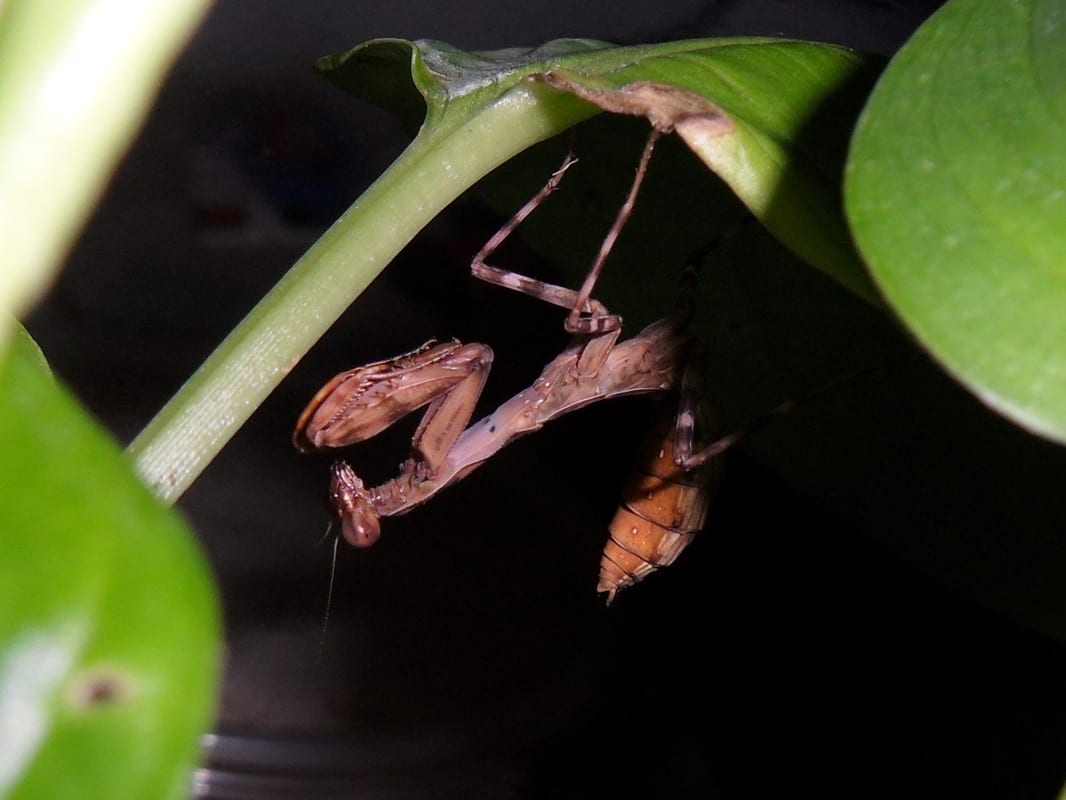
A large mantis found only on Flores, Indonesia. After about the fifth instar a two-tiered shield develops on the thorax, and in threat display it shows blue-purple inner forelegs and red abdominal bands. Colour varies widely.
Difficulty
Advanced
Temperature
20〜28℃
Lifespan
Little data
Size
Males about 79mm, females 86-89mm
Humidity
60〜80%
Diet
Live insects and other small animals (fruit flies for first instars)
About
Pnigomantis medioconstricta Westwood, 1889 is the only species of its genus in the family Mantidae and is endemic to Flores, Indonesia. Adult males are about 79mm and females 86-89mm. Colour varies widely and apparently not with environmental conditions. The two-tiered shield that gives it its name appears after about the fifth instar; females pass through nine instars and males eight. The inner forelegs are pale blue-purple with dark lower markings that seem to act as eyespots, and in threat display it also shows red bands between the upper abdominal segments. Most adults turn grey, with two light spots on the forewings. In captivity it is strongly built and aggressive, chasing down prey and taking many invertebrates. First-instar nymphs readily take fruit flies such as Drosophila hydei and move to larger prey as they grow; adult females occasionally take live mice. Breeding is somewhat difficult because females are very aggressive and each ootheca yields relatively few males. In Japan live animals appear only occasionally at specialist shops.
Source: Wikipedia (CC BY-SA 4.0)
Size of the Double shield mantis
The Double shield mantis grows to Males about 79mm, females 86-89mm.
Basic Info
Origin
Flores, Indonesia (endemic)
Lifespan
Little data
Size
Males about 79mm, females 86-89mm
Temperature
20〜28℃
Humidity
60〜80%
References & Sources
Edited & verified by: BreederDirect editorial team
The taxonomic, regulatory, and husbandry data on this page are compiled and verified against the authoritative primary sources below.
Taxonomy & Authority
Regulations & Conservation Status
Not CITES-listed
It is not designated under the Invasive Alien Species Act (Ministry of the Environment list, September 2026). Anyone bringing live insects from abroad must first check with the Plant Protection Station whether they count as pests. Choose domestically bred stock and never release captive animals.
Sources: Ministry of the Environment: List of invasive alien species (JA) / Plant Protection Station: Importing live insects (JA) / Species+ CITES query (no listing)
Regulations may change. Always verify the latest information with the relevant authorities.
Double shield mantis Listings
Loading latest listingsFind listings for this species