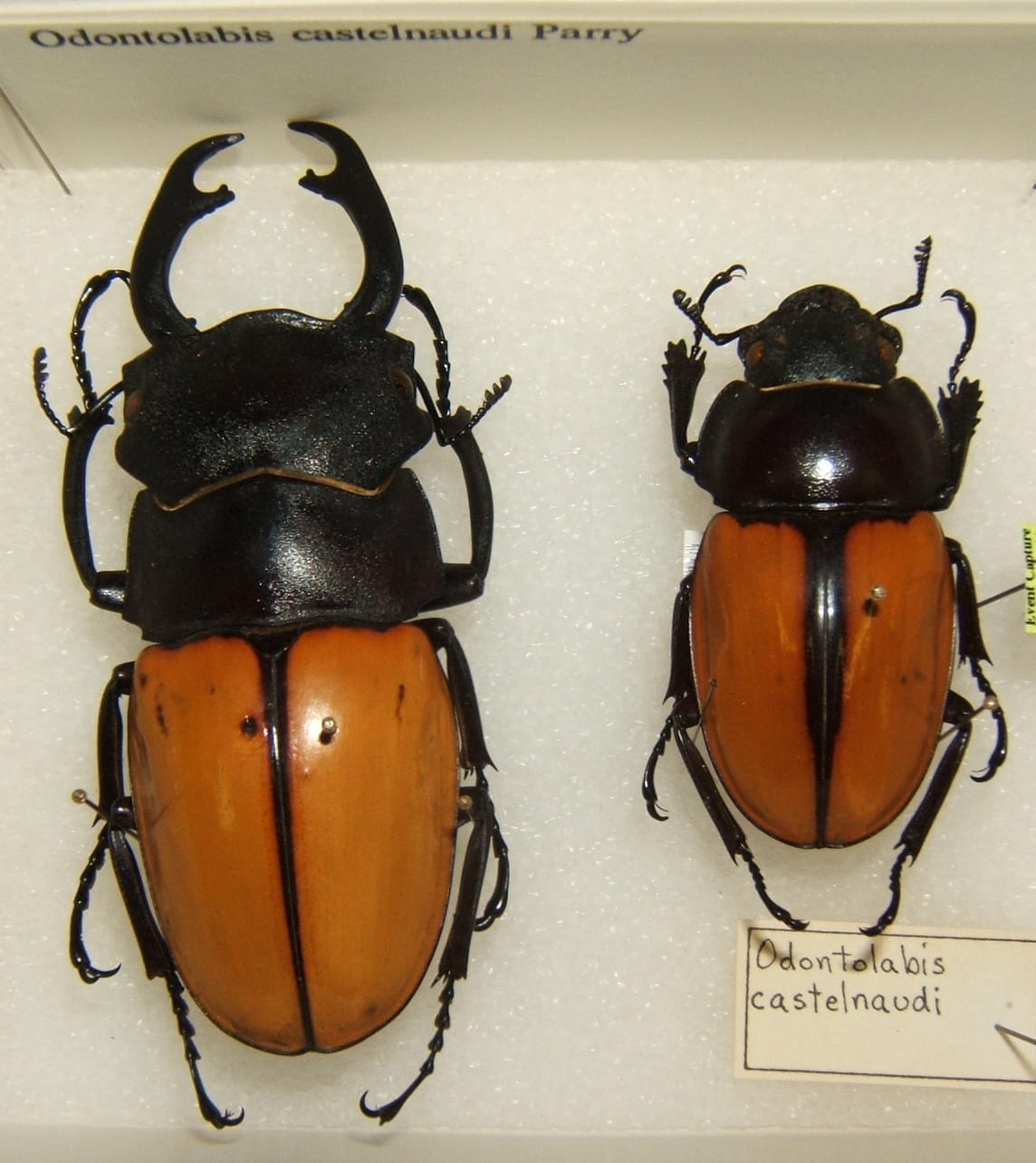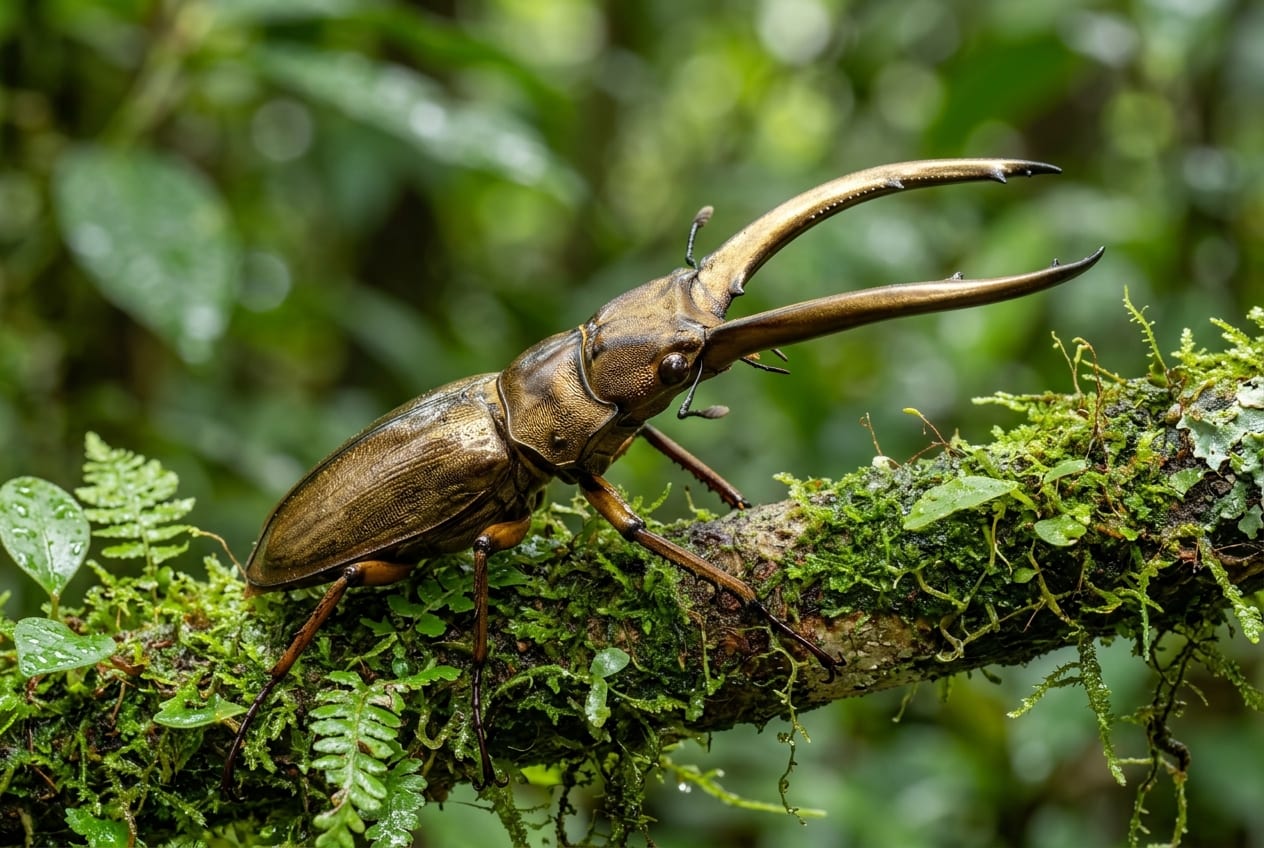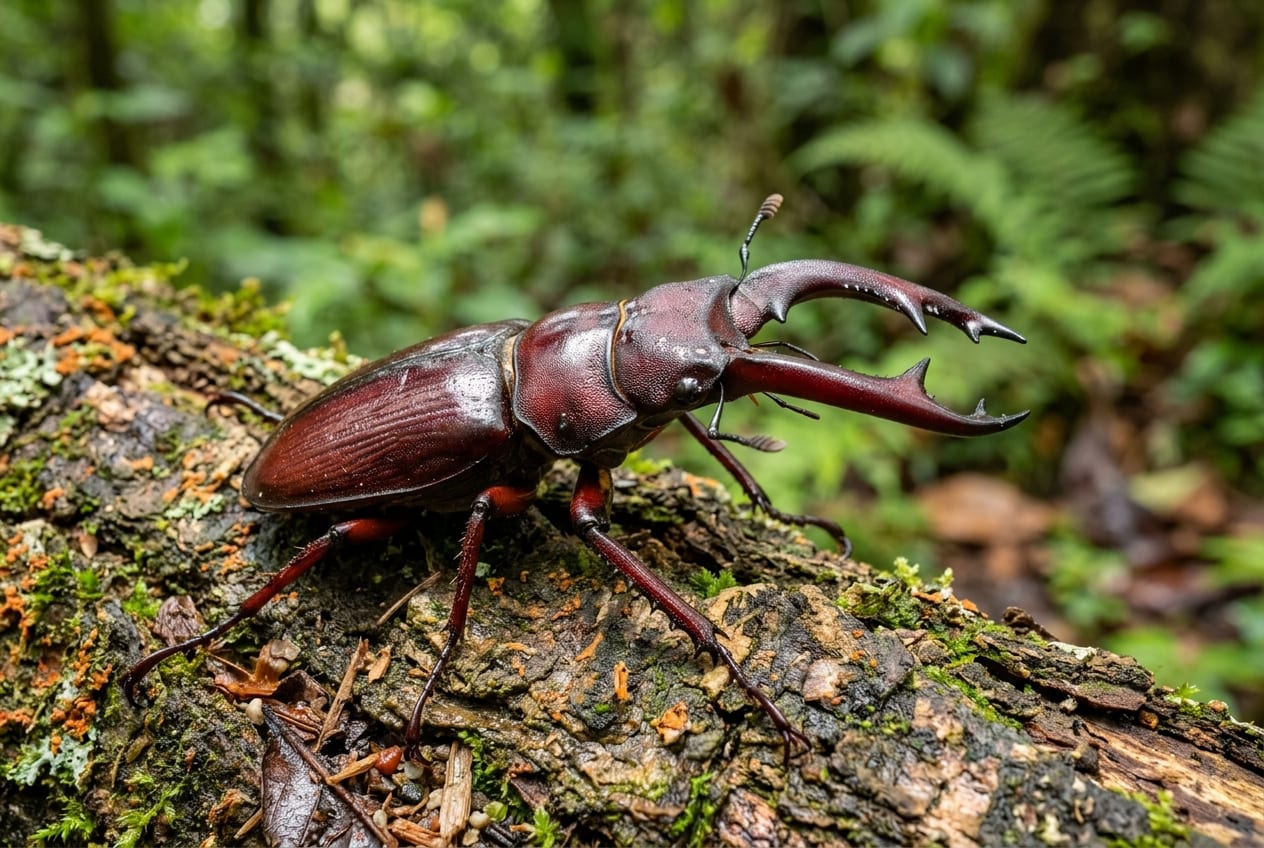
AI-generated image
Bowring's Stag Beetle
AdvancedHexarthrius bowringi
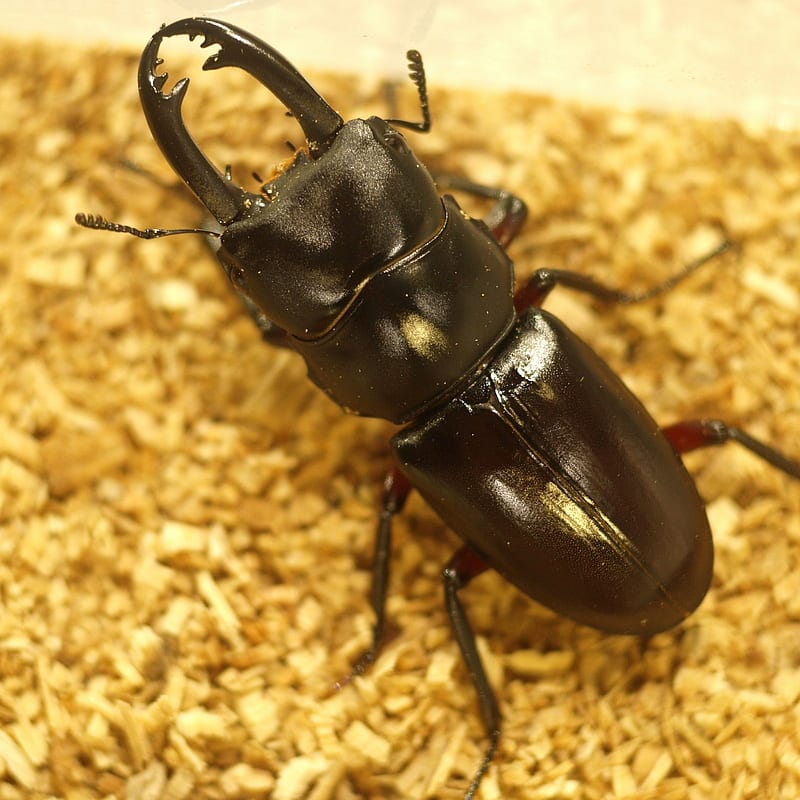
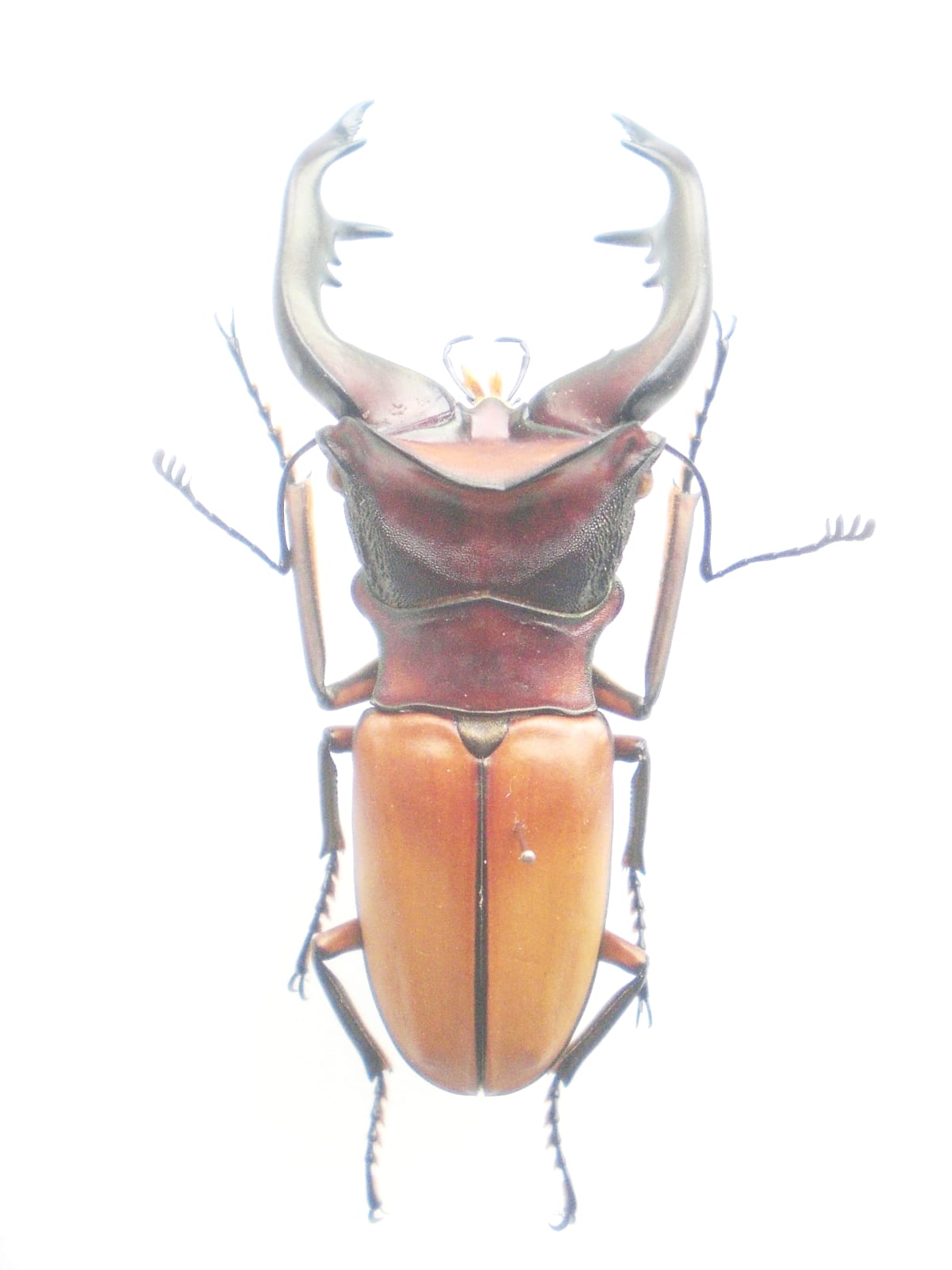
A fork-horned stag from the high south-eastern Himalayan foothills with a glossy wine-red sheen and thick-based mandibles. Females are fussy about logs and eggs rot easily with low hatch rates, so it is regarded as the hardest Hexarthrius to breed; for experienced keepers.
Difficulty
Advanced
Temperature
18〜23℃
Lifespan
Adults 6 months to 1 year
Size
Males up to 83.5mm (wild max), females 39-45mm (captive examples)
Humidity
60〜80%
Diet
Beetle jelly (adults); fermented substrate or Kawara kinshi (larvae)
About
Bowring's stag beetle (Hexarthrius bowringi) is the most north-western member of the genus, split into the nominate form around Darjeeling in West Bengal and Bhutan and the subspecies baminorum (described 2016) from Arunachal Pradesh. It lives on the fringes of broadleaf forest at 500-2,000 m and emerges from late July to late October. Colour ranges from deep red-brown to bright wine red, and the mandible bases are thick; baminorum has straighter mandibles with a broad forked basal tooth. The wild maximum is 83.5mm, and BE-KUWA 2025 captive records are 86.3mm for baminorum (2020) and 84.0mm for the nominate form (2019). In captivity females are fussy about logs, chew without laying, or lay eggs that blacken and rot, so it is regarded as the hardest species in the genus. Keepers report better hatch rates at a cool 18-23C with several thick oak logs soaked through to the core, eggs collected every three days and held in moist larval substrate. Larvae take 12-18 months on Kawara kinshi or substrate.
Source: Wikipedia (CC BY-SA 4.0)
Lifespan of the Bowring's Stag Beetle
The Bowring's Stag Beetle lives Adults 6 months to 1 year.
Size of the Bowring's Stag Beetle
The Bowring's Stag Beetle grows to Males up to 83.5mm (wild max), females 39-45mm (captive examples).
Temperature & humidity for the Bowring's Stag Beetle
The ideal temperature for the Bowring's Stag Beetle is 18〜23℃.
Basic Info
Origin
West Bengal (Darjeeling) and Arunachal Pradesh in India, Bhutan
Care Specifications
AggressiveSolitaryBreeding: Very hard
Sources: Komachi Breeding Room: rearing H. bowringi baminorum / Stag Beetle Japan: rearing the nominate H. bowringi / Conifers stag beetle rearing: H. bowringi / COLORS fork-horned stag beetle catalogue / Wikipedia (ja): Hexarthrius
Breeding Records & Localities
Captive record (♂)
86.3 mm
Record source: BE-KUWA 2025 edition (Bowring's stag, baminorum: captive 86.3mm, Takeo Yajima, 2020; wild record 83.5mm)
Notable localities
Darjeeling, West Bengal, IndiaSamtse, BhutanLower Subansiri, Arunachal Pradesh, India
Regional subspecies
- Hexarthrius bowringi bowringi(nominate subspecies) — West Bengal (India), Bhutan
- Hexarthrius bowringi baminorum — Arunachal Pradesh, India
BE-KUWA lists the nominate form separately at 84.0mm (2019; wild 83.5mm). The female record is 39.0mm (2025).
Generation codes
- WD
- Wild-caught
- WF1
- Offspring of a wild-caught female
- F1〜
- Captive generations (same locality)
- CBF1
- Cross-locality captive-bred (reset)
Sources: BE-KUWA certified breeding records (Mushi-sha, 2025 edition)
References & Sources
Edited & verified by: BreederDirect editorial team
The taxonomic, regulatory, and husbandry data on this page are compiled and verified against the authoritative primary sources below.
Primary sources
- Wikipedia
- Ministry of the Environment (Japan): Importing live Scarabaeoidea beetles
- CITES Appendices (species not listed)
- Komachi Breeding Room: rearing H. bowringi baminorum
- Stag Beetle Japan: rearing the nominate H. bowringi
- Conifers stag beetle rearing: H. bowringi
- COLORS fork-horned stag beetle catalogue
- BE-KUWA certified breeding records (Mushi-sha, 2025 edition)
- GBIF
Taxonomy & Authority
Accepted name: Hexarthrius bowringi Parry, 1862
Synonyms: Hexarthrius bowringii
Authority databases: GBIF
Nomenclature follows global taxonomic authority databases.
Regulations & Conservation Status
Not CITES-listed
Plant Protection Act: Live Scarabaeoidea beetles (rhinoceros, stag and flower beetles) may be imported into Japan only with a species-name certificate issued by the exporting government under the Invasive Alien Species Act, and only through Narita, Chubu, Kansai, Fukuoka or Kagoshima airports. This species is not a designated invasive alien species and can be imported with the certificate.
Sources: Ministry of the Environment (Japan): Importing live Scarabaeoidea beetles / CITES Appendices (species not listed)
Regulations may change. Always verify the latest information with the relevant authorities.
Bowring's Stag Beetle Listings
Loading latest listingsFind listings for this species