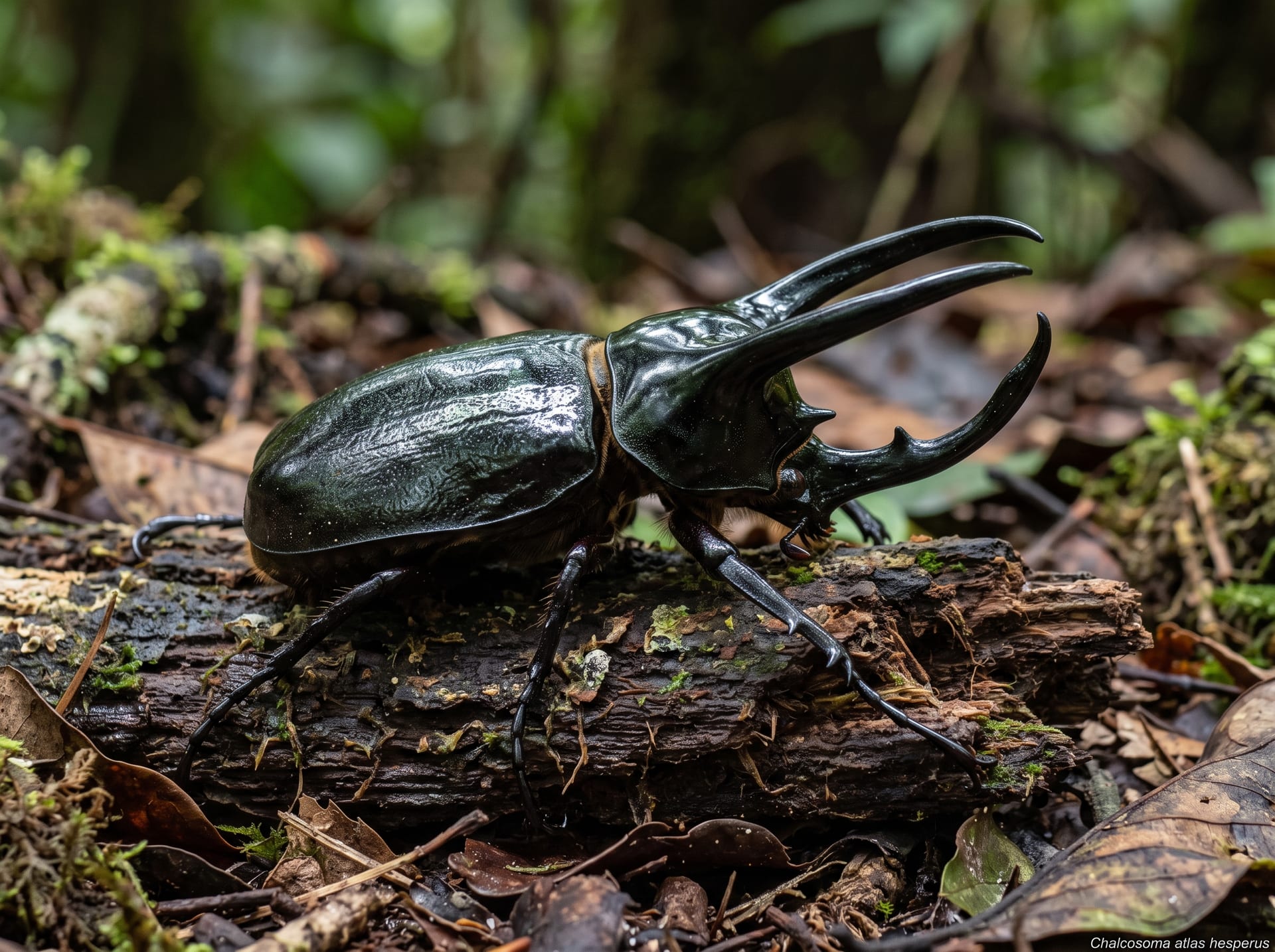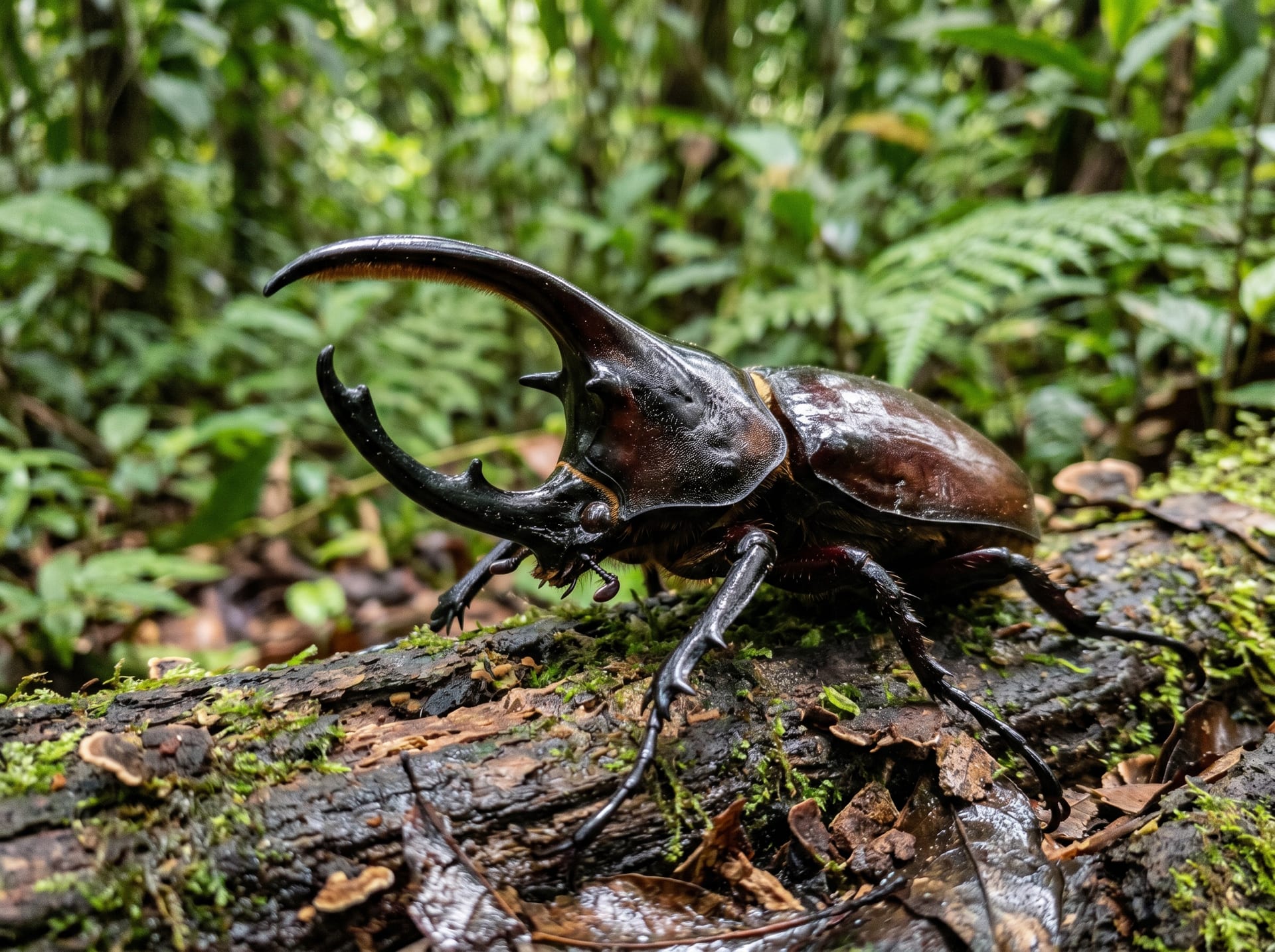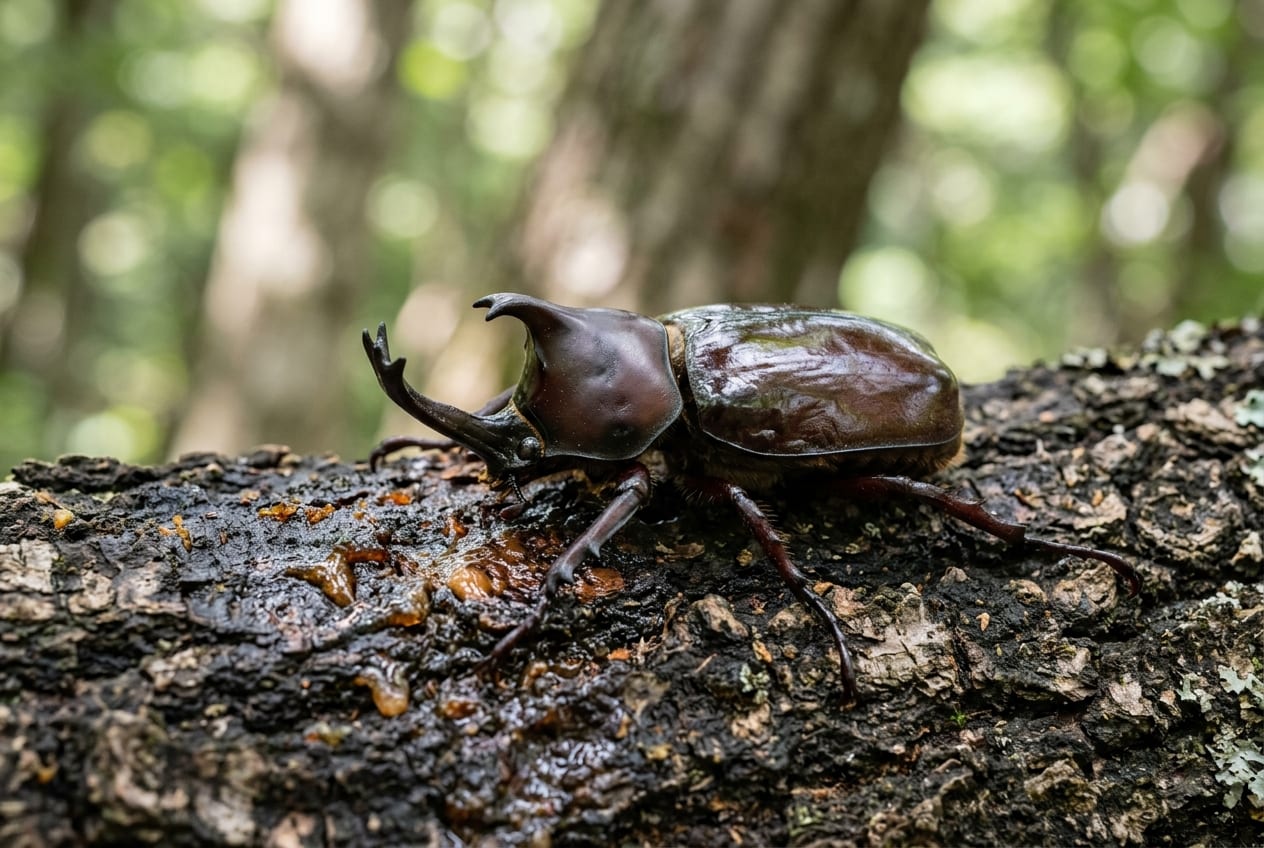
AI-generated image
Tsuchiya's Rhinoceros Beetle
IntermediateTrypoxylus dichotomus tsuchiyai
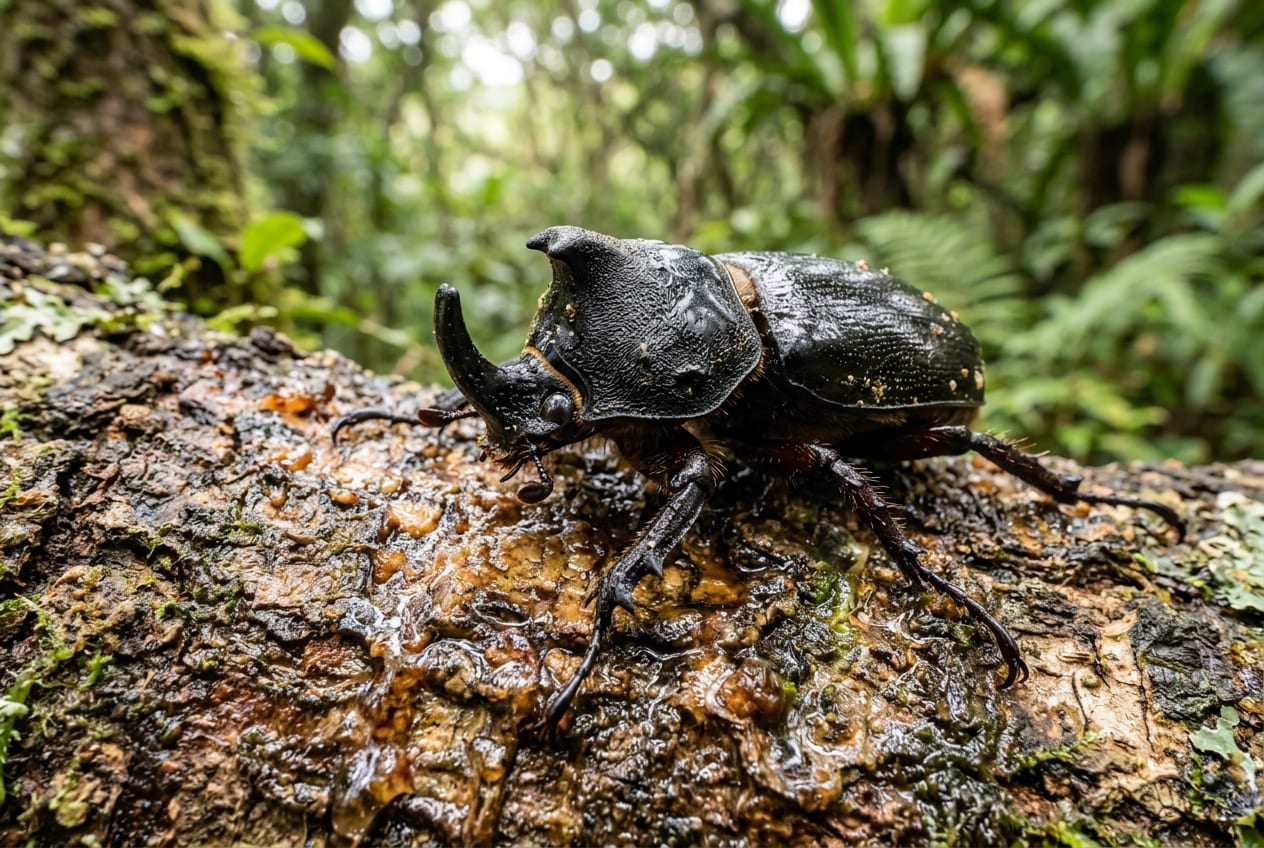
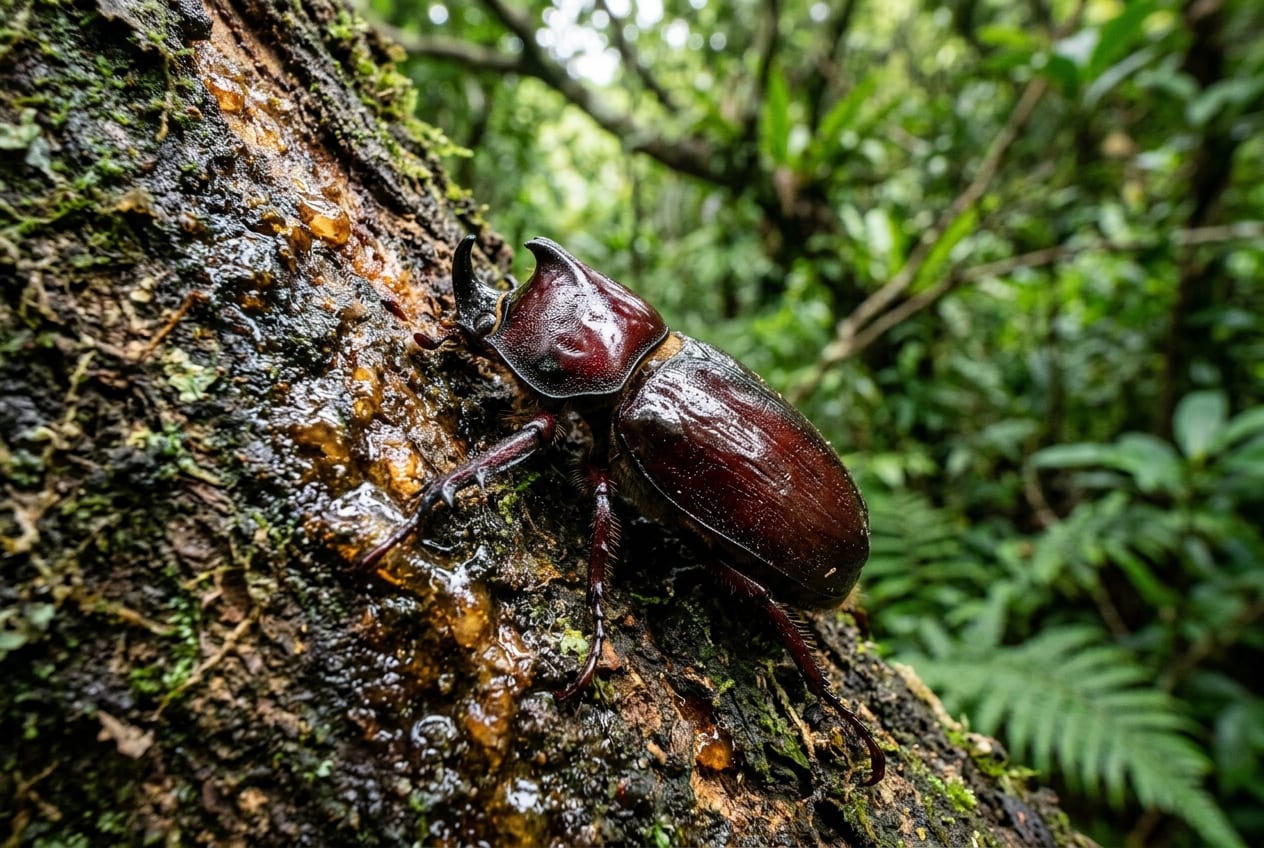
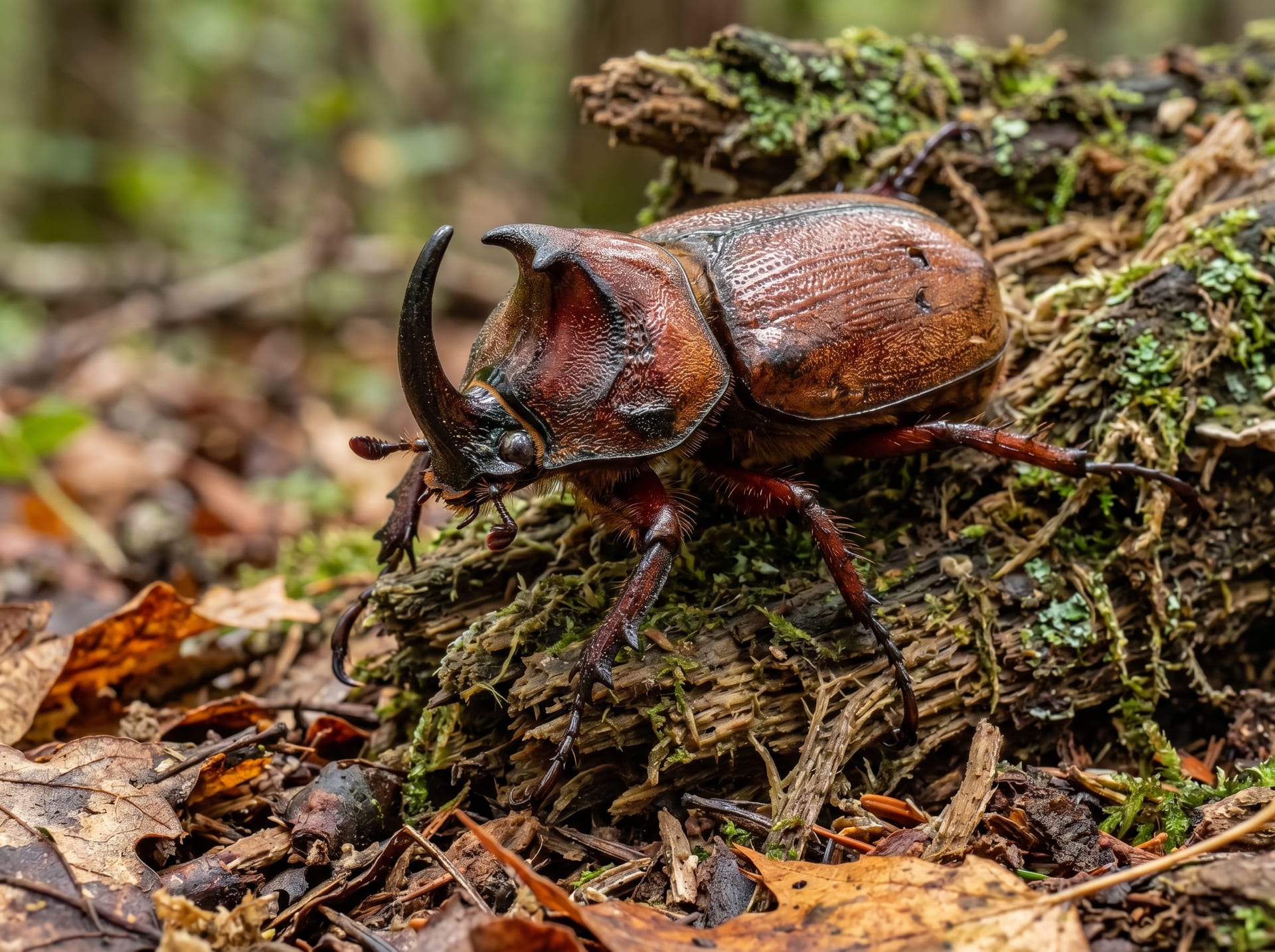
A subspecies confined to Kuchinoerabujima. It is smaller and broader than the mainland form, with very short hairs on the pronotum and elytra that some individuals lack almost entirely, and the male's elytra are smooth and strongly glossy.
Difficulty
Intermediate
Temperature
20〜28℃
Lifespan
1-3 months as an adult
Size
Males 33.9-48.8mm (excluding the head horn), females 31.6-43.6mm
Humidity
60〜80%
Diet
Adults take sap of Machilus and other trees, plus beetle jelly; larvae feed on leaf mould
About
Trypoxylus dichotomus tsuchiyai is endemic to Kuchinoerabujima in the Osumi Islands and was described by Shinji Nagai in 2006. The Japanese Wikipedia gives males as 33.9-48.8 mm excluding the head horn, up to 50.5 mm, and females as 31.6-43.6 mm, while total length including the male head horn runs to 42-78 mm. Body width is 17.5-26.4 mm in males and 16.9-23.2 mm in females. Both sexes average smaller and shorter than the mainland form and are correspondingly broader. The hairs on the centre and front margin of the male's pronotum and elytra are very short, and some individuals have almost none, so the elytra look smoother and glossier than in the mainland form. The male head horn tends to be short and the thoracic horn slender, though some authors regard the difference from the mainland form as slight. Adults gather at the sap of Machilus. The subspecific name honours the collector Toshiyuki Tsuchiya.
Source: Wikipedia (CC BY-SA 4.0)
Lifespan of the Tsuchiya's Rhinoceros Beetle
The Tsuchiya's Rhinoceros Beetle lives 1-3 months as an adult.
Size of the Tsuchiya's Rhinoceros Beetle
The Tsuchiya's Rhinoceros Beetle grows to Males 33.9-48.8mm (excluding the head horn), females 31.6-43.6mm.
Basic Info
Origin
Japan (Kuchinoerabujima in the Osumi Islands, Kagoshima Prefecture)
Lifespan
1-3 months as an adult
Size
Males 33.9-48.8mm (excluding the head horn), females 31.6-43.6mm
Care Specifications
Breeding Records & Localities
Wild record (♂)
71.8 mm
Record source: BE-KUWA 2025 edition, large-size rhinoceros beetle records (Tsuchiya: wild 71.8 mm, Takashi Tsukamoto, 2013; dream maximum 80 mm)
Notable localities
Kuchinoerabujima
Regional subspecies
- Trypoxylus dichotomus dichotomus — Central and southern China
- Trypoxylus dichotomus septentrionalis — Mainland Japan, Korea, northern China
- Trypoxylus dichotomus takarai — Okinawa Islands
- Trypoxylus dichotomus inchachina — Kumejima
- Trypoxylus dichotomus tsuchiyai(This entry) — Kuchinoerabujima
- Trypoxylus dichotomus shizuae — Yakushima, Tanegashima
- Trypoxylus dichotomus tsunobosonis — Taiwan
- Trypoxylus dichotomus politus — Northeastern India, Myanmar, Thailand, Laos, Vietnam, Yunnan
- Trypoxylus dichotomus shennongjii — Hubei, China
- Trypoxylus dichotomus xizangensis — Tibet Autonomous Region
- Trypoxylus dichotomus corniculatus — West Bengal, India
References & Sources
Edited & verified by: BreederDirect editorial team
The taxonomic, regulatory, and husbandry data on this page are compiled and verified against the authoritative primary sources below.
Taxonomy & Authority
Accepted name: Trypoxylus dichotomus tsuchiyai Nagai, 2006
Synonyms: Allomyrina dichotoma tsuchiyai
Authority databases: GBIF
Nomenclature follows global taxonomic authority databases.
Regulations & Conservation Status
Not CITES-listed
Sources: CITES Appendix (checklist.cites.org)
Regulations may change. Always verify the latest information with the relevant authorities.
Tsuchiya's Rhinoceros Beetle Listings
Loading latest listingsFind listings for this species