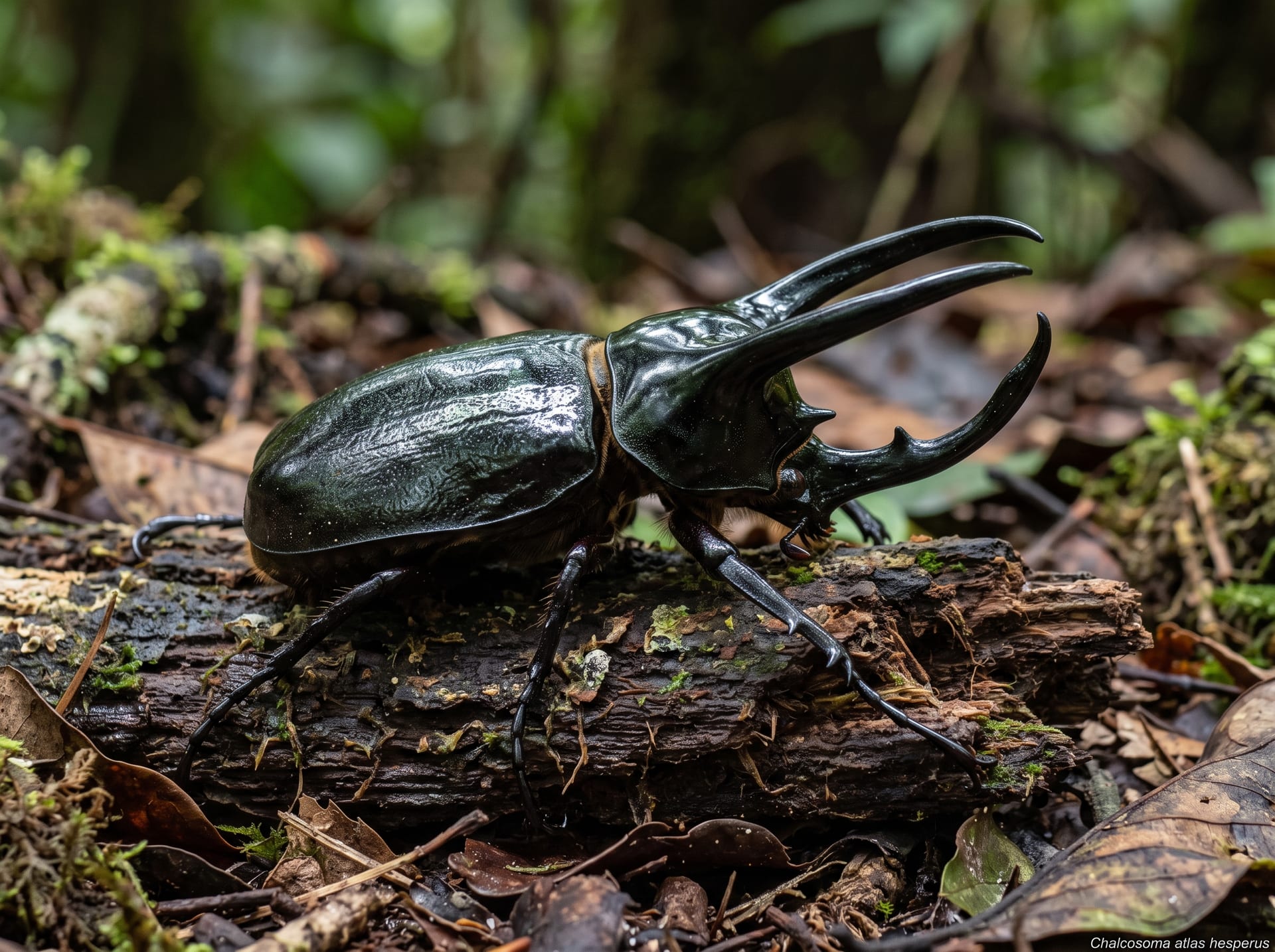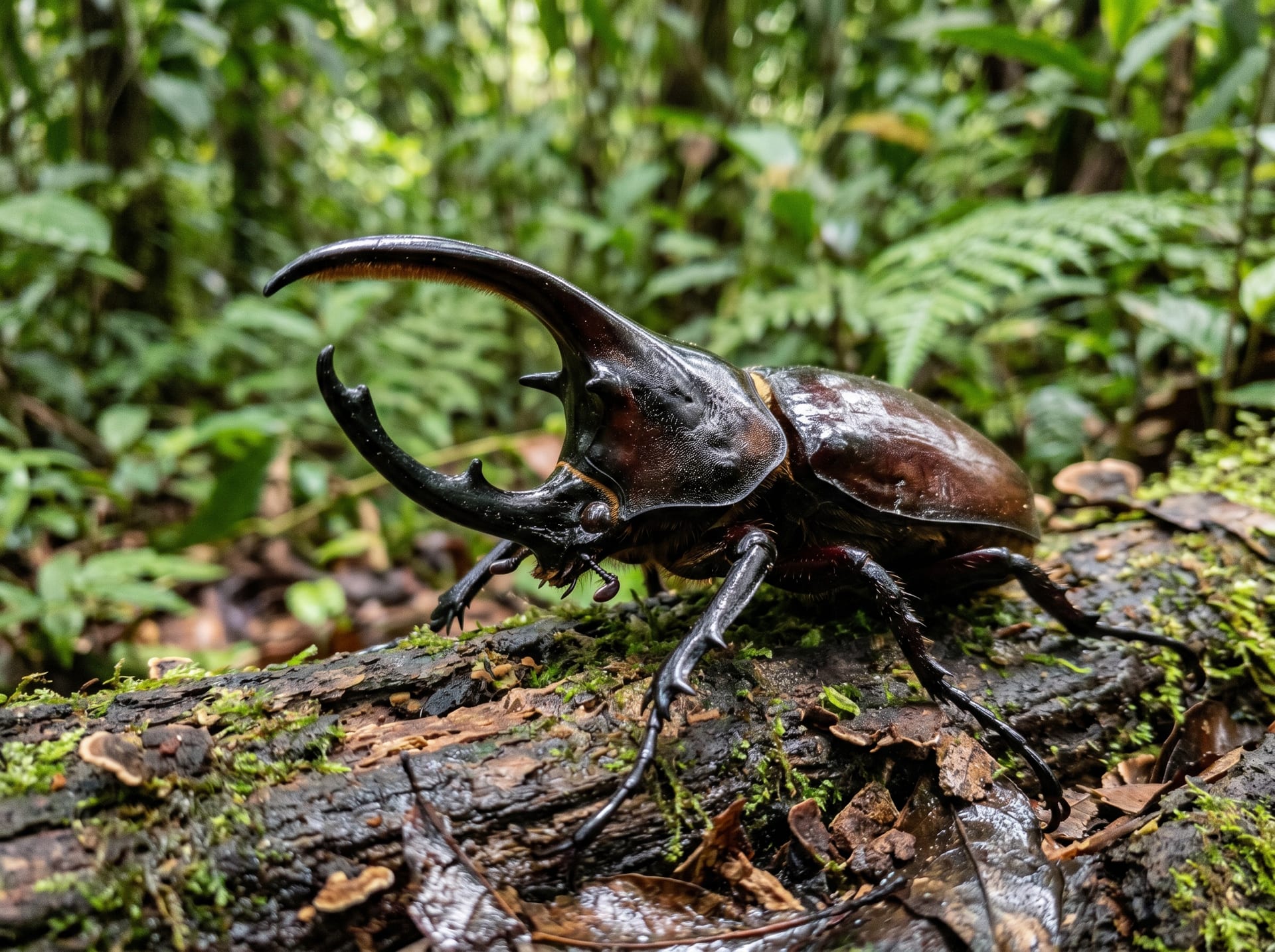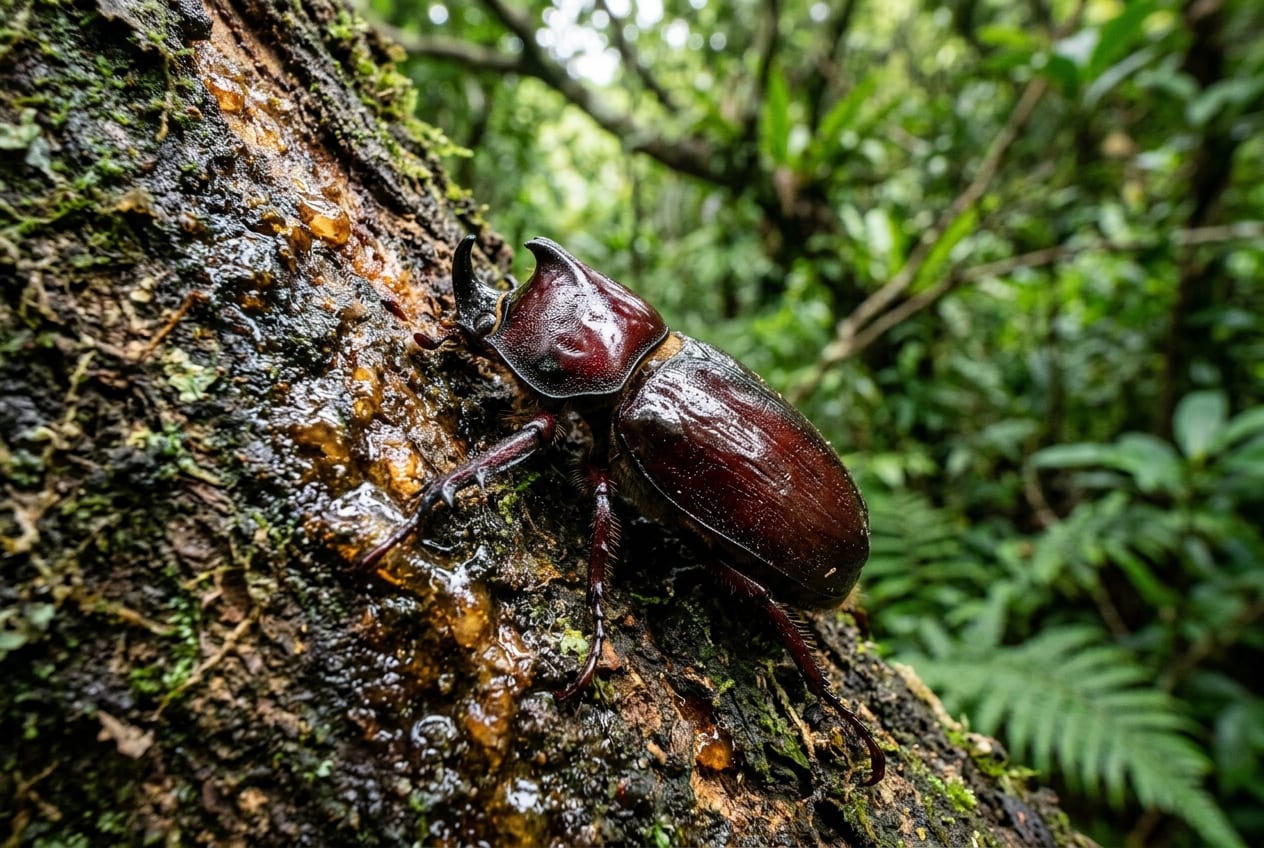
AI-generated image
Okinawa Rhinoceros Beetle
IntermediateTrypoxylus dichotomus takarai
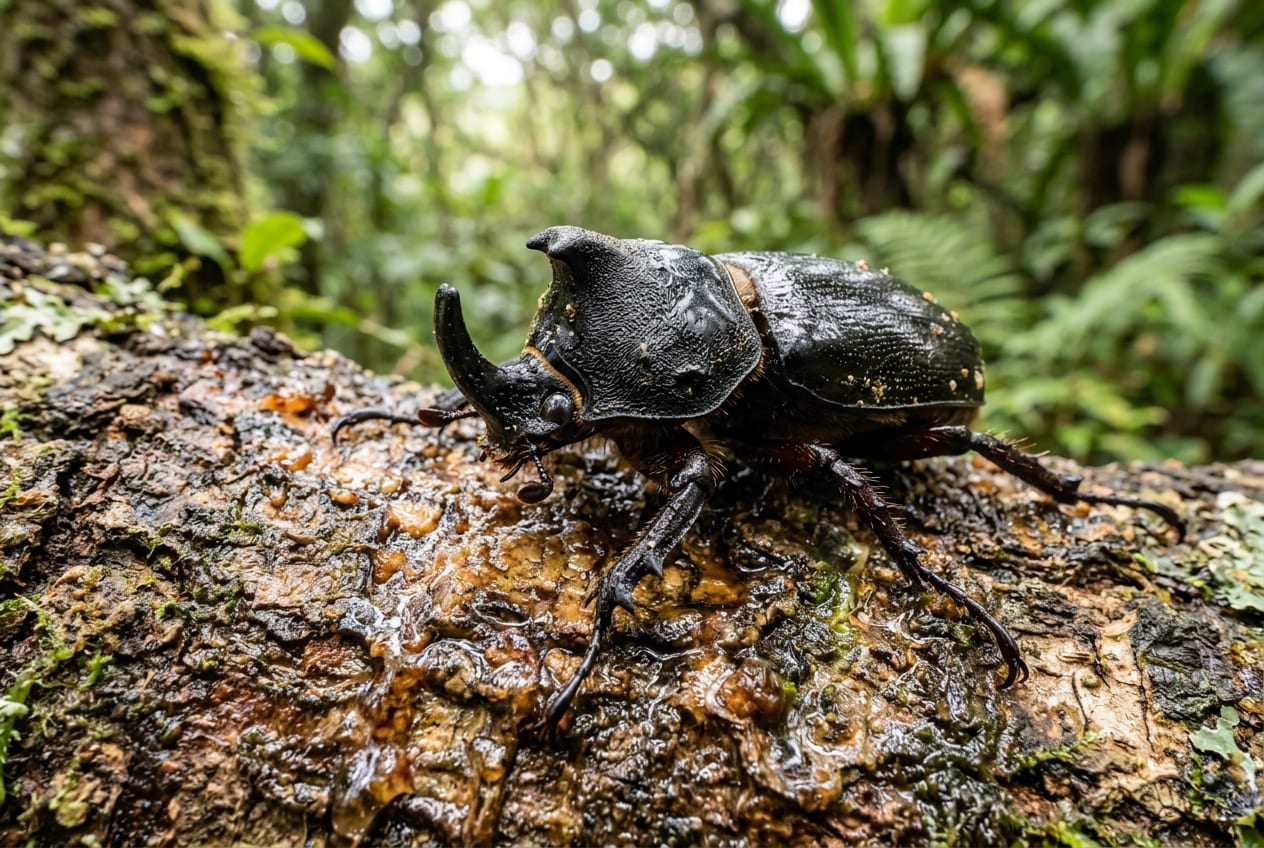
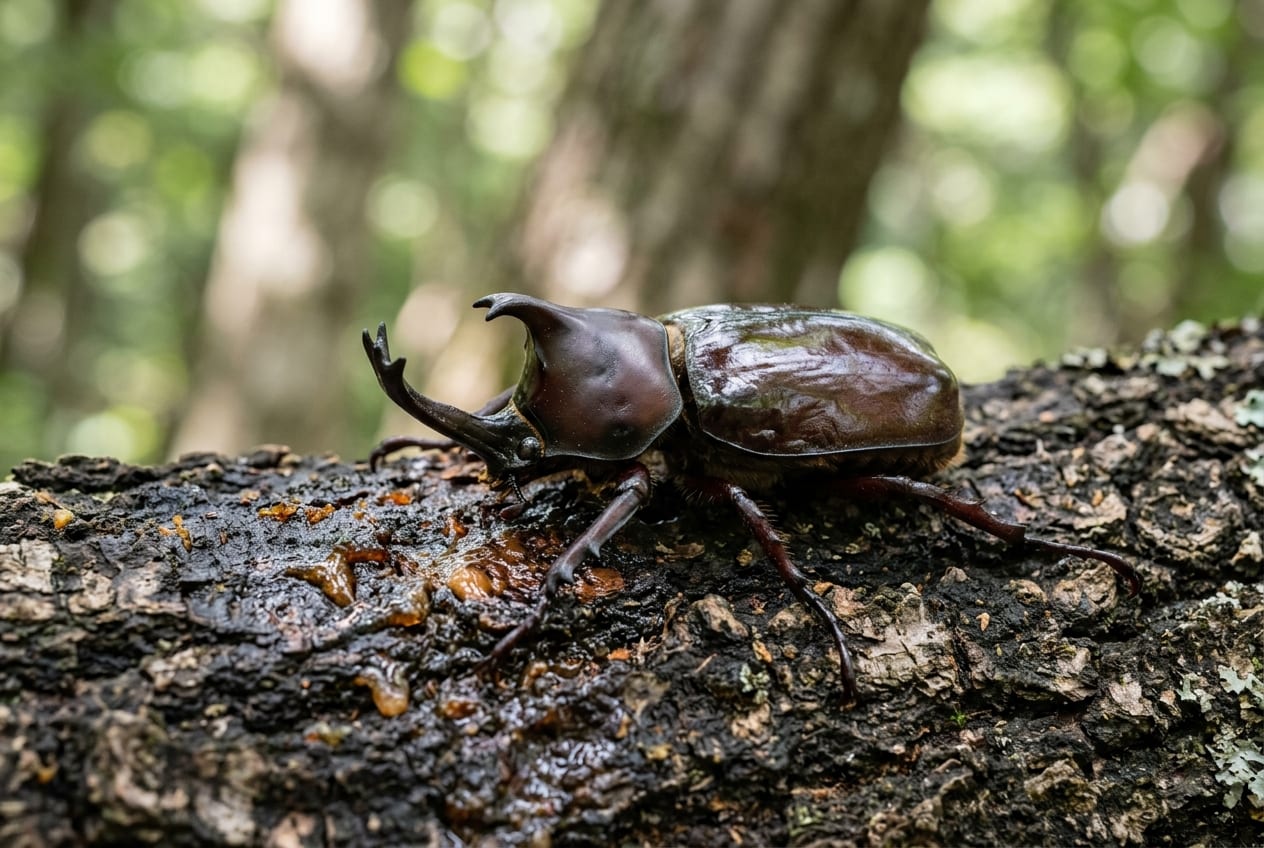
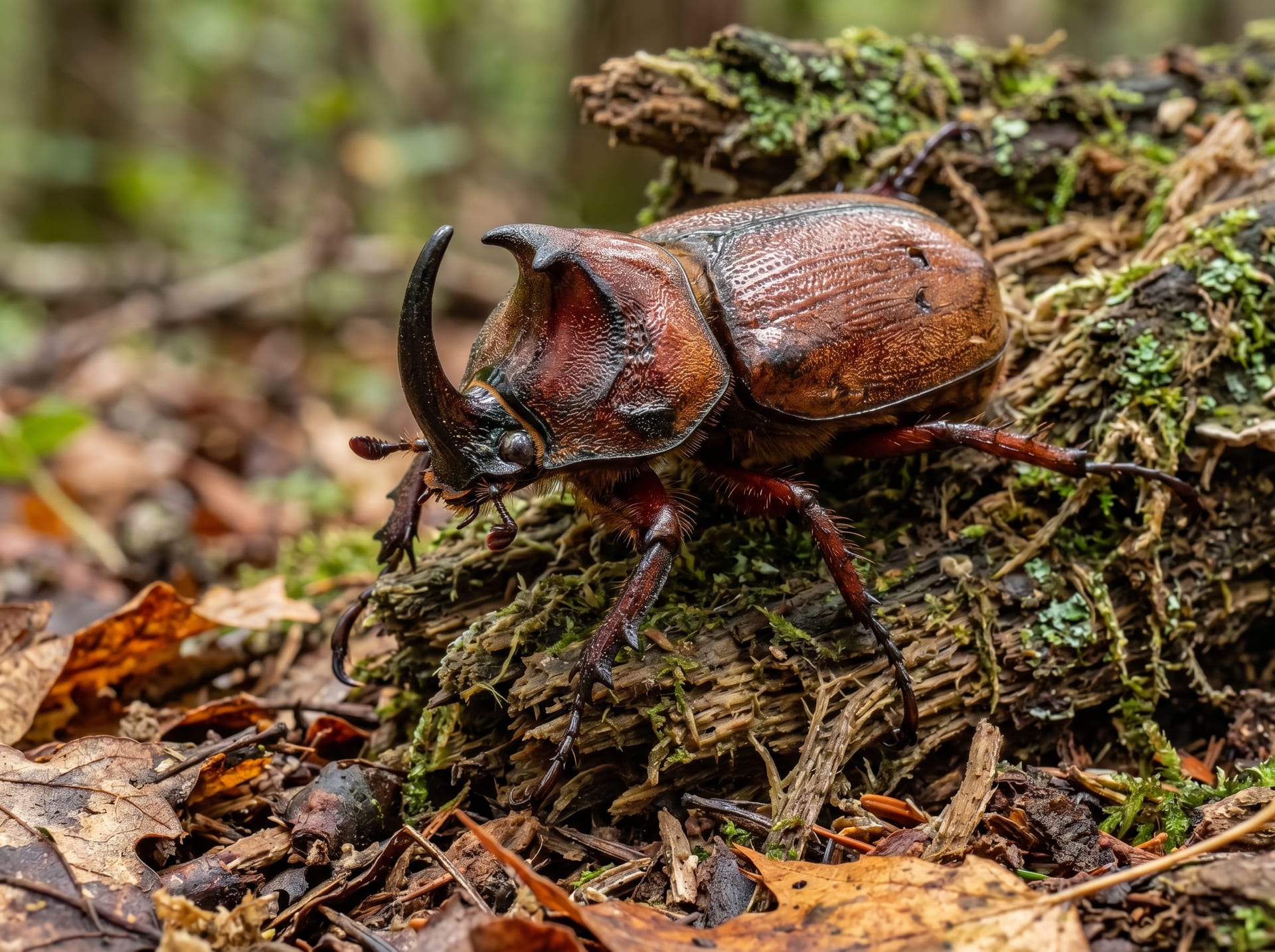
A subspecies endemic to the Okinawa Islands, smaller than the mainland form and with shorter male horns. The male's elytra are strongly glossy and the female is covered in short yellowish-grey hairs. It avoids the lowlands and lives in well-preserved natural forest.
Difficulty
Intermediate
Temperature
20〜28℃
Lifespan
1-3 months as an adult
Size
Males 30.3-50.1mm (excluding the head horn), females 35.2-47.6mm
Humidity
60〜80%
Diet
Adults take sap of Castanopsis, Machilus, Mallotus and shikuwasa, plus beetle jelly; larvae feed on leaf mould
About
Trypoxylus dichotomus takarai is endemic to the Okinawa Islands, occurring on Okinawa Island, Iheyajima, Sesokojima, Iejima and Kourijima. The Japanese Wikipedia gives males as 30.3-50.1 mm excluding the head horn, and Nagai's measurements of Okinawa Island females as 35.2-47.6 mm, making the subspecies smaller than the mainland form with shorter male horns. The body is black to very dark brown, the male's elytra strongly glossy and the female clothed in short yellowish-grey hairs. The shape of the male genitalia is closer to the Taiwanese subspecies than to the mainland one. Unlike the mainland form it is absent from the lowlands, living in well-preserved natural forest on low hills in the north and centre of Okinawa Island, where it gathers at the sap of Castanopsis, Mallotus, Machilus, citrus, shikuwasa and Chinese ash. It is listed as data deficient by the Ministry of the Environment and as near threatened on the Okinawa red list.
Source: Wikipedia (CC BY-SA 4.0)
Lifespan of the Okinawa Rhinoceros Beetle
The Okinawa Rhinoceros Beetle lives 1-3 months as an adult.
Size of the Okinawa Rhinoceros Beetle
The Okinawa Rhinoceros Beetle grows to Males 30.3-50.1mm (excluding the head horn), females 35.2-47.6mm.
Basic Info
Origin
Japan (Okinawa Island, Iheyajima, Sesokojima, Iejima and Kourijima)
Lifespan
1-3 months as an adult
Size
Males 30.3-50.1mm (excluding the head horn), females 35.2-47.6mm
Care Specifications
Breeding Records & Localities
Wild record (♂)
69.5 mm
Record source: BE-KUWA 2025 edition, large-size rhinoceros beetle records (Okinawa: wild 69.5 mm, Satoshi Uechi, 2020; dream maximum 76 mm)
Notable localities
Okinawa IslandIheyajimaSesokojimaIejimaKourijima
Regional subspecies
- Trypoxylus dichotomus dichotomus — Central and southern China
- Trypoxylus dichotomus septentrionalis — Mainland Japan, Korea, northern China
- Trypoxylus dichotomus takarai(This entry) — Okinawa Islands
- Trypoxylus dichotomus inchachina — Kumejima
- Trypoxylus dichotomus tsuchiyai — Kuchinoerabujima
- Trypoxylus dichotomus shizuae — Yakushima, Tanegashima
- Trypoxylus dichotomus tsunobosonis — Taiwan
- Trypoxylus dichotomus politus — Northeastern India, Myanmar, Thailand, Laos, Vietnam, Yunnan
- Trypoxylus dichotomus shennongjii
References & Sources
Edited & verified by: BreederDirect editorial team
The taxonomic, regulatory, and husbandry data on this page are compiled and verified against the authoritative primary sources below.
Taxonomy & Authority
Accepted name: Trypoxylus dichotomus takarai (Kusui, 1976)
Synonyms: Allomyrina dichotoma takarai
Authority databases: GBIF
Nomenclature follows global taxonomic authority databases.
Regulations & Conservation Status
Not CITES-listed
Sources: CITES Appendix (checklist.cites.org)
Regulations may change. Always verify the latest information with the relevant authorities.
Okinawa Rhinoceros Beetle Listings
Loading latest listingsFind listings for this species