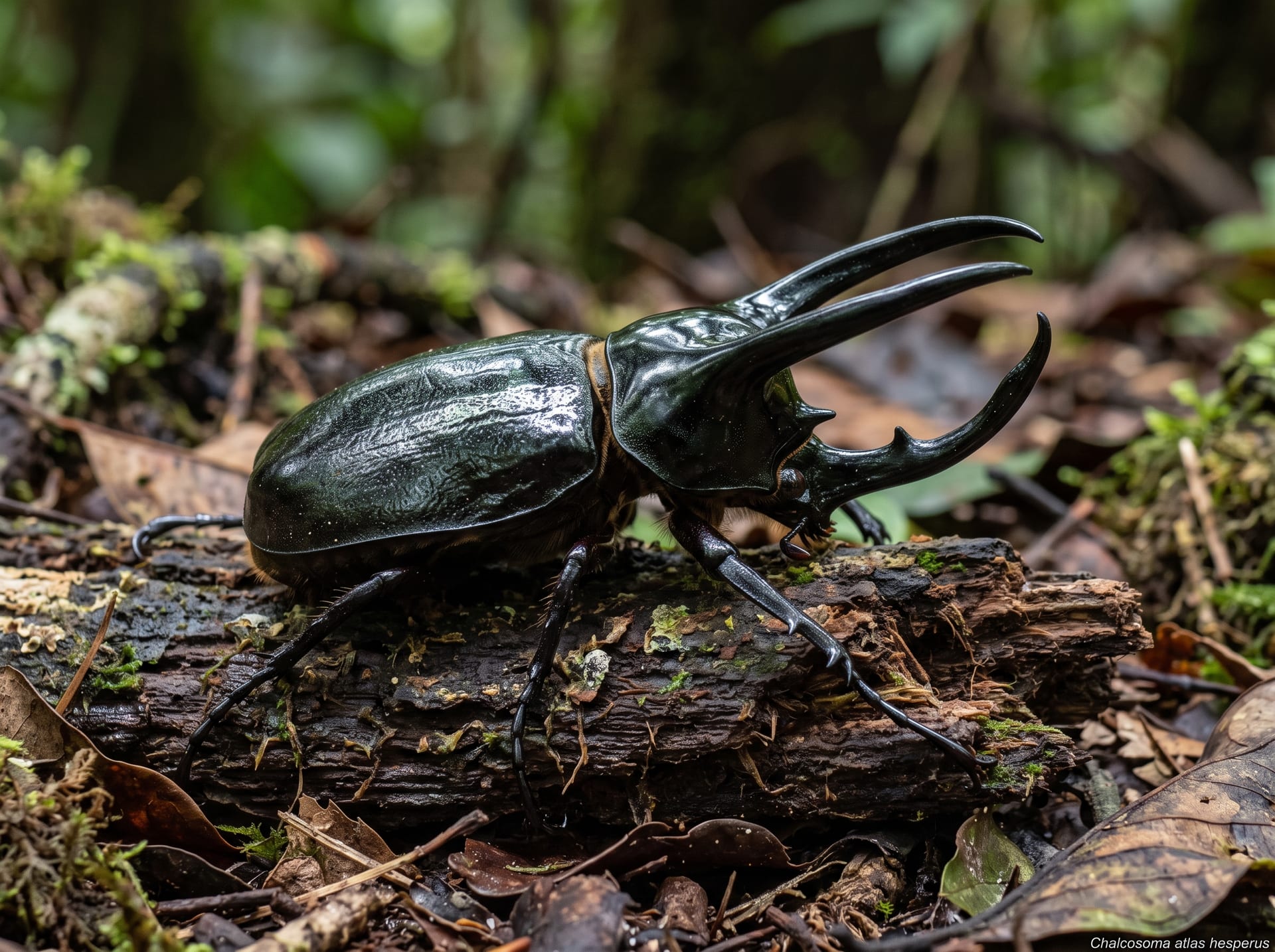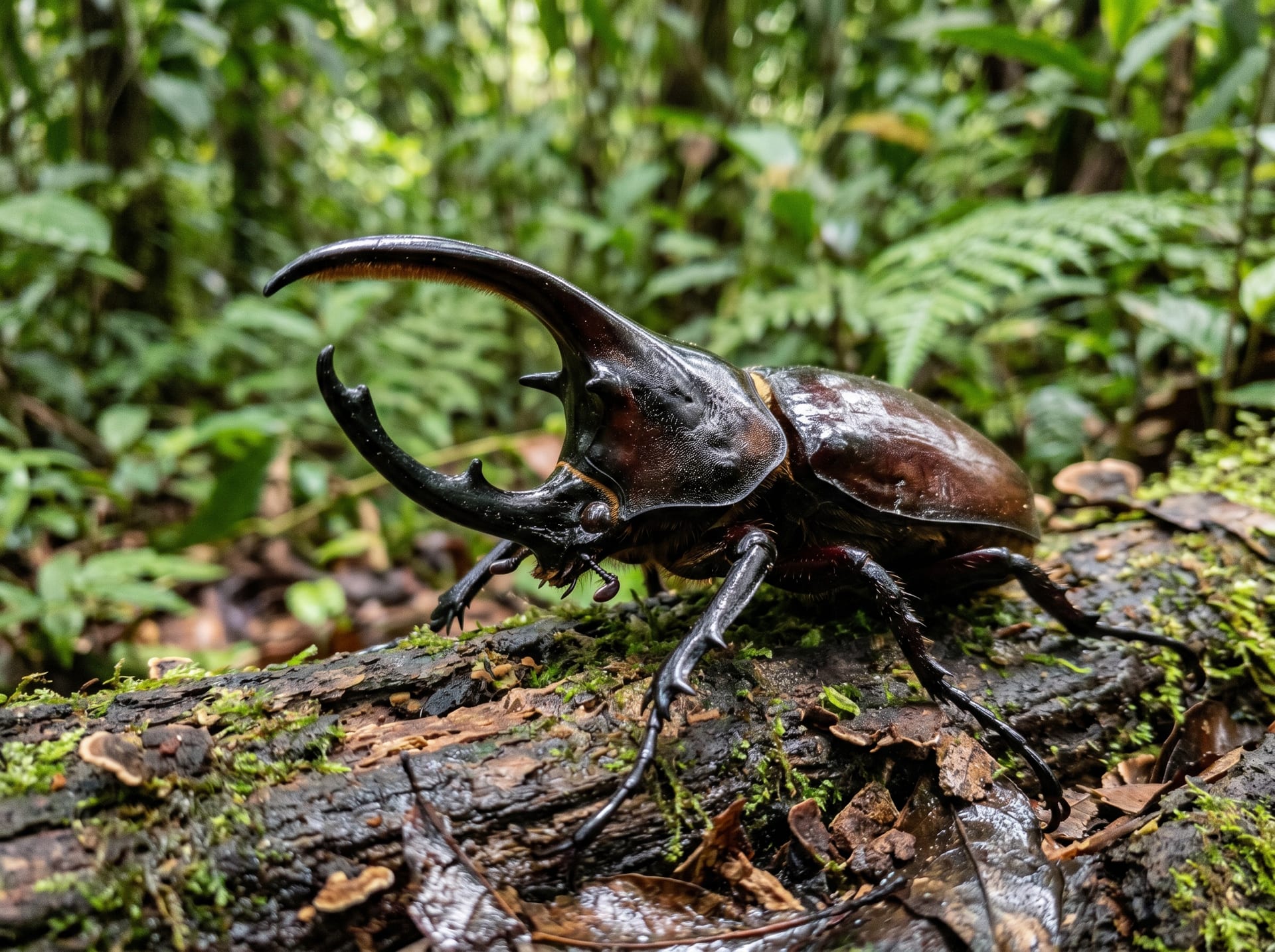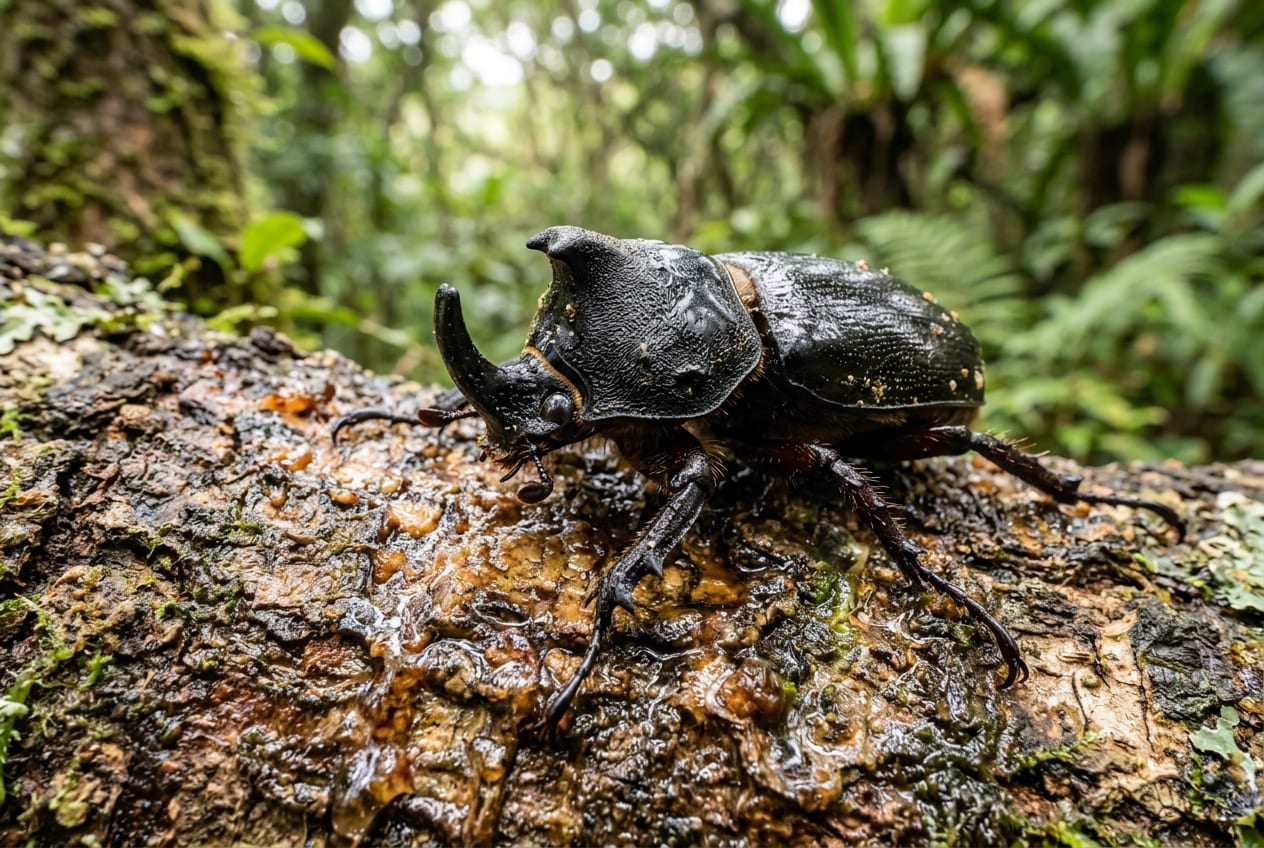
AI-generated image
Kumejima Rhinoceros Beetle
IntermediateTrypoxylus dichotomus inchachina
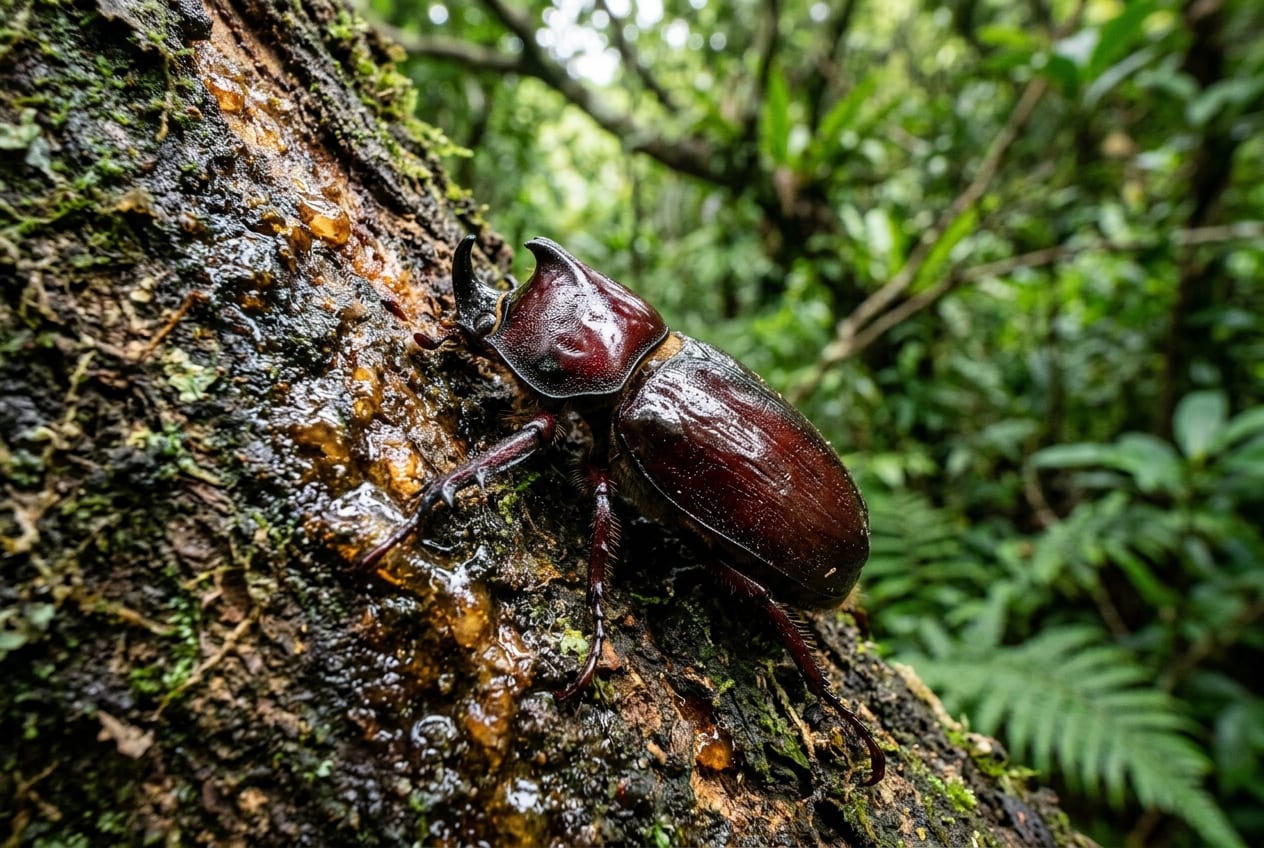
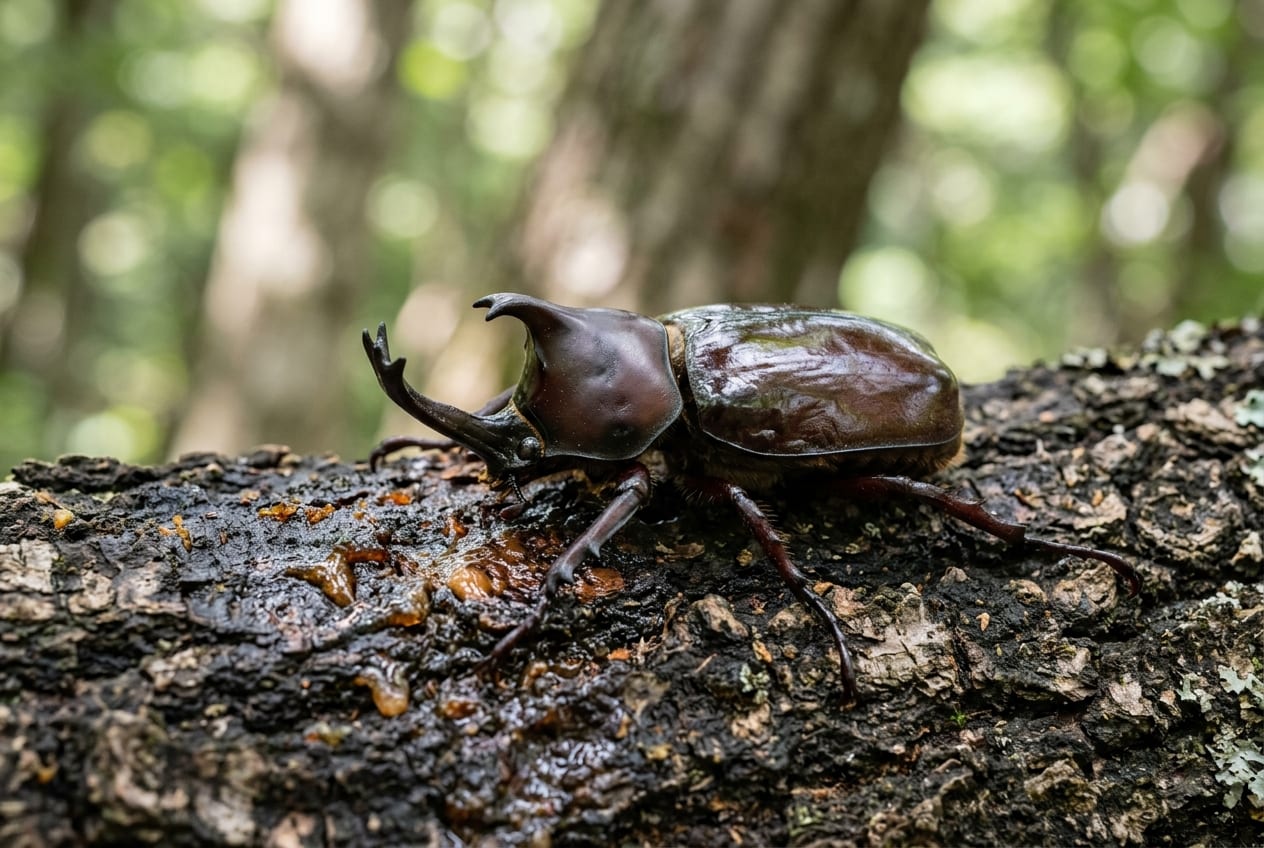
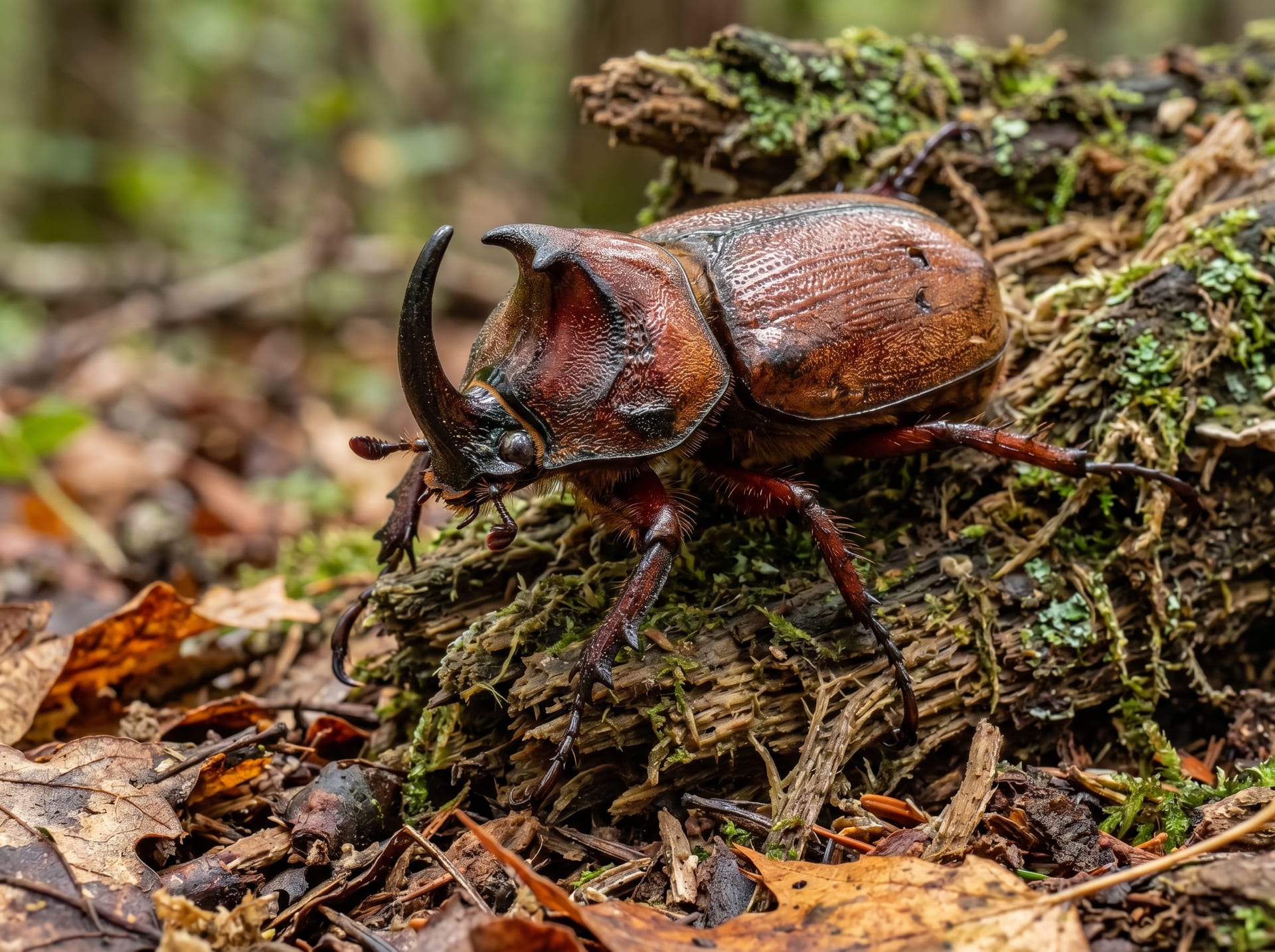
A subspecies confined to Kumejima. Males are black and strongly glossy, but the head horn is even shorter than in the Okinawa subspecies and the thoracic horn is extremely short. Its habitat is limited and numbers are thought to be low.
Difficulty
Intermediate
Temperature
20〜28℃
Lifespan
1-3 months as an adult
Size
40-50mm (excluding the male horn)
Humidity
60〜80%
Diet
Adults take sap of Mallotus, Machilus, Castanopsis and citrus, plus beetle jelly; larvae feed on leaf mould
About
Trypoxylus dichotomus inchachina is confined to the island of Kumejima. Males are given as 40-50 mm excluding the horn; Yoshida measured males at 42-57 mm including the head horn and females at 38-47 mm, while Okamura reports males reaching more than 67 mm with the horn. Males are black and strongly glossy, but the head horn is even shorter and less developed than in the Okinawa subspecies and the thoracic horn is extremely short. The subspecific name inchachina means a short-horned goat in the Kumejima dialect and refers to exactly that. It lives in evergreen broadleaf forest and in stands mixed with Ryukyu pine, the adults emerging in early summer to drink sap from broadleaf trees inside the forest and along its edges. Kumejima is drier than northern Okinawa Island and holds few large trees with the hollows its larvae need, so numbers are thought to be low, and the Okinawa red list treats it as vulnerable.
Source: Wikipedia (CC BY-SA 4.0)
Lifespan of the Kumejima Rhinoceros Beetle
The Kumejima Rhinoceros Beetle lives 1-3 months as an adult.
Size of the Kumejima Rhinoceros Beetle
The Kumejima Rhinoceros Beetle grows to 40-50mm (excluding the male horn).
Basic Info
Origin
Japan (Kumejima, Okinawa Prefecture)
Lifespan
1-3 months as an adult
Size
40-50mm (excluding the male horn)
Care Specifications
Breeding Records & Localities
Wild record (♂)
67.2 mm
Record source: BE-KUWA 2025 edition, large-size rhinoceros beetle records (Kumejima: wild 67.2 mm, Masanori Suzuki, 2023; dream maximum 76 mm)
Notable localities
Kumejima
Regional subspecies
- Trypoxylus dichotomus dichotomus — Central and southern China
- Trypoxylus dichotomus septentrionalis — Mainland Japan, Korea, northern China
- Trypoxylus dichotomus takarai — Okinawa Islands
- Trypoxylus dichotomus inchachina(This entry) — Kumejima
- Trypoxylus dichotomus tsuchiyai — Kuchinoerabujima
- Trypoxylus dichotomus shizuae — Yakushima, Tanegashima
- Trypoxylus dichotomus tsunobosonis — Taiwan
- Trypoxylus dichotomus politus — Northeastern India, Myanmar, Thailand, Laos, Vietnam, Yunnan
- Trypoxylus dichotomus shennongjii — Hubei, China
- Trypoxylus dichotomus xizangensis — Tibet Autonomous Region
- Trypoxylus dichotomus corniculatus — West Bengal, India
What BE-KUWA lists for this subspecies is a wild record; no captive record is registered. The figure is total length including the head horn.
References & Sources
Edited & verified by: BreederDirect editorial team
The taxonomic, regulatory, and husbandry data on this page are compiled and verified against the authoritative primary sources below.
Taxonomy & Authority
Accepted name: Trypoxylus dichotomus inchachina (Kusui, 1976)
Synonyms: Allomyrina dichotoma inchachina
Nomenclature follows global taxonomic authority databases.
Regulations & Conservation Status
Not CITES-listed
Sources: CITES Appendix (checklist.cites.org)
Regulations may change. Always verify the latest information with the relevant authorities.
Kumejima Rhinoceros Beetle Listings
Loading latest listingsFind listings for this species