Source: Wikimedia Commons
Devil's Flower Mantis
AdvancedIdolomantis diabolica
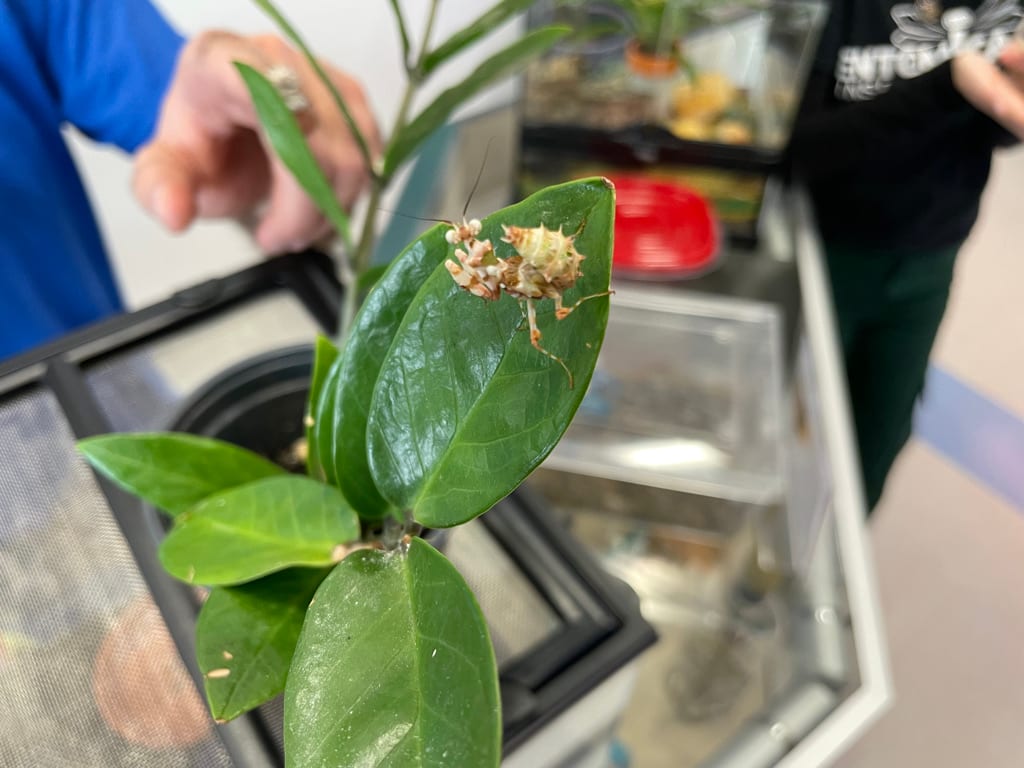
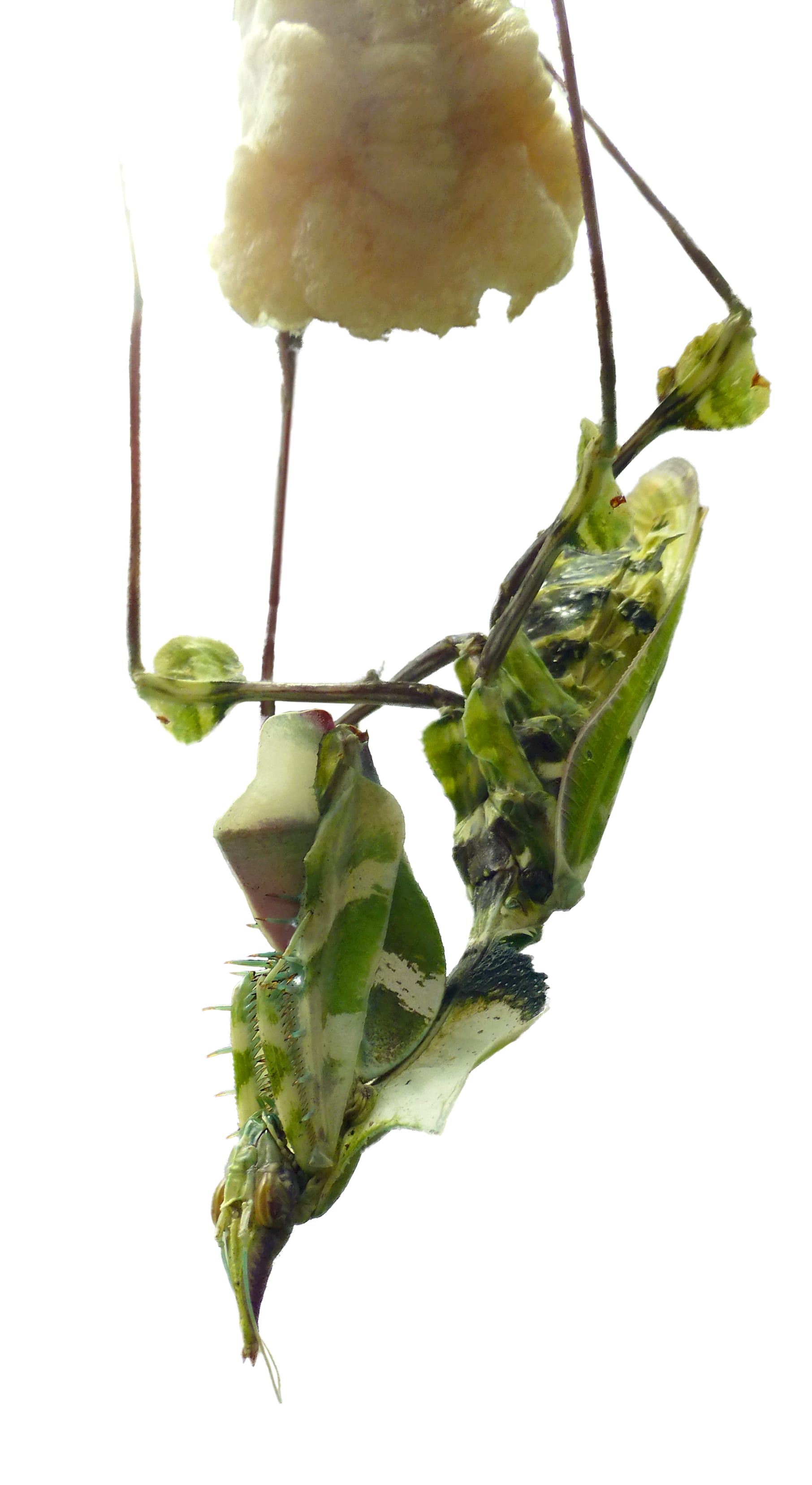
An East African species and one of the largest flower-mimicking mantises. Adults are striped white and green with red, blue and purple threat colours. Needs high heat, humidity with ventilation and a flies-only diet; the hardest mantis to keep.
Difficulty
Advanced
Lifespan
About 12 months (typical)
Size
Females about 13cm, males about 10cm
Humidity
60〜80%
Diet
Flying insects only such as flies and moths (fruit flies for nymphs)
About
The devil's flower mantis (Idolomantis diabolica) is a large empusid from East Africa, from Ethiopia to Tanzania, and the only species in its genus. Females reach about 13cm and males about 10cm, making it the largest flower-mimicking mantis. Nymphs are dead-leaf coloured, while adults turn white with green stripes and flash red, white, blue, purple and black on the forelegs and wings when threatened. In the wild it takes only flying insects such as butterflies and flies. Captive care requires daytime temperatures of 32-40C with high humidity and plenty of ventilation, and food limited to flies and moths. It is skittish, easily stressed by disturbance or too many prey insects, and whole groups are often lost to moulting failures. It cannot walk on glass, so use mesh cages or enclosures with many branches. Males mature after about seven moults and females after eight; an ootheca holds 10-50 eggs and hatches in roughly 50 days. Its difficulty and price make it a prestige species, with thousands traded in Europe and North America each year.
Source: Wikipedia (CC BY-SA 4.0)
Lifespan of the Devil's Flower Mantis
The Devil's Flower Mantis lives About 12 months (typical).
Size of the Devil's Flower Mantis
The Devil's Flower Mantis grows to Females about 13cm, males about 10cm.
Basic Info
Origin
Ethiopia, Kenya, Malawi, Somalia, Tanzania, South Sudan, Uganda
Lifespan
About 12 months (typical)
Size
Females about 13cm, males about 10cm
Care Specifications
PeacefulGroupBreeding: Very hard
Sources: Keeping Insects - Devils Flower Mantis / Idolomantis - Wikipedia (EN)
References & Sources
Edited & verified by: BreederDirect editorial team
The taxonomic, regulatory, and husbandry data on this page are compiled and verified against the authoritative primary sources below.
Taxonomy & Authority
Accepted name: Idolomantis diabolica (Saussure, 1869)
Authority databases: GBIF
Nomenclature follows global taxonomic authority databases.
Regulations & Conservation Status
Not CITES-listed
Sources: CITES Appendix (checklist.cites.org)
Regulations may change. Always verify the latest information with the relevant authorities.
Devil's Flower Mantis Listings
Loading latest listingsFind listings for this species