Source: Wikimedia Commons
Thorny Devil Stick Insect
IntermediateEurycantha calcarata
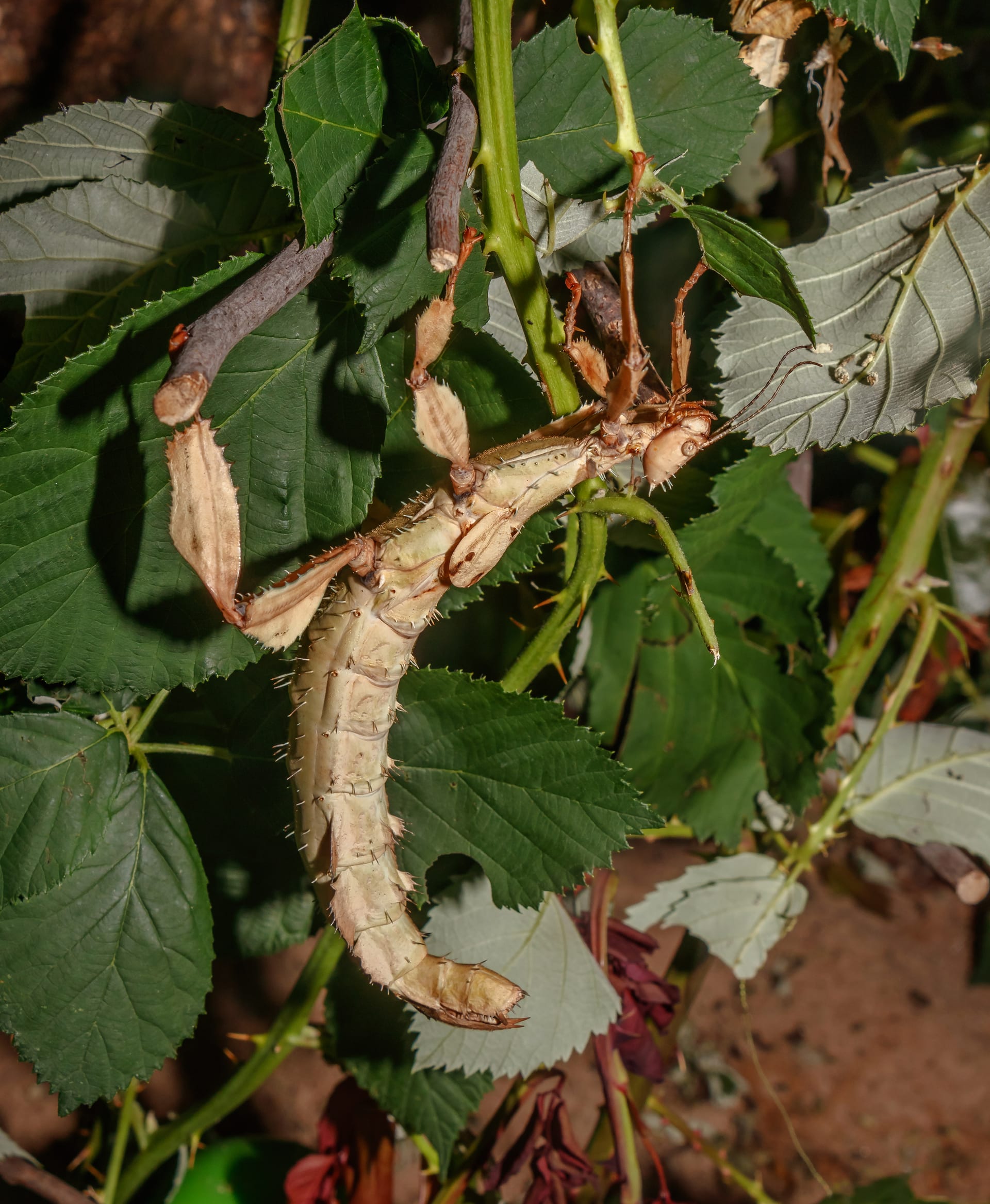
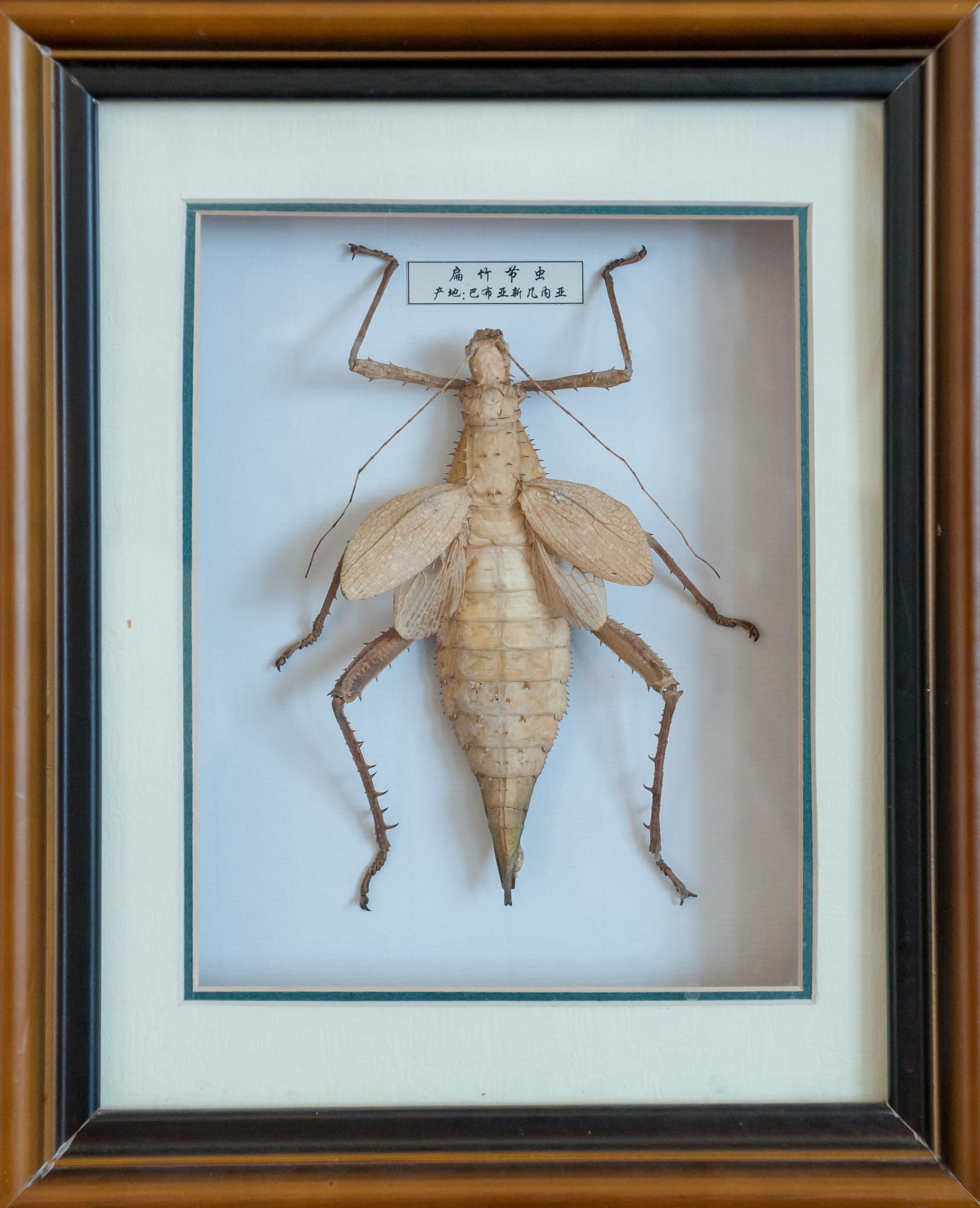
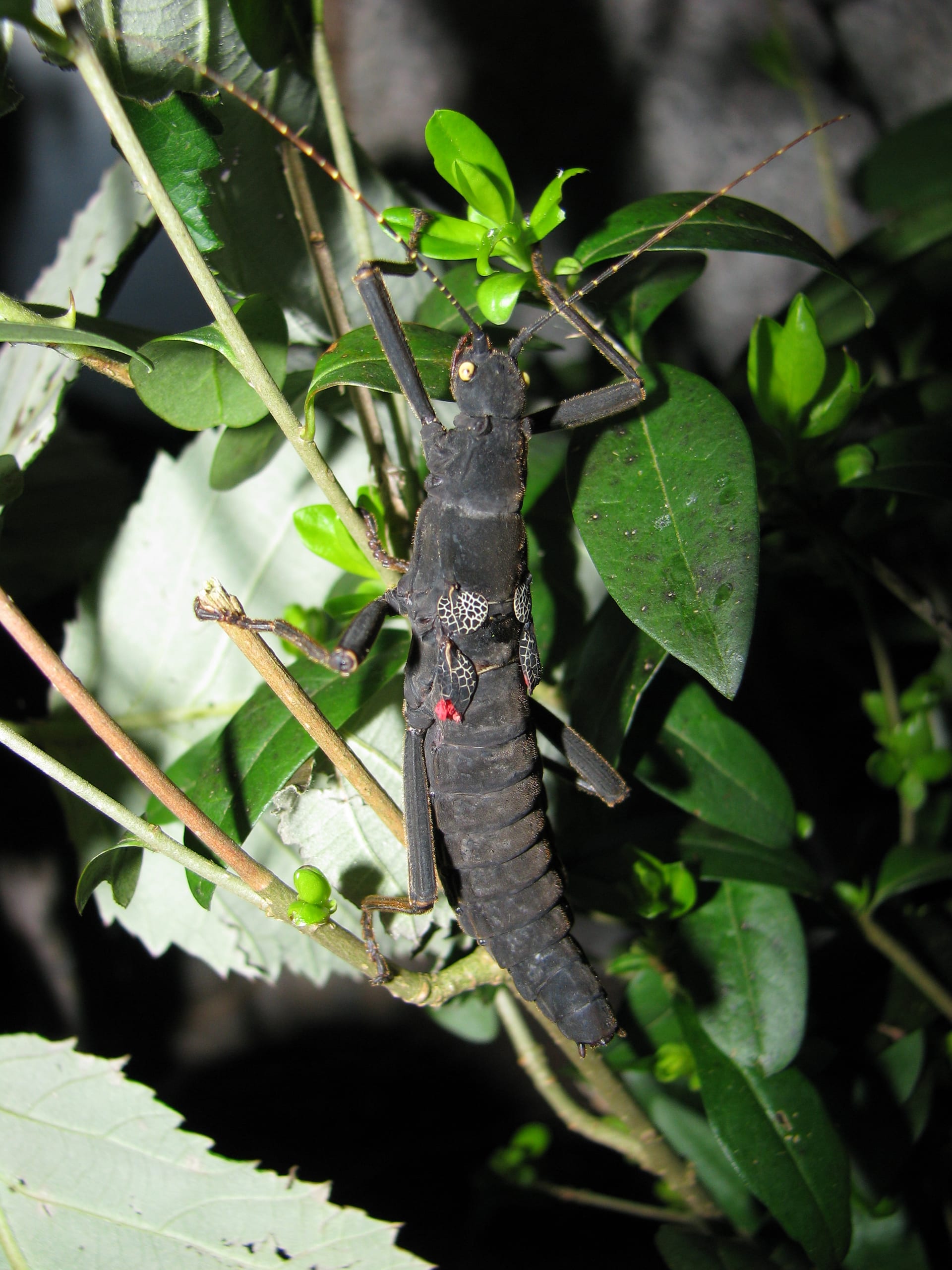
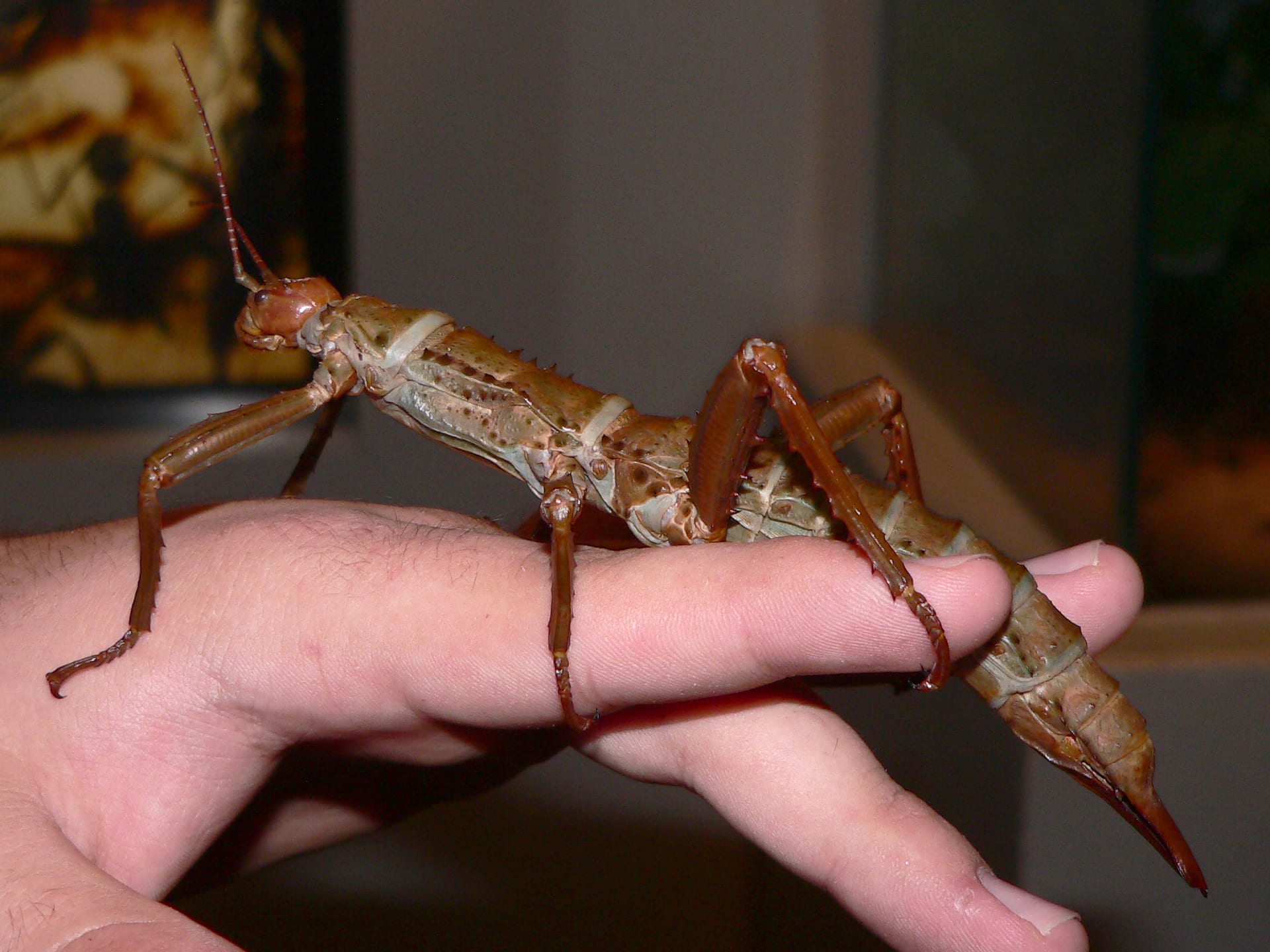
A large stick insect of New Guinea, New Caledonia and the Solomon Islands, looking like bark or rotten wood. Both sexes are wingless and armoured with spines, and the curved thorn on the male's swollen hind femur is large enough to serve as a fish hook.
Difficulty
Intermediate
Temperature
20〜28℃
Lifespan
Adults 1-2 years
Size
Males under 9-10cm, females about 14cm
Humidity
60〜80%
Diet
The leaves of eucalyptus, ficus, bramble, raspberry, rose, cherry laurel and guava
About
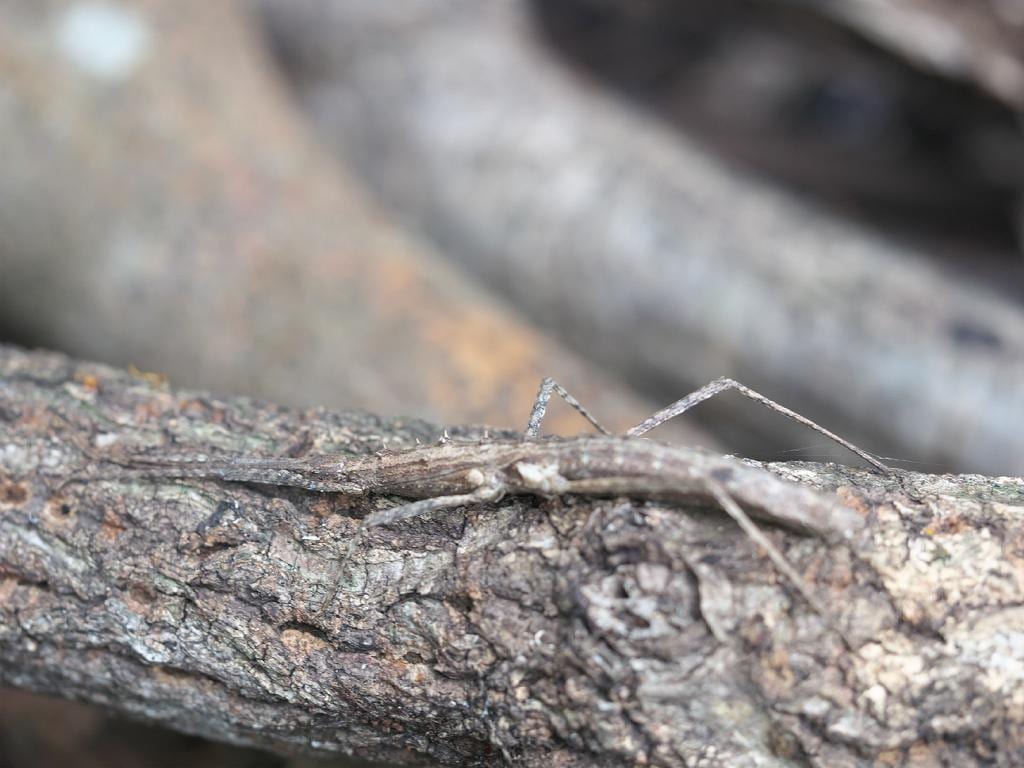
Eurycantha calcarata occurs in New Guinea, New Caledonia and the Solomon Islands. Its typical habitat is warm, humid rainforest, where it is found in foliage and in ground litter. Colour runs from light brown to black, and the insect resembles bark or rotten wood. Both sexes are wingless and armoured with spines on the body and legs. Males are small and slender at under 9-10cm while females are typically 14cm. The male's hind femur is enlarged and carries a curved thorn beneath, large enough to be used as a fish hook in New Guinea. Only the female has the larger abdomen, tipped with an ovipositor. It feeds at night and groups together by day under bark and in tree hollows for protection, and like other stick insects it evades predators by crypsis and catalepsy.
Source: Wikipedia (CC BY-SA 4.0)
Lifespan of the Thorny Devil Stick Insect
The Thorny Devil Stick Insect lives Adults 1-2 years.
Size of the Thorny Devil Stick Insect
The Thorny Devil Stick Insect grows to Males under 9-10cm, females about 14cm.
Basic Info
Origin
New Guinea, New Caledonia and the Solomon Islands
Lifespan
Adults 1-2 years
Size
Males under 9-10cm, females about 14cm
Temperature
20〜28℃
Care Specifications
PeacefulSolitaryBreeding: Moderate
Sources: Wikipedia (en): Eurycantha calcarata / GBIF: Eurycantha calcarata Lucas, 1869 / Stick insects - Wikipedia (JA); life cycle and lifespan / Plant Protection Station, MAFF Japan: import of insects and microorganisms
References & Sources
Edited & verified by: BreederDirect editorial team
The taxonomic, regulatory, and husbandry data on this page are compiled and verified against the authoritative primary sources below.
Taxonomy & Authority
Accepted name: Eurycantha calcarata Lucas, 1869
Authority databases: GBIF
Nomenclature follows global taxonomic authority databases.
Regulations & Conservation Status
Not CITES-listed
Plant Protection Act: The import of insects, foreign stick insects included, is regulated under Japan's Plant Protection Act, and whether a given species may enter depends on the country it comes from. What circulates in Japan is captive-bred stock.
Sources: CITES Appendix (checklist.cites.org) / Plant Protection Station, MAFF Japan: import of insects and microorganisms
Regulations may change. Always verify the latest information with the relevant authorities.
Thorny Devil Stick Insect Listings
Loading latest listingsFind listings for this species