Exotic Beetle Comparison Guide | Breeding and Charm of Caucasus Beetles, Atlas Beetles, and Elephant Beetles
A comprehensive comparison of popular large exotic beetles other than Hercules—Caucasus beetles, Atlas beetles, and elephant beetles—covering their characteristics, breeding difficulty, and larval rearing methods. A beginner's guide to exotic beetle keeping.
Key Takeaways
A comprehensive comparison of popular large exotic beetles other than Hercules—Caucasus beetles, Atlas beetles, and elephant beetles—covering their characteristics, breeding difficulty, and larval rearing methods. A beginner's guide to exotic beetle keeping.
Related Species
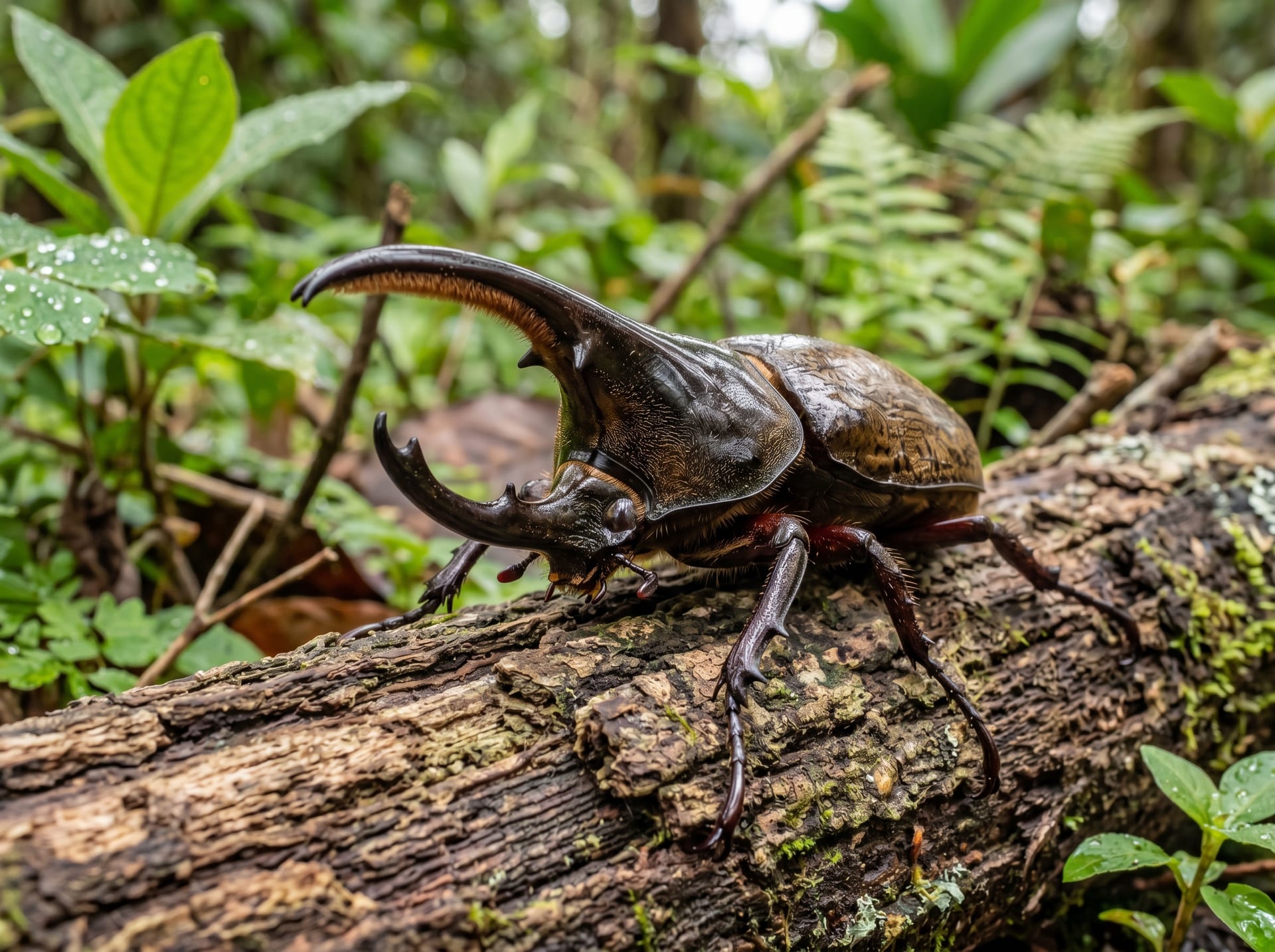
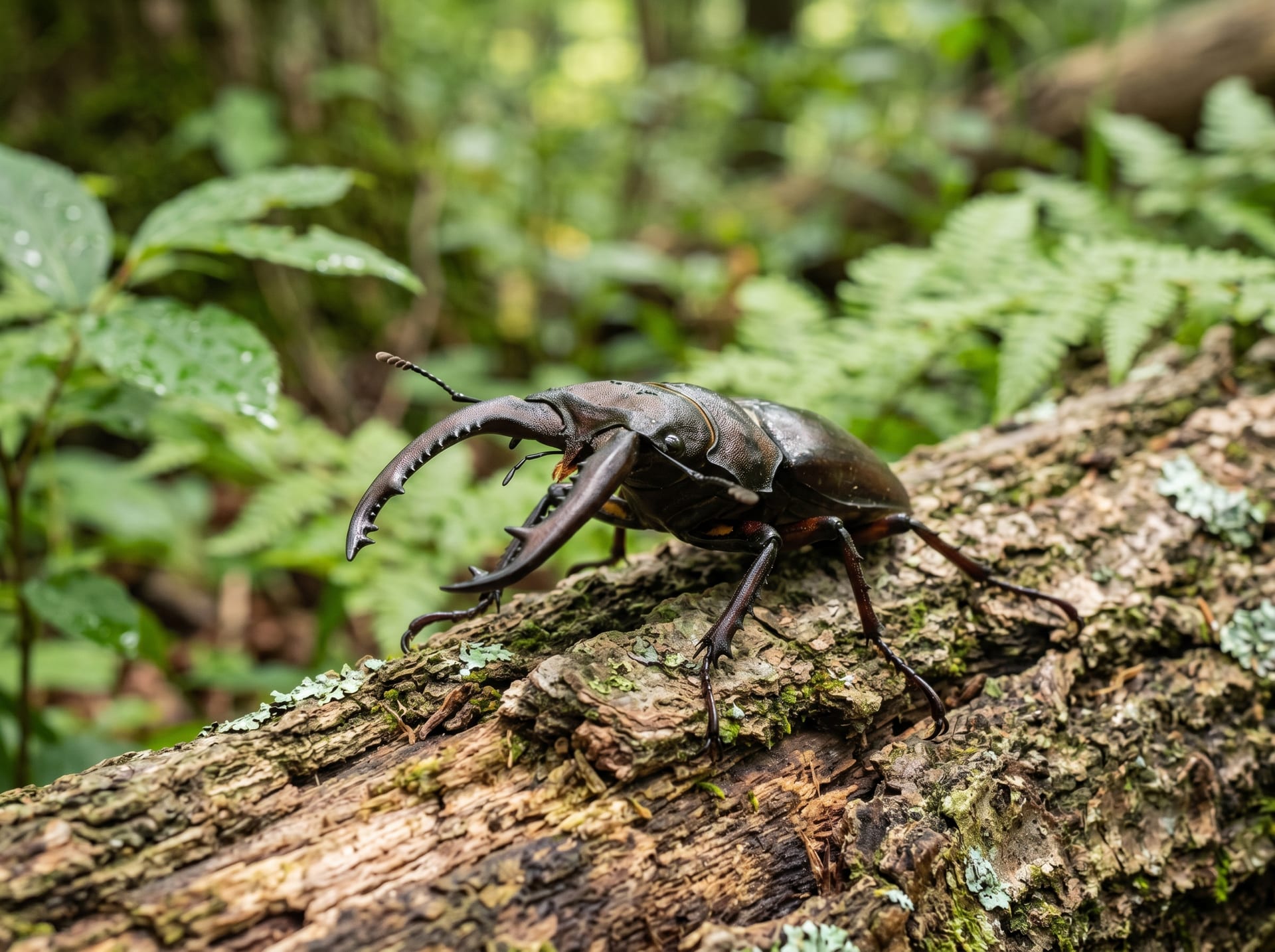
When it comes to breeding exotic beetles, the Hercules beetle is the most famous, but there are many other fascinating large beetles. This article covers three popular exotic beetles in Japan—the Caucasus beetle, Atlas beetle, and elephant beetle—providing a detailed comparison of their characteristics, breeding methods, and how to obtain them.
Caucasus Beetle (Chalcosoma caucasus)
The Caucasus beetle is a large beetle found throughout Southeast Asia (Indonesia, Malaysia, Thailand, and others) and is characterized by its three long horns (two thoracic horns + one head horn).
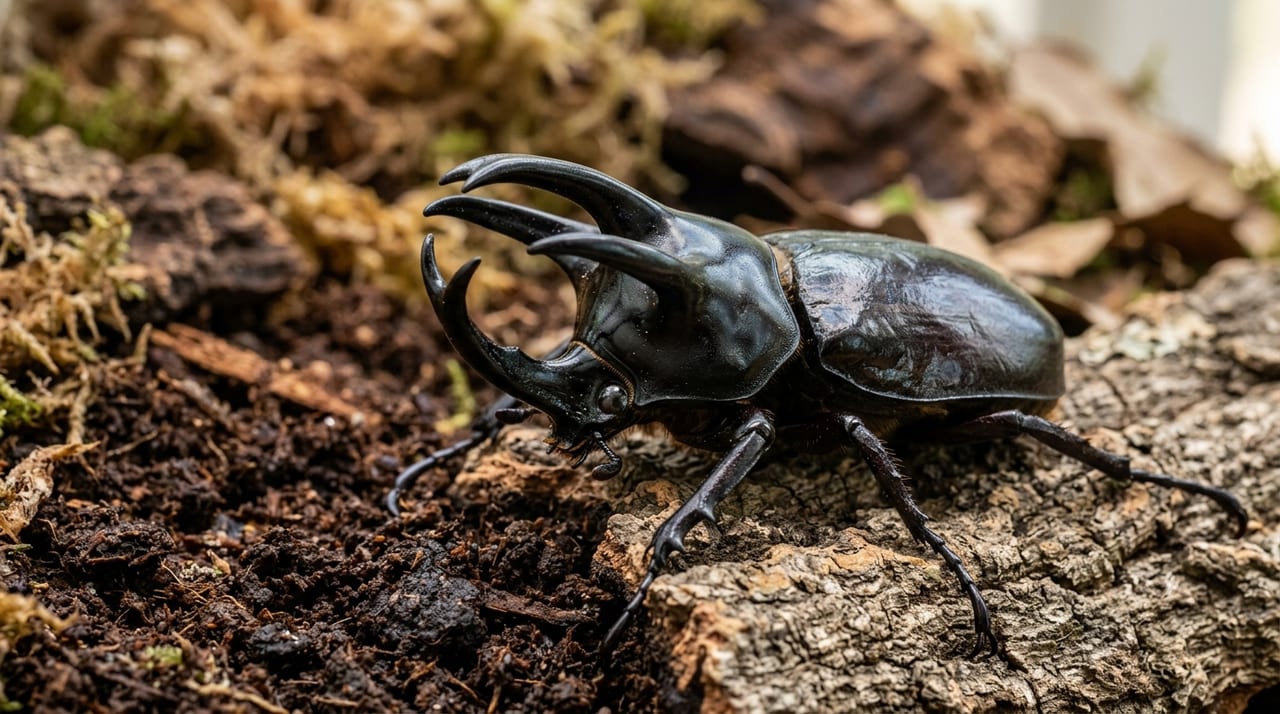
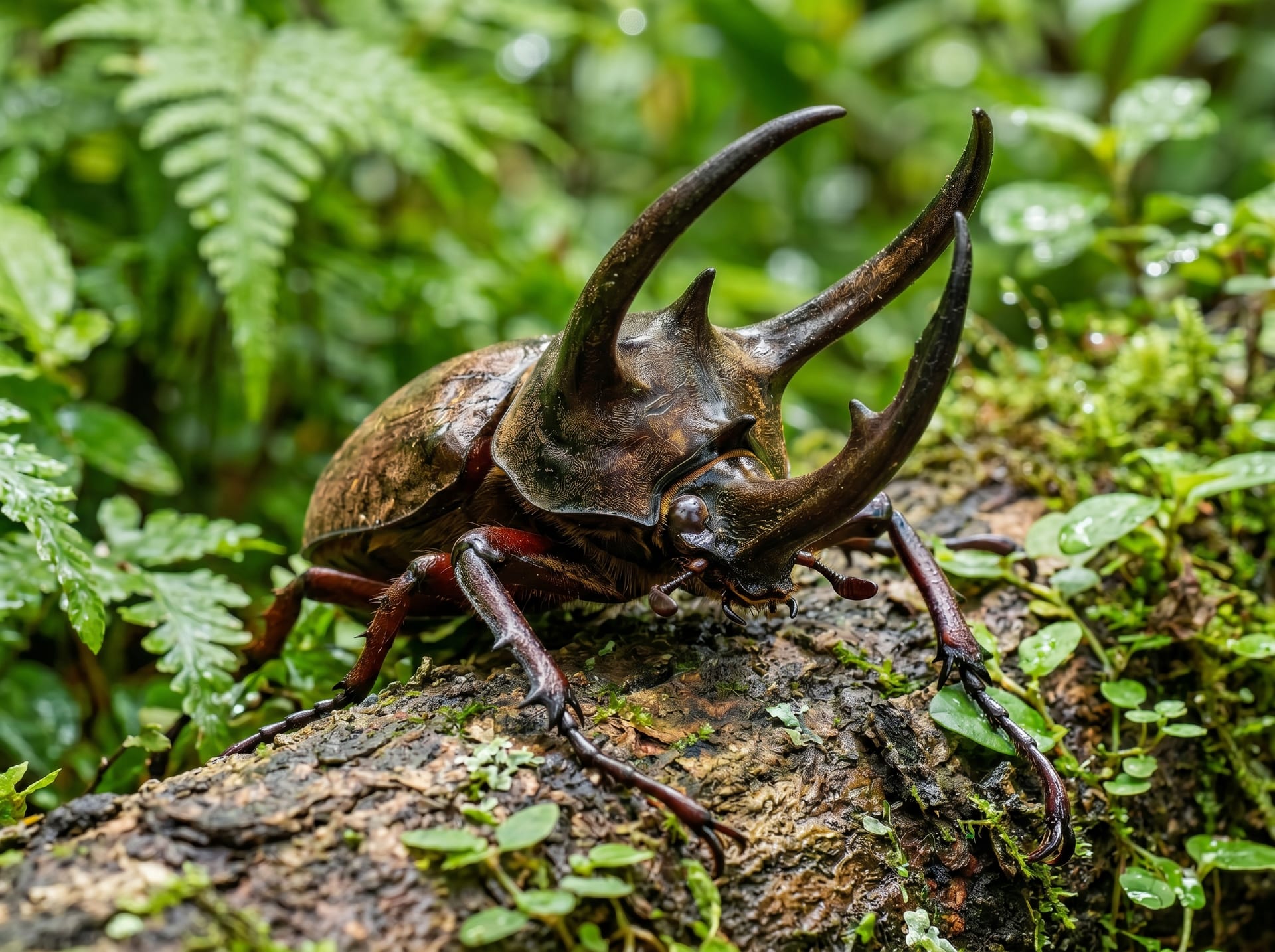
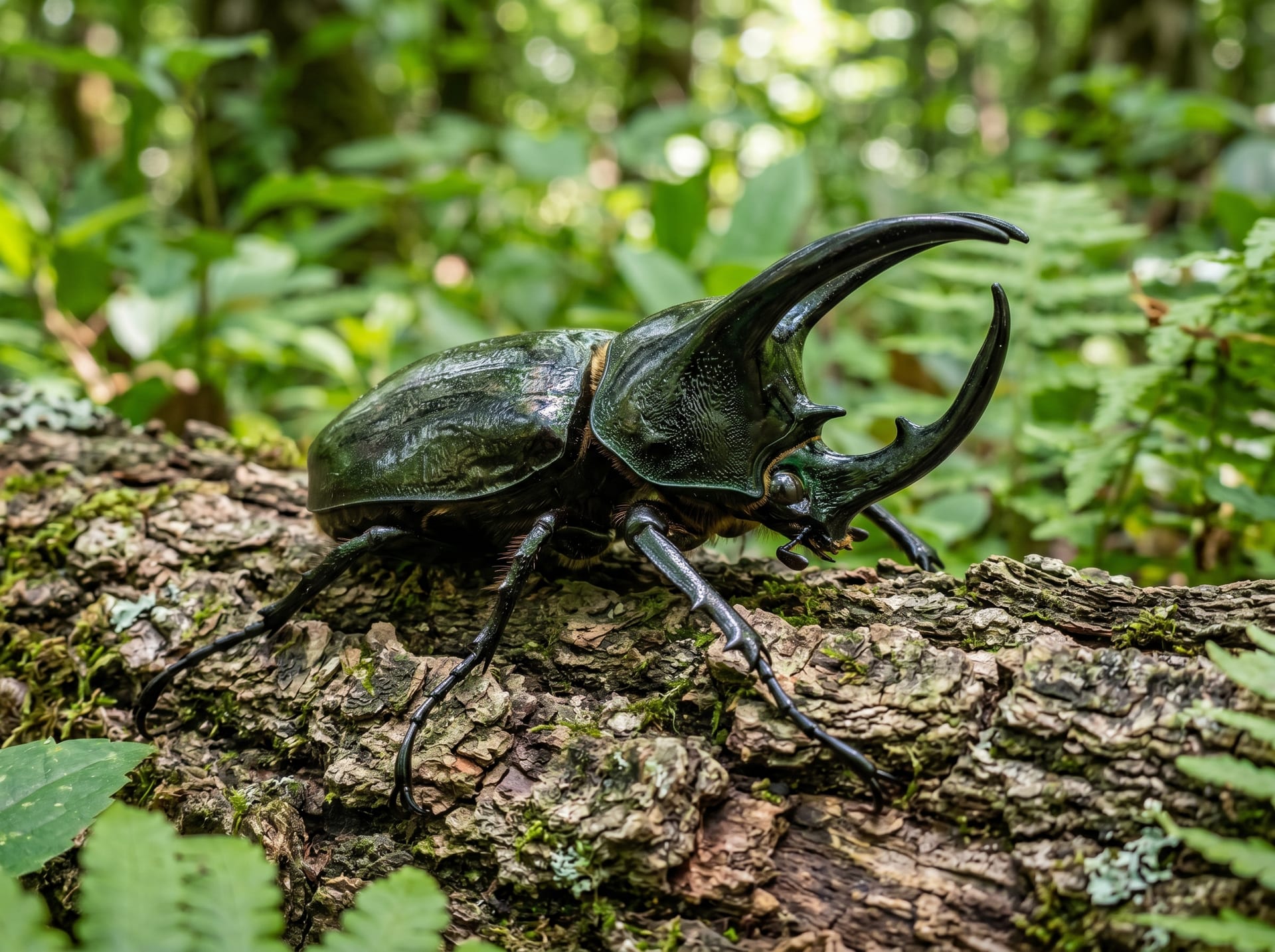
Size and Appearance: Males reach 60–100mm or more in total length, with large individuals sometimes exceeding 100mm. Their shiny black bodies with long horns extending from them are truly striking, and they are sometimes called the "strongest beetles in the world." Horn shape and length vary between individuals and subspecies.
Breeding Difficulty: Moderate to somewhat challenging. While adults themselves are not difficult to keep, the larval rearing period is long (approximately 2–3 years), requiring patience and skill in larval management.
Adult Breeding Environment: The ideal temperature range is 25–28°C. Because they are large beetles, a container of 60cm or larger is recommended. They are highly aggressive, and fights between multiple individuals (especially males) can be intense, making solitary housing basically preferable. The key to longevity is replacing beetle jelly daily with fresh portions and providing adequate nutrition.
Larval Rearing: They prefer fermented substrate, though their suitability for fungal medium (used for stag beetles and saw beetles) varies by species. For Caucasus beetles, fermented substrate is the standard, and pupae become delicate as they near the adult stage. Care must be taken to avoid vibrations or temperature fluctuations from pupation chamber construction until emergence.
Atlas Beetle (Chalcosoma atlas)
The Atlas beetle also belongs to the same genus (Chalcosoma) as the Caucasus beetle and is distributed across a wide region of Southeast Asia. While similar in appearance to the Caucasus beetle, it differs in several ways.
Size and Appearance: Males are approximately 50–90mm in total length, generally somewhat smaller than Caucasus beetles. The horn shape differs from Caucasus beetles in the ratio and curvature of the thoracic and head horns, making them distinguishable with familiarity. Body color varies from black to black with a slight reddish tint.
Breeding Difficulty: Moderate. They can be managed with care methods similar to Caucasus beetles, though Atlas beetles are considered relatively easy to keep and are sometimes introduced as a beginner species for exotic large beetles.
Adult Breeding Environment: The ideal temperature is around 25–27°C, similar to Caucasus beetles. They are also aggressive, making solitary housing essential. Never house Caucasus and Atlas beetles together, as this will result in intense fighting.
Breeding: Egg-laying occurs in a container filled with fermented substrate to a depth of 30cm or more. Males and females are housed together for pairing, then the female is moved to a separate egg-laying container. Larvae hatching from eggs are translucent white and are managed with appropriate fermented substrate.
Giant Beetles (Large species other than Hercules beetles)
Actually, "giant beetle" does not refer to a single insect species but is sometimes used broadly to include beetles of the Golofa genus found in Africa. In Japan, however, "giant beetle" often refers to medium to large species in the Boeing genus or more broadly the Dynastes genus. Here we discuss the elephant beetle (Megasoma elephas), which originates from South America.
Elephant Beetle (Megasoma elephas): A large beetle distributed from Mexico through northern South America. It reaches 60–100mm or more in total length and is characterized by thick, short horns and a body covered in hair. While the horns are shorter compared to Hercules and Caucasus beetles, its stocky build gives it a distinctive presence.
Breeding Difficulty: Somewhat challenging. Adults have a relatively short lifespan (approximately 3–6 months) and breeding is labor-intensive. Larvae grow very large (200g or more) and consume substantial quantities of fermented substrate. The ideal breeding temperature is 22–26°C, and they tend to be sensitive to high temperatures.
Notes on Purchasing and Keeping Exotic Beetles
CITES (Convention on International Trade in Endangered Species) Verification: The importation of exotic insects is subject to legal regulations. Certain species are prohibited from import and sale or require permits. It is important to verify before purchase that the individual is legally distributed.
Absolute Prohibition on Escape or Release: Exotic beetles become invasive species in domestic ecosystems. If proper management is neglected and captive individuals escape into the wild, there is potential for ecological impact. Always use secure locks on breeding containers, and if you must part with your beetles, seek an adoption center or find a foster home.
Breeding Responsibility and Respect for Life: Exotic large beetles are expensive to purchase and have long breeding periods. While the joy of raising them from larvae to emergence is extraordinary, maintaining responsible care until the end is essential.
BreederDirect handles transactions for insects, including exotic beetles. Obtain healthy individuals from trusted breeders and enjoy keeping them with proper knowledge.