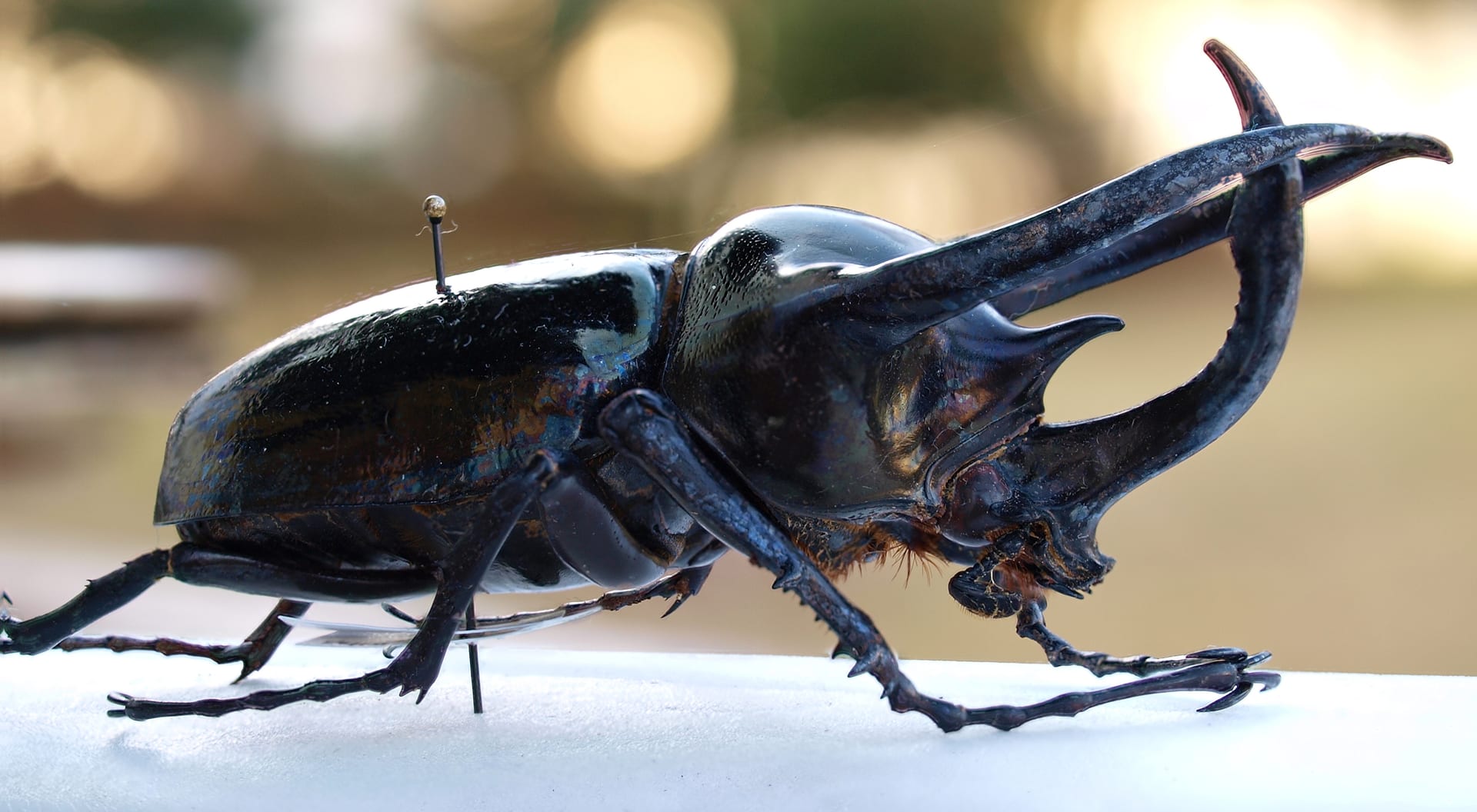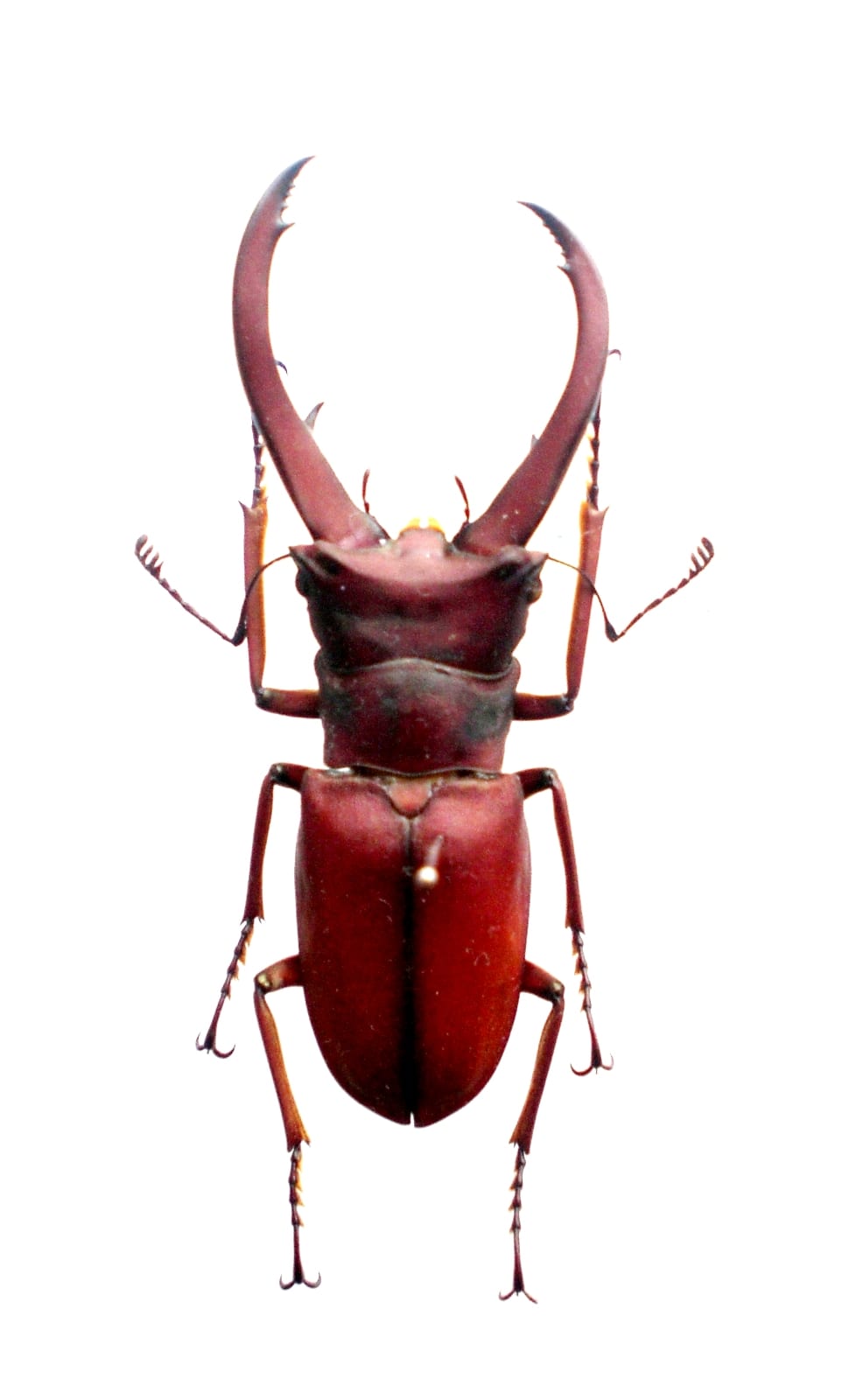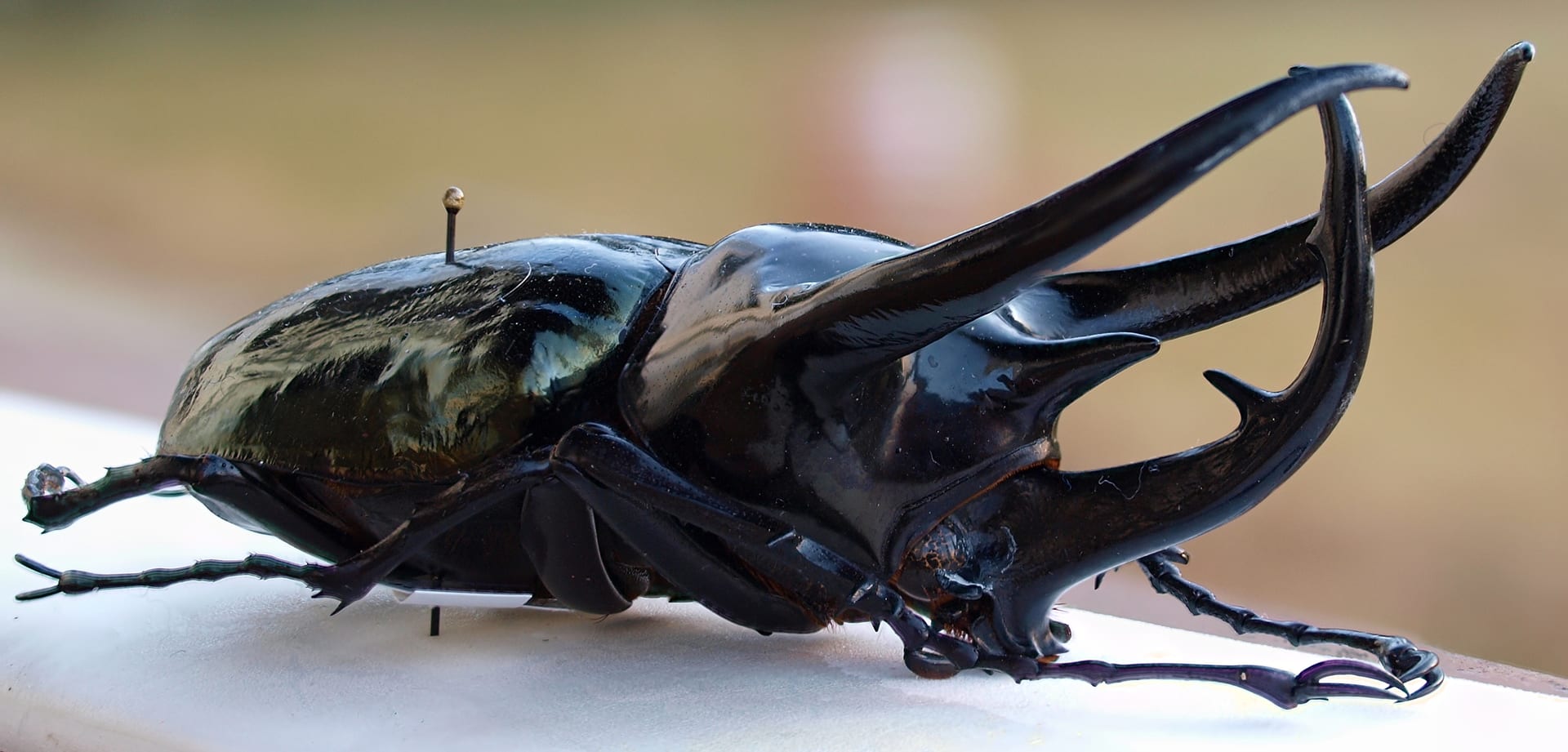
Source: Wikimedia Commons
Caucasus Beetle (belangeri)
IntermediateChalcosoma chiron belangeri
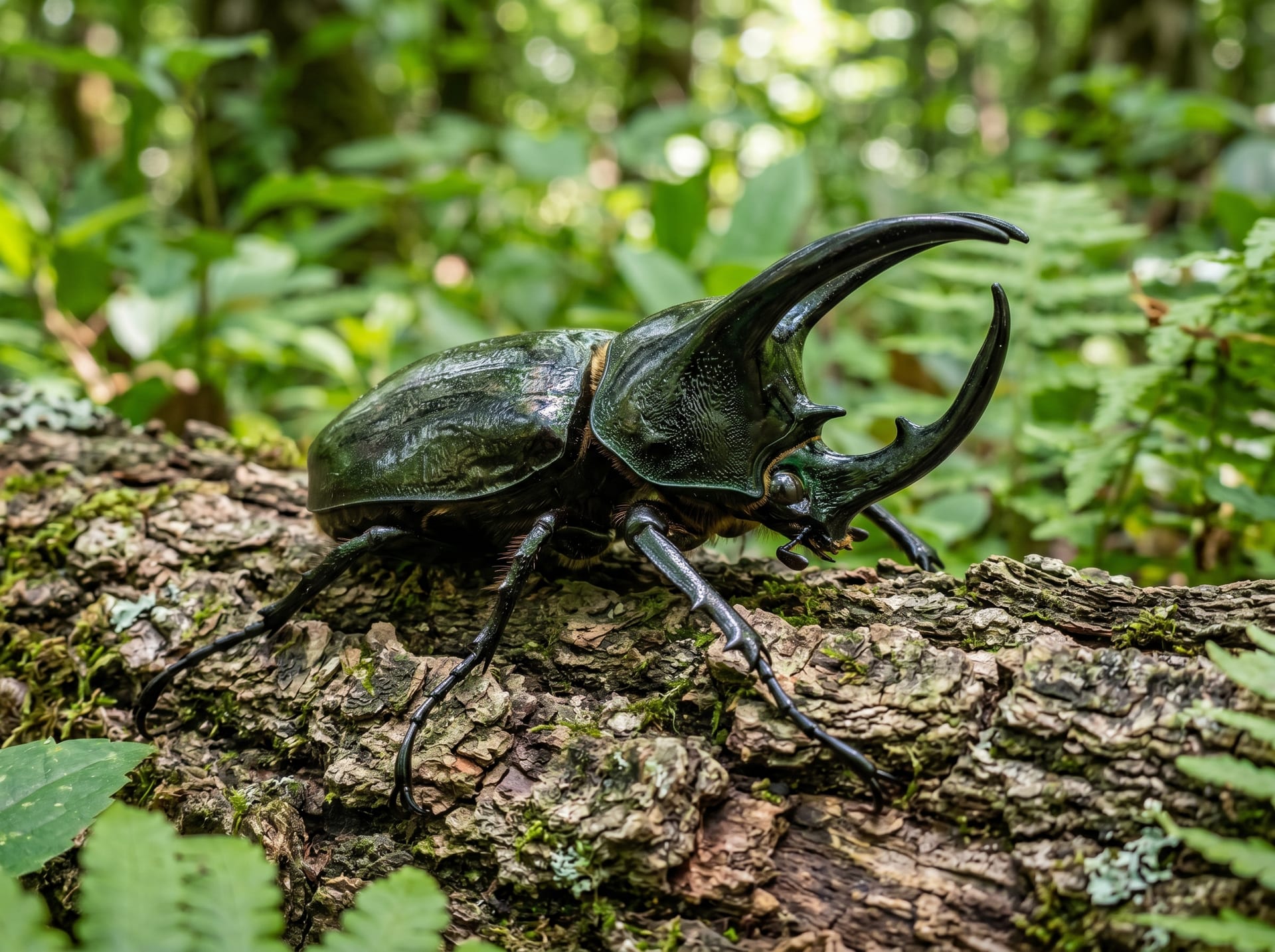
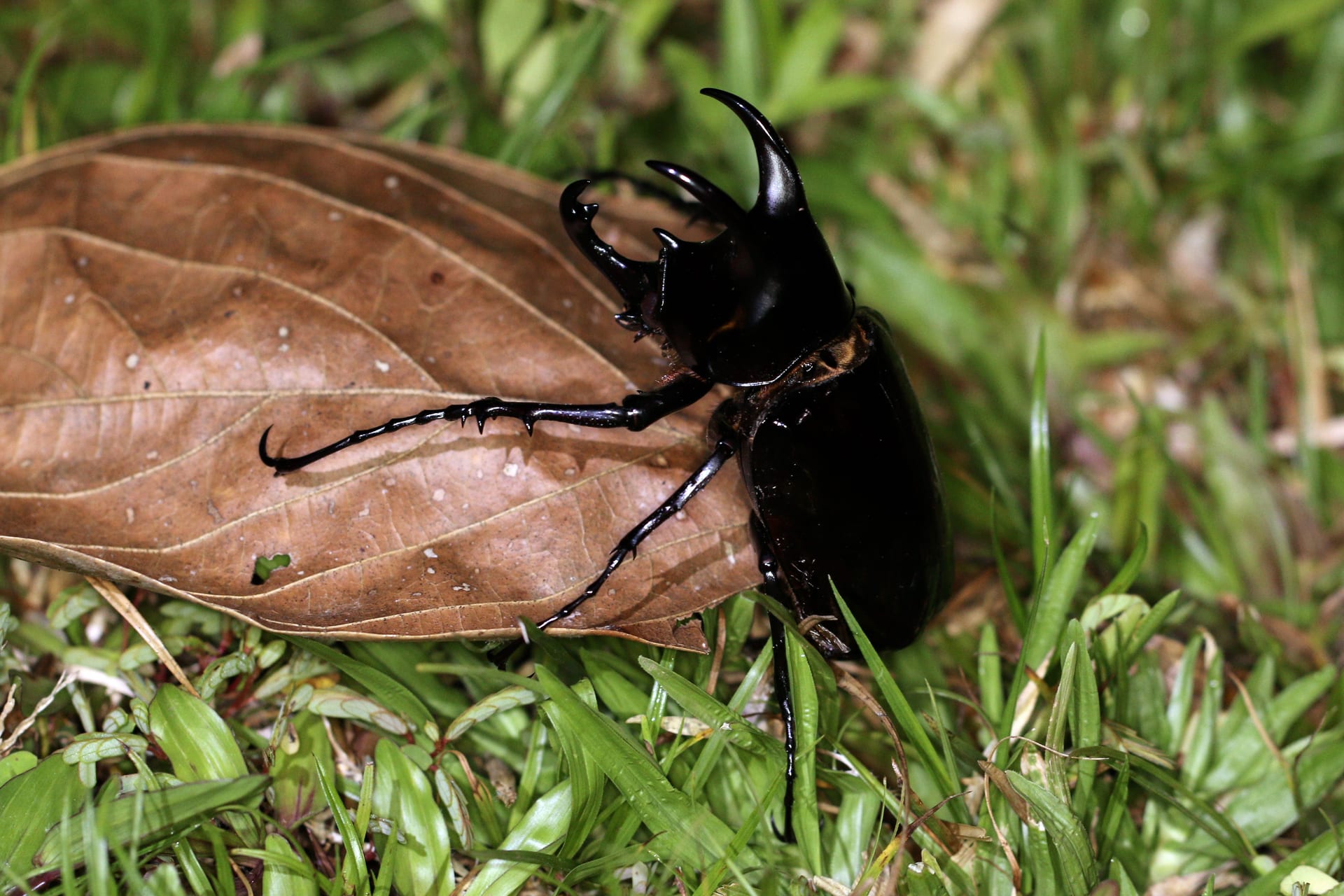
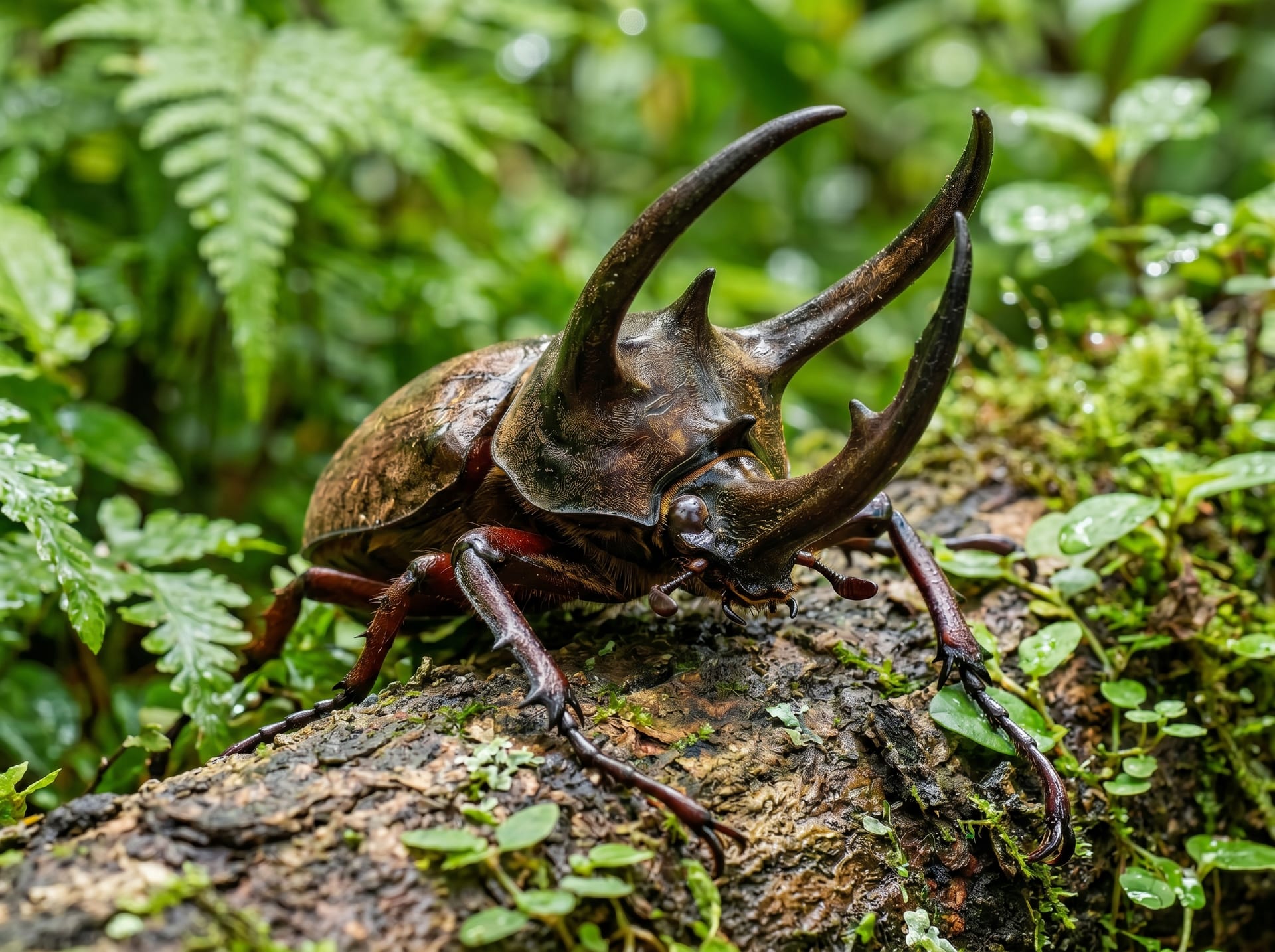
Continental subspecies of the Caucasus beetle from Indochina and Langkawi. One of Asia's largest three-horned beetles, with fairly thick, gently curved thoracic horns. Heat-sensitive and extremely combative.
Difficulty
Intermediate
Temperature
20〜25℃
Lifespan
Adults 3-4 months, larvae 1-2 years
Size
Males 55-127mm, females 55-65mm
Humidity
60〜80%
Diet
Beetle jelly (adults), fermented flake soil (larvae)
About
Chalcosoma chiron belangeri is the continental subspecies of the Caucasus beetle, found in Indochina and on Langkawi Island and known to Japanese hobbyists as the 'Tairiku' (mainland) Caucasus. Males measure 55-127mm and females 55-65mm; in size and form it resembles the Malayan subspecies kirbyi, with fairly thick, gently curved thoracic horns. The species inhabits tropical highland forest at 800-2,000m, is the largest Chalcosoma and, with Hercules, is called the strongest beetle in the world. Its aggression stands out even among giant beetles: males attack not only rivals but also females that refuse to mate, so both sexes are housed singly and pairings are brief and supervised. Larvae are also combative and bite hard. Being a highland insect it dislikes heat; the ideal is given as 15-20C, or about 25C by specialist shops, and either way it cannot survive a Japanese summer without air conditioning. Adults live up to about six months in captivity and larvae take 1-2 years, often emerging as short-horned adults despite large bodies. The BE-KUWA 2025 captive record for the mainland form is 129.4mm (2025), with Sumatra 118.5mm, Malay 128.1mm and the nominate form 119.6mm registered separately.
Source: Wikipedia (CC BY-SA 4.0)
Lifespan of the Caucasus Beetle (belangeri)
The Caucasus Beetle (belangeri) lives Adults 3-4 months, larvae 1-2 years.
Size of the Caucasus Beetle (belangeri)
The Caucasus Beetle (belangeri) grows to Males 55-127mm, females 55-65mm.
Temperature & humidity for the Caucasus Beetle (belangeri)
The ideal temperature for the Caucasus Beetle (belangeri) is 20〜25℃.
Basic Info
Care Specifications
AggressiveSolitaryBreeding: Moderate
Sources: Tsukiyono Kinokoen rearing manual (Chalcosoma chiron) / Wikipedia (ja): Chalcosoma chiron / Wikipedia (en): Chalcosoma chiron
Breeding Records & Localities
Captive record (♂)
129.4 mm
Record source: BE-KUWA 2025 edition (Caucasus, mainland form, captive 129.4mm, Seitetsu Fujii, 2025; total length incl. horn)
Notable localities
ThailandVietnamLangkawi Island
Regional subspecies
- Chalcosoma chiron chiron(nominate subspecies) — Java
- Chalcosoma chiron janssensi — Sumatra and Nias
- Chalcosoma chiron kirbyi — Malay Peninsula
- Chalcosoma chiron belangeri — Indochina and Langkawi
BE-KUWA registers records by locality: mainland 129.4mm, Malay 128.1mm, nominate 119.6mm and Sumatra 118.5mm in the 2025 edition. Lengths include the horn. The mainland form is uncommon; most trade stock is Javan, Sumatran or Malayan.
Generation codes
- WD
- Wild-caught
- WF1
- Offspring of a wild-caught female
- F1〜
- Captive generations (same locality)
- CBF1
- Cross-locality captive-bred (reset)
References & Sources
Edited & verified by: BreederDirect editorial team
The taxonomic, regulatory, and husbandry data on this page are compiled and verified against the authoritative primary sources below.
Taxonomy & Authority
Accepted name: Chalcosoma chiron belangeri (Guérin-Méneville, 1834)
Synonyms: Scarabaeus belangeri Guérin-Méneville, 1834, Chalcosoma caucasus belangeri
Authority databases: GBIF
Nomenclature follows global taxonomic authority databases.
Regulations & Conservation Status
Not CITES-listed
Plant Protection Act: Live Scarabaeoidea beetles (rhinoceros, stag and flower beetles) may be imported into Japan only with a species-name certificate issued by the exporting government under the Invasive Alien Species Act, and only through Narita, Chubu, Kansai, Fukuoka or Kagoshima airports. This species is not a designated invasive alien species and can be imported with the certificate.
Sources: Ministry of the Environment (Japan): Importing live Scarabaeoidea beetles / CITES Appendices (species not listed)
Regulations may change. Always verify the latest information with the relevant authorities.
Caucasus Beetle (belangeri) Listings
Loading latest listingsFind listings for this species