Source: Wikimedia Commons
Moellenkamp's Beetle
IntermediateChalcosoma moellenkampi
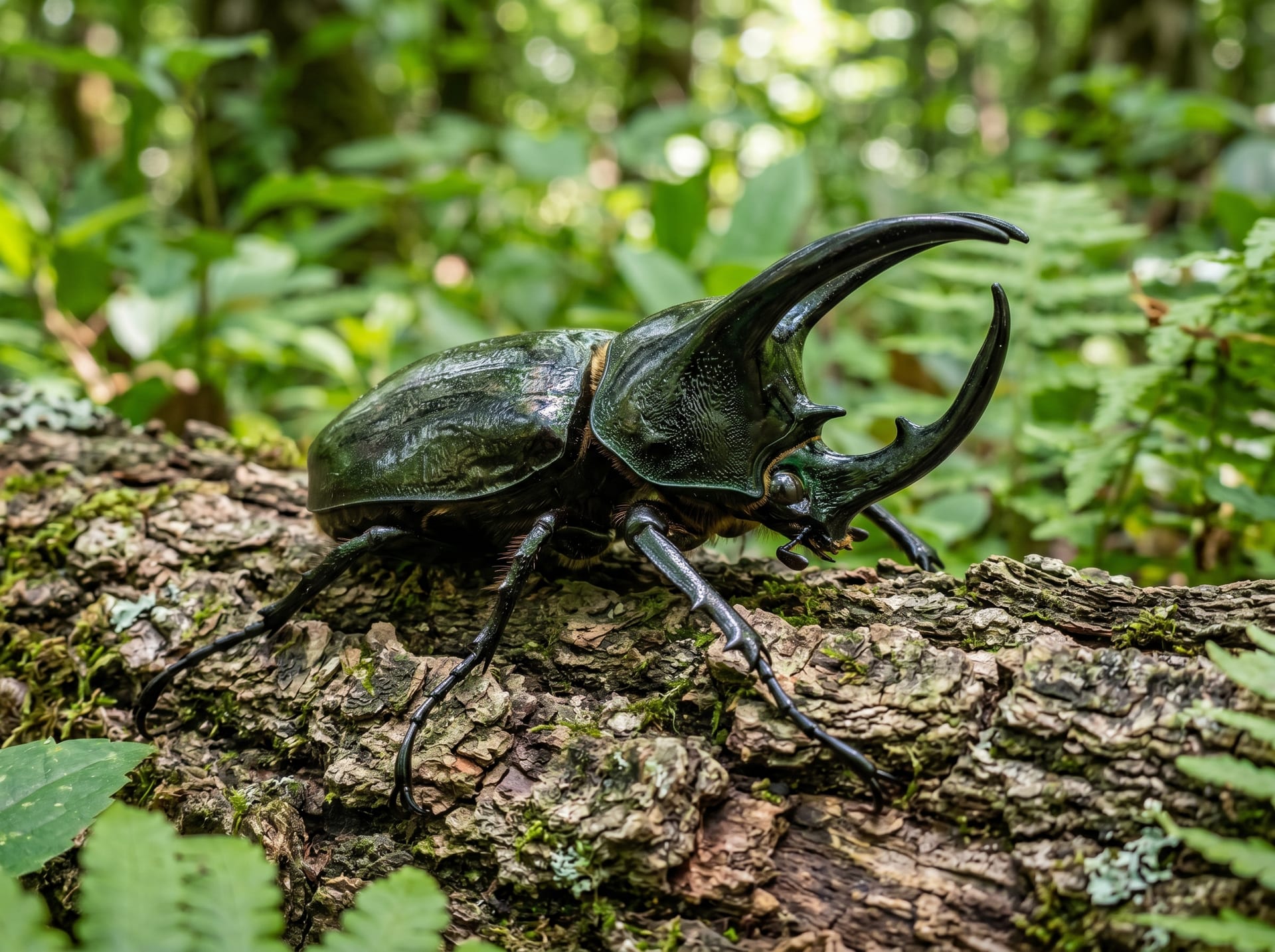
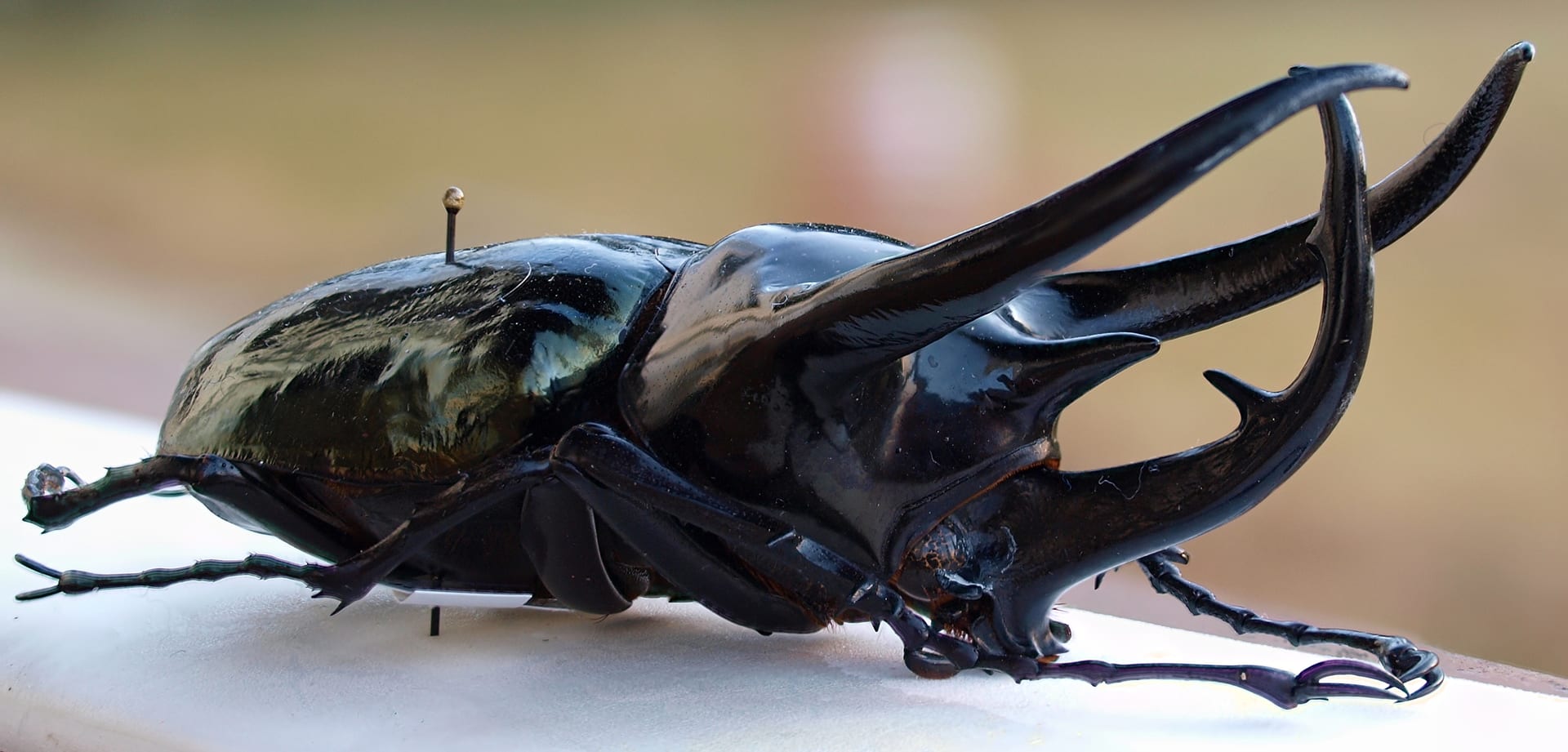
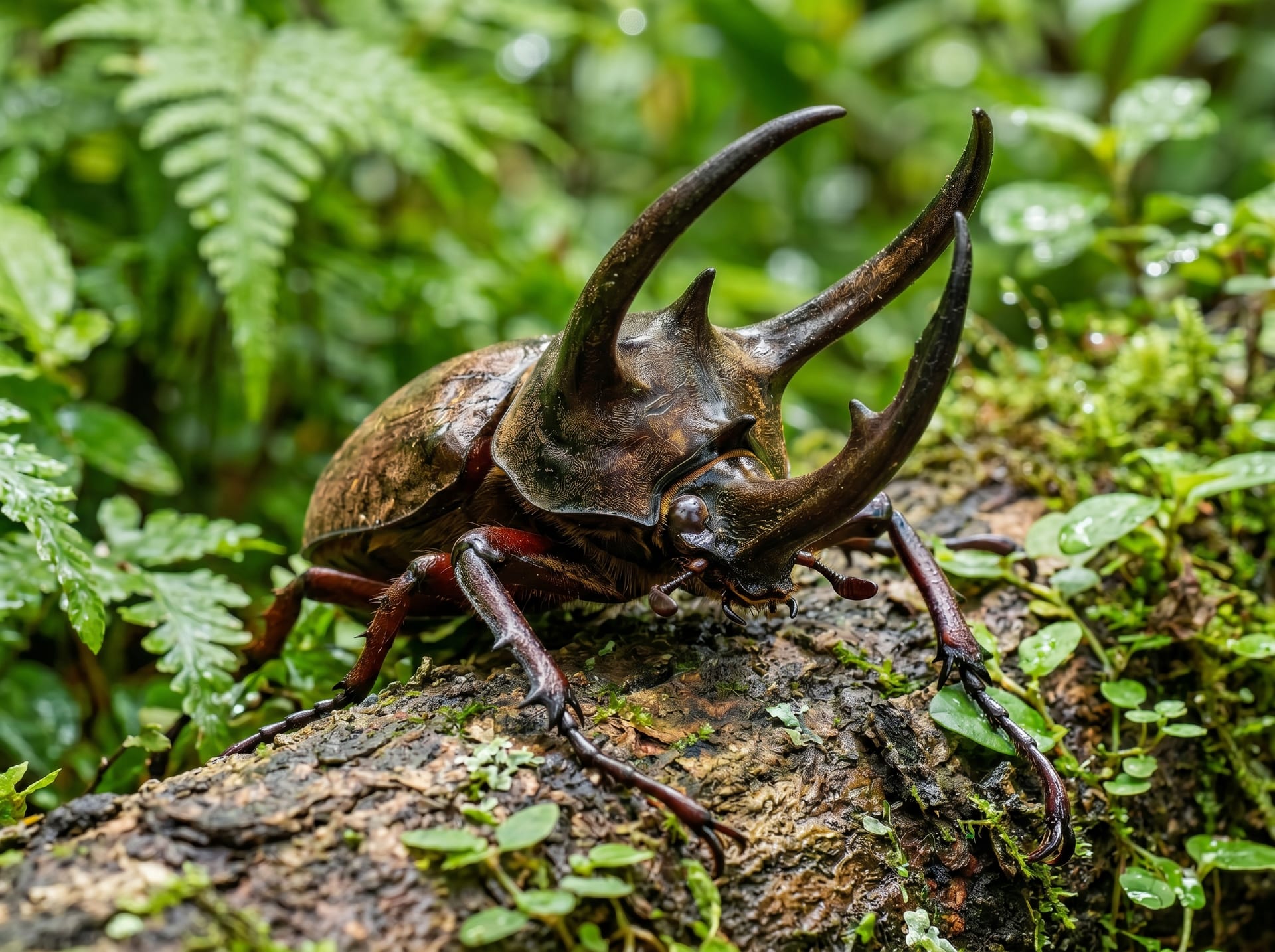
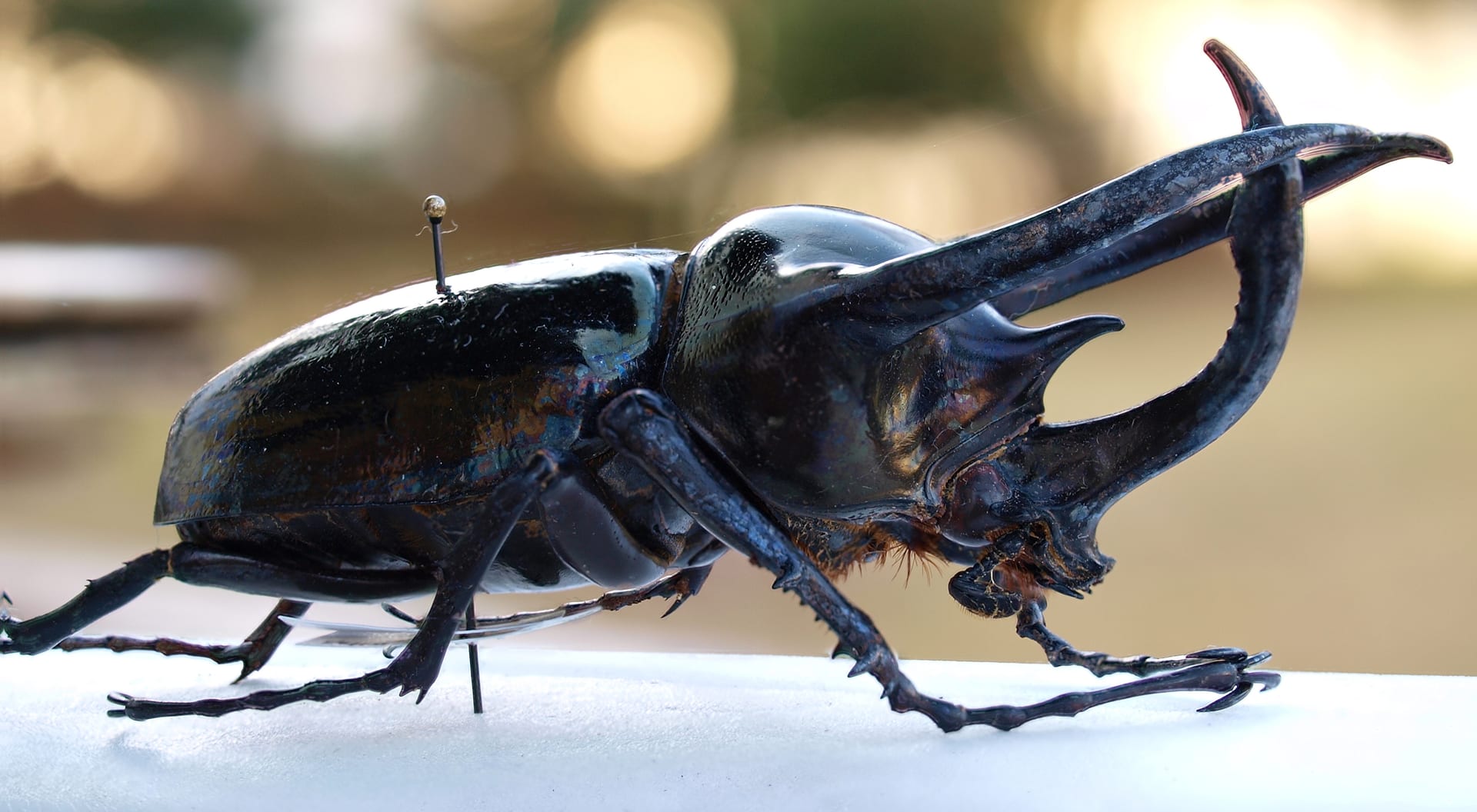
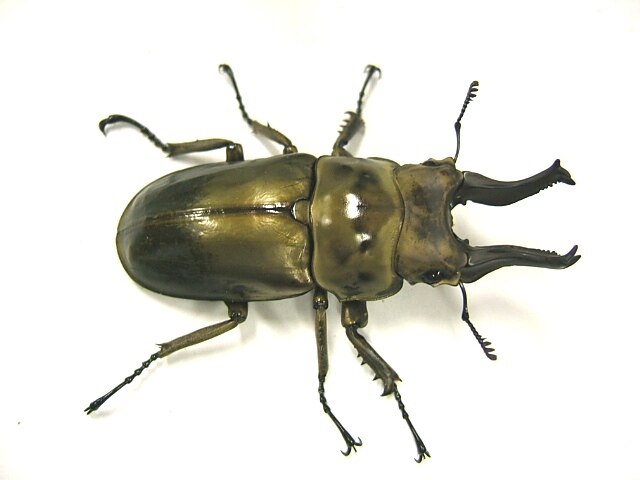
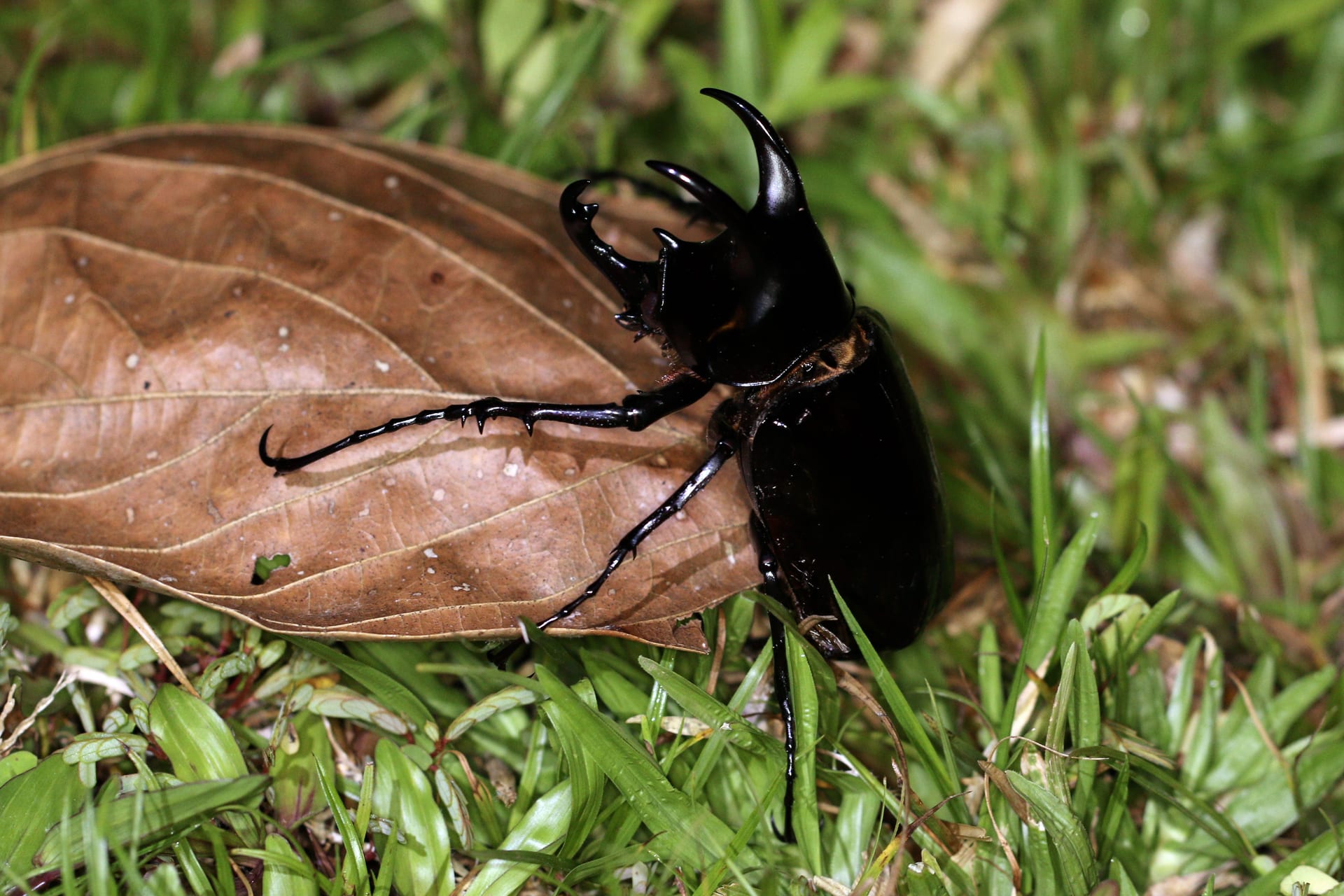
Three-horned rhinoceros beetle endemic to Borneo. Narrower and deeper-bodied than its congeners, with parallel thoracic horns. A highland species that dislikes heat and needs slightly cooler management.
Difficulty
Intermediate
Temperature
20〜25℃
Lifespan
Adults 6-12 months, larvae 14-18 months
Size
Males 60-115mm (rarely over 130mm), females 45-60mm
Humidity
60〜80%
Diet
Beetle jelly (adults), fermented flake soil (larvae)
About
Chalcosoma moellenkampi, also called the Borneo giant beetle, occurs only on Borneo, in highlands of 1,000-2,000m around Mount Kinabalu, where larvae feed in fallen and rotting wood and take about 18 months to mature. Males measure 60-115mm, rarely exceeding 130mm to the tip of the head horn, and females 45-60mm. The body is narrow and deep, and the thoracic horns run parallel from a triangular pronotum, which distinguishes it at a glance from the Caucasus and Atlas beetles; large males have a longer head horn without the terminal swelling or mid-horn teeth of those species. Collecting is restricted in national parks, so imports are limited. Care follows the other Chalcosoma, but as a highland species it is kept slightly cooler at 20-25C, and males may kill females, so adults are housed singly. Breeder logs give larval periods of 14-18 months for males and 14-16 months for females with an egg-laying period of 1.5-2 months. The BE-KUWA captive record is 107.3mm (2025), and as with all Chalcosoma, producing large long-horned males is the hard part.
Source: Wikipedia (CC BY-SA 4.0)
Lifespan of the Moellenkamp's Beetle
The Moellenkamp's Beetle lives Adults 6-12 months, larvae 14-18 months.
Size of the Moellenkamp's Beetle
The Moellenkamp's Beetle grows to Males 60-115mm (rarely over 130mm), females 45-60mm.
Temperature & humidity for the Moellenkamp's Beetle
The ideal temperature for the Moellenkamp's Beetle is 20〜25℃.
Basic Info
Origin
Borneo (highlands of 1,000-2,000m around Mount Kinabalu)
Care Specifications
AggressiveSolitaryBreeding: Moderate
Sources: Tsukiyono Kinokoen: rearing Chalcosoma moellenkampi larvae / Wikipedia (ja): Chalcosoma moellenkampi / Wikipedia (en): Moellenkampi beetle
Breeding Records & Localities
Captive record (♂)
107.3 mm
Record source: BE-KUWA 2025 edition (Moellenkampi, captive 107.3mm, Zheng Zhongren, 2025; total length incl. horn)
Notable localities
Borneo (around Kinabalu, Sabah)
Monotypic, with no subspecies. Collecting is restricted in the national parks of its range, so wild stock is scarce. Lengths include the horn.
Generation codes
- WD
- Wild-caught
- WF1
- Offspring of a wild-caught female
- F1〜
- Captive generations (same locality)
- CBF1
- Cross-locality captive-bred (reset)
Sources: BE-KUWA certified breeding records (Mushi-sha, 2025 edition)
References & Sources
Edited & verified by: BreederDirect editorial team
The taxonomic, regulatory, and husbandry data on this page are compiled and verified against the authoritative primary sources below.
Taxonomy & Authority
Accepted name: Chalcosoma moellenkampi Kolbe, 1900
Authority databases: GBIF
Nomenclature follows global taxonomic authority databases.
Regulations & Conservation Status
Not CITES-listed
Plant Protection Act: Live Scarabaeoidea beetles (rhinoceros, stag and flower beetles) may be imported into Japan only with a species-name certificate issued by the exporting government under the Invasive Alien Species Act, and only through Narita, Chubu, Kansai, Fukuoka or Kagoshima airports. This species is not a designated invasive alien species and can be imported with the certificate.
Sources: Ministry of the Environment (Japan): Importing live Scarabaeoidea beetles / CITES Appendices (species not listed)
Regulations may change. Always verify the latest information with the relevant authorities.
Moellenkamp's Beetle Listings
Loading latest listingsFind listings for this species