Source: Wikimedia Commons
Chilean Stag Beetle
AdvancedChiasognathus grantii
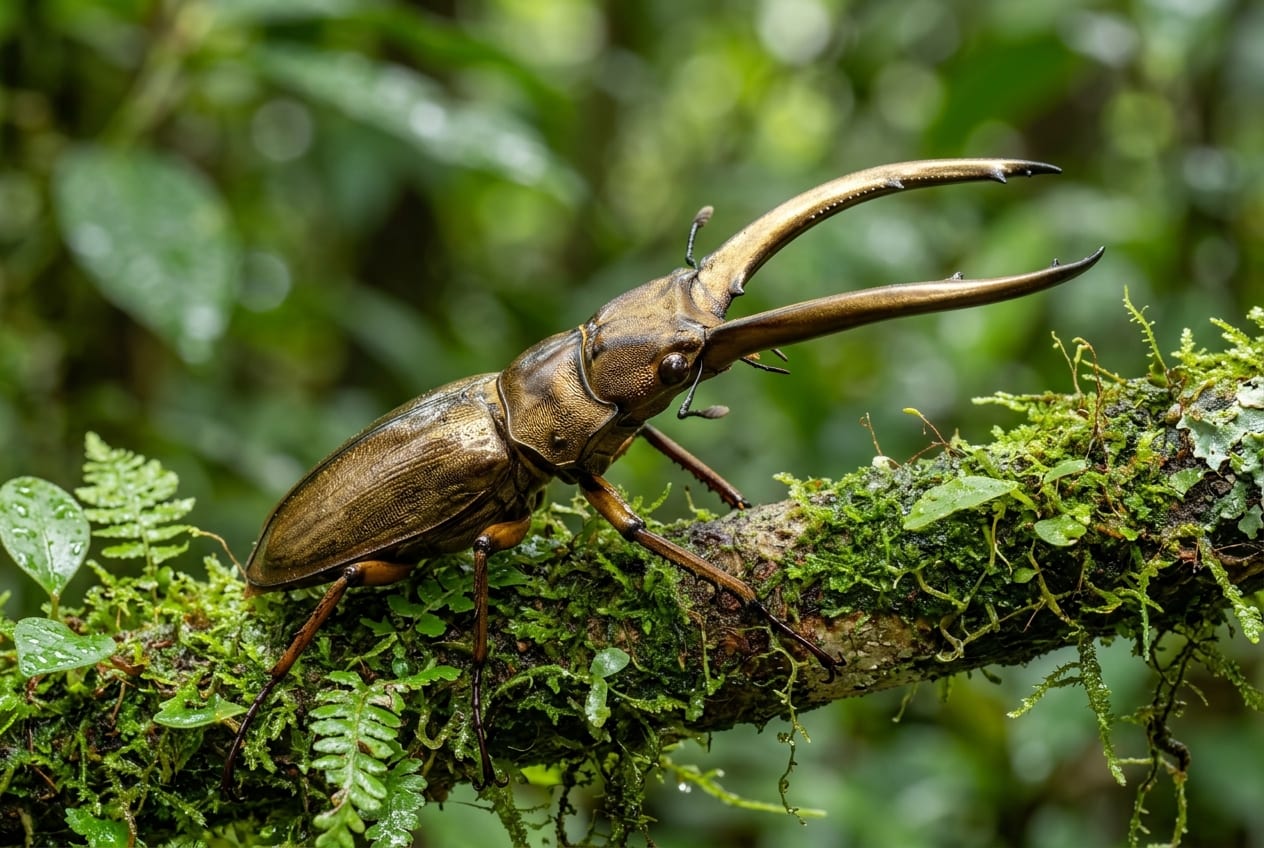
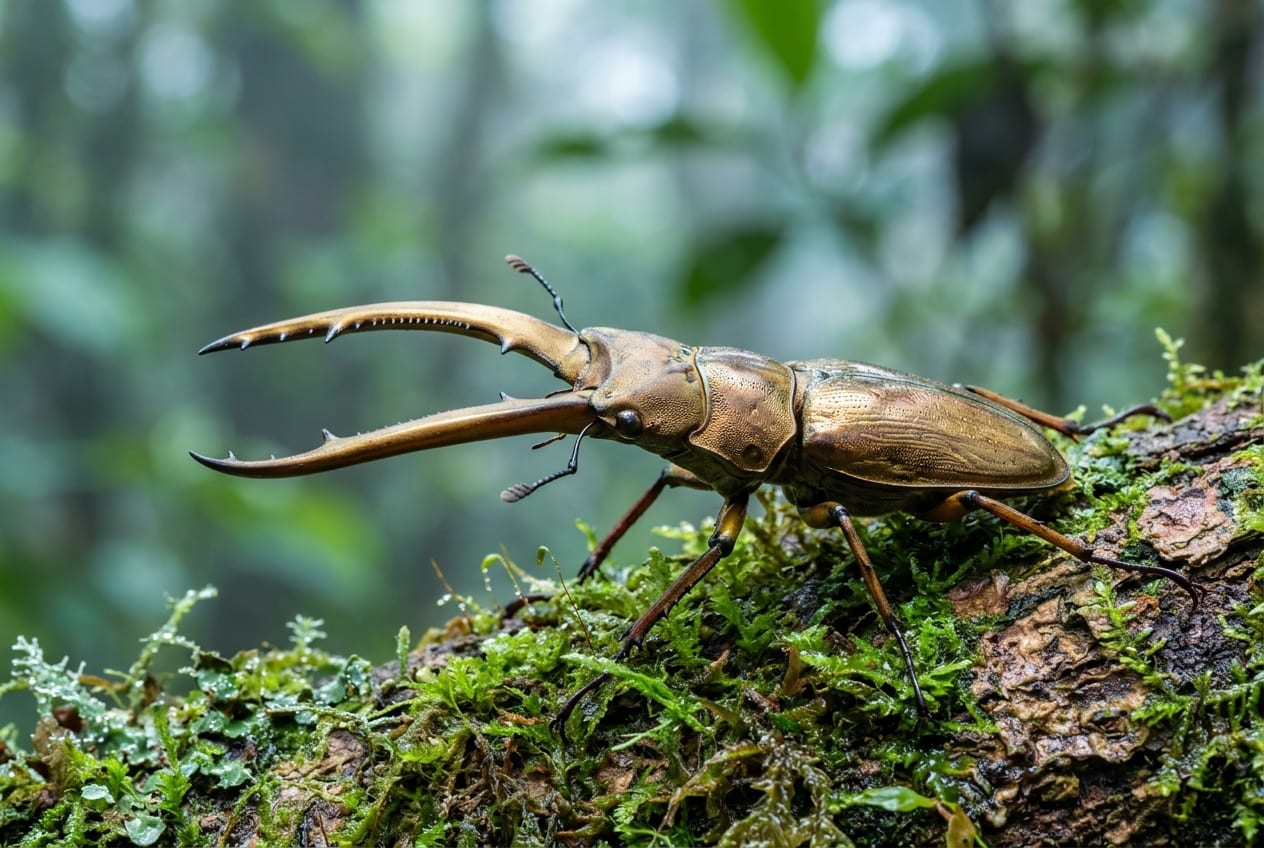
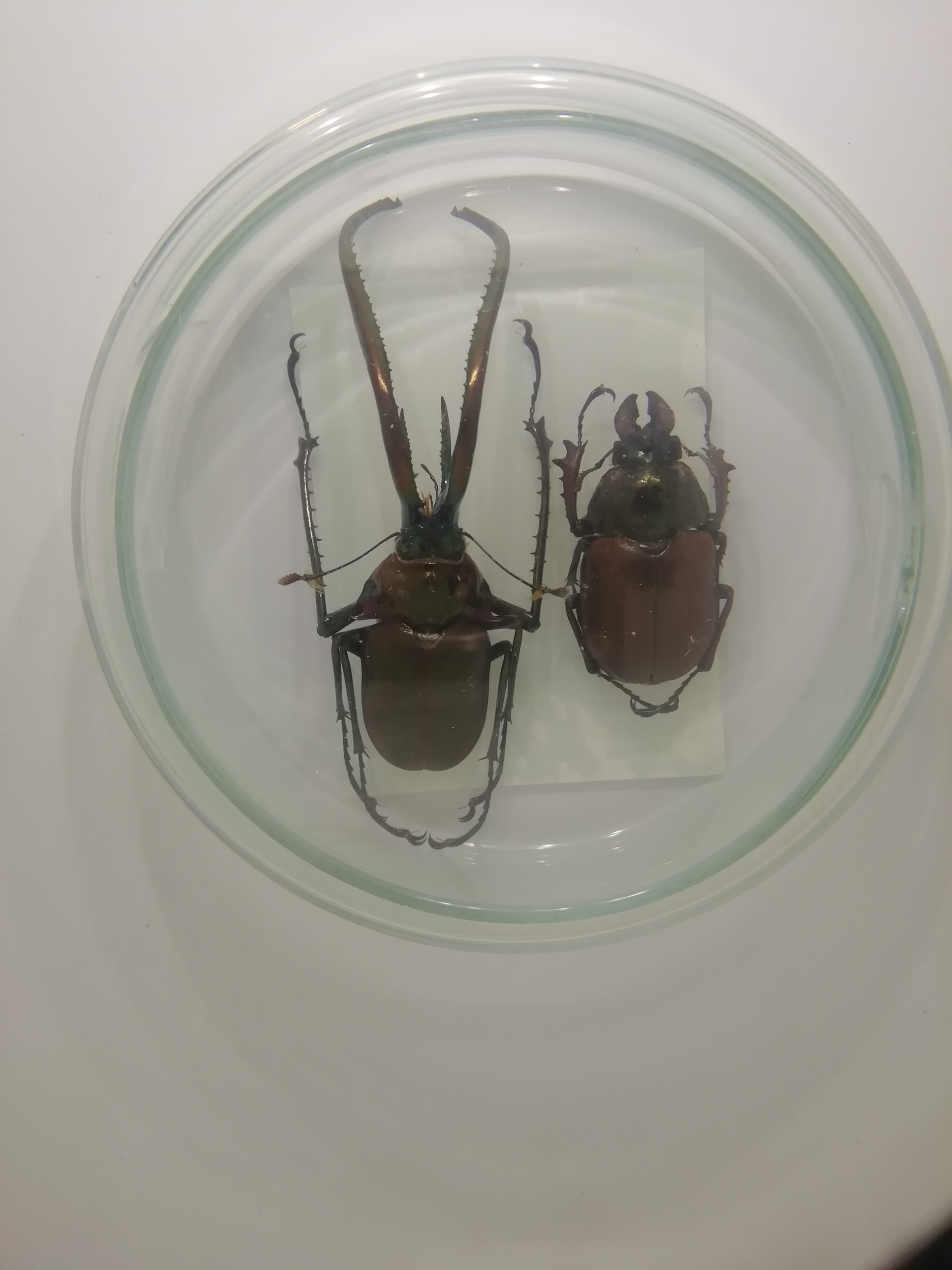
The largest stag beetle in South America. Apart from the underside the body is reddish brown with an iridescent metallic sheen. In large males the slender mandibles take up more than half the body length and carry a long series of fine teeth.
Difficulty
Advanced
Temperature
20〜28℃
Lifespan
Under a month once active above ground
Size
Males 33-90mm, females 25.1-37.1mm
Humidity
60〜80%
Diet
Adults take tree sap; larvae feed on decaying wood in the soil
About
Chiasognathus grantii is the largest stag beetle in South America, found in Chile and Argentina and known as Darwin's beetle, Grant's stag beetle or the Chilean stag beetle. Males run 33 to 90 mm and females 25.1 to 37.1 mm. Apart from the underside the body is reddish brown with an iridescent metallic sheen, weaker on the elytra. Its most striking feature is the male's extravagant mandibles, which in large individuals take up more than half the body length and carry fine teeth from base to tip. It lives in Nothofagus temperate rainforest, cooler country than most stag beetles occupy. The larvae live in the soil, while the adults climb trees several metres high, gather in dense territories and have been seen flying together at dusk. Charles Darwin, visiting South America, let one grip his finger and recorded in his diary that the jaws were not strong enough to produce pain, which is how the beetle came by its English name. Only the tips are weak, however; the fang-like process at the base is sharp.
Source: Wikipedia (CC BY-SA 4.0)
Size of the Chilean Stag Beetle
The Chilean Stag Beetle grows to Males 33-90mm, females 25.1-37.1mm.
Basic Info
Origin
Nothofagus temperate rainforest in Chile (Biobio) and Argentina (Neuquen and Chubut)
Lifespan
Under a month once active above ground
Size
Males 33-90mm, females 25.1-37.1mm
Temperature
20〜28℃
Care Specifications
AggressiveSolitaryBreeding: Very hard
Sources: Chiasognathus grantii - Wikipedia (JA; size, morphology, range, biology, fighting behaviour, lifespan, state of captive husbandry) / Chiasognathus grantii - Wikipedia (EN; size, morphology, range and habitat, fighting behaviour, Darwin's note, conservation status) / GBIF species page for Chiasognathus grantii Stephens, 1831
References & Sources
Edited & verified by: BreederDirect editorial team
The taxonomic, regulatory, and husbandry data on this page are compiled and verified against the authoritative primary sources below.
Primary sources
- Wikipedia
- Ministry of the Environment, Invasive Species Act: "Guidance for Those Importing Live Insects in Scarabaeoidea"
- CITES Appendix (checklist.cites.org)
- Chiasognathus grantii - Wikipedia (EN; size, morphology, range and habitat, fighting behaviour, Darwin's note, conservation status)
- GBIF species page for Chiasognathus grantii Stephens, 1831
Taxonomy & Authority
Accepted name: Chiasognathus grantii Stephens, 1831
Synonyms: Chiasognathus grantii holometallicus, Chiasognathus pygmaeus, Tetropthalma chiloensis
Authority databases: GBIF
Nomenclature follows global taxonomic authority databases.
Regulations & Conservation Status
Not CITES-listed
Plant Protection Act: When importing live specimens of Scarabaeoidea (including rhinoceros beetles, stag beetles, flower beetles, etc.), a species identification certificate issued by the exporting country government agency or equivalent must be attached in accordance with the Invasive Species Act (import ports are limited to Narita, Chubu, Kansai, Fukuoka, and Kagoshima airports). This species itself is not a designated invasive species, and import is possible upon submission of the certificate.
Sources: Ministry of the Environment, Invasive Species Act: "Guidance for Those Importing Live Insects in Scarabaeoidea" / CITES Appendix (checklist.cites.org)
Regulations may change. Always verify the latest information with the relevant authorities.
Chilean Stag Beetle Listings
Loading latest listingsFind listings for this species