Source: Wikimedia Commons
Spiny Flower Mantis
IntermediatePseudocreobotra wahlbergii
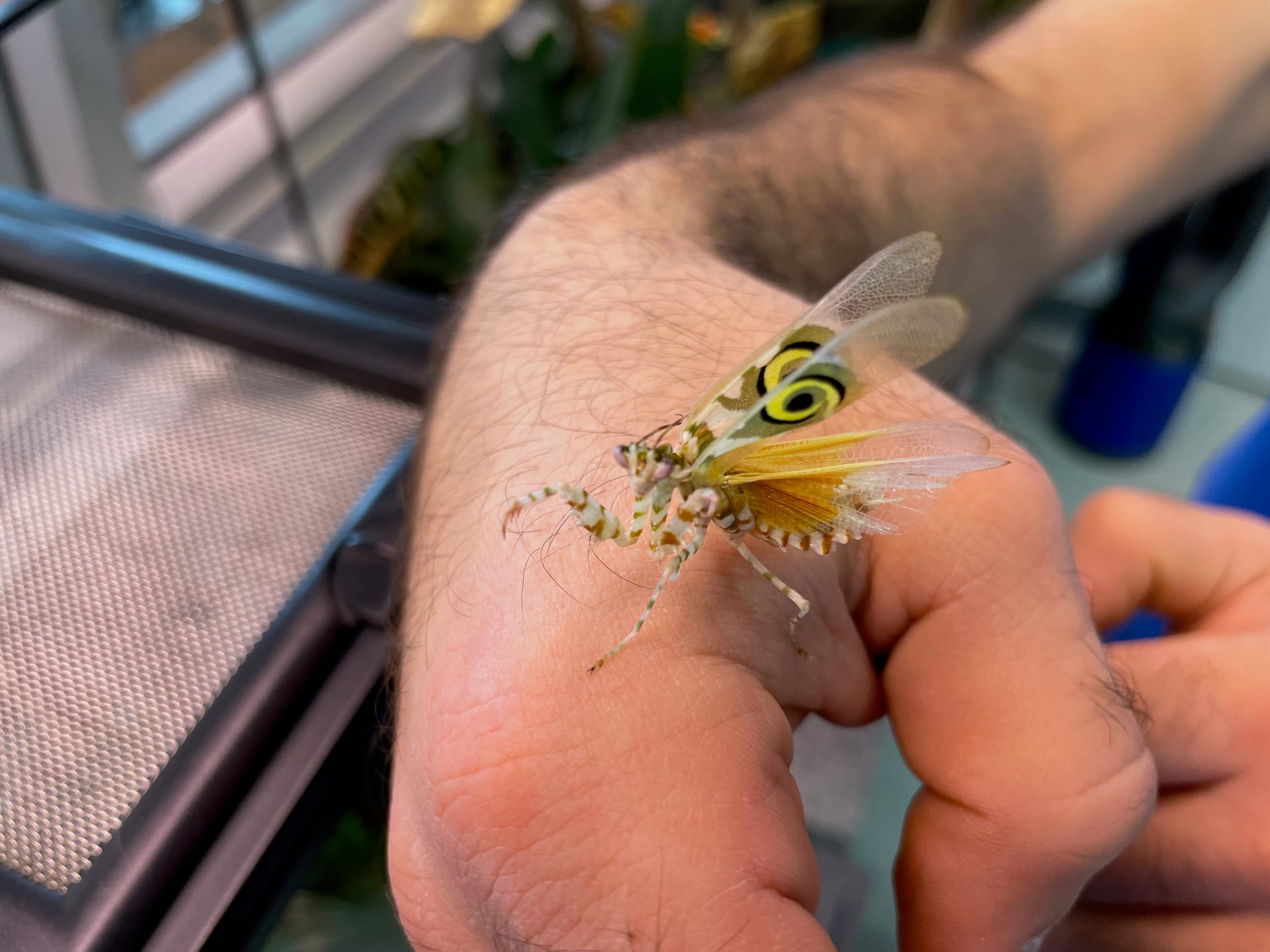
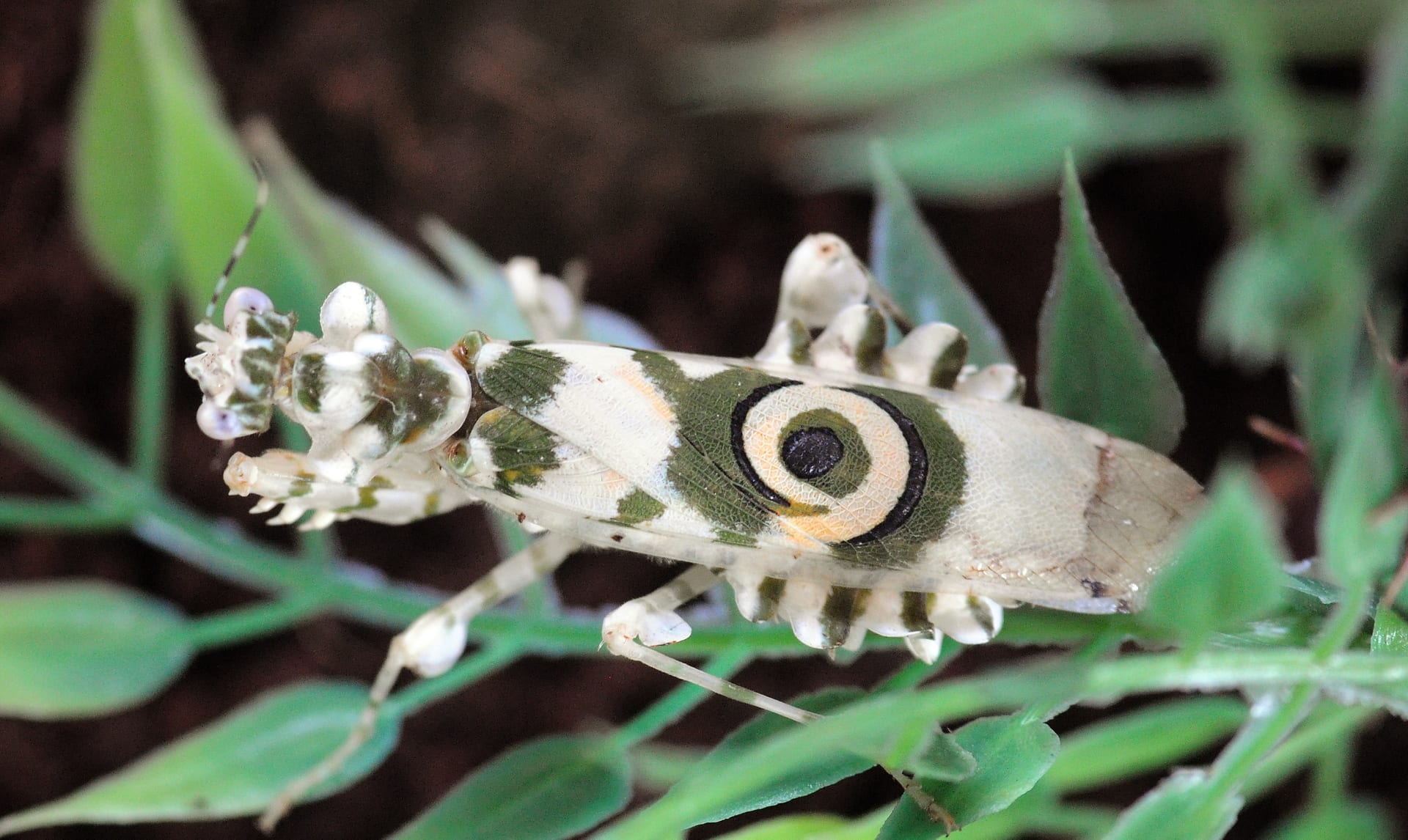
A small flower mantis from southern and eastern Africa, about 4cm as an adult. Large black, green and cream eyespots mark the forewings, and spiny structures under the abdomen give it its name. Sensitive to excess moisture and moderately hard to breed.
Difficulty
Intermediate
Temperature
26℃
Lifespan
Adults 2-4 months
Size
About 4cm (females larger and broader)
Humidity
60%
Diet
Flying prey such as moths and flies (fruit flies for nymphs)
About
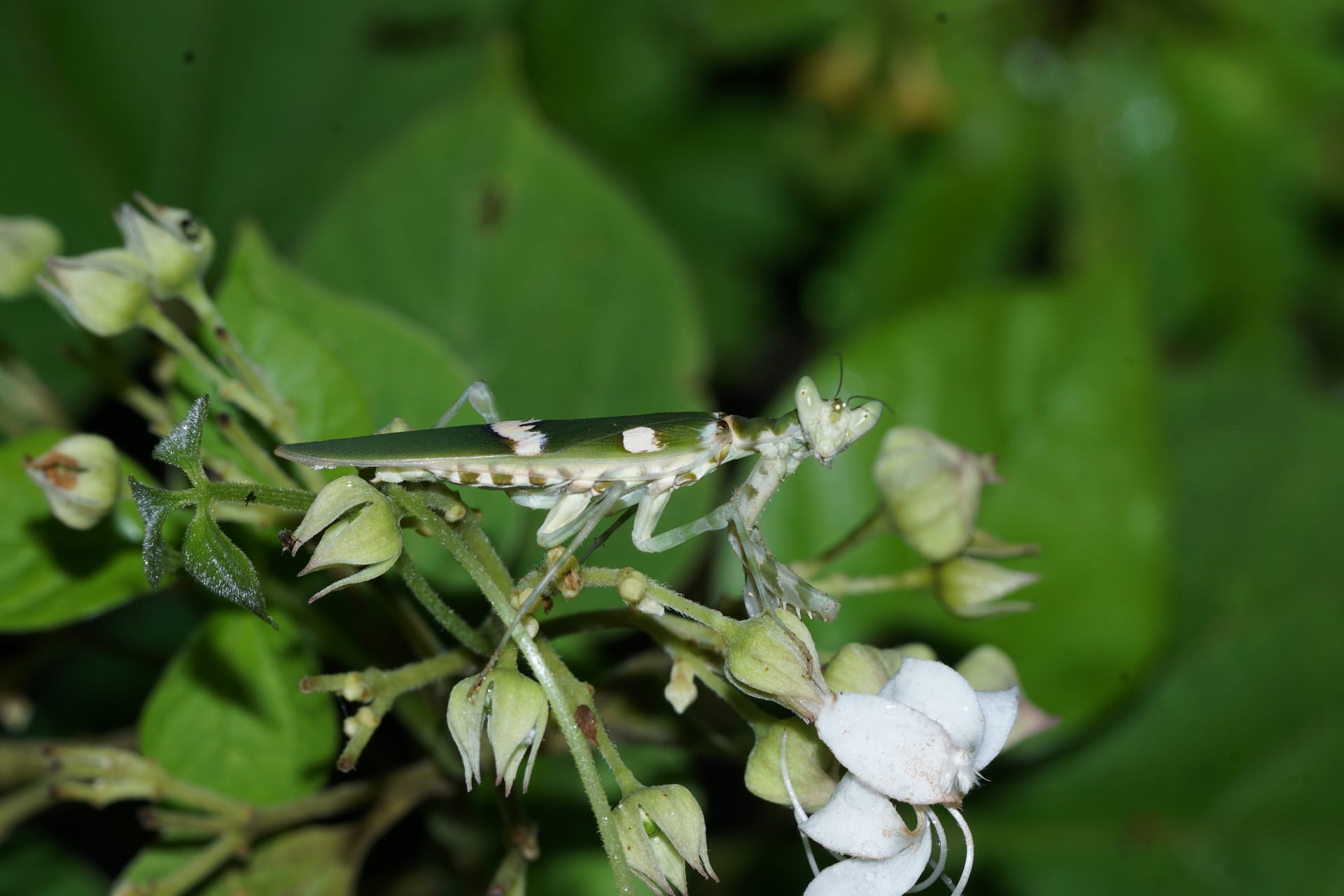
The spiny flower mantis (Pseudocreobotra wahlbergii) is a small flower mantis found from South Africa through Tanzania, Kenya, Zimbabwe and Uganda, reaching about 4cm as an adult. Spiny structures on the underside of the abdomen give it its name. It is typically light green but may be tinted yellow, pink or red. Each forewing carries a large black, green and cream eyespot ringed by a green patch; the inner hindwings are orange and the outer ones transparent. Nymphs are black until the third instar. It is a convincing flower mimic, seizing pollinators that approach it as a blossom, and spreads its forewings in a deimatic display when startled, though how readily varies between individuals. Females have six or seven abdominal segments, longer wings and mature after seven moults; males have eight segments, longer and thicker antennae and mature after six. Excess moisture invites fatal infection, so mist about three times a week and maintain good ventilation. It cannot handle large prey, so feed mainly moths and flies. Nymphs can share a cage until the fourth instar, after which they turn cannibalistic. An ootheca yields 30-55 nymphs.
Source: Wikipedia (CC BY-SA 4.0)
Lifespan of the Spiny Flower Mantis
The Spiny Flower Mantis lives Adults 2-4 months.
Size of the Spiny Flower Mantis
The Spiny Flower Mantis grows to About 4cm (females larger and broader).
Temperature & humidity for the Spiny Flower Mantis
The ideal temperature for the Spiny Flower Mantis is 26℃. Ideal humidity is 60%.
Keep at about 26C with humidity around 60%.
Basic Info
Care Specifications
Semi-aggressiveSolitaryBreeding: Moderate
Sources: Keeping Insects - Spiny Flower Mantis / Pseudocreobotra wahlbergi - Wikipedia (EN)
References & Sources
Edited & verified by: BreederDirect editorial team
The taxonomic, regulatory, and husbandry data on this page are compiled and verified against the authoritative primary sources below.
Taxonomy & Authority
Accepted name: Pseudocreobotra wahlbergii Stal, 1871
Synonyms: Pseudocreobotra wahlbergi
Authority databases: GBIF
Nomenclature follows global taxonomic authority databases.
Regulations & Conservation Status
Not CITES-listed
Sources: CITES Appendix (checklist.cites.org)
Regulations may change. Always verify the latest information with the relevant authorities.
Spiny Flower Mantis Listings
Loading latest listingsFind listings for this species