Source: Wikimedia Commons
Japanese Water Bug
IntermediateAppasus japonicus
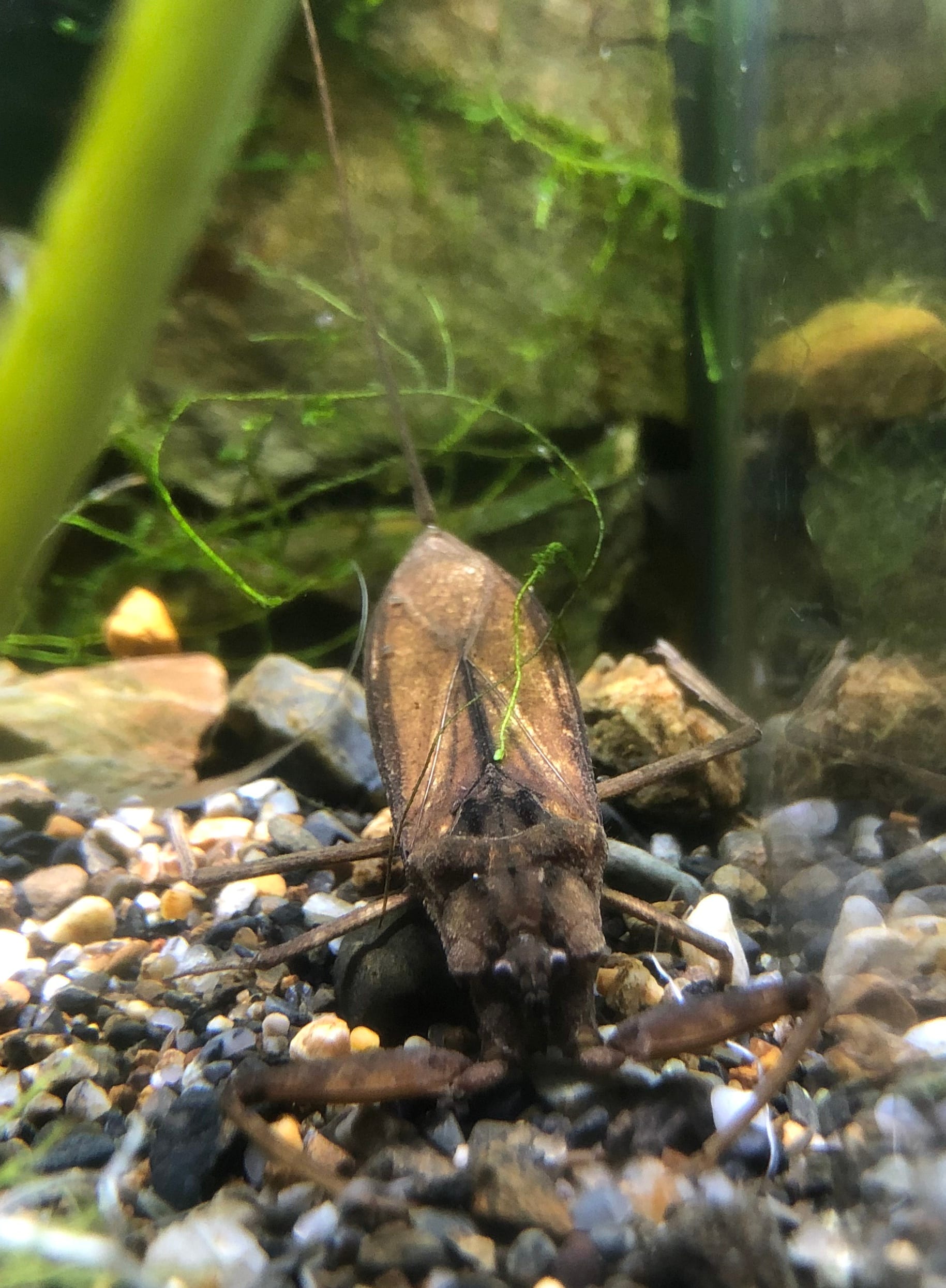
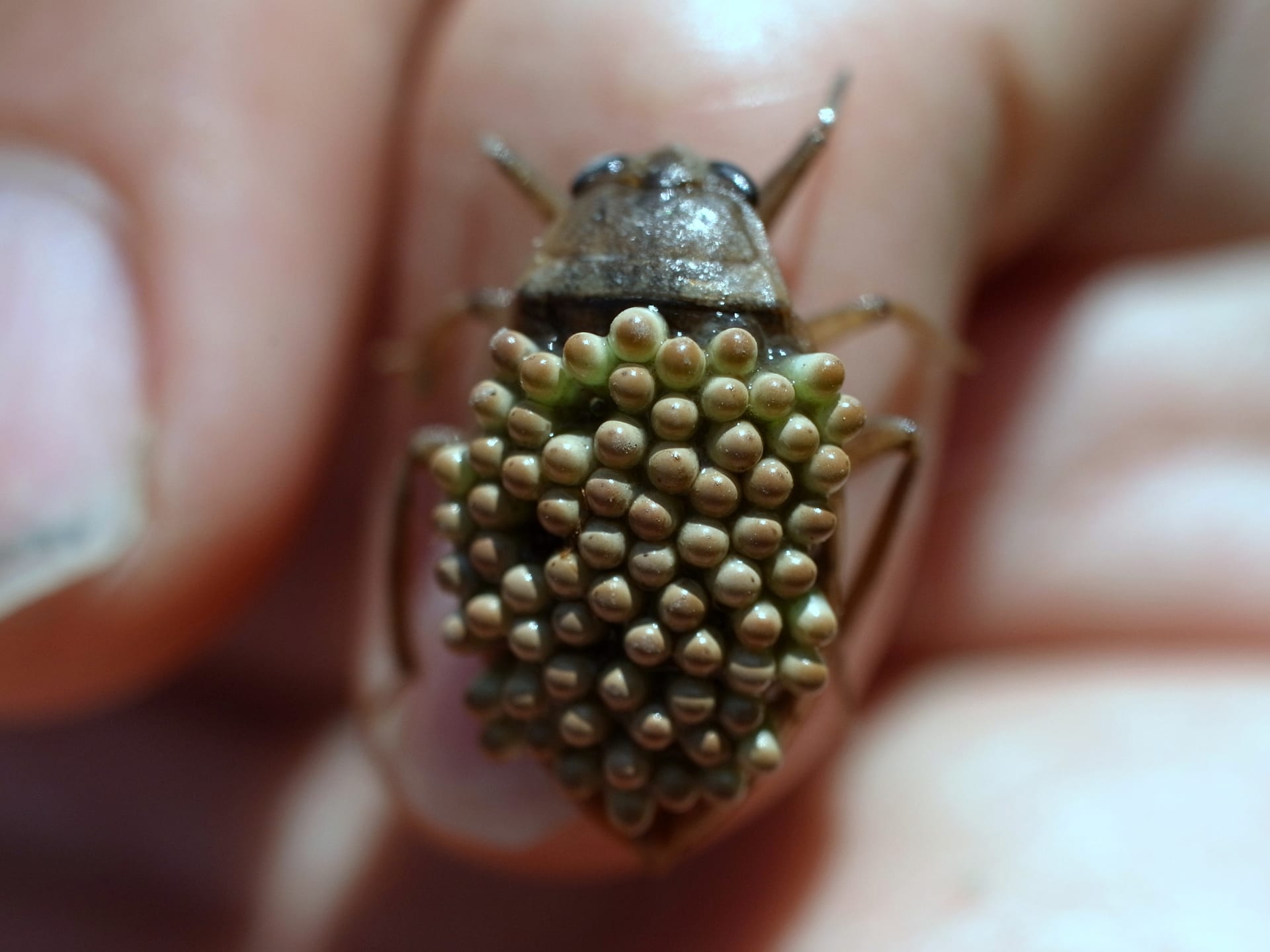
A water bug in which the female lays her eggs on the male's back and he carries and guards the mass. The Japanese name, meaning child-carrying bug, comes from that sight. Adults get on well with one another and rarely turn cannibal even at high density.
Difficulty
Intermediate
Temperature
20〜28℃
Lifespan
About two years
Size
17-20mm
Humidity
60〜80%
Diet
Small fish, pond snails, aquatic insects and terrestrial insects
About
Appasus japonicus is a water bug of 17-20 mm that lives in sunlit shallow water a few to a few tens of centimetres deep and thick with plants: lowland paddies, shallow ditches, slow irrigation channels and farm ponds. Its raptorial front legs do not spread sideways to clasp prey as the giant water bug's do but strike downward like a mantis, and each ends in two claws. Paternal care of the eggs is unusual among insects, and unlike the giant water bug, which guards eggs laid on a support, the female here places a mass of 30-40 eggs on the male's back and he carries them about. That is what the Japanese name, child-carrying bug, refers to. A male carrying eggs cannot fly. The larvae hatch after a few weeks and mature through five moults, but once they hatch the male gives no further care and will treat even his own offspring as prey. The bug lives about two years.
Source: Wikipedia (CC BY-SA 4.0)
Size of the Japanese Water Bug
The Japanese Water Bug grows to 17-20mm.
Basic Info
Origin
Japan (Hokkaido to Kyushu), China and Korea
Lifespan
About two years
Size
17-20mm
Temperature
20〜28℃
Humidity
60〜80%
Diet
Care Specifications
References & Sources
Edited & verified by: BreederDirect editorial team
The taxonomic, regulatory, and husbandry data on this page are compiled and verified against the authoritative primary sources below.
Taxonomy & Authority
Accepted name: Appasus japonicus Vuillefroy, 1864
Synonyms: Diplonychus japonicus
Authority databases: GBIF
Nomenclature follows global taxonomic authority databases.
Regulations & Conservation Status
Not CITES-listed
Sources: CITES Appendices (species not listed)
Regulations may change. Always verify the latest information with the relevant authorities.
Japanese Water Bug Listings
Loading latest listingsFind listings for this species