Two-Forked Stag Beetle (Metallifer & Elafsus) Care Guide | Breeding Set | Larva Management | Temperature Control
A comprehensive guide to keeping two-forked stag beetles (Cyclommatus metallifer and related species), characterized by metallic luster and distinctive bifurcated mandibles. Essential temperature management (20-26°C), substrate-based breeding setup, larval rearing in mushroom spawn bottles and fermented substrate, and prevention of failed emergence—this complete guide is ideal for beginners entering the world of imported stag beetles and showcases this beautiful species.
Key Takeaways
A comprehensive guide to keeping two-forked stag beetles (Cyclommatus metallifer and related species), characterized by metallic luster and distinctive bifurcated mandibles. Essential temperature management (20-26°C), substrate-based breeding setup, larval rearing in mushroom spawn bottles and fermented substrate, and prevention of failed emergence—this complete guide is ideal for beginners entering the world of imported stag beetles and showcases this beautiful species.
Related Species


About Two-Forked Stag Beetles
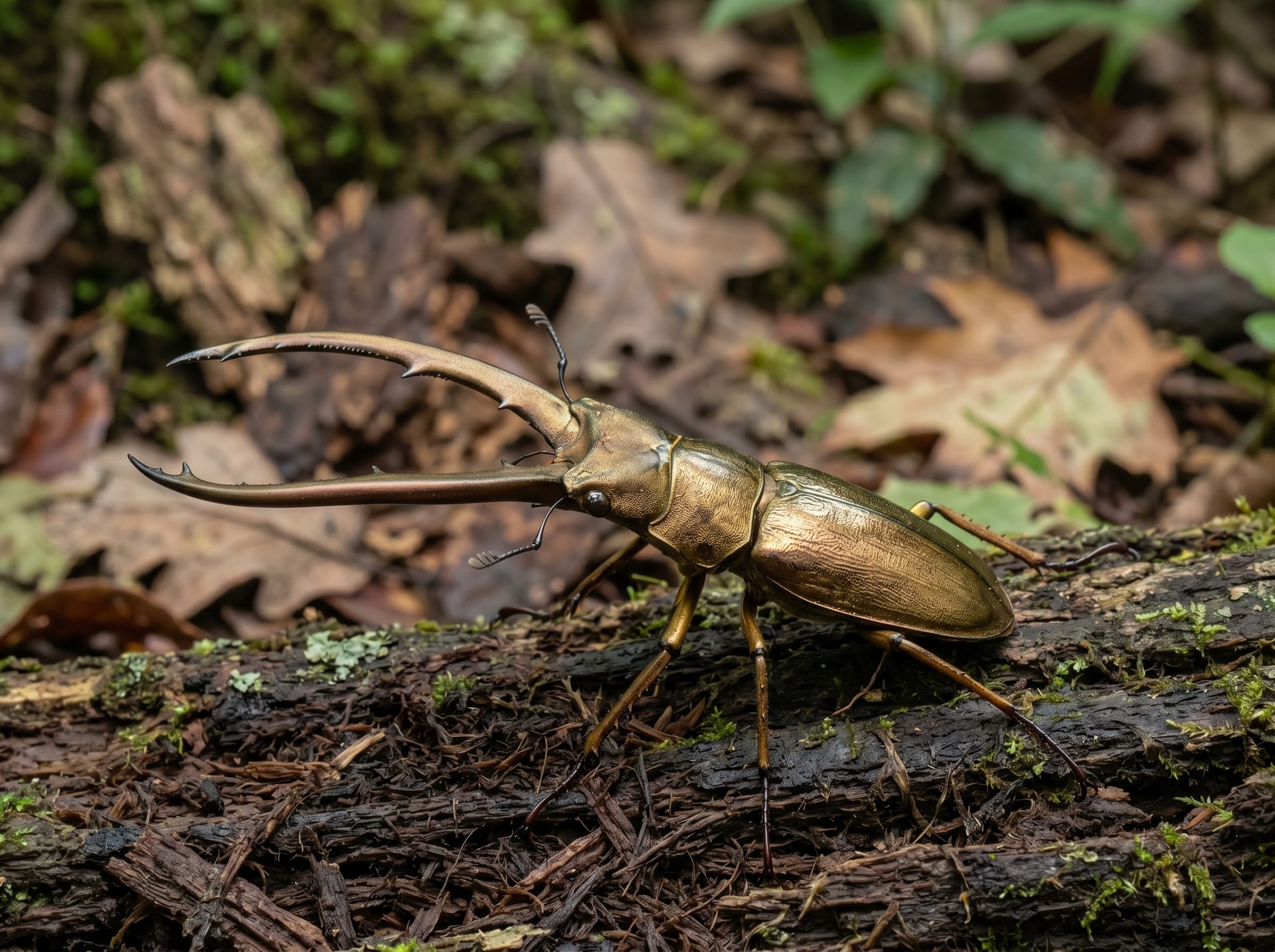
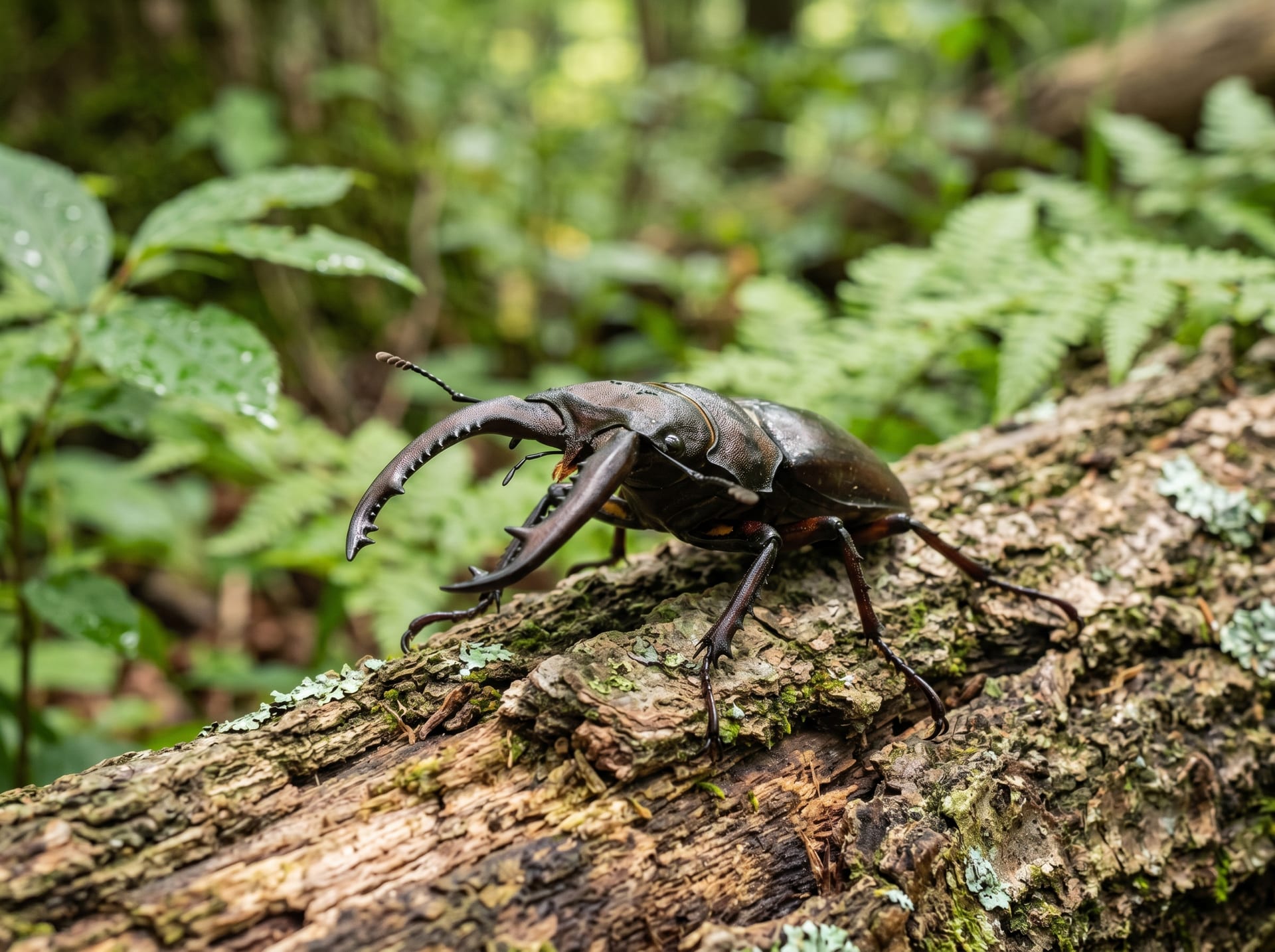
Two-forked stag beetles (genus Cyclommatus, Prosopocoilus, and others) are a group of beetles widely distributed across Southeast Asia and Oceania. Their most distinctive feature is the uniquely bifurcated mandibles that split into two branches—hence the Japanese name "two-forked." "Two-forked" is a common name used by Japanese enthusiasts; scientifically, it primarily refers to species in the genus Cyclommatus (Cyclommatus).
Popular Species and Characteristics
| Species | Origin | Male Length | Characteristics |
|---|---|---|---|
| Metallifer Stag Beetle | Malaysia/Indonesia | 45-100mm | Most popular, metallic luster body |
| Elafsus Stag Beetle | Malaysia | 50-95mm | Characterized by slender mandibles and legs |
| Startus Two-Forked Stag Beetle | Sulawesi Island | 50-90mm | Beautiful coloration resembling rainbow beetles |
| Giraffa Saw Stag Beetle | Sumatra, etc. | Up to 110mm+ | Large, intermediate form between saw stag beetles |
Among these, the Metallifer Stag Beetle (Cyclommatus metallifer) is highly popular among Japanese breeders due to its beautiful metallic-lustered body and relatively straightforward care requirements.
Basic Setup for Keeping
Adult Enclosure
Two-forked stag beetles are active and have strong escape abilities, making a high-security plastic container essential.
- Recommended size: For males up to 130-160mm, approximately 20cm (L) × 15cm (W) × 13cm (H)
- Clear slider containers with escape-prevention modifications are recommended
Substrate (Mat)
For adult management, substrate should be laid thinly (3-5cm). For breeding and larval rearing, use high-quality fermented substrate (with additives).
Temperature Control
Two-forked stag beetles (especially Metallifer) are tropical in origin and vulnerable to low temperatures.
- Adult ideal temperature: 20-26°C
- Larval optimal temperature: 22-25°C
- Avoid temperatures below 20°C: Winter cold causes poor health and shortened lifespan
- Wine coolers or insulated boxes (styrofoam) are commonly used for temperature management
Setting Up a Breeding Container
Most two-forked stag beetle species spawn primarily in substrate ("mat spawning").
Required Materials
- Large plastic container (preferably 25cm or wider)
- High-fermentation, nutrient-rich substrate (fermented substrate with additives for Hercules beetles or rhinoceros beetles)
- Wooden materials and branches for preventing overturning
Setup Method
- Firmly compact substrate at the bottom to 7-10cm depth (compact 2/3 of the base)
- Add a loosely compacted, soft substrate layer of 3-5cm on top (preferred by breeding females)
- Place wooden materials for preventing overturning
- Adjust moisture: substrate should hold together lightly when squeezed (excess moisture causes rot)
- Introduce a mature pair (individuals that have been feeding for 1-2+ months after emergence)
Breeding Temperature
Maintain at 22-26°C. During breeding, place the container in a quiet location away from foot traffic and vibrations.
Timing for Excavation
Excavate the breeding container approximately 4-6 weeks after setup. If larvae grow too large, they may cannibalize each other, so avoid delayed excavation.
Larval Rearing
Two-forked stag beetle larvae can be raised in either mushroom spawn bottles or substrate bottles.
Mushroom Spawn Bottles (For Larger Adults)
- Recommended fungi: Oyster mushroom type (800ml-1400ml)
- Temperature: 22-24°C
- Change timing: When bottle substrate begins to deteriorate (approximately 3-5 months)
Fermented Substrate Bottles (For Stability)
- High-quality fermented substrate with additives (for rhinoceros beetles or two-forked stag beetles)
- Temperature: 22-25°C
- Change timing: When substrate deteriorates or darkens
Larval Stage Management
- First instar larvae: Start in small plastic cups (120ml-500ml)
- Second to third instar larvae: Transfer to 800ml-1400ml bottles
- Pre-pupation: Ensure individual housing (prevents cannibalism)
Common Problems and Solutions
Adults Won't Breed
- Insufficient post-emergence feeding period: Ensure at least 1-2 months before attempting breeding
- Temperature too low: Verify 22-26°C range
- Substrate moisture imbalance: Substrate should hold together when squeezed
Larval Mortality
- Low-temperature death (below 20°C): Review heating setup
- Rot from excess moisture: Check substrate and bottle moisture levels
- Gas poisoning: Air out fresh, high-fermentation substrate for several days before use
Frequent Failed Emergence
- Insufficient pupal cell size: Replace bottles before larvae become too large
- Rapid temperature fluctuations: Maintain stable 22-24°C environment
Summary
The two-forked stag beetle, particularly the Metallifer species, is a popular imported stag beetle prized for its beautiful metallic-lustered body and distinctive bifurcated mandibles. As a tropical species, proper temperature management (maintaining 20-26°C) is the most critical factor; once established, this species is relatively straightforward to keep. Breeding uses substrate-based setup, and larvae can be reared in mushroom spawn bottles or high-quality fermented substrate for large adults. With a proper temperature-controlled environment, the two-forked stag beetle is an excellent choice for beginners entering the world of imported stag beetles.